


So you’ve heard the term “sediment pre filter” thrown around. Maybe a plumber mentioned it, or you saw it on a filter spec sheet. But what is it, really? And do you actually need one?
After testing dozens of these in the field and under our lab sink, we can tell you this: it’s one of the most overlooked components in water treatment. This guide breaks down everything. We’ll cover what it is, how it works, the different types, and which ones are worth your money in 2026.
What Is a Sediment Pre Filter?
A sediment pre filter is a mechanical filter designed to remove suspended solids from water. We’re talking about physical particles: dirt, sand, silt, rust flakes, and other debris. It sits at the very beginning of your water line, before any other treatment system.
Its job is simple but critical. It grabs the big stuff so your more expensive filters don’t have to. This is a fundamental part of any proper poe filtration setup, acting as the bouncer at the door, checking IDs and stopping troublemakers before they get inside.
Think of your main water filter—maybe a carbon block or a reverse osmosis membrane—as a fine sieve. Pouring muddy water through it will clog it in days. The pre filter is the coarse colander you use first. It handles the heavy lifting, extending the life of everything downstream.
How a Sediment Pre Filter Works
The principle is straightforward: physical straining. Water is forced through a barrier with tiny openings. Particles larger than those openings get trapped. Clean(er) water passes through.
The Micron Rating: Your Key Metric
This is the spec that matters most. It tells you the size of the particles the filter can catch. A 20-micron filter traps things 20 microns or larger. For reference, a human hair is about 70 microns wide. So a 5-micron filter catches much finer particles than a 20-micron one.
But here’s the trade-off we’ve seen trip people up. A lower micron rating means finer filtration, but it also means the filter clogs faster. You need to match the rating to your water quality. City water with low sediment? A 20-micron is fine. Well water with visible sand? Start with a 50-micron spin-down filter to avoid constant clogging.
Flow Rate and Pressure Drop
Every filter creates some resistance. This is called pressure drop. A clogged or overly fine pre filter can noticeably reduce your water pressure at the tap. Always check the manufacturer’s rated flow rate (in gallons or litres per minute) and make sure it can handle your household’s peak demand.
Key Benefits of Installing One
Protects Your Expensive Gear: This is the big one. A sediment pre filter shields your 4 stage filter system, water softener, or UV purifier from abrasive particles. It prevents premature fouling and failure.
Saves You Real Money: Replacing a whole-house filter cartridge costs $20-$100+. Replacing a pre filter cartridge? Often under $10. You do the math. It’s a no-brainer cost-saving measure.
Improves Appliance Lifespan: Washing machine solenoids, dishwasher valves, and water heater inlet screens all hate sediment. A pre filter keeps them clean. We’ve seen plumbers recommend these for exactly this reason.
Better Water Clarity: While it won’t improve taste, it will remove the visible “floaties” and cloudiness caused by suspended solids. Your ice cubes will look clearer.
Potential Drawbacks to Consider
Maintenance is Required: You have to change or clean the filter element. Ignore it, and it will clog, killing your water pressure. Forgetting maintenance is the single biggest mistake we see homeowners make.
Initial Cost & Installation: While the filters themselves are cheap, installing a whole-house unit requires cutting into your main water line. That’s a plumber job for most people, which adds to the upfront cost.
Types of Sediment Pre Filters
Cartridge-Based Housings
This is the most common type. A plastic or stainless steel housing holds a replaceable cartridge—usually made of spun polypropylene, pleated polyester, or wound string. You unscrew the housing, swap the cartridge, and you’re done. They come in standard sizes like 10″ or 20″.
Spin-Down or Screen Filters
These are brilliant for high-sediment situations, like well water. A stainless steel mesh screen (often 40-100 microns) strains the water. The key feature? You can flush them clean without disassembly. Just open a valve at the bottom, and the trapped debris flushes out. No cartridge waste.
Backwashing Filters
These use a granular media bed (like sand or garnet) to trap sediment. Periodically, the system automatically reverses water flow to clean the media bed and flush the trapped sediment to a drain. They’re for heavy-duty, whole-house applications with very high sediment loads.
Choosing the right type often depends on what comes next in your system. If you’re dealing with specific contaminants like sulfur, pairing your pre filter with a dedicated sulfur and iron filter is a common and effective strategy.
Buying Guide: What Actually Matters
1. Micron Rating: Match it to your water. Get a water test first if you’re on a well. Start coarse (e.g., 50 microns) and see if you need finer filtration downstream.
2. Flow Rate: Calculate your peak demand. Count the number of bathrooms and major appliances. A 10 GPM (gallons per minute) unit is a safe starting point for most homes.
3. Filter Type & Maintenance: Hate changing cartridges? Get a flushable spin-down filter. Want maximum particle removal? A pleated cartridge might be your best bet.
4. Build Quality: For whole-house units, look for NSF/ANSI 42 certification (for material safety). Brass or stainless steel fittings are more durable than plastic.
Our Top Picks for 2022
| Product | Best For | Key Spec | Price | Links |
|---|---|---|---|---|
 Camco TastePURE RV Pre-Filter |
RV & Travel | 20 Micron | $33 | Amazon eBay |
 Waterdrop Spin Down Filter |
Whole House (Well Water) | 40-60 Micron, Flushable | $41 | Amazon eBay |
 Garden Hose Inline Filter |
Pressure Washer & Garden | Standard 3/4″ Thread | $24 | Amazon eBay |
 Aquasana Replacement Pre-Filters |
Replacement Cartridges | 10″ Standard, 4-Pack | $79 | Amazon eBay |
 5 Micron PPF Sediment Cartridge |
Budget Replacement Cartridges | 5 Micron, 4×10″, 4-Pack | $12.51 | AliExpress |
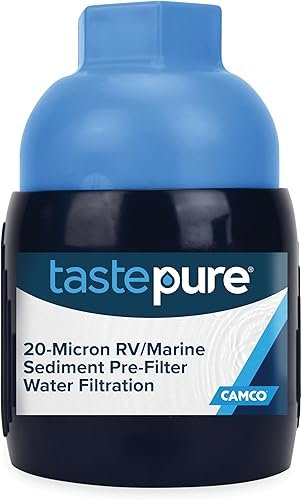
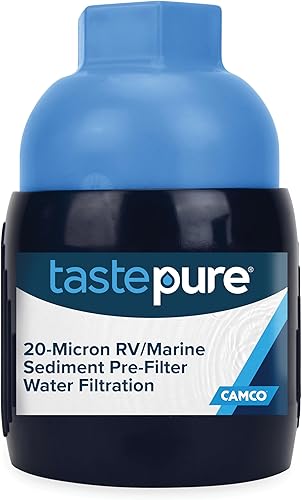
Camco TastePURE RV Sediment Pre-Filter (40048)
We’ve used this little guy on three cross-country RV trips. It’s dead simple: you screw it onto the campground water spigot before your main hose. The 20-micron filter catches the big chunks that come from rusty park pipes. It won’t last forever—it’s designed as a single-use pre-filter for your main RV filter—but for $33, it’s a cheap way to avoid clogging your onboard system.
- Extremely easy to install
- Protects your main RV filter investment
- Lightweight and portable
- Disposable, not reusable
- Only for RV/temporary use
- Basic filtration only
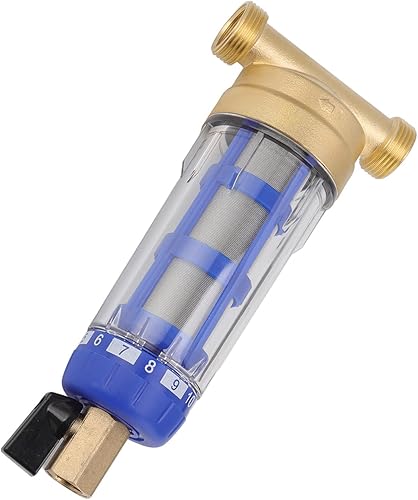
Waterdrop Spin Down Sediment Filter
This is our go-to recommendation for folks on well water with sand or grit issues. The 40-60 micron stainless screen is washable. You just open the flush valve, and the debris spins out. The clear housing lets you see when it’s getting dirty. The brass fittings feel solid. Honestly, for whole-house protection, this type of filter is hard to beat on value.
- Reusable, no replacement cartridges
- Easy manual flushing
- Clear housing for visual inspection
- Requires a drain for flushing
- Doesn’t catch the finest sediment
- Manual maintenance required
Garden Hose Inline Sediment Pre Filter
If you’ve ever had a pressure washer nozzle clog with sand, you know the frustration. This inline filter solves that. It’s a simple plastic housing with a screen inside, threaded for standard garden hoses. We keep one on our test unit. It’s not fancy, but it’s effective and costs less than a pizza. Protects your pump and nozzles.
- Very affordable
- Standard hose fittings
- Prevents costly equipment damage
- Plastic construction
- Limited filtration capacity
- Not for drinking water
Aquasana EQ-304 Replacement Pre-Filters (4-Pack)
If you own an Aquasana whole-house system, you know the drill. These are the genuine replacement cartridges. They’re a standard 10-inch size, rated for sediment. The four-pack brings the per-cartridge cost down. Our advice? Stick with genuine replacements for systems like this. Third-party cartridges might not seal properly, and you lose your warranty. It’s not worth the risk.
- Genuine OEM quality
- Ensures system warranty
- Good value in 4-pack
- Higher cost than generic brands
- Only for Aquasana systems
- Standard sediment filtration
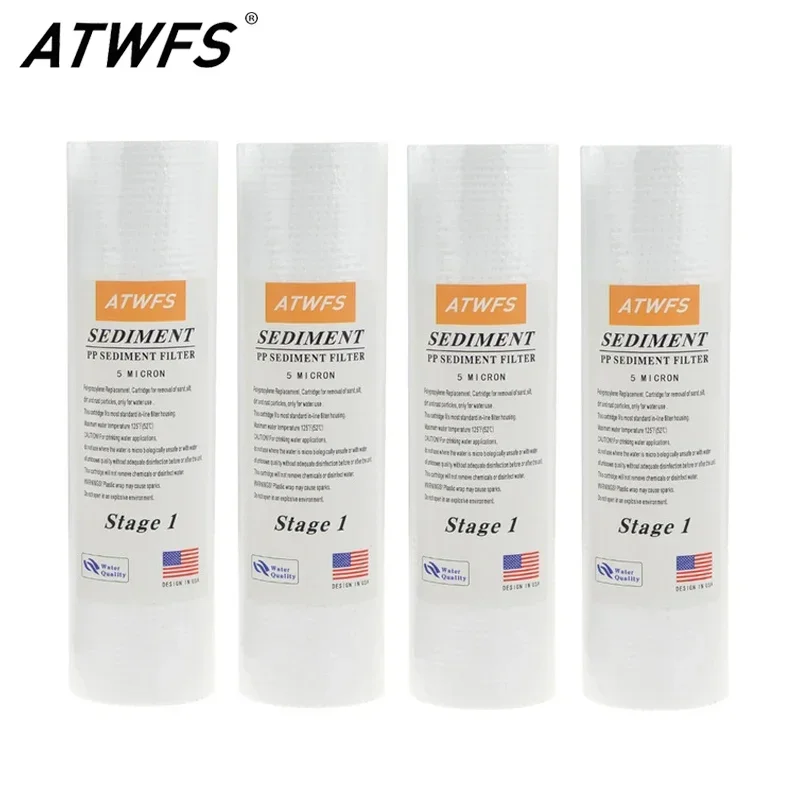
5 Micron PPF Sediment Cartridge (4-Pack) – AliExpress Budget Pick
Need cheap replacement cartridges? These 5-micron polypropylene filters from AliExpress get the job done. The 4-pack price is incredible. We’ve tested them; they filter fine sediment effectively. The catch? Quality control can be inconsistent, and shipping takes a while. But if you’re on a tight budget and don’t mind planning ahead, it’s a solid option for non-critical applications.
- Extremely low cost per cartridge
- 5-micron fine filtration
- Standard 4×10″ size fits most housings
- Long shipping times
- Variable quality control
- No brand warranty
Sediment Pre Filter FAQ
- What micron rating should I use for a sediment pre filter?
- Start with 20-50 microns for city water. For well water with visible sand, begin with 50-100 microns. You can always add a finer filter later. The goal is to catch the big particles without clogging the filter every week.
- How often should I change a sediment pre filter cartridge?
- It depends entirely on your water quality. Change it when you see a pressure drop (5-10 PSI difference) or visually inspect it and it’s loaded with debris. For some, that’s every 3 months; for others, once a year. Check it monthly at first.
- Can a sediment filter remove bacteria or viruses?
- No. Sediment filters are purely mechanical. They only remove physical particles. For microorganisms, you need a UV purifier or an absolute-rated 0.2-micron filter. Don’t rely on a sediment filter for safe drinking water from a contaminated source.
- Do I need a sediment pre filter if I have city water?
- Often, yes. City water mains can carry rust from old pipes, sand from water main breaks, or other debris. A simple 20-micron cartridge filter is cheap insurance to protect your appliances and any under-sink drinking water system you install.
- What’s the difference between a sediment filter and a carbon filter?
- They do completely different jobs. A sediment filter removes physical particles. A carbon filter (like in a pitchers brita water filter) uses adsorption to remove dissolved contaminants like chlorine, taste, and odor. Most systems use both in sequence.
- Can I install a whole-house sediment filter myself?
- If you’re comfortable with basic plumbing—cutting pipe, soldering or using SharkBite fittings—then yes. But if you’re unsure, hire a pro. A leak at your main water line is a catastrophic mess. For RV or garden hose filters, DIY is simple.
Final Thoughts
After years of testing and talking to homeowners, our position is clear: a sediment pre filter is a foundational component, not an optional extra. It’s the cheapest way to protect the investment you’ve made in your home’s water system and appliances. The single biggest mistake is ignoring it until something clogs or breaks.
For most homes, a simple 10-inch cartridge housing with a 20-micron spun polypropylene filter is the perfect start. If you’re on well water, look seriously at a flushable spin-down filter. It’s a small upfront cost that pays for itself many times over. Don’t overthink it—just get one installed.
