


You’ve probably seen it: that gritty feeling in your shower, or worse, cloudy water from the tap. That’s sediment. And while it won’t necessarily make you sick, it will wreak havoc on your pipes, water heater, and any other filter you’ve got installed. A dedicated sediment filter system is the unsung hero that catches this junk first.
In this guide, we’ll break down everything you need to know. We’ll cover what these systems actually are, how they work, the different types you’ll encounter, and how to pick the right one for your home. We’ve also put a few popular models to the test.
What Is a Sediment Filter System?
Think of it as a bouncer for your water line. Its only job is to stop the big, visible particles—dirt, sand, rust flakes, silt—from getting inside your home’s plumbing. It’s a mechanical filter, meaning it physically blocks stuff based on size. No chemicals, no fancy tech, just a barrier.
These systems are almost always installed at the point of entry (POE), right where the water main enters your house. This protects every faucet, every appliance, and any downstream filtration you have. It’s a foundational piece of water treatment. While a pitchers brita water filter handles taste and odor at the tap, a sediment system guards the entire infrastructure.
How a Sediment Filter System Works
The principle is dead simple. Water is forced through a filter media—usually a pleated cartridge, a wound string, or a melt-blown polypropylene cylinder. The pores in this media are a specific size, measured in microns. Anything larger than the pore gets trapped. Clean water passes through.
The Micron Rating: Your Most Important Number
This is the size of the particles the filter will catch. A 5-micron filter stops stuff you can’t even see. A 20-micron filter lets finer silt through but won’t clog as fast. For city water with minor rust, 5-10 microns is common. For well water with heavy sand, you might start with a 20-50 micron pre-filter to avoid constant clogging.
Flow Rate and Pressure Drop
Every filter creates some resistance. The denser the filter (lower micron rating), the more it can slow your water flow. A good system is sized for your home’s peak demand—how many showers and appliances might run at once. Undersizing leads to weak water pressure, which is a top complaint we hear from homeowners.
Key Benefits of Installing One
Protects Your Investment. This is the big one. Sediment destroys appliances. It clogs the inlet valves on washing machines and dishwashers. It settles in your water heater, insulating the bottom and forcing it to work harder, which hikes your energy bill. A $20 filter cartridge can prevent a $1500 appliance replacement.
Extends the Life of Other Filters. If you have a carbon block filter or an expensive reverse osmosis membrane, sediment will foul it in record time. A sediment pre-filter is cheap insurance. It lets those downstream systems focus on what they’re good at—chemicals, heavy metals, and dissolved solids. If you’re shopping for the best under sink ro system, pairing it with a sediment pre-filter is non-negotiable.
Improves Clarity and Reduces Grittiness. You’ll notice the difference in your shower and when you fill a glass. No more sand at the bottom of the bathtub. It’s a simple quality-of-life upgrade.
Potential Drawbacks to Consider
Regular Maintenance is Required. The cartridge will clog. When it does, your water pressure drops. You’ll need to shut off the water, relieve the pressure (if your housing has a valve—get one that does), and swap the cartridge. How often? Could be every 3 months, could be every 6. It depends entirely on your water quality. Ignoring it is the single biggest mistake we see.
Types of Sediment Filter Systems
Spun/Wound Cartridge Filters
The most common and budget-friendly. A dense cylinder of polypropylene, often with a gradient density—finer on the inside. They’re disposable and great for general-purpose use. The Culligan WH-S200-C uses a classic version of this.
Pleated Cartridge Filters
More surface area means longer life and better flow rates. They can sometimes be cleaned and reused a few times. They cost more upfront but can be more economical over time, especially if your sediment load is high.
Multi-Stage “Big Blue” Systems
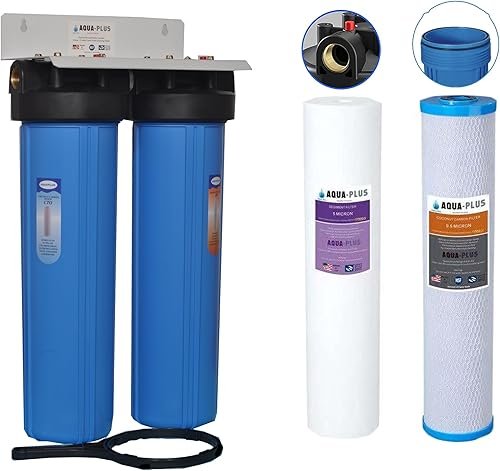
These are the heavy-duty housings you see, often in blue. They hold large 20″x4.5″ cartridges. The “stage” refers to how many filters are in sequence. A common setup is a sediment filter first, followed by a carbon block for chlorine. The Aqua-Plus system is a prime example of this dual-stage approach.
Sediment Filter Buying Guide
Forget brand hype. Focus on these three specs.
1. Micron Rating: Test your water or get a report. Start with a higher micron (like 20) if you have very heavy sediment to avoid frustration. You can always add a finer filter later. For most municipal water, 5 microns is the sweet spot.
2. Flow Rate (GPM): Match the filter housing and cartridge to your home’s needs. A 1″ port is standard for whole-house systems. Look for the GPM (gallons per minute) rating. A 3-4 bedroom home typically needs at least 10-15 GPM.
3. Filter Size & Housing Quality: Standard sizes are 10″ or 20″ lengths, and “Slim Line” or “Big Blue” (4.5″ diameter). Big Blue holds more filter media, lasts longer, and has less pressure drop. Always get a housing with a pressure relief button—it makes changes much less messy.
Our Top Sediment Filter Picks for 2026
| Product | Type | Best For | Price | Links |
|---|---|---|---|---|
 Aqua-Plus 2 Stage Jumbo |
Whole House, Dual-Stage | Homes needing sediment + carbon filtration in one unit. | $1.92 | AmazoneBay |
 Culligan WH-S200-C |
Whole House, Single-Stage | Budget-conscious homeowners with standard sediment issues. | $1.75 | AmazoneBay |
 Waterdrop WD-X8 RO System |
Under-Sink, 9-Stage RO | Those wanting ultimate purity, with sediment filtration built into the multi-stage process. | $7.19 | AmazoneBay |
 Sawyer Squeeze System |
Portable, Hollow Fiber | Outdoor adventures, travel, or emergency kits. Removes sediment and microbes. | $81 | AmazoneBay |
 Budget RO Membrane (AliExpress) |
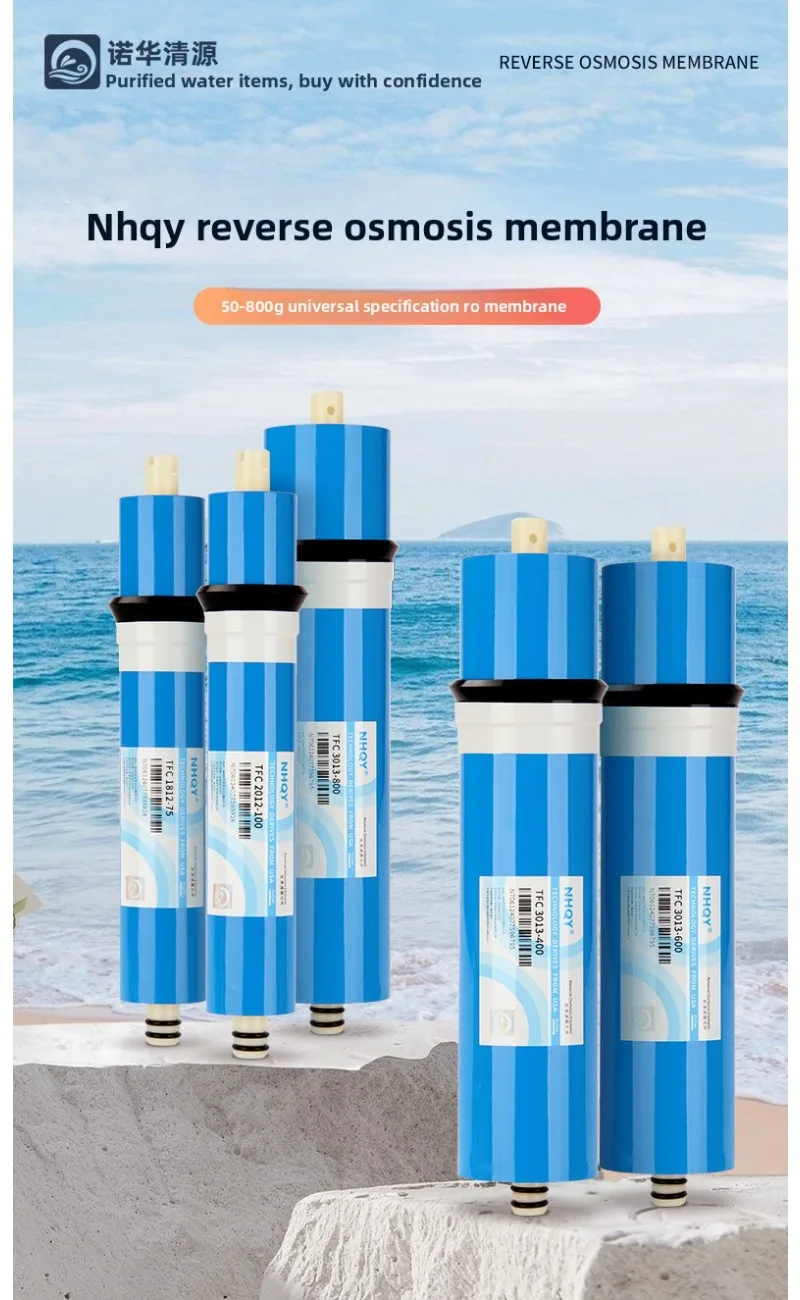
Replacement Membrane | DIYers looking for a cheap replacement part for an existing RO system. | $27.28 | AliExpress |
Aqua-Plus 2 Stage Jumbo Big Blue Review
This is a solid, no-frills workhorse. The dual-stage setup (sediment then carbon) is a classic for a reason—it tackles particles and chlorine taste in one go. The food-grade housing and included pressure relief valve are exactly what you want. At this price point, it’s a fantastic entry point for whole-house filtration. Just know you’re buying the housings; the cartridges are standard and replaceable.
- Excellent value for a dual-stage system
- Uses standard, affordable 20″x4.5″ cartridges
- Pressure relief valve included
- Initial cartridges are basic (5-micron sediment)
- Installation is DIY-friendly but requires some plumbing know-how
Culligan WH-S200-C Review
The Culligan is the definition of a reliable, basic sediment filter. It’s been around forever for a reason. The clear housing lets you see when the cartridge is getting dirty, which is a nice touch. The valve-in-head bypass is clever, making cartridge changes quick without shutting off water to the whole house. It’s not fancy, but it gets the job done for most standard homes.
- Clear housing for visual monitoring
- Valve-in-head bypass simplifies maintenance
- Trusted brand with good customer support
- Only a single-stage sediment filter
- 3/4″ ports may limit flow in larger homes
Waterdrop WD-X8 RO System Review
This isn’t just a sediment filter—it’s a full purification powerhouse. The sediment filtration is the first of nine stages, including a 0.0001-micron RO membrane. The 800 GPD capacity is massive, meaning almost no waiting for a glass of water. The 2:1 pure-to-waste ratio is industry-leading for efficiency. If you want the ultimate under-sink solution that handles everything from sand to PFAS, this is it. Remember, it needs a dedicated faucet and space under the sink.
- Exceptional 9-stage filtration, NSF certified
- Very high flow rate (800 GPD)
- Excellent water efficiency (2:1 ratio)
- Much higher upfront cost than a simple sediment filter
- Requires under-sink installation and a drain connection
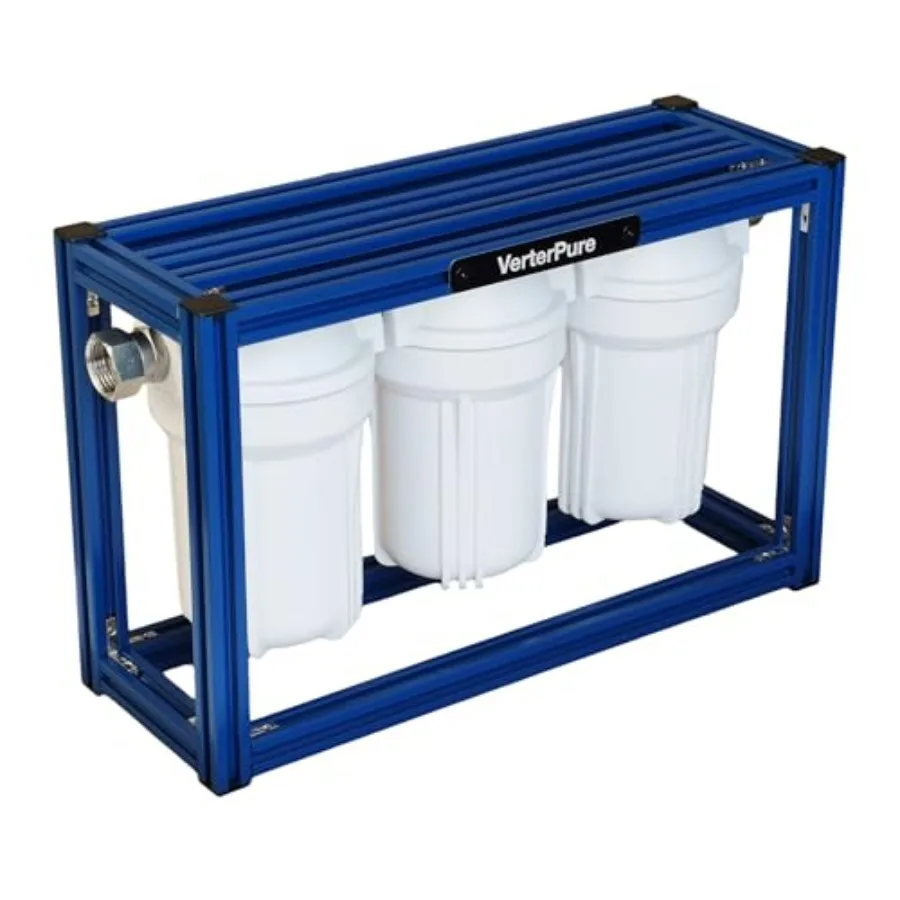
Budget Pick: S3 Mini RV Filter System
For RV or boat owners, this compact 3-stage system is interesting. It’s built with stainless steel fittings for durability on the move. The three 5-inch filters allow for a staged approach—maybe sediment, then carbon, then a finer polish. It’s a niche product, but if you need a point of use filter for mobile living, it’s a solid contender. The price is steep, but portability and build quality cost money.
- Extremely compact and portable
- Stainless steel fittings resist corrosion
- 3-stage customization
- Very high price for the category
- Uses non-standard 5″ filter cartridges
Sediment Filter System FAQ
- How often should I change my sediment filter?
- There’s no fixed schedule. Check it monthly at first. When you see a noticeable color change (brown/orange) or your water pressure drops, it’s time. For most homes, every 3-6 months is typical. With very clean city water, you might stretch it to a year.
- Can a sediment filter remove bacteria or viruses?
- Absolutely not. Sediment filters are mechanical barriers for particles. Bacteria and viruses are far too small. For microbiological safety, you need disinfection (UV light) or a sub-micron filter like an RO membrane or hollow fiber membrane (0.1-0.02 microns). The Sawyer Squeeze uses this tech for portable use.
- What’s the difference between a sediment filter and a carbon filter?
- They do completely different jobs. A sediment filter catches physical particles. A carbon filter uses adsorption to remove dissolved chemicals like chlorine, volatile organic compounds (VOCs), and improves taste and odor. Most whole-house systems use them in sequence: sediment first, then carbon.
- Why is my water pressure low after installing a sediment filter?
- Two likely causes. First, the filter might be clogged—check and replace it. Second, you might have chosen a filter with too fine a micron rating for your water conditions, creating excessive resistance. Try stepping up to a higher micron rating (e.g., from 5 to 10 or 20).
- Do I need a sediment filter if I’m on city water?
- Often, yes. City water treatment plants do a great job, but sediment can enter from aging pipes in the street or your own home. You might have fine rust or sand that causes problems. It’s a low-cost insurance policy for your plumbing and appliances.
- Can I install a whole-house sediment filter myself?
- If you’re comfortable with basic plumbing—cutting into a pipe, using thread tape or compression fittings, and mounting a bracket—it’s a very doable weekend project. The key is having enough straight pipe to work with and ensuring the housing is mounted securely. When in doubt, hire a plumber for a one-hour job.
Final Thoughts
After years of testing and talking to homeowners, our stance is clear: a sediment filter system is one of the most cost-effective upgrades you can make to your home’s water infrastructure. It’s not glamorous, but it’s foundational. For most homes, a simple, well-sized whole-house housing like the Culligan or the Aqua-Plus will do the job perfectly. Pair it with a quality how to clean brita pitcher routine for your drinking water, and you’re covered.
Don’t overcomplicate it. Get your water tested, choose the right micron rating, size the housing for your flow rate, and commit to changing the cartridge on schedule. Do that, and you’ll protect your home, save money on repairs, and enjoy cleaner water from every tap.
