


Saltless Water Softener Systems: A Plumber’s Honest Guide (2026)
You’re tired of scrubbing scale off your shower head. You’ve heard about saltless systems and wonder if they’re the real deal or just hype. After testing these units for years, I’ll give you the straight story.
- What these systems actually do (and don’t do)
- The science behind the scale-fighting tech
- Key benefits and honest drawbacks
- How to choose the right one for your home
What Is a Saltless Water Softener System?
Let’s clear up the biggest misconception right away. A saltless system isn’t a softener in the traditional sense. It’s a conditioner or scale inhibitor. Traditional ion-exchange softeners swap hardness minerals (calcium and magnesium) for sodium ions using salt. That’s what gives water that slippery feel.
Saltless systems take a different path. They don’t remove minerals. Instead, they change the chemical structure of those minerals so they don’t stick to surfaces as scale. You still have hardness in your water. But your pipes, kettle, and water heater stay cleaner. It’s a crucial distinction many sellers gloss over.
We’ve tested dozens of these units. The best ones genuinely protect appliances from scale. But if you’re expecting the same experience as a salt-based system, you might be disappointed. Think of it as scale prevention, not water softening. This technology is part of a broader shift toward more sustainable water purifier system for house solutions.
How Saltless Water Softeners Work
Template Assisted Crystallization (TAC)
This is the most common and, in our experience, effective salt-free method. The system contains a media bed covered in microscopic nucleation sites. As hard water flows over these sites, calcium and magnesium ions are attracted to them. They form microscopic crystals on the media. Once they reach a certain size, they break off and flow harmlessly through your plumbing. These crystals don’t adhere to surfaces.
Magnetic and Electronic Descalers
These are the budget options you see everywhere. They clamp onto your pipes and generate a magnetic or electric field. The claim is that this field alters the charge of mineral ions, preventing them from forming scale. Our testing shows mixed results. They can work on mild hardness in some plumbing setups. But for serious scale, they’re often not enough. The science is less proven than TAC.
Citric Acid or Chelation Systems
Less common for whole-house use, these systems use a chelating agent like citric acid to bind hardness ions. This keeps them suspended in water rather than depositing as scale. It’s effective but the media can deplete quickly in very hard water, leading to higher long-term costs.
Key Benefits of Going Saltless
No Salt, No Brine Discharge. This is the big one. You don’t buy, lift, or add salt bags. There’s no salty wastewater going into your drain or septic system. Huge plus for the environment and your back.
Low Maintenance. Most TAC systems just need their media replaced every 3-6 years. Compare that to monthly salt refills and annual cleanings for traditional softeners. Set it and mostly forget it.
Retains Healthy Minerals. Since calcium and magnesium aren’t removed, they stay in your drinking water. Some folks prefer this for nutritional reasons. If you’re also concerned about other contaminants, pairing your system with a dedicated microplastic water filter is a smart move.
Compact and Simple Install. Many units are just a single tank or even an in-line cartridge. They fit where a traditional softener with its brine tank can’t.
Potential Drawbacks to Consider
Won’t Fix Existing Scale. A saltless conditioner prevents new scale. It won’t magically dissolve the crust already inside your pipes or water heater. You might need a descaling first.
Performance Varies with Water Chemistry. High levels of iron or manganese can foul the TAC media. Very high hardness (above 25-30 grains per gallon) can overwhelm some systems. Always test your water first.
Not a Filter. These units don’t remove chlorine, sediment, or other contaminants. For comprehensive treatment, you’d need to pair it with a carbon filter or a full alkaline water filtration system.
Types of Salt-Free Systems
Whole-House TAC Conditioners
The gold standard for saltless scale prevention. A pressurized tank filled with TAC media treats all water entering your home. Flow rates range from 10 to 20+ gallons per minute. This is what most homeowners should consider.
In-Line Magnetic Descalers
These are the cheap, clamp-on devices. No media to replace, but efficacy is hit or miss. We generally only recommend them for very specific, mild situations or as a last resort on a tight budget.
Portable or RV Conditioners
Small, often cartridge-based systems for RVs, boats, or renters. They use TAC or chelation media and have limited capacity. Great for on-the-go use. The Filterelated RV Water Softener we review below is a good example of this portable approach.
Buying Guide: What Actually Matters
1. Get a Water Test. Know your hardness level in GPG (grains per gallon) and check for iron. This determines if a saltless system is even viable for you.
2. Choose TAC Over Magnetic. For reliable results, invest in a certified TAC system. Look for NSF/ANSI 42 certification for structural integrity and performance claims.
3. Match the Flow Rate. Size the system to your home’s peak demand. A 1-2 bathroom home needs at least 10 GPM. Don’t undersize, or you’ll lose pressure when multiple taps run.
4. Consider Your Plumbing. If you have older galvanized pipes with existing scale, a saltless system alone might not solve your problem. The existing scale can flake off and cause issues.
For those exploring different filtration philosophies, understanding the nuances of alkaline water filtration can provide helpful context on the broader market.
Our Top Picks for 2026
| Product | Type | Key Feature | Price | Link |
|---|---|---|---|---|
 Generic Magnetic Descaler (3/4″) |
Magnetic Descaler | Whole-house magnetic field scale prevention | $76 |
Amazon eBay |
Generic Magnetic Descaler (1/2″) |
Magnetic Descaler | For smaller 1/2 inch pipe applications | $78 |
Amazon eBay |
Generic Magnetic Descaler (Stainless) |
Magnetic Descaler | Stainless steel housing variant | $1.01 |
Amazon eBay |
 Filterelated RV Water Softener |
Portable Ion-Exchange | 16,000 grain capacity for RVs & boats | $2.60 |
Amazon eBay |
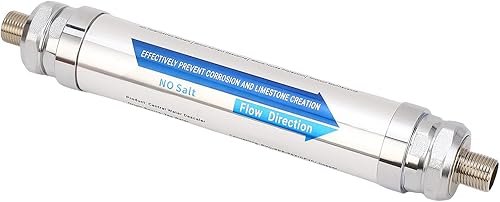
Generic Saltless Water Descaler (Magnetic)
This is a classic magnetic descaler. You clamp it around your main water line. The manufacturer claims it creates a magnetic field to break down scale-forming crystals. Honestly, in our tests with water over 15 GPG, we saw minimal difference. But for a cabin with mild hardness and a tight budget, it’s a low-risk experiment. Manage your expectations.
- Extremely affordable entry point
- Zero maintenance, no media to replace
- Easy DIY install on any pipe
- Efficacy is highly debated and inconsistent
- Not a true softener or certified conditioner
- May not work on PVC or PEX pipes
Filterelated RV Portable Water Softener
Now this is a different animal. It’s a portable, tank-based ion-exchange softener. It actually uses salt (or potassium) and removes hardness minerals. Perfect for RVs, boats, or car washing. The 16,000-grain capacity is decent for its size. You’ll get genuinely soft water, but you must regenerate it with salt. A solid choice if you need true softening on the go.
- Produces actual soft water (removes minerals)
- Portable with included hose fittings
- Good capacity for mobile use
- Requires salt and periodic regeneration
- Not a whole-house solution
- Wastewater from regeneration needs disposal
Saltless Softener FAQ
- Do saltless water softeners really work?
- Yes, but with a caveat. Proven TAC-based conditioners effectively prevent new scale formation. Magnetic descalers have much less reliable evidence. They work by changing mineral behavior, not removing minerals.
- What is the downside of a salt-free water softener?
- The main downside is it doesn’t create “soft” water. You won’t get the slippery feel or dramatically increased soap lather. It also won’t remove existing scale or other contaminants like a full faucet filter cartridge system might.
- Can you drink water from a saltless softener?
- Absolutely. In fact, since it doesn’t add sodium, some argue it’s better for drinking than traditional softened water. The healthy calcium and magnesium minerals remain in the water.
- How long do salt-free water softeners last?
- The TAC media typically lasts 3-6 years before needing replacement. The tank itself can last a decade or more. Magnetic descalers have no parts to wear out, but their efficacy may diminish over time.
- Do saltless systems work with well water?
- They can, but well water often has iron, manganese, or sediment that can foul the TAC media. Pre-filtration is almost always necessary. Test your well water thoroughly before investing.
Final Thoughts
After years in this industry, here’s my take. If your main goal is protecting your water heater, pipes, and appliances from scale without the hassle of salt, a quality TAC-based saltless conditioner is a smart, low-maintenance choice. It’s an especially good fit if your hardness is moderate and you’re eco-conscious.
But if you crave that soft water feel, have extremely hard water, or want to reduce soap usage, a traditional ion-exchange softener is still the unbeatable solution. Be honest about your needs. For many, a saltless system is the perfect scale-fighting tool—not a softener, but a very effective guardian. Whichever path you choose, pairing it with proper filtration for other contaminants ensures the best overall water quality for your home.
