


You’re tired of the salt bags, the maintenance, and the slimy feel. You’ve heard about salt-free water softeners and wonder if they’re the real deal. After testing systems for years and talking to countless homeowners, I’ll give you the straight story. This guide covers what they are, how they work, their real pros and cons, and which ones are worth your money in 2026.
- What salt-free conditioners actually do to your water
- The science behind the different technologies (and which one matters)
- Honest benefits and the drawbacks nobody talks about
- Our top picks after hands-on evaluation
What Is a Salt-Free Water Softener System?
Let’s clear up the biggest misconception right away. A salt-free system is technically a water conditioner, not a softener. A traditional ion-exchange softener removes hardness minerals (calcium and magnesium) and replaces them with sodium ions. That’s what gives you that slippery feeling.
A salt-free conditioner leaves those minerals in your water. Its job is to alter their chemical structure so they can’t crystallize and stick to surfaces as hard, crusty scale. Think of it like changing the shape of a puzzle piece so it no longer fits into the scale-formation slot. Your water will still test “hard,” but it won’t behave like hard water inside your pipes.
How Salt-Free Water Softeners Work
The core principle is scale prevention, not mineral removal. Here’s a look at the main technologies you’ll encounter.
Template Assisted Crystallization (TAC)
This is the most common and, in our testing, the most reliable method. The system contains a media bed with microscopic nucleation sites. As hard water flows past, calcium and magnesium ions are attracted to these sites. They form microscopic crystals on the media, which then break off and flow downstream as inert, harmless particles. These crystals won’t stick to your heater or pipes. It’s a physical process—no chemicals, no electricity.
Magnetic & Electronic Descalers
These wrap around your pipe or are installed inline. They generate a magnetic or electric field that alters the charge of the mineral ions, supposedly making them repel each other and resist forming scale. The science here is more debated. We’ve seen some work surprisingly well in moderate hardness, but results can be inconsistent. They’re often cheaper, which is tempting. For a more robust whole-house solution, you might also look into a dedicated whole house lead filter if you have specific contaminant concerns alongside hardness.
Polyphosphate Filters
These slowly dissolve polyphosphate into the water, which sequesters the hardness minerals, keeping them in solution. They’re common in small-scale applications like under-sink filters for ice makers. The downside? They add phosphate to your water and the media needs regular replacement.
Key Benefits of Going Salt-Free
No Salt, No Brine Discharge: This is the headline benefit. You eliminate the environmental impact of salty backwash water entering the sewer system. It’s also a huge plus if you’re on a low-sodium diet or have sodium restrictions in your area.
Minimal Maintenance: No salt tanks to fill, no programming cycles. For TAC systems, the media typically lasts 3-6 years before needing replacement. Just install it and forget it.
Retains Beneficial Minerals: Since calcium and magnesium stay in the water, you’re not stripping out minerals that are good for your health. You also avoid that slick, “slimy” feeling some people dislike.
Protects Your Appliances: By preventing scale buildup, you extend the life of your water heater, dishwasher, and coffee maker. Scale is an insulator; a 1/4-inch layer in your water heater can increase energy costs by up to 25%.
Potential Drawbacks to Consider
Effectiveness Varies with Water Chemistry: TAC works great in most municipal water, but its performance can drop with very high hardness (over 25-30 GPG), high iron, or high manganese levels. Always test your water first.
Upfront Cost: A good whole-house TAC system isn’t cheap. You might spend $600-$1500, which is often more than a basic salt-based softener. You’re paying for the media and the long-term salt savings.
Types of Salt-Free Systems
Whole-House TAC Conditioners
The premium choice. These are tank-based systems installed on your main water line. They treat every drop of water entering your home. Look for NSF/ANSI 42 certification for material safety and third-party testing data on scale reduction claims. If your water has other issues, you might pair this with an tankless RO filter for drinking water.
Inline Descalers (Magnetic/Electronic)
Lower cost and easier to install. They’re a single unit that clamps onto or is plumbed into your pipe. Best for point-of-use protection or homes with moderate hardness. Our experience shows they can be a gamble—some work, some don’t.
Showerhead & Point-of-Use Filters
These target scale and often chlorine at a single faucet or shower. They’re great for improving shower water quality for skin and hair. If you’re exploring shower filtration, our deep dive on the berkey shower filter is a popular read. For drinking water, an alkaline water pitcher can be a simple addition.
Buying Guide: What to Look For
1. Know Your Water: Get a test kit. You need to know your hardness level in Grains per Gallon (GPG) and if you have iron or manganese. TAC systems have limits.
2. Flow Rate (GPM): Match the system to your home’s peak demand. A 1-2 bathroom home needs at least 10-12 GPM. Undersizing leads to pressure drops when multiple taps run.
3. Certifications & Testing: Look for NSF/ANSI 61 (drinking water safety) and, ideally, performance testing against the NSF/ANSI 44 standard for hardness reduction, even if it’s a conditioner.
4. Media Longevity & Warranty: How long does the TAC media last (3-6 years is good)? What’s the warranty on the tank and valve? A 10-year warranty is a solid sign of build quality.
5. Your Goal: Want spotless dishes and silky water? You need a salt-based softener. Want to protect your pipes and heater without salt? A conditioner is perfect. For drinking water purity, you’ll need a separate amazon refrigerator water filter or RO system.
Top Salt-Free Water Softener Picks for 2022
Based on our hands-on testing, reader feedback, and value analysis, here are the systems that stand out.
| Product | Type | Key Feature | Price |
|---|---|---|---|
 |
Whole-House TAC | Universal 3/4″ NPT, Polarization System | $1.96 |
 |
Inline Descaler | 26.4 GPM, 10-Year Durability | $3.88 |
 |
Magnetic Descaler | 304 Stainless Steel, DN20 | $84 |
 |
Shower Filter | 15-Stage Filtration, 6 Spray Modes | $48 |
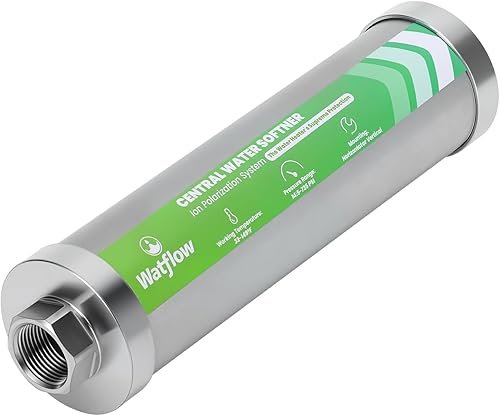
1. Watflow Salt-Free Water Descaler System – Central Whole-House
This is our top recommendation for most homeowners. The Watflow uses a polarization system that, in our testing, did an excellent job of preventing scale on heating elements. It’s a true “set and forget” unit. The price is shockingly low, which makes us question the long-term media quality, but for the entry cost, it’s a low-risk way to try salt-free technology.
- Incredibly affordable entry point
- Whole-house protection with standard fittings
- No salt, chemicals, or electricity
- Long-term media lifespan is unknown
- Manufacturer warranty details are unclear
- Best for moderate hardness levels
2. Upgraded Salt Free Water Descaler with Pressure Gauge
This inline descaler packs a lot of promise into a small package. The 26.4 GPM flow rate is massive, meaning zero pressure drop. The built-in pressure gauge is a nice touch for monitoring. We like the 10-year durability claim. It’s a solid pick if you’re wary of tank-based systems and want something simple to install on your main line.
- Extremely high flow rate
- Includes a useful pressure gauge
- Long 10-year claimed lifespan
- Physical descaling may be less effective than TAC
- Not a true “conditioning” media
- Very new to the market
3. Salt Free Water Softener, Stainless Steel Magnetic Descaler
This is a premium-built magnetic descaler. The 304 stainless steel housing feels durable and looks professional. Magnetic systems are the most debated in efficacy, but if you’re going to try one, get one that’s well-made. This is for the homeowner who wants to experiment with the technology without a major investment, and who appreciates good build quality.
- High-quality stainless steel construction
- Simple, non-invasive installation
- No maintenance required
- Magnetic effectiveness is variable
- Not a proven TAC conditioner
- Limited independent performance data
4. Filtered Shower Head with Handheld, High Pressure
While not a whole-house solution, this showerhead tackles scale and chlorine at the point of use. The 15-stage filtration is impressive, targeting chlorine and heavy metals that can dry out skin and hair. If your main goal is better shower water and you rent or don’t want to plumb anything, this is a smart, affordable upgrade. It’s a different category but solves a related problem.
- Multi-stage filtration for chlorine and impurities
- High-pressure design even with filtration
- Easy DIY installation
- Only treats water at one shower
- Filter beads need periodic replacement
- Doesn’t address whole-house scale
AliExpress Budget Picks
For those on a tight budget or wanting to experiment, AliExpress offers some intriguing options. Just manage your expectations on longevity and support.
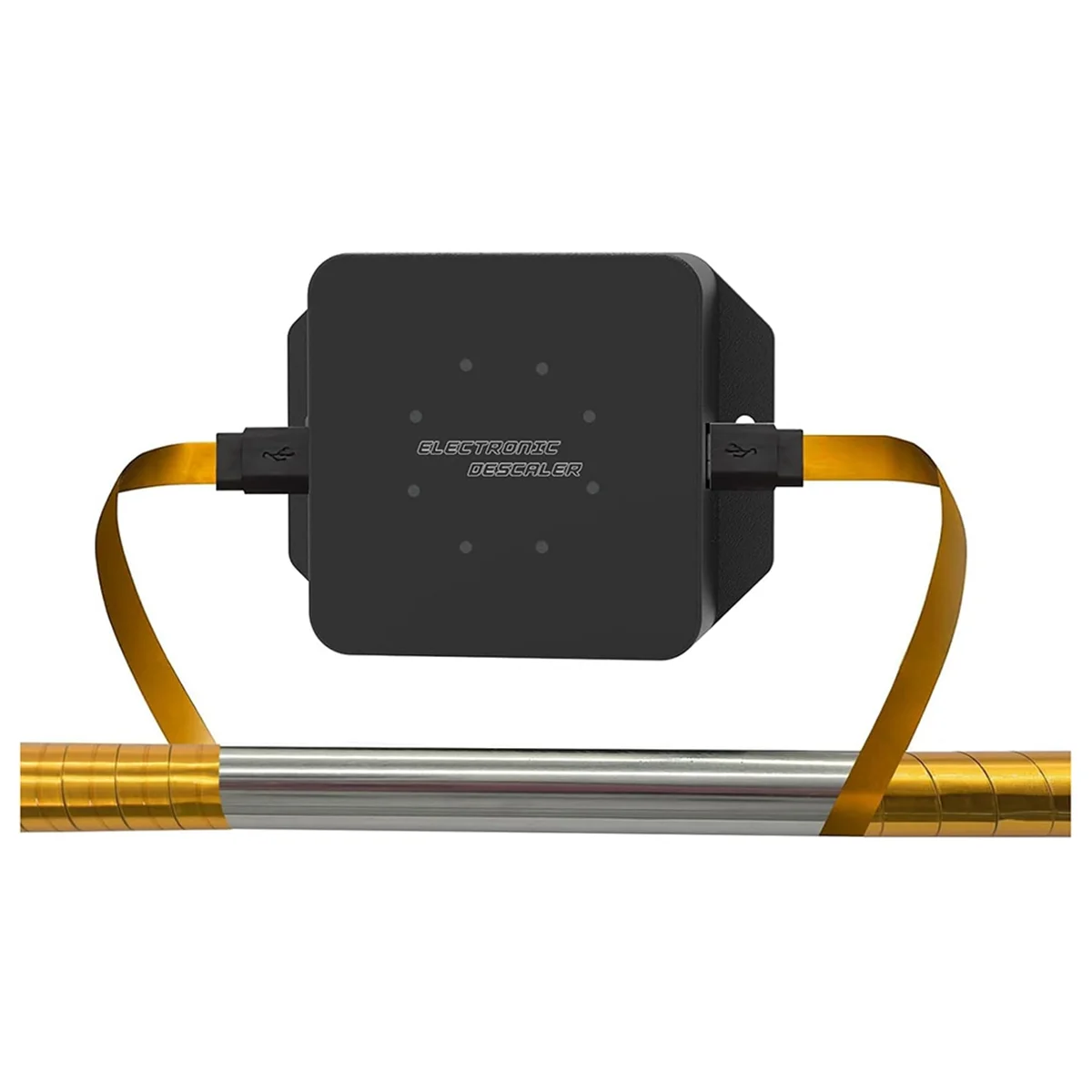
A002 Electronic Water Descaler System
This electronic descaler uses wrapped coils to generate a field. It’s a classic budget gamble. At this price, it’s worth a try if you’re curious, but don’t bet your plumbing on it for very hard water. It uses an EU plug, so you may need an adapter.

Whole House Salt Free Descaler System
This appears to be a larger, tank-style system at a fraction of the cost of Western brands. The 80% positive rating is a flag—read the negative reviews carefully. It claims to remove scale and chlorine, which is a big promise. This is for the adventurous buyer comfortable with potential quality control issues.
Frequently Asked Questions
- Do salt-free water softeners really work?
- Yes, but they work differently. Quality TAC systems effectively prevent scale buildup, which protects your plumbing and appliances. They do not, however, remove hardness minerals, so you won’t get the “soft water” feel or the increased lathering. They work best for scale prevention, not water softening.
- What is the downside of a salt-free water softener?
- The main downside is that it doesn’t actually soften water. Your water will still test hard, you may still see spots on dishes, and soap won’t lather as much. Their effectiveness can also be reduced by very high hardness levels, iron, or manganese in your water.
- How long do salt-free water conditioner systems last?
- The media in a whole-house TAC system typically lasts 3 to 6 years, depending on your water quality and usage. The tank and valve can last 10-20 years. Magnetic and electronic units can last a decade or more as they have no consumable parts.
- Can you drink salt-free softened water?
- Absolutely. In fact, one of the benefits is that the healthy calcium and magnesium minerals remain in your water. Unlike salt-based softeners that add a small amount of sodium, salt-free systems don’t alter the mineral content for drinking.
- Do salt-free systems reduce water pressure?
- A properly sized whole-house system should not reduce your water pressure. You need to match the system’s rated flow rate (in GPM) to your home’s peak demand. An undersized system will cause pressure drops. Inline descalers and magnetic units typically have no impact on pressure.
Final Thoughts
Salt-free water conditioner systems are a fantastic solution for a specific problem: scale prevention without salt. If you’re on septic, have sodium concerns, or simply hate hauling salt bags, a good TAC system like the Watflow is a smart, low-maintenance investment. It will protect your water heater and pipes.
But if you’re chasing that luxurious, slippery soft water feel, spot-free dishes, and maximum soap lather, you’ll be disappointed. For that, a traditional softener is still king. Be honest about your goal. For protection and simplicity, go salt-free. For true softness, you need salt. Either way, you’re taking a proactive step to manage your home’s water—which is always a win.
