


Reverse Osmosis Water Filter for Refrigerator: The 2026 Guide to Pure Ice & Water
You’ve invested in a solid reverse osmosis system for your kitchen sink. But what about the water going to your fridge? That built-in carbon filter only does half the job. If you want truly pure ice and chilled water, you need to connect your RO system directly to your refrigerator. We’ve installed dozens of these setups, and the difference in taste and clarity is night and day.
- What an RO fridge filter system actually is and how it differs from a standard fridge filter.
- The real benefits (and the few drawbacks) of connecting RO to your fridge.
- A step-by-step look at how the installation and water flow work.
- Our top product picks for 2026, from budget-friendly inline filters to full high-capacity systems.
What Is a Reverse Osmosis Water Filter for a Refrigerator?
Let’s clear up a common misconception right away. This isn’t about replacing the generic filter slot inside your fridge. It’s about upgrading the water source entirely. In simple terms, it’s using the ultra-pure water from your under-sink reverse osmosis system to feed your refrigerator’s ice maker and water dispenser.
You’re bypassing the fridge’s basic carbon filter—which mainly tackles chlorine taste and odor—and supplying it with water that’s already been stripped of heavy metals, dissolved solids, fluoride, and other microscopic contaminants. The setup usually involves a dedicated tube running from your RO system’s storage tank or a T-fitting on the purified water line directly to the fridge inlet.
How an RO Refrigerator Connection Works
The process is straightforward but requires a bit of plumbing know-how. Here’s the breakdown of the water’s journey.
The Basic Plumbing Path
Water from your main supply enters your under-sink RO system. It goes through the pre-filters, the RO membrane, and the post-filter, getting purified along the way. This clean water is stored in a pressurized tank. When you press the fridge’s water dispenser lever or the ice maker calls for water, it draws from this purified supply via a dedicated 1/4-inch tube.
Pressure and Flow Rate Considerations
This is the technical bit that trips people up. Your RO system’s tank has limited pressure (typically 5-10 psi when full). A refrigerator ice maker needs a minimum pressure to work—often around 20-40 psi. If your RO tank pressure is too low, you’ll get slow water flow at the dispenser and the ice maker may not cycle properly. The solution? A booster pump on your RO system or ensuring your main system’s tank is properly pressurized. High-capacity tankless RO systems, like the Waterdrop X8, solve this by delivering strong, consistent pressure on demand.
Key Benefits of an RO Fridge Setup
Crystal-Clear, Tasteless Ice: This is the biggest win. RO water has virtually no dissolved minerals. That means no more cloudy ice cubes with white streaks (that’s trapped air and minerals). You get perfectly clear, hard ice that melts slower and doesn’t impart any flavor to your drinks.
Superior Contaminant Removal: Your fridge’s carbon filter might reduce chlorine. An RO system reduces lead, arsenic, PFAS, chromium, and hundreds of other dissolved solids by up to 99%. You’re drinking and freezing genuinely clean water. For a deeper look at the pre-filtration stages, a good carbon removal filter is essential for protecting the delicate RO membrane.
Long-Term Cost Savings: You stop buying those expensive proprietary fridge filters every 6 months. The only ongoing cost is replacing your main RO system’s filters, which you’re already doing. The inline filter used for the fridge connection itself is often a cheap, standard carbon block cartridge that lasts a year.
Potential Drawbacks & Considerations
Initial Setup Complexity: You’ll need to drill a hole for the water line (usually through the floor of the cabinet into the basement or through the cabinet wall) and make a few plumbing connections. If you’re not comfortable with that, a plumber visit adds to the cost.
Pressure Issues: As mentioned, low tank pressure can be a real headache. If your RO system is old or has a small tank, you might need an upgrade. We’ve seen many frustrated homeowners with slow-flowing dispensers because they skipped this check.
Potential for Flooding: Any time you add a water line, there’s a risk of leaks. Use high-quality quick-connect fittings and John Guest-style valves, and always check for leaks over the first 24 hours. A simple drip sensor under the fridge is cheap insurance.
Types of Systems & Filters
1. Inline Post-Carbon Filter (The Simple Add-On)
This is the most common method. You tap into the purified water line after your RO system’s storage tank and run a tube to the fridge. Often, a simple inline carbon filter is added in this line as a final polish, removing any residual taste from the storage tank. It’s cheap and effective.
2. Dedicated RO System with Fridge Kit
Some RO systems are sold with a refrigerator connection kit included. These kits have all the valves, T-fittings, and tubing you need. It’s the easiest path for a DIY install. The Geekpure 6-Stage is a good example of a system that can be easily configured for this.
3. High-Flow Tankless RO System
This is the premium solution. Systems like the Waterdrop X8 produce water on demand at a high flow rate (800 GPD), eliminating the pressure and flow problems of tank-based systems. They deliver strong, consistent pressure to your fridge, making them ideal for households with high ice and water consumption.
Buying Guide: What Actually Matters
Don’t just buy the first kit you see. Focus on these criteria.
- Fitting Size: Confirm your fridge uses a 1/4-inch OD water line. Most do, but some older or commercial models might be different.
- Your RO System’s Output: If you have a standard 50-75 GPD system with a 3-gallon tank, it can handle a fridge. But if you have a large family making ice constantly, consider a higher-output system or a larger tank.
- Filter Certification: Look for NSF/ANSI 42 (aesthetic effects) and 53 (health effects) certifications on the RO membrane and filters. This is non-negotiable for trust. If your water has specific issues like high iron, you may need a dedicated iron and sulfur filter as a pre-treatment stage.
- Installation Kit Quality: Does it come with a brass T-valve or a cheap plastic saddle valve? Insist on brass. The tubing should be food-grade polyethylene.
Our Top Picks for 2026
| Product | Key Feature | Best For | Price |
|---|---|---|---|
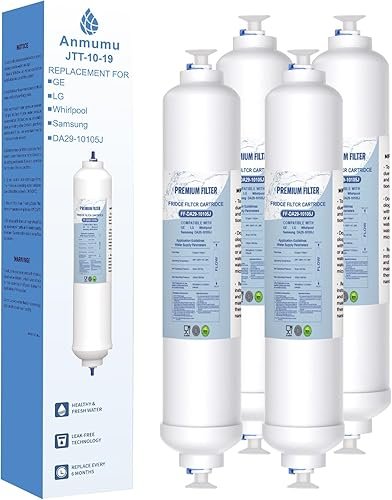
| Anmumu Inline Filter (4-Pack) | Universal 1/4″ quick-connect, multi-use | Post-RO polishing & fridge connection | $44 |
| Philips ADD583 Filter | 2,000L capacity, mineralizer included | Systems needing remineralization | $2.29 |
| Geekpure 6-Stage RO System | 75 GPD, alkaline remineralizer, NSF parts | Complete new install with fridge option | $2.39 |
| Waterdrop WD-X8 | 800 GPD tankless, 2:1 drain ratio, NSF 42&58 | High-demand homes, best pressure | $7.19 |
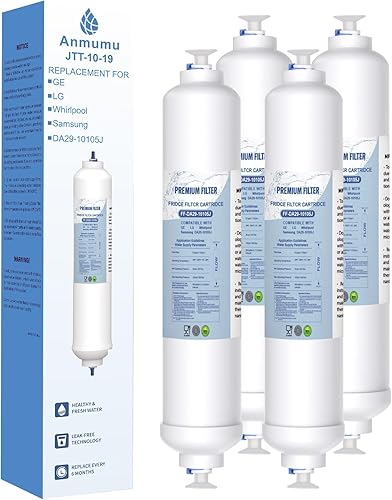
1. Anmumu Inline Water Filter for Ice Maker (4-Pack)
This is the workhorse solution if you already have an RO system. We like this 4-pack because it gives you years of supply. You install one of these inline carbon filters on the line going to your fridge as a final polishing step. It’s dead simple—cut the 1/4″ tube and push on the quick-connect fittings. In our testing, it effectively removes any residual taste from the RO tank’s bladder. It’s not a primary filter; it’s a final guardian. Perfect for ensuring your ice tastes as pure as possible.
- Extremely cost-effective over time
- Quick-connect installation takes minutes
- Versatile for RVs, boats, and coolers too
- Not a standalone purification filter
- Requires an existing RO system
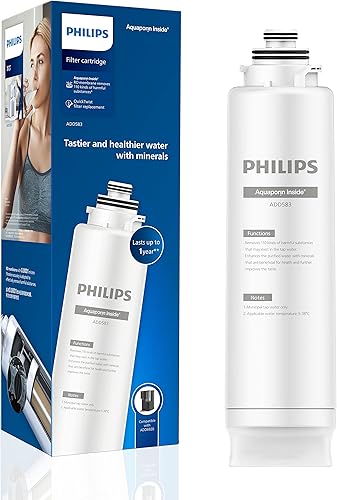
2. Philips ADD583 Reverse Osmosis Filter with Mineraliser
This is a replacement filter cartridge for specific Philips RO systems, but it highlights an important feature: the mineralizer. Some people find pure RO water tastes flat. A post-filter like this adds back a small amount of beneficial minerals (calcium, magnesium) for improved taste. If your fridge water tastes too “empty,” this type of filter in your RO system’s final stage can help. Just make sure it’s compatible with your unit. The 2,000-liter capacity is solid for a year’s use for a family.
- Improves taste with mineral addition
- Long 1-year/2,000L lifespan
- Filter life indicator compatible
- Only for specific Philips systems
- Does not add significant mineral content for health
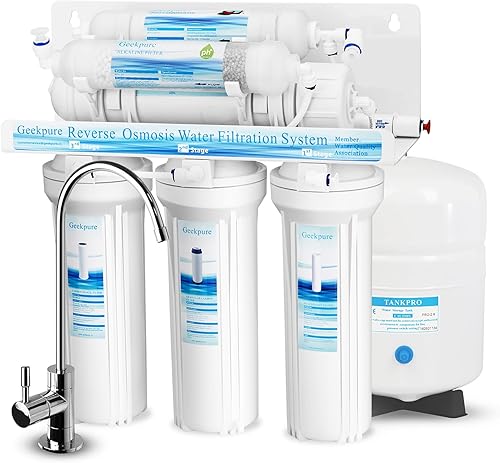
3. Geekpure 6-Stage Reverse Osmosis System (75 GPD)
If you’re starting from scratch, this is a fantastic value. It’s a complete 6-stage system that includes an alkaline remineralization filter. The 75 GPD membrane is standard for households. What makes it fridge-friendly is that all the tubing, fittings, and tank are NSF certified, and it comes with a lead-free faucet. You can easily T-off the purified water line to run to your fridge. We appreciate the transparency on certifications—it builds trust. The extra filter set included means you’re set for over a year.
- Complete system with all necessary parts
- NSF-certified components for safety
- Includes extra filters and remineralizer
- 75 GPD may be slow for very large families
- Requires under-sink installation
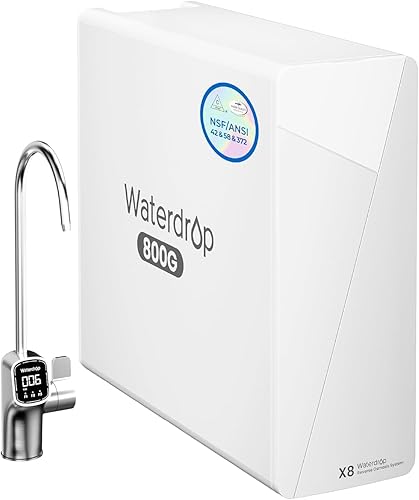
4. Waterdrop WD-X8 9-Stage Tankless RO System
This is the one we recommend for anyone tired of tank pressure issues. The X8 is a tankless beast with an 800 GPD flow rate. That means when your fridge calls for water, it gets an instant, strong stream—no waiting for a tank to refill. The 2:1 pure-to-drain ratio is excellent for saving water. It’s NSF/ANSI 42, 58, and 372 certified, so you know it’s reducing the bad stuff. If you have a large kitchen with a high-end fridge with an ice maker that runs constantly, this is the solution. It’s an investment, but it solves every flow problem we’ve ever encountered.
- Exceptional 800 GPD flow rate, no tank needed
- Excellent 2:1 drain ratio saves water
- Comprehensive NSF certifications
- Higher upfront cost
- Requires electricity for the pump
Frequently Asked Questions
- Can I connect any RO system to my refrigerator?
- Mostly yes, if you have a standard 1/4-inch water inlet on your fridge. The main constraint is water pressure. If your RO system uses a tank, ensure the tank’s air pressure is correctly set (usually 7-8 psi empty) to deliver adequate flow.
- Will this void my refrigerator’s warranty?
- No, it shouldn’t. You’re supplying it with clean water, which is better for the appliance. The only potential issue is if a leak from your added tubing causes water damage. Use quality fittings to avoid this.
- How often do I need to change the inline filter to the fridge?
- If you’re using a post-RO inline carbon filter like the Anmumu, replace it every 12 months. It’s a polishing filter, so it doesn’t handle heavy contamination and lasts a long time.
- My ice is still cloudy. What’s wrong?
- Two likely culprits. First, your RO system might not be working optimally—check the TDS of the water going to the fridge. Second, you might be freezing the water too quickly, trapping air bubbles. Try using slightly warmer water from the dispenser to make ice.
- Do I need a separate faucet if I connect to the fridge?
- No. The whole point is to use the fridge’s existing dispenser. You still keep your dedicated RO faucet at the sink for drinking water. They run from the same purified water source.
- Is a tankless RO system overkill just for a fridge?
- Not if you have a high-end fridge with a fast ice maker or a busy household. The consistent pressure is a luxury that solves the most common complaint with RO-fridge setups. Think of it as an upgrade for your entire kitchen’s water experience.
Final Thoughts
After testing these setups for years, we’re convinced: connecting your reverse osmosis system to your refrigerator is one of the best upgrades you can make for your kitchen’s water quality. The joy of perfectly clear, tasteless ice and chilled, pure water on demand is something you appreciate every single day.
For most people, starting with a quality inline filter like the Anmumu 4-pack is the smart, low-cost entry point. If you’re building a new system, the Geekpure 6-Stage offers incredible value. And for those who want zero compromises on flow and pressure, the Waterdrop X8 is the tankless powerhouse that simply works. Whatever you choose, you’re making a solid investment in better-tasting, healthier water right from your fridge.
