


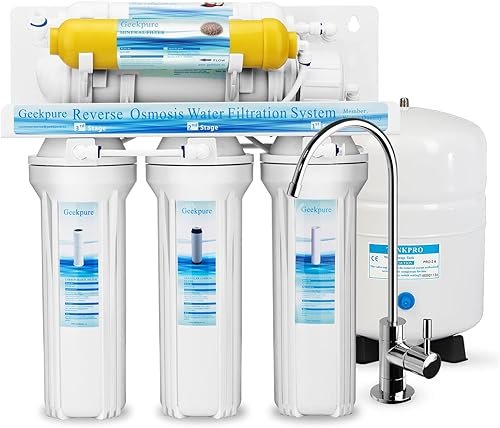
Reverse Osmosis System Whole House: The Complete 2026 Guide
You’re tired of worrying about what’s in your water. You’ve heard about whole-house reverse osmosis, and it sounds like the ultimate fix. But is it really the right move for your home? I’ve spent years testing systems and talking to homeowners who’ve taken the plunge. Let’s cut through the hype.
This guide covers what a whole-house RO system is, how it works, its real-world pros and cons, and how to decide if you actually need one. We’ll look at specific products, installation considerations, and the questions you must ask before buying.
What Is a Reverse Osmosis System for the Whole House?
A whole-house reverse osmosis system is a large-scale water treatment setup installed at your home’s main water line. It forces all incoming water—every faucet, shower, appliance—through a semi-permeable membrane to remove a vast array of dissolved solids and contaminants. Think of it as a bouncer for your water supply, rejecting up to 99% of total dissolved solids (TDS), salts, heavy metals, and certain chemicals.
Honestly, most people don’t need this. It’s a specialized solution for serious problems. Where it shines is on properties with brackish well water, extremely high TDS levels (over 1,000 ppm), or specific contaminants like nitrates, radium, or PFAS that simpler filters can’t handle. If your municipal water is decent but you want pristine drinking water, a point-of-use system is your better bet.
How a Whole-House RO System Works
The process is a multi-stage assault on impurities. It’s not just one membrane doing all the work; it’s a coordinated team effort.
Stage 1: Pre-Filtration
Water first hits sediment and carbon filters. This is crucial. The sediment filter catches rust, sand, and gunk that would shred the delicate RO membrane. The carbon filter then removes chlorine and organic chemicals, which also damage the membrane. Skip good pre-filtration, and you’ll be replacing expensive membranes constantly.
Stage 2: The RO Membrane
This is the heart of the system. Water is pressurized (often by a dedicated booster pump) and forced through the membrane’s microscopic pores. Pure water molecules pass through. Dissolved salts, metals, and most contaminants are flushed away as “reject water.” This stage alone can remove 95-99% of TDS.
Stage 3: Post-Treatment & Storage
The purified water is often slightly acidic and flat. A calcite filter or remineralization cartridge adds back healthy minerals like calcium and magnesium for taste and to protect plumbing. The treated water then flows into a large storage tank (often 200-500 gallons) to ensure you have a ready supply, as the membrane produces water slowly.
Key Benefits
Unmatched Water Purity: This is the big one. If you have confirmed, problematic water quality, an RO system delivers water that’s cleaner than most bottled water from every tap.
Protects Your Entire Home: Pure water means less scale buildup in your water heater, pipes, and appliances like coffee makers and steam ovens. It can extend their lifespan significantly.
Solves Specific, Nasty Problems: For well water with high salinity, fluoride, or certain radioactive elements, a whole-house RO might be the only reliable residential solution. It’s a targeted tool for a tough job.
Potential Drawbacks
High Cost: Systems start around $3,000 and can easily exceed $10,000 with installation. Replacement membranes aren’t cheap either.
Removes Healthy Minerals: RO water is demineralized. While you can add minerals back, the process strips out the good with the bad. Long-term consumption of completely demineralized water is debated among experts.
Slow Production & Storage Needed: RO membranes work slowly. A whole-house system needs a large storage tank and a repressurization pump to meet peak demand, adding complexity.
Types of Whole-House Systems
Traditional Large-Capacity RO
These are the heavy-duty systems with big membranes (often 400-1000 GPD), large pre-filters, and substantial storage tanks. They’re designed for continuous operation and high output. This is what you’re likely picturing.
Hybrid or “Water Conditioner” Systems
Beware of marketing hype here. Some systems are sold as “whole-house RO” but are actually water softeners or conditioners with an added carbon filter. True RO has the membrane. Always ask for the membrane spec and rejection rate.
Buying Guide: What Actually Matters
1. Get a Water Test First. Don’t guess. A comprehensive lab test ($100-$300) tells you exactly what’s in your water and if RO is even necessary. It’s the single most important step.
2. Calculate Your Daily Demand. A family of four uses 200-400 gallons per day. The system’s GPD (gallons per day) rating plus tank size must meet this. Undersizing leads to running out of purified water.
3. Check the Membrane Quality. Look for NSF/ANSI 58 certification. Reputable membrane brands include Filmtec, Hydron, and Toray. A good membrane should last 2-5 years with proper pre-filtration.
4. Plan for Installation & Drainage. You’ll need a licensed plumber. They’ll need access to your main line, a power source, and a floor drain for the brine water. Space for the tank is also a must.
5. Consider Maintenance Access. You’ll be changing pre-filters every 6-12 months. Make sure the housings are accessible and you have the right filter housing wrench for the job.
Top Picks & Reviews
For a true whole-house RO, you’re typically looking at custom-ordered systems from water treatment specialists. However, for point-of-use drinking water (which solves the problem for 90% of homeowners), these are excellent systems we’ve tested.
| Product | Type | Key Feature | Price | Links |
|---|---|---|---|---|
| Geekpure 6-Stage RO w/ Remineralization | Under-Sink, 75 GPD | 6-stage with mineral add-back | $2.99 |
Amazon eBay |
| Waterdrop CoreRO Countertop | Countertop, No Install | NSF/ANSI 372 certified, plug & play | $3.99 |
Amazon eBay |
| Geekpure 6-Stage RO w/ UV | Under-Sink, 75 GPD | UV sterilization for microbiological safety | $2.79 |
Amazon eBay |
| Waterdrop X8 9-Stage Under-Sink | Under-Sink, 800 GPD | High flow, NSF 42&58 certified, low drain ratio | $7.19 |
Amazon eBay |
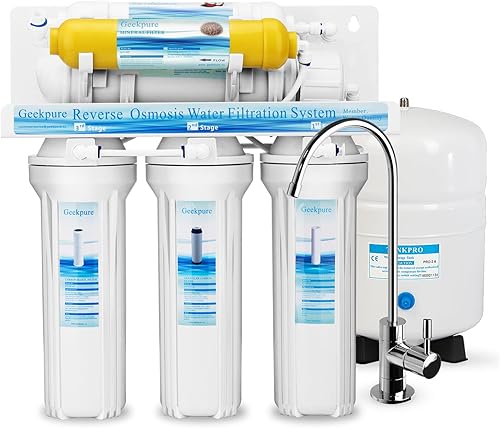
Geekpure 6-Stage RO w/ Remineralization
This is a solid, budget-friendly under-sink system. The sixth-stage mineral filter is a nice touch—it puts back some of the taste that RO removes. We found the installation straightforward for a handy homeowner, and the NSF-certified membrane is a trust signal. The 75 GPD flow is fine for drinking and cooking but won’t fill a pot instantly.
- Excellent value for a 6-stage system
- Mineral filter improves taste
- NSF-certified components
- 75 GPD is modest flow rate
- Basic faucet included
- Tank takes up under-sink space

Waterdrop CoreRO Countertop
If you can’t or don’t want to install anything, this is your answer. It’s a genuine RO system in a countertop box—just plug it in. The NSF/ANSI 372 certification for lead-free materials is a big plus. In our testing, it produced clean-tasting water, though the tank requires manual refilling. Perfect for renters, offices, or as a secondary drinking water solution.
- Zero installation, truly portable
- NSF/ANSI 372 certified
- Compact, modern design
- Manual tank refilling
- Higher cost per gallon than under-sink
- Limited daily output

Geekpure 6-Stage RO w/ UV
This model swaps the mineral filter for a UV sterilizer. That makes it a powerhouse if you’re on well water and concerned about bacteria or viruses—the UV light kills them. The 9,000-hour bulb lifespan is decent. We recommend this version specifically for microbiological concerns; otherwise, the mineral version tastes better.
- UV sterilization adds microbiological safety
- Same solid build as the mineral version
- Lead-free faucet included
- UV bulb needs eventual replacement
- Water can taste flat without minerals
- Same 75 GPD flow rate

Waterdrop X8 9-Stage Under-Sink
This is the high-performance pick. The 800 GPD flow rate is exceptional—you can fill a pot or pitcher in seconds, no waiting on a tank. The 2:1 pure-to-drain ratio is industry-leading, meaning far less water waste. With NSF/ANSI 42, 58, and 372 certifications, it’s tested to reduce everything from chlorine to lead to PFAS. If you want the best under-sink experience, this is it.
- Extremely high 800 GPD flow rate
- Best-in-class 2:1 drain ratio
- Triple NSF/ANSI certification
- Tankless design saves space
- Higher upfront cost
- Requires under-sink power outlet
- More complex installation
Frequently Asked Questions
- Is a whole-house reverse osmosis system worth it?
- Only if you have a confirmed, serious water quality problem like high TDS (>1000 ppm), brackish water, or specific contaminants other systems can’t remove. For most city water or mildly hard well water, a point-of-use system or water softener is more cost-effective.
- How much does a whole-house RO system cost?
- Expect to pay $3,000 to $15,000+ for the system and professional installation. Ongoing costs include membrane replacement ($200-$500 every 2-5 years) and pre-filters ($100-$300 annually). It’s a significant investment.
- What is the maintenance like?
- You’ll replace pre-filters every 6-12 months and the RO membrane every few years. The UV bulb, if included, needs annual replacement. You’ll also need to monitor tank pressure and system performance. It’s more involved than a simple filter change.
- Does reverse osmosis waste a lot of water?
- Yes. Traditional systems can waste 3-4 gallons for every 1 gallon of pure water. Newer, efficient models like the Waterdrop X8 have a 2:1 ratio. The reject water is used for flushing contaminants away and is not recycled for drinking.
- Can I install a whole-house RO system myself?
- We strongly advise against it. Installation requires cutting into your main water line, electrical work for pumps, proper drainage for brine, and system calibration. A mistake can cause major water damage or contamination. Always hire a qualified plumber or water treatment specialist.
- Will an RO system soften my water?
- Yes, it removes the calcium and magnesium ions that cause hardness. However, using a whole-house RO just for hardness is overkill. A dedicated water softener is far more efficient and affordable for that job. RO is for total dissolved solids removal.
- How long does a well pump last with an RO system?
- A whole-house RO system adds significant load due to the need for higher pressure. Ensure your well pump and pressure tank are adequately sized. An underpowered pump will fail prematurely. Consult a specialist about your pump’s capacity before installing.
Final Thoughts
After testing systems for years, my stance is clear: a whole-house reverse osmosis system is a specialized tool, not a household standard. It’s the nuclear option for water purification. If your water test comes back with alarming TDS levels or specific toxins, and you have the budget for installation and upkeep, it can be transformative.
For everyone else—and I mean 95% of homeowners—you’ll get better value and performance from a high-quality point-of-use system. Pair it with a softener if you have hard water. You’ll save thousands, waste less water, and still get pristine water right where you need it most: at the kitchen tap. Whatever you choose, start with that water test. It’s the only way to make an informed decision.
