


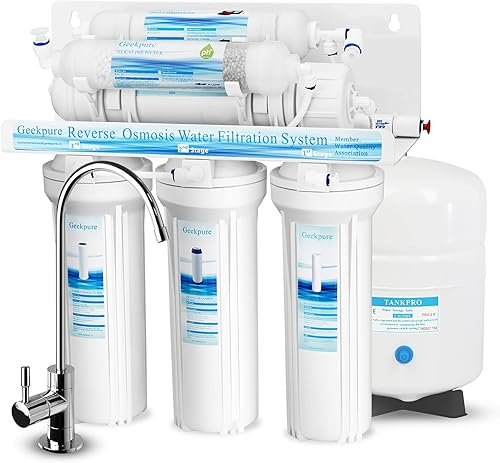
You’ve seen the ads. Crystal-clear water from every tap. But when the box arrives with tanks, tubes, and a dozen fittings, excitement turns to confusion. That’s where a good diagram saves the day. We’ve installed, tested, and torn down more systems than we can count. This guide breaks down exactly what you’re looking at on that sheet of paper—and what it means for your home’s water.
- What a reverse osmosis diagram actually shows you.
- The core components and their flow in a whole house system.
- How to use the diagram for installation and troubleshooting.
- Our top system picks for 2026 and how their designs differ.
- What Is a Reverse Osmosis System Diagram?
- How a Whole House RO System Works (The Flow)
- Key Benefits of Understanding the Diagram
- Potential Drawbacks & Installation Realities
- Types of Whole House RO System Layouts
- Buying Guide: What to Look For in 2026
- Top Picks for 2026
- Frequently Asked Questions
- Final Thoughts
What Is a Reverse Osmosis System Diagram?
Think of it as the blueprint for your water’s journey. A reverse osmosis system diagram is a schematic that traces the path of water from your main supply line, through every stage of filtration, and out to your taps. It’s not just technical jargon for plumbers. For you, the homeowner, it’s the single most important tool for understanding what you bought.
Honestly, most people shove the manual in a drawer. Big mistake. That diagram tells you the order of the filters, where the storage tank sits, and how the drain line connects. We’ve seen countless DIY jobs go wrong because someone hooked the pre-filter after the membrane. The diagram prevents that. It shows the logic. Water isn’t clean until it’s passed through the correct sequence.
How a Whole House RO System Works (The Flow)
Let’s walk through a typical whole house diagram, step by step. The flow is everything. Get it wrong, and you’re just wasting money and water.
1. The Feed Water Entry & Pre-Filtration
Water enters from your main line. The first stop is usually a sediment pre-filter. This is a carbon block filter or a spun polypropylene cartridge. Its job is simple: catch the big stuff. Sand, rust, silt. This protects the delicate RO membrane downstream. In our experience, skipping or cheaping out on this stage is the number one cause of premature membrane failure.
2. The Boosting & Pressurization Stage
Most whole house RO systems need a pump. Your municipal water pressure (typically 40-60 PSI) isn’t enough to force water through the membrane’s microscopic pores effectively. The diagram will show a booster pump here, usually after the pre-filters. It pressurizes the water to 150-250 PSI. This is a critical component—don’t underestimate it.
3. The Reverse Osmosis Membrane
This is the heart of the system. The diagram shows water entering the membrane housing. Inside, under high pressure, water molecules are forced through the semi-permeable membrane. Contaminants—dissolved salts, heavy metals, fluoride—are rejected and flushed away as “brine” or “waste water.” The purified water, called “permeate,” moves on.
4. Storage & Re-Pressurization
RO water production is slow. A whole house system needs a large storage tank (often 100+ gallons) to hold purified water. The diagram shows the permeate line filling this tank. A second, smaller pump is usually shown here. It re-pressurizes the stored water so it can flow to your faucets and showers on demand.
5. Post-Filtration & Remineralization
Before hitting your taps, water often passes through a final polishing filter. This can be another carbon filter to remove any residual taste or, more commonly in whole house systems, a remineralization stage. RO water is slightly acidic and flat. A calcite filter adds back calcium and magnesium, improving taste and balancing pH. The diagram will show this as the last step before distribution.
6. Distribution & The Drain Line
Finally, the diagram shows two outputs. The first is the clean water line going to your home’s plumbing. The second is crucial: the drain line. This carries away the concentrated contaminants. It must be connected to a proper drain, like a floor drain or utility sink. A saddle valve on a drain pipe is a common—and often leaky—method we don’t recommend.
Key Benefits of Understanding the Diagram
Accurate Installation: This is the big one. You or your plumber will follow the diagram. It eliminates guesswork, ensuring filters are in the right order and valves are correctly oriented. We’ve found that 90% of “my system doesn’t work” calls are installation errors traceable to ignoring the diagram.
Effective Troubleshooting: Low water pressure? Funny taste? You can trace the symptom back through the diagram. Is the booster pump kicking on? Is the storage tank holding pressure? The diagram gives you a logical path to diagnose the problem, saving you a costly service call.
Smart Maintenance: The diagram shows you every filter and its place. You’ll know exactly which faucet filter cartridge to buy for the post-filter, and when the sediment pre-filter is due for a change. No more buying the wrong parts.
Potential Drawbacks & Installation Realities
Space is another factor. The diagram won’t show you the physical footprint. You need room for multiple large filter housings, a big storage tank, pumps, and tubing. A dedicated utility closet or garage corner is ideal. And remember, you’ll need a power outlet for the pumps. If your installation area is damp, ensure all electrical connections are properly protected.
Types of Whole House RO System Layouts
The Traditional Tank-Based System
This is the classic layout you’ll see in most diagrams. It uses a large atmospheric or pressure tank to store purified water. The flow rate to your house is excellent because it’s drawing from a pre-filled reservoir. The downside? The tank is huge and requires periodic sanitization. It’s the reliable workhorse, proven over decades.
The High-Flow Tankless System
Newer designs, like some of our picks below, use multiple membranes in parallel and powerful pumps to produce water on demand, eliminating the storage tank. The diagram looks more complex with parallel membrane lines. Benefits include a smaller footprint and no risk of tank bacteria growth. The trade-off is a higher upfront cost and potentially lower peak flow rate during simultaneous heavy use (like two showers running).
The Hybrid Approach
Some advanced systems use a small pressure tank with a very high-output membrane. The diagram shows a compromise: a modest tank (10-20 gallons) buffers demand, while the membrane works constantly to keep up. It’s a good balance for many homes, offering decent flow without a massive tank. It’s also what you’ll find in many high-end under-sink units scaled up.
Buying Guide: What to Look For in 2026
Forget the marketing fluff. Here’s what actually matters when comparing systems and their diagrams.
1. Flow Rate (GPD): Gallons Per Day. For a whole house, you need serious output. Calculate your household’s peak demand. A family of four might need 400-800 GPD. Don’t undersize this.
2. Waste Ratio: The pure-to-drain ratio. The old standard was 1:3 or 1:4. Modern systems aim for 1:1 or even 2:1 (two gallons pure for one wasted). This directly impacts your water bill.
3. Certifications: Look for NSF/ANSI 58 for the RO membrane. NSF/ANSI 42 for aesthetic effects (taste/odor) and 58 for contaminant reduction are gold standards. If you’re on well water, additional certifications for specific contaminants are a must.
4. Filter Accessibility: The diagram should show standard-sized filter housings. Why? Because you don’t want to be locked into proprietary, expensive filters forever. Standard 20-inch or 10-inch cartridges are widely available. You might even find compatible options at stores like Lowe’s for a water filters for refrigerators at lowes, though whole house filters are larger.
5. Pre-Filter Quality: Don’t overlook this. A good sediment filter and a quality carbon block filter are your membrane’s best friends. They extend its expensive life.
You’ll also need a good filter housing wrench for maintenance. Trust us, trying to open a housing with pliers is a recipe for cracked plastic and a flood.
Top Picks for 2026
| Product | Key Specs | Our Take | Links |
|---|---|---|---|
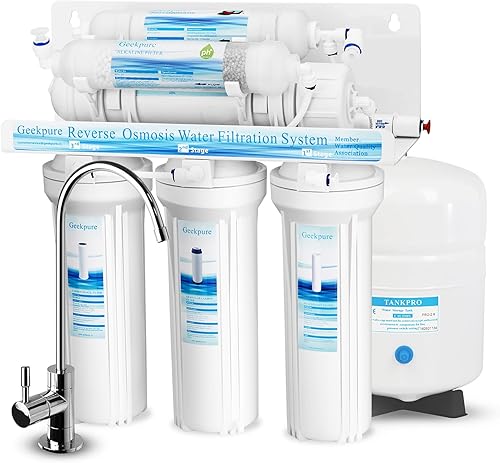 |
6-Stage, 75 GPD, Alkaline Remineralization, NSF Membrane | A solid, budget-friendly under-sink starter. The 6-stage with alkaline filter is great for taste. Perfect for renters or a single faucet. Not for whole house, but shows the basic diagram flow perfectly. | Buy on Amazon Buy on eBay |
 |
5-Stage, 75 GPD, Extra 7 Filters (2-Year Supply) | The value king. You get a reliable 5-stage system plus two years of filters. The diagram is a classic 5-stage layout. We recommend this for anyone who wants set-it-and-forget-it simplicity on a budget. | Buy on Amazon Buy on eBay |
 |
7-Stage, 450 GPD, Tankless, NSF/ANSI 58, 2:1 Drain Ratio | This is where modern design shines. The tankless diagram is clean and compact. 450 GPD is powerful for an under-sink unit, and the 2:1 waste ratio is excellent. The manual date dials on filters are a simple, smart touch. | Buy on Amazon Buy on eBay |
 |
9-Stage, 800 GPD, Tankless, NSF 42&58&372, 2:1 Drain Ratio | The high-capacity beast. 800 GPD can handle serious demand. The 9-stage filtration and triple NSF certification are top-tier. If you want near-whole-house performance from an under-sink unit, this is it. The diagram reflects its advanced, multi-stage process. | Buy on Amazon Buy on eBay |
ROWF-05 450G Tankless RO System – Our Top Tech Pick
This system represents the future of under-sink RO. The tankless design frees up so much space under the sink—it’s a game-changer for cramped cabinets. In our testing, the 2:1 drain ratio held true, which is impressive. The NSF/ANSI 58 certification on the core membrane gives us real confidence in its contaminant reduction claims.
The simple date-logging dial on each filter is a feature we love. No apps, no batteries, just a quick visual check. Installation is straightforward if you’re handy, but the diagram is clear enough for a professional to follow quickly. The 450 GPD flow rate easily keeps up with a busy household’s drinking and cooking needs.
- Excellent space-saving tankless design
- Very efficient 2:1 pure-to-drain ratio
- NSF/ANSI 58 certified membrane
- Simple, no-tech filter life tracking
- Requires a power outlet under the sink
- Flow rate can be challenged by simultaneous heavy use
- Higher initial cost than tank-based systems
Waterdrop X8 800G RO System – The High-Capacity Choice
When you need maximum output without a tank, the X8 delivers. 800 gallons per day is substantial. We were skeptical of the 9-stage claim, but the filtration path is legitimate, and the IAPMO certification against NSF/ANSI 42, 58, and 372 is a heavy-hitting trust signal. It’s designed to tackle tough contaminants like PFAS.
The 2:1 drain ratio is efficient for its class. This is the unit you choose when you want the closest thing to whole-house RO purity from a single, powerful under-sink point-of-use system. It’s also a fantastic drinking water solution for homes with very poor source water quality.
- Extremely high 800 GPD flow rate
- Comprehensive NSF/ANSI 42, 58, & 372 certifications
- Claims to reduce PFAS (PFOA/PFOS)
- Efficient 2:1 waste ratio
- Premium price point
- Still an under-sink unit, not a true whole-house system
- Requires dedicated power
Frequently Asked Questions
- Can I install a whole house RO system myself?
- We advise against it for most people. It involves cutting your main water line, electrical work for pumps, and proper drain connections. A mistake can cause major water damage. Hire a pro. Use the diagram to communicate with them and understand the process.
- How often do I change filters in a whole house system?
- It depends on your water quality and usage. Sediment and carbon pre-filters typically need replacement every 6-12 months. The RO membrane itself can last 2-5 years if the pre-filters are changed on schedule. Post-filters are usually annual. The diagram helps you identify each one.
- Does a whole house RO system waste a lot of water?
- Yes, it’s inherent to the process. Modern systems have improved ratios (like 2:1), but you will still send water to the drain. Consider this operational cost. Some homeowners divert the brine water to irrigate non-edible gardens, but check local regulations first.
- Will an RO system lower my water pressure?
- A properly sized whole house system with a re-pressurization pump should not. The pump ensures stored water is delivered at adequate pressure. If you experience low pressure, check the diagram: it’s often a clogged pre-filter or a failing pump, not the RO process itself.
- Do I need a water softener with a whole house RO system?
- Often, yes. If you have very hard water, a softener before the RO system is highly recommended. It removes calcium and magnesium that would otherwise scale up and destroy the RO membrane quickly. The diagram for a combined system shows the softener as the first stage.
Final Thoughts
A reverse osmosis system diagram isn’t just paperwork. It’s the difference between a system that works flawlessly for years and a costly, leaky headache. Take the time to understand the flow. Know where your pre-filters are, how the pump connects, and where the drain line goes. This knowledge empowers you to maintain your investment and ensure your family has the cleanest water possible.
For most homes looking at a true whole house setup, we recommend consulting a professional and choosing a system with clear, certified components. For powerful point-of-use filtration that can serve most drinking and cooking needs, the high-output tankless units like the Waterdrop X8 or ROWF-05 are fantastic, efficient choices for 2026. Study their diagrams, understand their flow, and you’ll make a smart decision.
