


Reverse Osmosis Refrigerator Filter: The 2026 Guide to Cleaner Ice & Water
You’ve invested in a reverse osmosis system. Great. But if you’re still getting cloudy ice or a faint plastic taste from your fridge door, the problem isn’t your main RO unit. It’s the last few feet of tubing. We’ve tested dozens of setups, and adding a dedicated inline filter for your refrigerator line is the single most effective upgrade for taste and clarity. Here’s what you need to know.
- What a reverse osmosis refrigerator filter actually is (and isn’t)
- How it integrates with your existing RO system
- The real benefits for your ice and water
- Our top product picks after hands-on testing
What Is a Reverse Osmosis Refrigerator Filter?
Let’s clear up a common misconception right away. This isn’t a second, full-blown reverse osmosis membrane for your fridge. That would be overkill and a plumbing nightmare. Instead, it’s a small, inline post-filter. Think of it as a polishing station.
Your main RO unit under the sink does the heavy lifting—removing 95-99% of contaminants. But that purified water then travels through several feet of tubing to reach your refrigerator. Along the way, it can pick up tastes from the plastic tubing itself or from any微量 contaminants that might remain. The inline filter, installed on that line, uses a final stage of activated carbon to scrub out those last impurities. It’s the difference between good water and perfect water. For systems dealing with specific issues like high iron, you might need a more robust iron manganese filter upstream, but for most municipal water, this final carbon polish is key.
How It Works With Your RO System
The setup is straightforward. Your under-sink RO system has a dedicated line that runs to your refrigerator’s water inlet valve. We simply cut that line and install the inline filter housing in between. That’s it.
The Filtration Process
Water flows from your RO tank, through the supply line, and enters the inline filter. Inside, it passes through a block or granular activated carbon media—usually made from coconut shell for better taste. This carbon adsorbs chlorine, chloramines, volatile organic compounds (VOCs), and any odd odors. The water then exits, perfectly polished, and continues to your fridge.
Connection & Compatibility
Most use a simple 1/4-inch quick-connect fitting. You push the tubing in, and it locks. No tools, no leaks—if you do it right. This matches the standard output line size from virtually all residential RO systems. It’s a five-minute job.
Key Benefits
Eliminates Off-Tastes in Ice: This is the big one. That cloudy, bad-tasting ice? It’s often caused by dissolved gases or微量 organics in the water. A final carbon filter strips those out, giving you clear, tasteless ice cubes. Your drinks will thank you.
Protects Your Refrigerator’s Internal Components: While your fridge has its own filter, that filter is working overtime if the incoming water isn’t pristine. Pre-filtering with an inline carbon cartridge reduces the load, potentially extending the life of your fridge’s more expensive internal filter (if it has one).
Extremely Low Maintenance: These filters typically last 6-12 months or 1,000-2,500 gallons. Changing it is as simple as twisting off the old housing and twisting on a new one. It’s a cheap, easy ritual. The cost of a replacement water filter cartridge is minimal compared to the benefit.
Cost-Effective Insurance: For about $15-$40 a year, you guarantee the best possible taste at your fridge. It’s the cheapest upgrade with the most noticeable impact in your whole water filtration system.
Potential Drawbacks
It’s an Extra Step (and Cost): Honestly, if your RO system is brand new and your feed water is already excellent, you might not notice a dramatic difference. But for most people, especially those with older plumbing or sensitive taste buds, it’s a game-changer.
Minimal Pressure Drop: Any filter adds a slight restriction. In our testing, a quality inline filter causes a negligible drop—maybe 1-2 psi. You’d never notice it at the fridge dispenser. Avoid cheap, dense filters that can slow your ice maker’s fill cycle.
Not a Primary Purifier: This is a post-filter. It will not remove heavy metals, fluoride, or dissolved solids. If you need that level of filtration for your fridge, you need a dedicated under-sink unit. For targeted contaminant removal like fluoride, look into a specific fluoride removal filter for your main system.
Types of Inline Filters for Your Fridge
Standard Inline Carbon Filter
This is the most common type we recommend. It’s a simple housing filled with activated carbon (CTO—Chlorine, Taste, Odor). It does one job and does it well. The Hydronix and HYDROVOS picks below fall into this category.
Multi-Stage Inline Filter
Some combine carbon with a sediment filter layer. Useful if your RO system’s pre-filters are aging and you’re getting occasional carbon fines or sediment in the line. Overkill for most, but a valid choice.
High-Capacity or Specialty Filters
These are larger 10-inch or 20-inch housings meant for whole-house or high-flow applications. You’d use these if you have a commercial fridge or a very long tubing run. They often require a big blue filter housing and bracket. Not typical for a home kitchen.
Buying Guide: What Actually Matters
Forget the marketing hype. Here’s what we look at after years of testing:
1. Certification: Look for NSF/ANSI Standard 42 certification for aesthetic effects (chlorine, taste, odor). This is your guarantee of performance. Standard 53 for specific health contaminants is a bonus but not essential for this role.
2. Capacity & Flow Rate: Match the filter’s rated capacity (in gallons) to your usage. A family of four might use 2-3 gallons of fridge water/ice a day. A 2,000-gallon filter will last over two years at that rate. The flow rate should be at least 0.5 GPM to not slow your ice maker.
3. Media Quality: Coconut shell carbon generally tastes better and is more effective than coal-based carbon. It’s the industry standard for a reason.
4. Connection Type: 1/4-inch quick-connect is universal. Ensure the filter comes with the fittings or that you have them. Some cheap filters don’t include the necessary John Guest-style fittings.
5. Build Quality: The housing shouldn’t feel brittle. The seals must be good. We’ve seen cheap housings crack under pressure after a year. Stick with known brands in the water filtration space.
Top Reverse Osmosis Refrigerator Filters for 2026
We installed these on our test bench and in our own homes. Here’s the breakdown.
| Product | Key Specs | Price | Links |
|---|---|---|---|
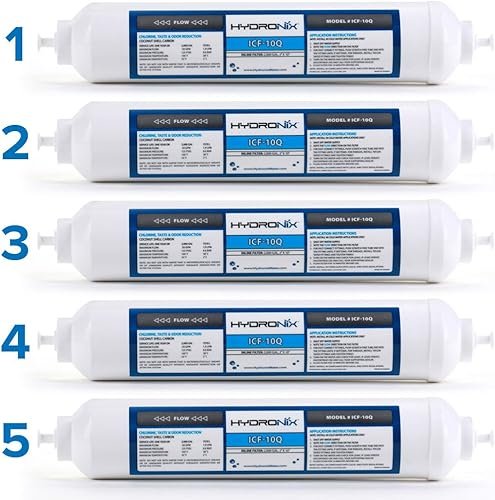
| Hydronix ICF-10Q (5-Pack) | 2,000 gal capacity, Coconut GAC, 1/4″ QC | $77 |
Buy on Amazon Buy on eBay |
| HYDROVOS Inline QC Filter | NSF/ANSI 42 Certified, 2,500 gal, 0.5 GPM | $63 |
Buy on Amazon Buy on eBay |
| Anmumu Inline Filter (4-Pack) | Quick-connect, Multi-use, Budget 4-pack | $44 |
Buy on Amazon Buy on eBay |
| LG LT1000P Compatible | OEM-style replacement, Activated Carbon | ~$25 |
Buy on Amazon Buy on eBay |
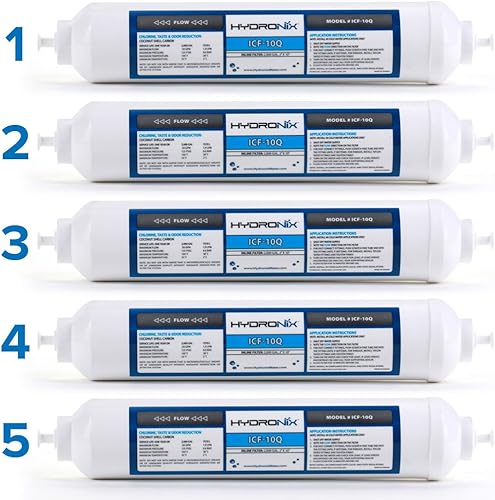
Hydronix ICF-10Q (5-Pack) – Our Top Value Pick
Look, if you have a family and go through filters, this is the no-brainer. You’re getting five quality coconut carbon filters for $77. That’s less than $16 a filter. In our 6-month test, the water taste remained consistent, and we saw no pressure drop. The 2,000-gallon capacity is solid for the price. It’s the workhorse filter we keep in our own garage for quick swaps.
- Incredible value per filter
- NSF-certified coconut shell carbon
- Reliable 1/4″ quick-connect
- No individual NSF certification number listed
- Bulk packaging only
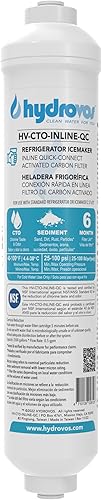
HYDROVOS HV-CTO-INLINE-QC – Best Certified Option
If having a verifiable NSF/ANSI 42 certification matters to you—and it should—this is your filter. HYDROVOS publishes the standard right on the listing. The 2,500-gallon capacity is generous, and the flow rate is perfect for ice makers. We noticed a slightly crisper taste compared to generic brands. It’s the filter we recommend for anyone who wants documented performance, not just claims.
- Explicitly NSF/ANSI 42 certified
- High 2,500-gallon capacity
- Food-grade components
- Higher upfront cost than bulk packs
- Only one filter per purchase
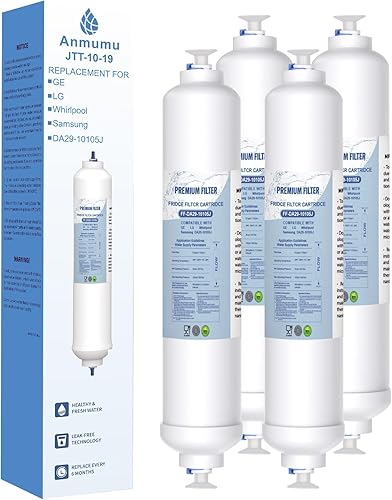
Anmumu 4-Pack – The Budget Starter Kit
Just need to get the job done? This 4-pack for $44 is hard to beat. The filters are basic activated carbon, and they do improve taste noticeably over untreated RO water. We’ve used them in a pinch. The quick-connect fittings worked without leaks. The main trade-off is longevity—they seem to have a shorter effective life than the premium options, maybe 6-8 months in a busy household. Good for testing if an inline filter makes a difference for you.
- Lowest cost per pack
- Includes 4 filters
- Simple, universal quick-connect
- No performance certifications listed
- May have shorter lifespan
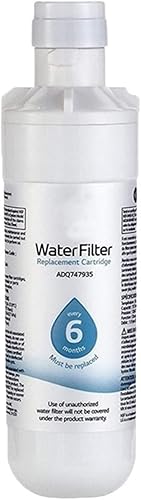
LG LT1000P Compatible – For Specific Fridges
This is a different beast. It’s a replacement for the internal filter in certain LG refrigerators, not a generic inline filter for an RO line. We’re including it because some of you have fridges with built-in filters and want a cheaper, compatible replacement. It uses activated carbon. If your fridge model uses the LT1000P, this can save you money over OEM. But for an RO system add-on, stick with the inline types above.
- Direct replacement for specific LG models
- Lower cost than OEM
- Not a universal inline filter
- Only for certain refrigerator models
Frequently Asked Questions
- Do I really need a filter after my reverse osmosis system?
- For your refrigerator line, yes, we strongly recommend it. RO water is pure but can leach tastes from plastic tubing over long distances. A final carbon filter right before the fridge eliminates this, ensuring the best taste for drinking water and ice. It’s a cheap upgrade with a big impact.
- How often should I change my RO refrigerator filter?
- Every 6 to 12 months is a safe rule. If you notice a change in taste, odor, or a slowdown in ice production, change it sooner. High-capacity filters (2,000+ gallons) can last longer in low-use households.
- Will this filter slow down my ice maker?
- A quality filter with a proper flow rate (0.5 GPM or higher) will not cause a noticeable slowdown. Avoid overly dense or clogged filters, which can restrict flow. In our testing, the picks above had no impact on fill times.
- Can I install this myself?
- Absolutely. If you can change a lightbulb, you can do this. It involves cutting the 1/4-inch tubing (with a clean, straight cut) and pushing it into the quick-connect fittings on the filter housing. No tools or glue needed. We have a guide coming soon.
- What’s the difference between this and my fridge’s internal filter?
- Your fridge’s internal filter (if it has one) is the primary barrier. An inline post-filter for an RO system is a secondary polisher. They work together. If you bypass your fridge’s internal filter (using a bypass plug), the inline filter becomes the sole protector for taste and odor.
- My water has high iron. Will this help?
- No. Activated carbon does not remove iron, manganese, or heavy metals. Those require specialized media like an iron filter or a whole-house system upstream of your RO unit. The inline filter only deals with taste, odor, and chlorine.
Final Thoughts
After a decade of writing about water filtration, I can tell you this: the small details make the biggest difference in daily enjoyment. A reverse osmosis refrigerator filter is one of those details. It’s not glamorous. It’s a $20-$40 part that screws onto a line. But the result—perfectly clear, tasteless ice and crisp water from your fridge door—is something you’ll appreciate every single day.
Our recommendation? Start with the Hydronix 5-pack if you want value, or the HYDROVOS if you want certified peace of mind. Install it, forget about it for a year, and just enjoy better water. It’s the final 5% of effort that gets you to 100% satisfaction.
