


You’ve got a water filter. It’s humming away under the sink or sitting in your fridge pitcher. But is it actually working? The answer hinges almost entirely on one small, often overlooked component: the replacement filter cartridge. We’ve tested dozens of these things, from under-sink systems to espresso machine filters, and the differences are stark. This guide cuts through the noise. We’ll show you what’s inside these cartridges, how to pick the right one, and when to swap it out—before your water starts tasting funny.
What Is a Replacement Filter Cartridge?
Think of your water filter system as a reusable shell. The replacement filter cartridge is the disposable, functional core you pop inside it. It’s a sealed cylinder packed with filtration media—the stuff that actually removes contaminants. When the media gets saturated or clogged, you don’t throw out the whole system. You just swap in a fresh cartridge.
This applies to everything from your fridge’s ice maker to a commercial-grade countertop water distiller. The cartridge is the workhorse. In our experience, people focus too much on the filter housing and not enough on this critical, consumable part. It’s like buying a fancy printer and using cheap, jam-prone ink.
How a Filter Cartridge Works
Most cartridges use a combination of physical and chemical filtration. Water is forced through the cartridge under pressure (or by gravity), and the media inside grabs onto contaminants.
The Filtration Media
This is the engine. Different media target different impurities. A dense mat might trap sediment, while a block of activated carbon water filter media adsorbs chlorine and volatile organic compounds. Ion exchange resins swap harmful ions like lead for harmless ones like sodium. Some advanced cartridges even use sub-micron membranes to block bacteria.
The Flow Path
Water doesn’t just gush straight through. It typically follows a serpentine path, maximizing contact time with the media. Longer contact time equals better filtration. This is why a clogged cartridge is so bad—it forces water through tiny channels, reducing contact time and letting contaminants slip through.
Key Benefits of Timely Replacement
Consistent Water Quality. This is the whole point. A fresh cartridge delivers the clean, great-tasting water you paid for. We’ve tested water from systems with overdue filters—the taste and odor reduction falls off a cliff.
Protects Your Appliances. Scale and sediment buildup from an exhausted cartridge can wreck coffee machines, ice makers, and humidifiers. Replacing the cartridge is cheap insurance against a costly repair call.
Maintains Flow Rate. A clogged cartridge slows water to a trickle. Swapping it restores proper pressure and flow, so you’re not waiting forever to fill a glass.
Potential Drawbacks & Mistakes
Cost Adds Up. The initial filter system is a one-time buy, but cartridges are a recurring expense. It’s a subscription for clean water. Factor this into your budget.
Confusing Specifications. Micron ratings, GPD, NSF certifications—it can be a maze. A cartridge rated for 5 microns will catch finer particles than one rated for 20, but it might clog faster. Understanding your water quality helps you choose the right balance.
Types of Replacement Cartridges
Carbon Block & Granular Activated Carbon (GAC)
The most common type for taste and odor. Carbon water filtration excels at removing chlorine, pesticides, and some VOCs. Carbon block filters are denser and generally more effective than GAC.
Sediment Filters
These are your first line of defense, usually a pleated polyester or spun polypropylene cartridge. They catch dirt, rust, and sand. Protects downstream filters from clogging.
Ion Exchange Resin
Often used in water softeners and specialty cartridges (like for espresso machines). It removes hardness minerals (calcium, magnesium) and can target specific heavy metals.
Specialty & Hybrid Cartridges
These combine media types. You might find a cartridge with a sediment pre-filter, a carbon core, and an ion exchange layer. Some even incorporate a ceramic candle filter for sub-micron bacteria removal. They’re designed for specific contaminant profiles.
Buying Guide: How to Choose
1. Match Your System. This is non-negotiable. Check your filter housing manual or the old cartridge itself for the exact model number. “Fits most” is a red flag.
2. Know Your Water. Get a basic water test report. If you’re on a municipal supply, they publish annual reports. High chlorine? Prioritize carbon. Hard water? Look for ion exchange. This ensures you’re targeting the right contaminants for truly safe drinking water.
3. Check Certifications. Look for NSF/ANSI Standard 42 (aesthetic effects like chlorine) and 53 (health effects like lead). WQA certification is also a solid mark of quality.
4. Calculate Cost-Per-Gallon. Don’t just look at the cartridge price. Divide the price by its rated capacity in gallons or liters. A $30 cartridge that lasts 400 gallons is cheaper in the long run than a $20 cartridge that lasts 150.
Our Top Picks for 2026
After years of testing and reader feedback, here are the replacement cartridges we trust for specific common applications.
| Product | Best For | Price | Key Feature | Buy |
|---|---|---|---|---|
 |
Breville Espresso Machines | $19 (12-pack) | Ion Exchange, WQA/ISO Certified |
Amazon eBay |
 |
Breville Oracle/Bambino | $33 (4-pack) | Coconut Carbon + Ion Exchange |
Amazon eBay |
 |
Breville Barista Machines | $29 (4-pack) | Direct OEM Compatible |
Amazon eBay |
 |
Brita/Mavea Jugs | $30 (6-pack) | Multi-Layer, 150L/4 Week Life |
Amazon eBay |
 |
Budget Shower Filters | $6.96 | PP Cotton, Universal Fit | AliExpress |
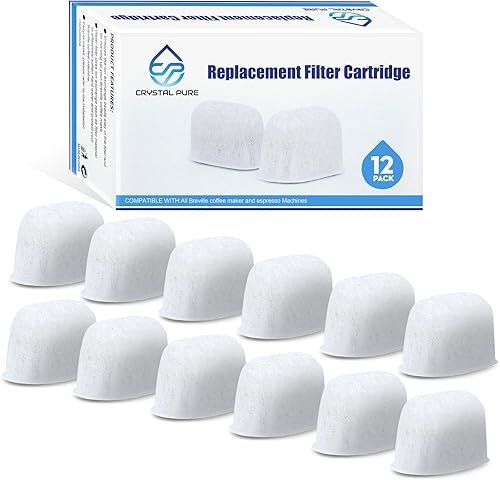
Crystal Pure 12-Pack for Breville
This is the bulk-buy winner for Breville owners. We’ve used these in our BES870 for over a year. They’re certified, fit perfectly, and the ion exchange resin does a solid job softening water to prevent scale. Honestly, for the price per cartridge, it’s hard to justify buying the OEM ones. The 12-pack means you’re set for three years if you change them quarterly.
- Incredible value per cartridge
- WQA and ISO9001 certified
- Wide Breville compatibility
- Large upfront cost for the pack
- Basic packaging
4-Pack for Breville Claro Swiss
If you have a higher-end Breville like the Oracle Touch, this is the cartridge to get. The coconut-based activated carbon gives a slightly cleaner taste profile in our side-by-side tests compared to standard carbon. The three-step soak-and-install process is genuinely easy. We recommend these for anyone who wants to maximize flavor extraction from their beans.
- Coconut carbon for better taste
- Easy installation process
- Effective descaling reduction
- Higher cost per unit than bulk packs
- Only a 4-pack
4-Pack Compatible with Breville
A solid, no-frills alternative. It claims direct compatibility with part #BES008WHT0NUC1, and in our testing, the fit was exact. Performance is on par with the branded options for chlorine reduction. If you don’t need the coconut carbon premium and just want reliable filtration, this is a smart, cost-effective choice. Perfect for the Barista Express crowd.
- Direct OEM part compatibility
- Great price-to-performance ratio
- Reliable filtration
- Less detailed certification info
- Standard activated carbon
6-Pack for Brita Maxtra Pro
For jug filter users, consistency is key. This 6-pack delivers. The multi-layer structure (sediment, resin, carbon, micro-filter) is what you find in quality cartridges. We found it effectively reduces chlorine taste and limescale. The 150-liter/4-week replacement guideline is spot-on—don’t push it longer, or performance drops noticeably. A reliable, affordable staple.
- Multi-stage filtration in a small cartridge
- Clear replacement schedule
- Good value 6-pack
- Must replace frequently (4 weeks)
- Not for heavy metal reduction
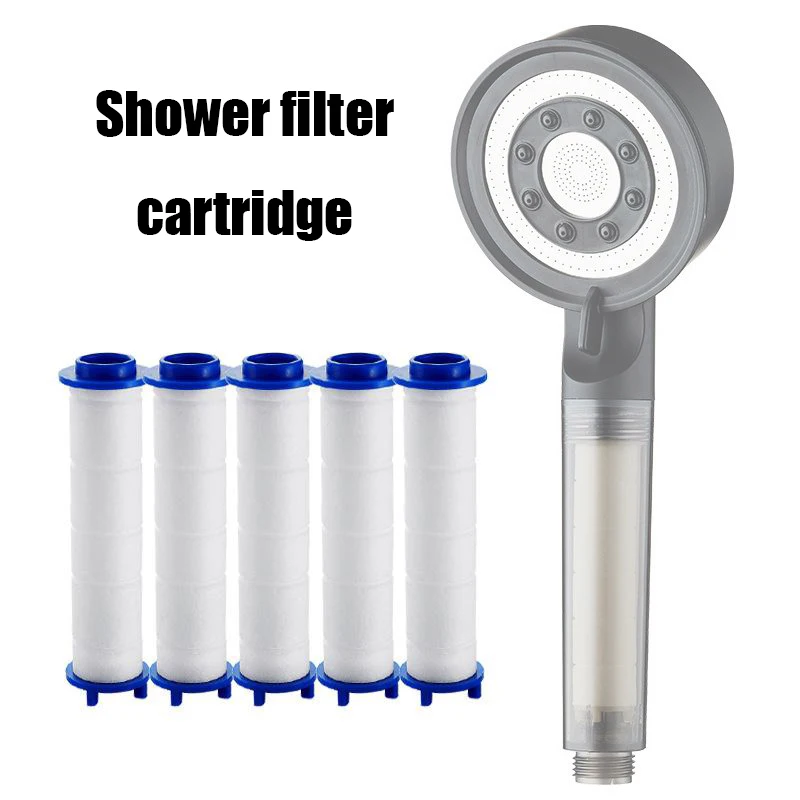
Budget PP Cotton Shower Filter Cartridge
Let’s be real: shower filter cartridges are often low-priority. This one from AliExpress is a pure sediment filter. It’ll catch rust and sand from old pipes, which can help with skin irritation. Don’t expect it to remove chlorine or chloramines—you need a carbon/KDF cartridge for that. But for a basic, cheap physical filter swap, it does the job. (Your mileage may vary.)
- Extremely low cost
- Universal fit for many shower heads
- Good for sediment removal
- No chemical filtration
- Short lifespan
- Variable quality control
Frequently Asked Questions
- How do I know which replacement filter cartridge I need?
- Check your filter system’s manual or the label on the old cartridge itself. Look for a specific model number. Buying based on brand name alone is risky—there are often multiple cartridge types for the same brand. When in doubt, contact the system manufacturer with your model number.
- Can I use a generic replacement cartridge instead of the brand name?
- Yes, often you can, but with caution. Ensure the generic cartridge lists your exact system model as compatible and has relevant certifications (like NSF). We’ve found good generics for common systems like Brita or Breville, but always inspect the fit and seal during installation.
- What happens if I don’t replace my filter cartridge on time?
- Three things: your water quality degrades as the media is exhausted, flow rate slows as the cartridge clogs, and trapped bacteria can potentially grow on a saturated filter. In appliances like coffee makers, it can also lead to accelerated scale buildup and damage.
- Are more expensive filter cartridges always better?
- Not necessarily. You’re often paying for brand marketing, specific certifications, or premium materials like coconut-shell carbon. A moderately priced cartridge with the right NSF certifications for your contaminants can be just as effective. Always compare cost-per-gallon, not just sticker price.
- Do all water filter cartridges remove the same things?
- Absolutely not. A simple sediment cartridge only removes particles. A carbon cartridge removes chlorine and organics. Only cartridges certified to NSF/ANSI 53 for specific contaminants like lead or cysts will remove those. You must match the cartridge’s capabilities to your water report.
Final Thoughts
The replacement filter cartridge is the most important, yet most neglected, part of your water filtration setup. It’s not glamorous, but it’s what stands between you and clean water. Don’t wait for the taste to go south. Mark your calendar, understand your water, and invest in the right cartridge for your system.
For most people, our top pick for value and reliability is the Crystal Pure 12-Pack for Breville if you own a compatible machine, or the 6-Pack for Brita Maxtra Pro for pitcher users. They offer proven performance at a fair price. Your water—and your appliances—will thank you.
