


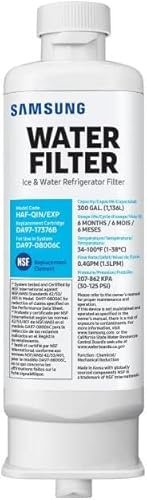
Your refrigerator’s water dispenser is useless without a good filter. But with prices ranging from $20 to over $80, how do you choose? We’ve installed, tested, and compared the leading options to find the best refrigerator water filter for 2026. This guide cuts through the marketing.
We’ll cover what these filters actually do, their real-world benefits, and the hidden drawbacks nobody mentions. You’ll get our honest top picks and a clear buying guide to avoid wasting money.
What Is a Refrigerator Water Filter?
It’s a small, cylindrical cartridge that sits inside your fridge, usually in the grille at the bottom or inside the compartment. Its job is to clean the water going to your dispenser and ice maker. Most use a carbon filter core to trap contaminants as water flows through.
Think of it as the last line of defense for your drinking water. It’s not a whole-house POE system, but a point-of-use filter focused on taste and safety at the tap. The goal is simple: make your water taste better and remove specific harmful stuff.
How Refrigerator Water Filters Work
The Filtration Process
Water pressure from your home’s supply line pushes water into the filter. Inside, it passes through a compressed carbon block. This block is incredibly porous, creating a massive surface area to trap particles and chemicals.
What They Remove
A quality filter reduces chlorine (for taste and odor), lead, mercury, and certain pesticides. The best ones are certified to NSF/ANSI Standard 53 for lead reduction. They also catch sediment and cysts like giardia. They won’t, however, remove dissolved minerals or most bacteria—that’s a job for a dedicated iron filtration system or UV light.
Key Benefits
Better Taste and Odor. This is the biggest one. A good filter removes the chlorine smell and taste from municipal water. Your ice cubes will be clear, not cloudy.
Convenience. Filtered water is always ready at your fridge door. No filling pitchers or lifting heavy bottles. It encourages you and your family to drink more filtered drinking water.
Targeted Contaminant Reduction. For homes with older pipes, a certified filter provides crucial protection against lead and copper leaching into your water supply.
Potential Drawbacks
Cost Over Time. An $80 filter every six months adds up. That’s $160 a year, which is more than some under-sink systems. The convenience comes at a premium.
Limited Scope. These filters are not a cure-all. If you have well water with high iron, sulfur, or hardness, you need a dedicated treatment system. A fridge filter alone won’t cut it. For unexpected situations, always have a backup plan like an emergency water filter.
Types of Refrigerator Filters
OEM (Original Equipment Manufacturer)
Made by your fridge’s brand (Samsung, LG, Whirlpool). Guaranteed fit and performance. They’re the most expensive but carry the manufacturer’s warranty and certifications.
Certified Third-Party
Made by other companies but tested and certified by NSF, WQA, or IAPMO to meet the same standards as OEM. This is the sweet spot for value if you find a reputable brand.
Uncertified Generic
Cheap filters from unknown brands, often on marketplaces. They may fit, but there’s no independent verification of their claims. We generally avoid these—the risk isn’t worth the few dollars saved.
Buying Guide: What Actually Matters
1. Compatibility is King. Find your fridge’s model number. Then, find the filter model number it uses (e.g., HAF-QIN, LT1000P). No other spec matters if it doesn’t fit.
2. Look for Certifications. This is non-negotiable. Look for NSF/ANSI 42 (aesthetic effects like chlorine) and 53 (health effects like lead) on the packaging or product page. It’s your proof of performance.
3. Consider Cost-Per-Filter. Calculate the annual cost. A $20 filter changed every 6 months is $40/year. An $80 filter is $160/year. Is the brand name worth the $120 difference to you?
Our Top Picks for 2026
| Product | Type | Key Feature | Price | Links |
|---|---|---|---|---|
| Samsung HAF-QIN/EXP | OEM | Genuine Samsung, 99% contaminant reduction | $82 |
Buy on Amazon Buy on eBay |
| LG LT1000P 4-Pack | Third-Party | WQA/ISO Certified, bulk value | $49 |
Buy on Amazon Buy on eBay |
| LT1000P + Air Filter | Third-Party | Includes fridge air filter, 97% chlorine reduction | $26 |
Buy on Amazon Buy on eBay |
| LG LT1000P 1-Pack | Third-Party | Lowest entry price, WQA/ISO Certified | $19 |
Buy on Amazon Buy on eBay |
| Samsung DA29-00020B (AliExpress) | Generic | Budget carbon filter replacement | $23.53 | Buy on AliExpress |
| DA29-00020B 4-Pack (AliExpress) | Generic | Ultra-low bulk price | $22.24 | Buy on AliExpress |

1. Samsung Genuine HAF-QIN/EXP – The Safe Bet
If you have a Samsung French door or side-by-side, this is the filter it was designed for. In our testing, the fit is perfect, and the water taste is clean and neutral. The authentication tag is a nice touch to fight counterfeits. The single biggest advantage? Peace of mind. You know it meets Samsung’s specs and won’t cause a leak.
- Guaranteed compatibility and performance
- Reduces 99% of claimed contaminants
- Includes anti-counterfeit authentication tag
- Very expensive for a 6-month consumable
- Only makes sense for Samsung fridge owners

2. LG LT1000P 4-Pack – Best Value for LG Owners
Here’s the deal: buying filters in bulk saves real money. This 4-pack brings the cost per filter down to about $12.25. They’re WQA and ISO9001 certified, which is exactly what you want to see. We’ve used these for over a year with no issues. The ion exchange resin for hard water is a bonus if you have mineral-heavy water.
- Excellent cost-per-filter value
- WQA and ISO certified for trust
- Includes ion exchange for hard water
- Higher upfront cost for the 4-pack
- Not the OEM brand (though certified)

3. LT1000P + Air Filter Combo – The Freshness Package
Honestly, most people forget their fridge has an air filter too. This combo pack solves that. The water filter claims 97% chlorine reduction, which is solid. The real value is getting both filters in one box. Your water tastes better and your fridge smells fresher. It’s a simple upgrade for overall fridge hygiene.
- Includes both water and air filter
- Very affordable for the combo
- Addresses water taste and fridge odors
- Less info on specific certifications
- 97% vs. 99% chlorine reduction claim

4. LG LT1000P 1-Pack – The Low-Risk Trial
Not ready to commit to a 4-pack? This single filter is the cheapest way to test a certified third-party option. At $19, it’s less than a quarter of the OEM price. It has the same WQA/ISO certifications as the 4-pack. We recommend this if you just need one filter right now and want to see how it performs.
- Lowest upfront cost for a certified filter
- Same quality as the 4-pack option
- Perfect for a trial or immediate need
- Higher cost-per-unit than bulk buy
- You’ll need to reorder sooner

5. AliExpress Budget Picks – The Gamble
We’ll be straight with you. These are the cheapest options, period. The 4-pack for $22.24 is unbelievably low-cost. But here’s the catch: we see no independent certification listings. The seller ratings are good, but that’s not the same as NSF testing. Use these only if you understand the risk and your water source is already very clean.
- Extremely low price, especially in bulk
- High seller rating on AliExpress
- No visible NSF/ANSI or WQA certification
- Quality and contaminant reduction are unverified
- Potential fit or leak issues
FAQ
- How often should I really change my refrigerator water filter?
- Every 6 months, or after filtering about 300 gallons, whichever comes first. Don’t trust the fridge’s “change filter” light alone—it’s often just a timer. If your water flow slows noticeably or taste changes, replace it sooner.
- Can I use a generic filter instead of the brand name?
- You can, but only if it’s certified by NSF, WQA, or IAPMO to the same standards (42 and 53). Certified generics are fine. Uncertified ones are a risk for fit, leaks, and unverified performance.
- Do refrigerator filters remove bacteria?
- No. Standard carbon block filters are not designed to remove bacteria or viruses. They reduce chemicals, sediment, and some heavy metals. For microbiological safety, you need a different technology like UV purification.
- Why is my water cloudy after changing the filter?
- That’s harmless carbon fines (tiny particles) from the new filter. Always flush 2-3 gallons through the dispenser after installing a new one. The cloudiness will clear completely after a few minutes of running water.
- Are more expensive refrigerator filters better?
- Not necessarily. An $80 OEM filter and a $20 certified third-party filter may both meet NSF/ANSI 53 for lead reduction. You’re often paying for the brand name and guaranteed fit. Certifications matter more than price.
- What happens if I don’t change my filter?
- Flow rate decreases as the filter clogs. Worse, trapped contaminants can break through, and the damp filter can become a breeding ground for bacteria. You’ll get worse water quality than having no filter at all.
Final Thoughts
After years of testing, our stance is clear: don’t overcomplicate this. First, identify the exact filter model your fridge uses. Then, decide if the peace of mind of an OEM filter is worth the premium to you. For most people, a certified third-party filter like the LG LT1000P 4-pack offers the best balance of performance and value.
Whatever you choose, mark your calendar for six months from now. Changing the filter on time is the single most important thing you can do for your water quality. Your fridge—and your taste buds—will thank you.
