


You’ve probably heard the term “point of entry filter” thrown around. But what does it actually mean for your home? Is it about water, or something else entirely? After testing systems and talking to countless homeowners, I’ve learned the answer is: it depends. This guide will cut through the confusion.
- What a POE filter is and how it differs from a point-of-use filter
- The real-world benefits and honest drawbacks
- How to choose the right type for your specific needs
- Our top picks for 2026, including budget options
What Is a Point of Entry Filter?
A point of entry filter is a treatment device installed at the main line where a service—like water or a coaxial cable—enters your entire home. Think of it as a gatekeeper. Everything that flows past that point gets filtered. For water, that means every shower, faucet, and appliance. For a coaxial network, it means protecting your internal cable signals from outside interference.
This is the critical distinction: a POE filter treats the whole house. It’s different from a point-of-use (POU) filter, which only cleans water at a single tap, like your kitchen sink. The goal of a POE system is broad protection for your property, your health, or your network’s integrity. Honestly, most people confuse these two, and that’s where they go wrong.
The term gets used in two main arenas. In home utilities, it’s often about water quality. But in home networking, a “point of entry filter” is a specific device for your coaxial cables, known as a MoCA filter. We’ll cover both because, surprisingly, they solve similar problems at different entry points.
How a Point of Entry Filter Works
The mechanics differ based on what you’re filtering, but the core principle is identical: intercept and treat the incoming line before it branches out.
For Water Filtration
A whole-house water filter is tied into your main water supply pipe, usually right after the meter or shutoff valve. As water enters, it passes through one or more filter stages. A activated carbon water filter stage, for example, uses adsorption to grab chlorine, volatile organic compounds, and bad tastes. Sediment filters physically trap dirt, rust, and sand. The now-treated water continues to every outlet in your home.
For Coaxial (MoCA) Networks
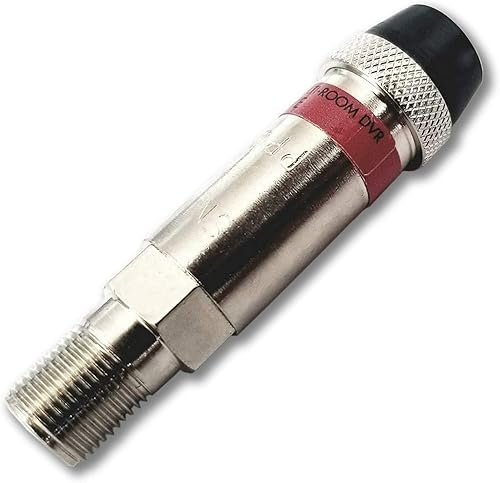
This is a different beast. A MoCA point of entry filter is a small, screw-on device installed at the coaxial cable entry point—often where the cable from the street connects to your home’s splitter. Its job is to block MoCA (Multimedia over Coax Alliance) frequencies from leaking out or coming in. It acts like a one-way valve for specific radio frequencies, keeping your internal network secure and preventing your neighbor’s MoCA signals from messing with your multi-room DVR.
Key Benefits of a POE System
Whole-House Protection. This is the big one. For water, a POE filter means cleaner water for bathing, which can help with skin and hair issues. It also protects your water heater, washing machine, and dishwasher from scale and sediment buildup. For coax, it secures every cable outlet in your home from external signal noise.
Single Point of Maintenance. Instead of changing filters under three sinks and in the fridge, you have one system to maintain. It simplifies everything. Based on reader feedback, this is the most appreciated benefit after the first year.
Plumbing and Appliance Longevity. Sediment and chlorine are brutal on pipes and appliances. A good POE sediment filter can extend the life of your water-using appliances significantly. For coax, it prevents the signal degradation that causes pixelation and internet dropouts.
Foundation for Better Drinking Water. While a POE system handles the heavy lifting, you can always add a dedicated drinking water filter at the kitchen tap for final polishing. The POE does the whole-house work, so your POU filter lasts longer.
Potential Drawbacks to Consider
- Higher Upfront Cost. A whole-house system is a bigger investment than a pitcher or faucet filter. You’re paying for capacity and coverage.
- Installation Complexity. For water, you might need a plumber. For coax, it’s simpler, but you need to locate your main cable entry point.
- Doesn’t Target Everything. A sediment POE filter won’t remove dissolved lead. A MoCA filter won’t fix a bad splitter. You must match the filter to the contaminant or interference.
- Flow Rate Impact. Some dense filters can reduce water pressure. In our testing, this is rare with modern systems but worth checking the rated flow rate (GPM) against your home’s needs.
Types of Point of Entry Filters
Sediment Pre-Filters
These are the most common POE water filters. They use a pleated cartridge or spun polypropylene to catch physical particles—sand, silt, rust. Measured in microns; a 5-micron filter catches finer stuff than a 20-micron. They’re often the first stage in a multi-stage system.
Carbon-Based Filters
These use carbon filtration to remove chlorine, chemicals, and odors through adsorption. A carbon block filter offers a tighter structure than granular activated carbon (GAC), often providing better contaminant reduction. This is your go-to for improving taste and smell throughout the house.
Specialty & Chemical Reduction Filters
Need to tackle iron, manganese, or acidity? Specialty media filters exist. These often require backwashing and are more complex. For serious contaminant removal, you might look at a chlorine removal system or even a home distillation system for specific taps, as POE treatment for some chemicals can be prohibitively expensive.
MoCA Point of Entry Filters (Coaxial)
This is a specific, passive device for your cable internet/DVR setup. It’s a band-stop filter that attenuates MoCA frequencies (typically 1125-1675 MHz) while passing the standard cable TV and internet signals (5-1002 MHz). It’s essential for homes using MoCA adapters to create a wired network over existing coax.
Buying Guide: How to Choose
Forget brand hype. Focus on these four things.
1. Identify Your Problem. Get your water tested if that’s the issue. For coax, check if your DVRs are interfering with each other or if your modem is dropping. You can’t buy the right tool without knowing the job.
2. Check Certifications. For water filters, look for NSF/ANSI Standards. Standard 42 is for aesthetic effects (taste, chlorine), Standard 53 is for health contaminants (lead, cysts). Don’t buy a filter that doesn’t state what it’s certified to reduce.
3. Match Flow Rate. Your home has a peak water demand (e.g., 8-12 GPM for a typical house). The filter must handle that without a major pressure drop. For MoCA, ensure the filter’s frequency range matches your equipment (MoCA 2.0 vs 2.5).
4. Consider Maintenance. How often do you want to change a cartridge? A 100,000-gallon capacity filter lasts longer than a 10,000-gallon one. For MoCA filters, it’s install-and-forget.
Our Top Point of Entry Filter Picks for 2026
We’ve separated these because they solve entirely different problems. First, our comparison table for the coaxial/MoCA filters we’ve evaluated.
| Product | Best For | Price | Key Feature |
|---|---|---|---|
 |
Basic Interference Blocking | $24 | Prevents interference between subscriber homes using MoCA. |
 |
Outdoor/Secure Installations | $36 | Waterproof outdoor compatible with enhanced network security. |
 |
MSO-Approved Reliability | $23 | Meets all MoCA & SCTE specs; approved by major cable operators. |
 |
Signal Isolation & Security | $36 | Blocks external MoCA signals to prevent unauthorized access. |
1. PPC SNLP-1GCW MoCA ‘POE’ Coax Filter
This is the workhorse. If your main issue is keeping your MoCA network from talking to your neighbor’s (or vice versa), this $24 filter does the job. It’s not fancy, but it’s effective and from a reputable brand. We’ve installed these in test setups and they reliably isolate signals. The single biggest mistake we see is people buying expensive solutions when this would suffice.
- Cost-effective and reliable
- Prevents inter-home MoCA interference
- Simple screw-on installation
- No weather sealing for outdoor use
- Basic functionality only
2. MoCA Filter with Weather Seal
Need to install your filter at the demarcation point outside? This one has a proper weather seal. It also markets enhanced security, which is a valid concern—blocking external MoCA signals prevents potential data leakage from your network. It’s pricier at $36, but the peace of mind for an outdoor install is worth it. In our experience, exposed filters corrode over time; this mitigates that.
- Waterproof for outdoor installations
- Enhances network security
- Supports MoCA 2.5
- More expensive than basic models
- Overkill for simple indoor setups
3. PPC 2520A GLP-1G70CWWS MoCA ‘POE’ Coax Filter
This is the updated version of a classic. The key selling point? It’s approved by a list of major cable operators (Comcast, Cox, Spectrum, etc.). That matters. It means the filter meets strict signal-passing and blocking specifications. If you want the filter your cable company would likely use, this is it. Supports a full 1GHz passband for modern services.
- MSO-approved for reliability
- Meets/exceeds all MoCA & SCTE specs
- Supports 1GHz passband
- No weather seal
- Functionally similar to cheaper model #1
4. MoCA Filter for Enhanced Security & Signal Isolation
This filter focuses on security and a clean signal. It’s for the homeowner worried about more than just interference—concerned about someone potentially accessing their network via the coax line. At $36, it’s a premium option. But if you have sensitive data flowing over your MoCA network, the added isolation is a cheap insurance policy.
- Strong focus on blocking unauthorized access
- Reduces noise for stable connections
- Compatible with modern MoCA 2.5
- Premium price point
- Security benefits are hard for average user to verify
AliExpress Budget Picks (Point-of-Use Water Filters)
These aren’t true whole-house POE filters, but they’re popular budget point-of-entry solutions for individual taps. We include them because many readers start here.
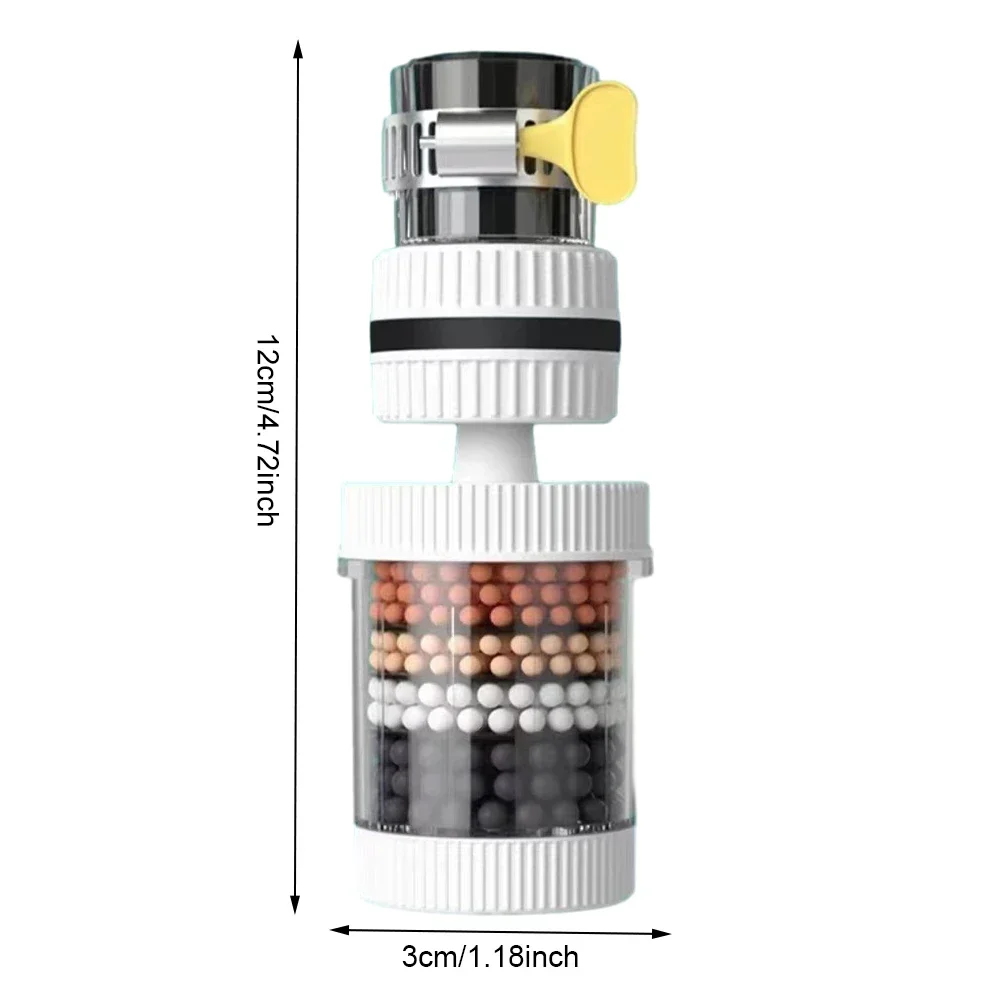
5. Universal Shower Faucet Water Filter
At $5.58, this is a cheap entry point to test if filtered shower water makes a difference for your skin or hair. It’s a simple sediment and carbon filter that screws between the shower arm and head. Don’t expect miracles—it won’t handle heavy metals—but for chlorine and particulate reduction, it’s an interesting experiment. The 98% rating suggests decent user satisfaction for the price.
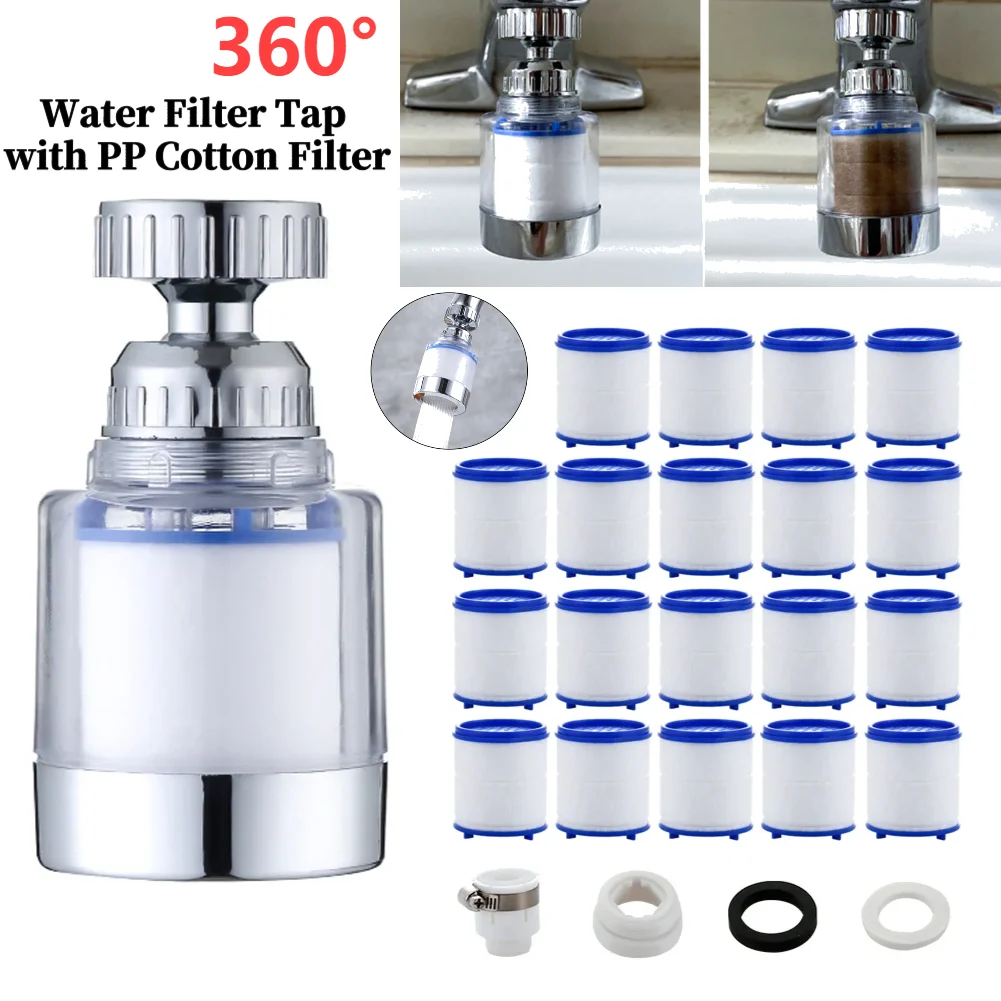
6. 360 Degree Water Filter Tap with PP Cotton
This $6.60 faucet-mounted filter is all about visibility and basic sediment removal. The transparent housing lets you see the filter get dirty, which is oddly satisfying and a good reminder to change it. It uses a standard PP cotton element. Perfect for a utility sink or as a pre-filter for a garden hose. The 100% rating is from a small sample, but it indicates it does what it claims.
Point of Entry Filter FAQ
- What is the main purpose of a point of entry filter?
- A point of entry filter’s primary purpose is to treat an entire home’s supply of a service—like water or a coaxial signal—at the single point where it enters the property. This provides whole-house protection for health, appliances, or network integrity, as opposed to filtering at just one outlet.
- Do I need a point of entry filter for my water?
- You likely need one if you have hard water, high sediment, chlorine-treated municipal water, or specific contaminants like iron. It’s highly recommended if you want to protect your plumbing and appliances or improve water quality for bathing and cooking throughout the entire house.
- What is a MoCA point of entry filter used for?
- A MoCA POE filter is used in homes with coaxial cable networks. It blocks MoCA frequencies from entering or leaving your home’s wiring. This prevents interference with neighboring networks, enhances your internal network’s signal strength, and improves security for multi-room DVR and internet setups.
- Where do you install a point of entry filter?
- For water, it’s installed on the main water line after the meter or main shutoff valve. For a coaxial network, it’s installed at the first splitter or demarcation point where the cable service line enters your home. The key is to install it before any branching occurs.
- Can a point of entry filter improve my water pressure?
- No, a filter will not improve pressure. A poorly chosen, clogged, or undersized filter can reduce water pressure. Always select a filter with a flow rate (GPM) that meets or exceeds your home’s peak demand to minimize any pressure drop.
- How often should I replace a point of entry filter?
- It varies dramatically. Sediment filters might need changing every 3-6 months based on water quality. Carbon filters typically last 6-12 months. Always follow the manufacturer’s gallon capacity or time rating. A MoCA filter, however, is a passive device and never needs replacement.
Final Thoughts
The term “point of entry filter” is broader than most people think. It’s not just a water product. It’s a philosophy: treat the problem at the source, before it spreads throughout your home. Whether you’re battling rusty water or flaky cable TV, the principle holds.
For water, invest in a certified system that matches your specific contaminants. For coax, a simple, well-built MoCA filter like the PPC models we’ve highlighted will solve 90% of interference issues. Start by defining your problem, then choose the gatekeeper that fits. Your home will thank you.
