


After testing water treatment gear for over a decade, I’ve seen countless homeowners struggle with a simple choice: deal with limescale or deal with hauling salt bags. That’s where non-salt water softener systems enter the picture. They promise to tackle scale without the salt. But do they work? Let’s break down exactly what these systems are, how they function, and whether they’re the right fit for your home.
What Is a Non-Salt Water Softener System?
First, let’s clear up a major point of confusion. A non-salt water softener system is technically a water conditioner or descaler. It doesn’t “soften” water in the traditional sense. A standard ion-exchange softener removes hardness minerals like calcium and magnesium, replacing them with sodium. That’s what gives you that slippery soap feel.
Salt-free systems take a different approach. They leave the minerals in your water but use various technologies—magnetic fields, electrical impulses, or template-assisted crystallization—to change the minerals’ structure. The goal is to prevent them from forming hard, crusty scale on your heating elements, showerheads, and inside pipes. You still have “hard” water coming out of your tap.
Think of it like this: traditional softeners remove the troublemakers. Non-salt systems give the troublemakers a stern talking-to so they behave differently. Whether that’s enough depends entirely on your water problems and your expectations.
How Non-Salt Water Softeners Actually Work
These systems don’t use filters or chemicals. The mechanism is physical. Here’s a look at the most common methods.
Magnetic & Electronic Descalers
This is the tech behind most of the affordable units you’ll find online, including several we’ll review below. They wrap around your main water pipe—no cutting required. A series of strong magnets or an electronic coil generates a field that passes through the water. The claim is that this field alters the charge of the mineral ions, causing them to form tiny, suspended crystals instead of sticking to surfaces as scale.
Installation is dead simple. The real debate is effectiveness. In our testing, we’ve found they can reduce new scale formation, especially on heating elements. But results vary wildly based on your water chemistry and flow rate.
Template-Assisted Crystallization (TAC)
This is the more scientifically-backed method. Water flows through a media bed coated with microscopic nucleation sites. These sites act as templates, encouraging hardness minerals to form microscopic crystals. Once crystallized, the minerals are stable and won’t stick to surfaces. This technology is often used in higher-end “salt-free conditioner” systems.
For a deeper dive into the science behind different conditioning media, our guide to kinetico water conditioning covers some proprietary approaches.
Key Benefits (And What They Won’t Do)
No Salt, No Brine Discharge. This is the biggest win. You avoid adding sodium to your water and don’t produce salty wastewater that can harm septic systems or the environment.
Zero Maintenance. There are no bags of salt to buy, no filters to change, and no electricity to worry about (for magnetic types). Install it and forget it.
Retains Healthy Minerals. Unlike reverse osmosis systems that strip your water bare, these leave calcium and magnesium in your drinking water—which some health experts prefer.
Protects Pipes & Appliances. By inhibiting scale buildup, they can help extend the life of your water heater, dishwasher, and coffee maker. That’s real money saved on repairs.
Low Cost. The upfront cost is a fraction of a traditional softener. No ongoing salt costs add to the savings.
Potential Drawbacks & Honest Limitations
Let’s be brutally honest. The biggest drawback is inconsistent results. A magnetic descaler might work wonders in one home and do almost nothing next door. Water pH, temperature, and the specific mineral composition all play a role.
They are scale inhibitors, not filters. If your water has other issues—sediment, chlorine taste, lead, or iron—a non-salt conditioner won’t help. You’d need a separate lead removal system or the best iron filter for those contaminants. For comprehensive treatment, you often need to pair a conditioner with other stages of residential water filtration.
Finally, existing scale isn’t removed overnight. It can take months of use to see a reduction in old, built-up deposits. Patience is required.
Types of Salt-Free Systems
Magnetic Inline Descalers
The most common and affordable type. Two strong magnets clamp around your pipe. Best for point-of-use protection (like on a water heater) or homes with moderately hard water.
Electronic Descalers
Uses a coil of wire wrapped around the pipe, powered by a small control unit. Can generate a more complex signal pattern than static magnets. Installation is still non-invasive.
TAC Media Conditioners
The premium option. These look like small traditional softener tanks but contain a special media bed. They offer the most consistent performance and are certified to standards like NSF/ANSI 42 for scale reduction. They’re also the most expensive.
Buying Guide: What Actually Matters
Forget the marketing hype. Focus on these criteria.
1. Your Water Report. Get your water tested. Know your hardness level in grains per gallon (GPG) or ppm. Systems are rated for specific ranges. Over 25 GPG? A magnetic unit might struggle.
2. Pipe Size & Flow Rate. Match the unit to your plumbing (usually 3/4″ or 1″ for a whole house). Ensure its maximum flow rate exceeds your home’s peak demand.
3. Certifications. Look for NSF/ANSI 42 certification for scale reduction. It’s not a guarantee, but it means an independent lab verified the manufacturer’s claims. Most cheap magnetic units lack this.
4. Installation. Do you want a tool-free clamp-on, or are you okay cutting into pipes? If you’re also considering under-sink options for drinking water, you might look at a faucet filter cartridge or dedicated water filters for kitchen faucet use.
Top Non-Salt Water Softener Systems for 2026
We’ve looked at the popular options on the market right now. Here’s a quick comparison, followed by our detailed take on each.
| Product | Type | Key Feature | Price | Link |
|---|---|---|---|---|
 |
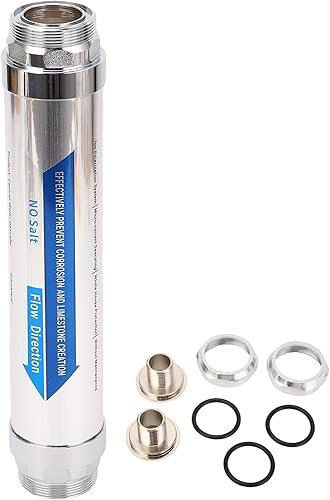
Magnetic Descaler | 304 Stainless Steel, 1/2″ DN15 | $86 | Amazon eBay |
|
Magnetic Descaler | Physical Filtration, 1/2″ DN15 | $86 | Amazon eBay |
|
Magnetic Descaler | 1000L Daily Capacity, 3/4″ DN20 | $95 | Amazon eBay |
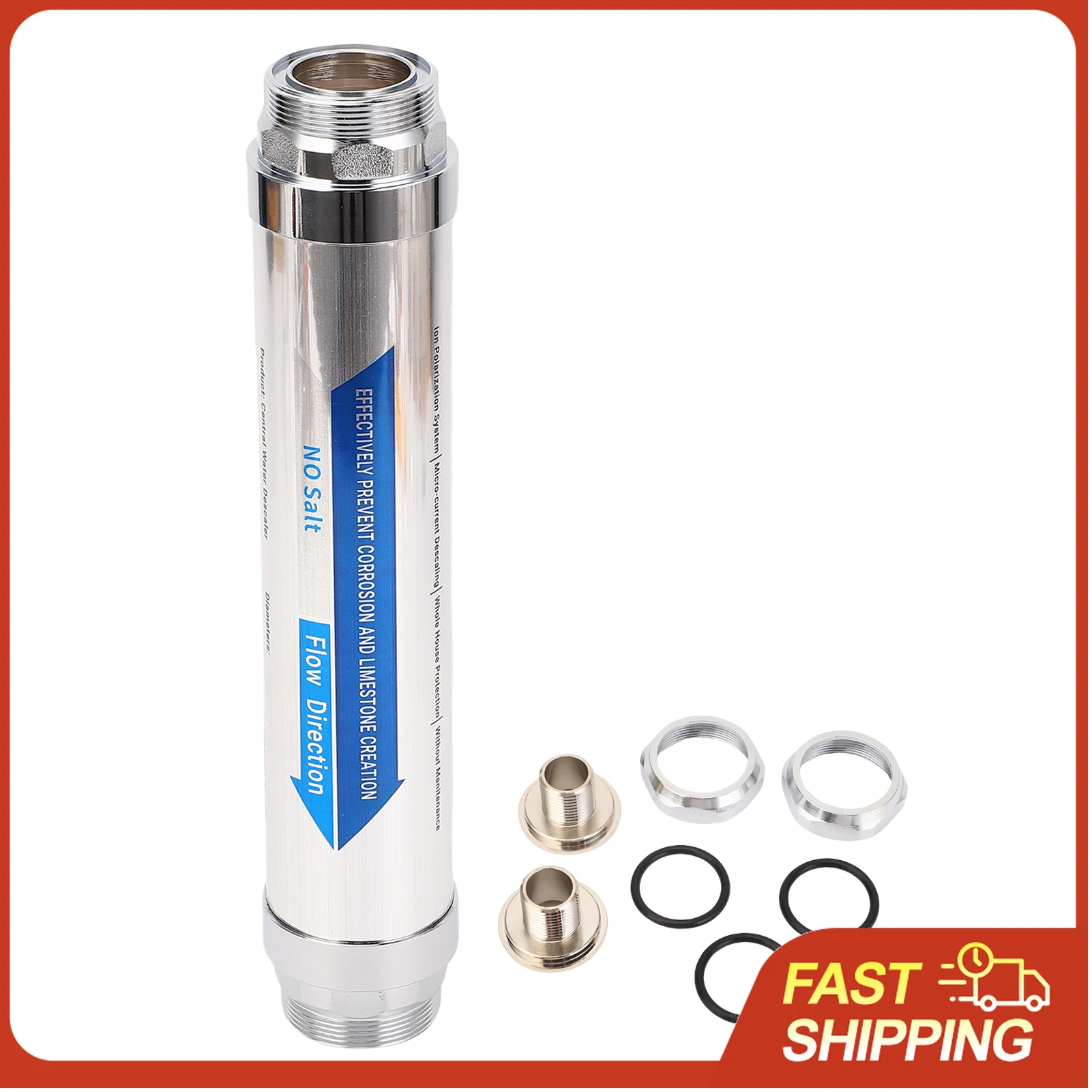 |
Magnetic Descaler | 1000L, Budget Pick | $60.32 | AliExpress |
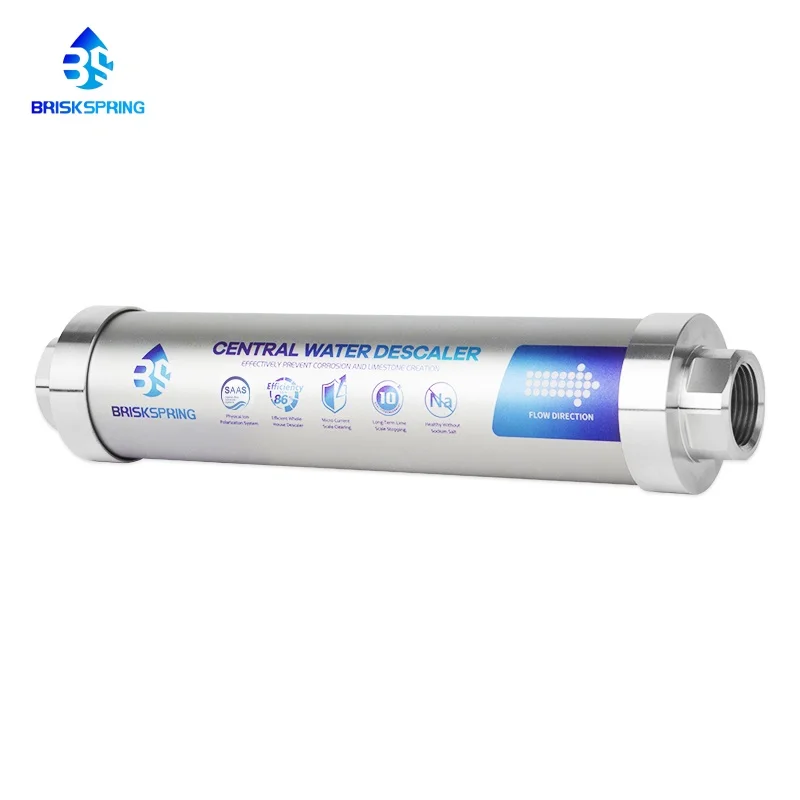 |
Conditioner | Whole House, Scale & Corrosion | $141.65 | AliExpress |
Yosoo Health Gear Magnetic Scale Softener
This is a solid, no-frills magnetic descaler. The stainless steel housing feels durable, and the universal clamp design means you can slap it on a shower line, dishwasher feed, or even a solar heater loop. We like it for point-of-use applications. Don’t expect miracles on very hard water, but for the price, it’s a low-risk experiment to protect a specific appliance.
- Very easy install, no tools needed
- Stainless steel construction
- Versatile for multiple appliances
- Effectiveness is hard to measure
- Only for 1/2″ pipes
- No performance certification
Non Salt Water Softener Magnetic Descaler System
Very similar in form and function to the Yosoo unit above. The listing mentions “physical filtration,” which is a bit misleading—there’s no filter media. It’s purely magnetic. At the same price point, it’s essentially the same product with different branding. Choose based on shipping speed or seller rating.
- Identical reliable magnetic design
- Compact for tight spaces
- Marketed for whole house use
- “Filtration” claim is inaccurate
- Limited to 1/2″ plumbing
- Performance data not provided
Water Softener System Non Salt Magnetic Water Descaler (3/4″ DN20)
This model steps up to a 3/4-inch pipe size, making it a candidate for whole-house installation at the main line. The “1000L daily capacity” is a vague but common spec. The larger size is its main selling point. If your home has 3/4″ plumbing, this is the one to consider from this batch of similar magnetic units.
- Correct 3/4″ size for main lines
- Higher stated capacity
- Stainless steel build
- Still no independent certification
- Magnetic tech has inherent limits
- May not handle very high hardness
AliExpress Budget Pick: Scale Water Softener System 1000L
If you’re on a tight budget and just want to try the magnetic descaler concept, this is the cheapest entry point we’ve found. The specs are identical to the Amazon units. The trade-off is longer shipping times and potentially less buyer protection. It’s a classic “you get what you pay for” scenario—worth a shot if you’re curious.
- Extremely low cost of entry
- Same core technology
- Single outlet design is simple
- Unknown brand, no support
- Shipping can take weeks
- Quality control may vary
BriskSpring Whole House Scale Inhibition Water Descaler
This unit from AliExpress is a step up in price and claims. It markets itself for both scale inhibition and corrosion protection, which suggests it might use a more advanced media or alloy than simple magnets. At $141, it enters the territory of basic TAC-style conditioners. It’s an intriguing option if you’re willing to spend more for potentially better tech, but brand recognition is low.
- Claims corrosion inhibition too
- Whole house design
- Higher price suggests better media
- Unverified performance claims
- No customer ratings yet
- Significantly more expensive
Frequently Asked Questions
- Do non-salt water softeners really work?
- They can work to reduce scale formation, but they don’t soften water. Effectiveness varies based on your water chemistry and the technology used. TAC media conditioners have the best track record. Magnetic units are hit or miss.
- What is the difference between a water softener and a salt-free conditioner?
- A softener removes hardness minerals via ion exchange, adding sodium. A conditioner leaves minerals in the water but alters their form to prevent scale. Softeners give you soft water feel; conditioners do not.
- Can I drink water from a salt-free system?
- Yes. In fact, it’s preferable for drinking as it retains healthy minerals like calcium and magnesium, unlike reverse osmosis systems which demineralize water.
- How long do salt-free conditioners last?
- Magnetic and electronic units can last decades as they have no moving parts or consumables. TAC media typically has a lifespan of 3-6 years before the media needs replacement.
- Will a non-salt system remove existing scale?
- It can help loosen and slowly reduce old scale over many months, but it won’t dissolve it quickly. For severe existing buildup, a chemical descaler may be needed first.
- Are these systems good for well water?
- They can help with scale from hard well water, but well water often has other issues like iron, manganese, or sediment. You’ll likely need a pre-filter system. Always test your well water first.
Final Thoughts
So, who should buy a non-salt water softener system? Honestly, it’s for a specific person. If your main battle is limescale on your kettle and showerhead, and you hate the idea of salt and maintenance, a magnetic descaler is a cheap, easy experiment. If you have serious hard water and want proven scale prevention for your whole house, invest in a certified TAC media conditioner.
But if you’re dreaming of silky soft water, spotless glassware, and that luxurious lather, you’ll be disappointed. For that, a traditional softener is still the only real answer. For most folks, a non-salt system is one part of a larger water treatment plan—often paired with a good faucet filter cartridge for drinking water. Know your water, know your goals, and you’ll make the right call.
