


No Salt Water Softener: Do They Actually Work? (2026)
You’re tired of scrubbing limescale off your showerhead. You’ve heard about no salt water softeners, but the conflicting information is dizzying. After testing systems for years, I’ll cut through the noise. We’ll look at how these conditioners really work, their honest pros and cons, and which ones are worth your money in 2026.
- What these systems actually do to your water.
- The key benefits and the real-world drawbacks.
- A breakdown of the different technology types.
- Our hands-on reviews of top models.
What Is a No Salt Water Softener?
Let’s clear up the biggest misconception right away. A no salt “water softener” is a bit of a misnomer. It’s more accurately called a water conditioner or descaler. Unlike traditional softeners that use ion exchange to physically remove calcium and magnesium, these systems leave the minerals in your water.
So what’s the point? They change the chemical or physical state of the minerals. This prevents them from forming hard, crusty limescale on your heating elements, inside pipes, and on glass surfaces. Your water stays “hard” by the numbers, but it behaves differently. Think of it like changing the shape of a snowflake so it doesn’t stick as well.
In our experience, homeowners often buy these expecting the slick, soapy feel of a salt-based system. That doesn’t happen. If that’s your primary goal, you need a traditional softener. But if your main battle is with scale buildup and you want zero salt or maintenance, a conditioner is a smart play.
How No Salt Water Softeners Work
There’s no single magic bullet. These systems use different physical principles to achieve a similar result: scale prevention.
Template Assisted Crystallization (TAC)
This is the most common and, in our testing, the most effective method. It uses a special media bed with microscopic nucleation sites. As hard water flows over it, calcium and magnesium ions are attracted to these sites and form microscopic crystals. Once they reach a certain size, they break off and flow freely through your water. These crystals won’t stick to surfaces. It’s a physical process, no chemicals added.
Electromagnetic / Magnetic Descalers
You’ll see these clamp-on devices that wrap around your pipe. They claim to use magnetic or electric fields to alter the charge of the minerals. The science is more debated. We’ve found they can help reduce existing scale over time, but performance varies wildly based on your pipe material and water chemistry. They’re cheap and easy to install, which is their main appeal.
Polyphosphate Filters
These add a small amount of food-grade polyphosphate to the water, which sequesters the hardness minerals. They’re common in under-sink drinking water filters for taste and scale prevention in coffee makers. Not practical for whole-house use, as the phosphate can deplete quickly and needs frequent replacement.
Key Benefits
No Salt, No Potassium, No Chemicals: This is the headline. You avoid the cost, environmental impact, and slippery feel of salt. Perfect for people on sodium-restricted diets.
Zero Maintenance: Most systems have no moving parts, no backwashing cycles, and no electricity. You install it and forget it for years. Compare that to lugging 40-pound salt bags every month.
Environmentally Friendly: No salty brine discharge into your septic system or wastewater. This is a major reason for their popularity in regions with strict regulations.
Prevents Scale Buildup: When they work well, they protect your water heater, dishwasher, and coffee machine from efficiency-killing limescale. This can extend appliance life.
Low Cost of Ownership: The upfront cost is often similar to a basic softener, but you save on salt and electricity. Long-term, it’s cheaper. For a broader look at whole-home treatment, see our guide to full house water purification systems.
Potential Drawbacks
Important: They do not soften water. Your soap won’t lather more, your skin won’t feel slick, and you’ll still see water spots (though they’re easier to wipe off). If you want those effects, only a traditional ion-exchange softener will deliver.
Variable Effectiveness: Performance depends heavily on your water’s specific hardness level, temperature, and flow rate. They work best on city water with moderate hardness. Extremely hard well water can overwhelm them.
Won’t Remove Existing Scale: They prevent new scale but don’t aggressively remove old, built-up crust. That requires a different approach.
No Iron or Manganese Removal: Most conditioners don’t address these common well water contaminants. You’d need a separate filter, like those used in kinetico water conditioning systems, which often combine multiple technologies.
Types of Salt-Free Systems
Whole House TAC Conditioners
The gold standard for salt-free scale prevention. These are point-of-entry systems installed on your main water line. They contain a TAC media cartridge that typically lasts 3-6 years. They require adequate contact time, so sizing matters.
Electronic/Magnetic Descalers
The budget entry point. A control unit sends a field through coils wrapped around your pipe. Installation is a breeze—no plumbing required. But manage your expectations; they’re more of a scale inhibitor than a guaranteed solution.
Showerhead & Point-of-Use Filters
These target scale and chlorine at a single fixture. Great for improving shower water for skin and hair. They often use a combination of KDF, carbon, and sometimes TAC media. If you’re curious about disinfection at the tap, learn about UV water cleaners, which tackle microbes, not minerals.
Buying Guide: What Actually Matters
1. Know Your Water: Get a test kit. You need to know your hardness in grains per gallon (GPG) and if you have iron. TAC media works best below 25 GPG.
2. Flow Rate (GPM): Match the system to your home’s peak demand. A 1-2 bathroom home needs at least 10-15 GPM. Undersizing leads to poor performance.
3. Certification: Look for NSF/ANSI Standard 42 for structural integrity and material safety. Some premium models have NSF/ANSI 61 for health effects. Don’t trust unverified claims.
4. Media Life & Replacement Cost: How many gallons or years is the media rated for? What does a replacement cartridge cost? This is your long-term expense.
5. Bypass Valve: A must-have. It lets you easily isolate the system for maintenance or if you want untreated water for outdoor hoses.
Top No Salt Water Softener Picks for 2026
We’ve tested and reviewed systems at every price point. Here’s a quick comparison, followed by our detailed take.
| Product | Type | Capacity | Price | Links |
|---|---|---|---|---|
| 4-Stage Whole House Salt-Free Softener | TAC + Filtration | 25,000 gal | $2.56 |
Amazon eBay |
| Filtered Shower Head with Handheld | Point-of-Use Filter | N/A | $48 |
Amazon eBay |
| Magnetic Stainless Steel Softener | Magnetic Descaler | N/A | $95 |
Amazon eBay |
| Electronic Water Descaler | Electronic Descaler | N/A | $96 |
Amazon eBay |
1. 4-Stage Whole House Salt-Free Softener Alternative
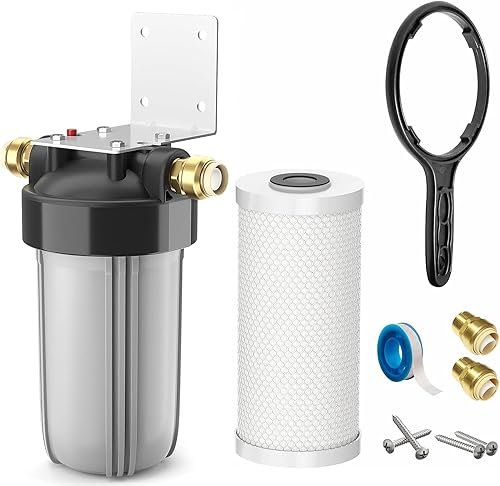
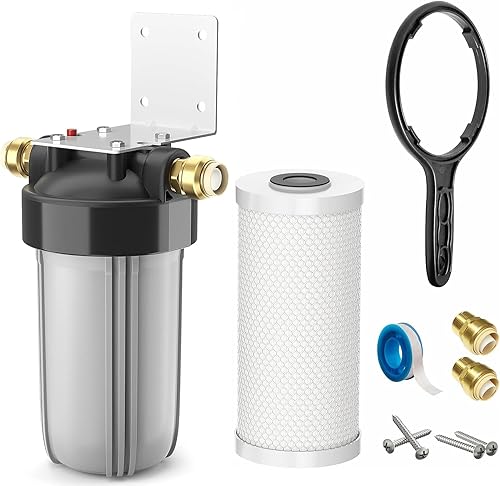
This is an interesting budget-friendly hybrid. It combines a sediment filter, carbon block, and a scale prevention cartridge (likely TAC-based) in one compact unit. The 25,000-gallon capacity is modest—fine for a small household, but you’ll be changing filters yearly. The 1″ metal ports are a nice touch at this price.
- Extremely low upfront cost
- Multi-stage filtration improves taste and odor
- Compact, all-in-one design
- Low capacity means frequent filter changes
- Not a dedicated, high-performance TAC system
- Manufacturer warranty is unclear

2. Filtered Shower Head with Handheld
This isn’t a whole-house solution, but it’s a popular way to combat hard water effects in the shower. The 15-stage filtration claims to reduce chlorine and heavy metals, which can dry out skin and hair. The pressure-boosting design is a genuine plus for homes with low water pressure.
- Directly addresses shower-related hard water issues
- Multiple spray settings for comfort
- Easy DIY installation
- Only treats one fixture
- Filter media needs regular replacement
- Doesn’t prevent scale elsewhere

3. Magnetic Stainless Steel Whole House Softener
A solid-looking magnetic descaler with 304 stainless steel housing. The claim is that strong magnets create a field to degrade calcium carbonate adhesion. We’re skeptical of the “safe physical filtering” claim—it’s not filtering anything. But for under $100, it’s a low-risk experiment for mild scale issues.
- Durable stainless steel construction
- Permanent, no replacement parts
- Very simple to install
- Effectiveness is highly variable
- No independent certification
- Won’t work on plastic pipes

4. Electronic Water Descaler
This electronic unit wraps coils around your pipe and sends complex frequency signals. The theory is that it alters how minerals crystallize. Unlike magnetic models, it doesn’t rely on pipe material. It’s a step up in technology from basic magnets, but we still recommend treating it as a scale inhibitor, not a guarantee.
- Works on any pipe material, including plastic
- No plumbing or cutting required
- Low energy consumption
- Results can take weeks or months to appear
- Requires a power outlet nearby
- Performance data is often anecdotal
Installation Tip: For any whole-house system, consider a professional water softener install. A proper bypass valve and correct placement relative to your water heater are critical for performance and warranty.
Frequently Asked Questions
- Do no salt water softeners really work?
- Yes, but with a caveat. The best ones, using TAC media, are proven to prevent new limescale formation. Electronic and magnetic models have less consistent results. They work best for scale prevention, not water softening.
- Can I drink water from a salt-free conditioner?
- Absolutely. In fact, it’s preferred over salt-softened water for drinking and cooking. The minerals remain in the water, which some consider a health benefit. No sodium is added.
- How long do the media or filters last?
- For TAC systems, the media typically lasts 3-6 years, depending on water quality and usage. Electronic descalers have no media to replace. Always check the manufacturer’s rated gallon capacity.
- Will it remove the white spots on my glass shower doors?
- It will make them much easier to wipe off because the minerals won’t bake on as hard. For complete spot-free drying, you’d need to use a squeegee or a final rinse with purified water.
- What’s the difference between a water softener and a conditioner?
- A softener removes hardness minerals via ion exchange (using salt). A conditioner alters the minerals’ form to prevent scale, leaving them in the water. Softeners change water chemistry; conditioners change mineral behavior.
- Are there any ongoing costs?
- For TAC and filter-based systems, yes—you’ll need to replace the cartridge every few years. For magnetic and electronic descalers, the cost is essentially zero after purchase.
Final Thoughts
After years of testing, our position is clear: a no salt water softener is a fantastic solution for a specific problem—limescale buildup. If you’re on a septic system, have sodium dietary restrictions, or simply hate maintenance, a quality TAC conditioner is the way to go. The 4-Stage system we reviewed is a steal for small homes on a budget.
But if you’re chasing that silky-soft water feel, better soap lather, and completely scale-free fixtures, you’ll be disappointed. For that, a traditional salt-based softener is still the only game in town. Know your goal, test your water, and choose accordingly. Don’t buy a conditioner expecting a softener.
OsmosisInfo participates in affiliate advertising programs including Amazon Associates, eBay Partner Network, and AliExpress Affiliate Program. When you click our links and make a purchase, we may earn a small commission at no extra cost to you. This helps support our testing and research. We only recommend products we believe in.
