


Let’s be honest. Five years ago, nobody was asking about microplastics in their water. Now? It’s one of the top three questions we get. You’ve probably heard the headlines—these tiny plastic fragments are everywhere, from the deep ocean to the snow on mountaintops. So it’s no surprise you’re wondering what you can actually do about the ones coming out of your tap.
This guide cuts through the noise. We’ll explain what these filters are, how they work, and which ones we’d actually trust in our own homes after years of testing. We’ll cover:
- The simple science behind trapping particles smaller than a human hair
- Key benefits and the honest drawbacks you should know
- The different types of systems, from pitchers to whole-house setups
- Our top picks for 2026, tested and reviewed
What Is a Microplastic Water Filter?
Forget the fancy marketing. At its core, a microplastic water filter is any device designed to physically remove tiny plastic particles—generally defined as smaller than 5 millimetres—from your drinking water. We’re talking about fragments from degraded bottles, synthetic clothing fibres from laundry runoff, and microbeads from old cosmetics.
The key term here is “micron rating.” A human hair is about 70 microns wide. Most effective microplastic filters target particles down to 1 or even 0.5 microns. That’s incredibly small. The filter acts like a microscopic sieve, letting water molecules through while catching the plastic debris. It’s a simple concept, but the engineering behind doing it well—and without clogging instantly—is what separates the good from the bad.
How Microplastic Filtration Works
It’s not magic. It’s mostly physics and a bit of clever material science. Here’s the breakdown.
Physical Straining
This is the primary method. Water is forced through a porous material with holes smaller than the target particles. Think of it like a coffee filter, but on a microscopic scale. The tighter the weave (the lower the micron rating), the more it catches. But there’s a trade-off: a filter that’s too tight will slow your water flow to a trickle and clog up fast. That’s why most systems use multiple stages.
Adsorption
Many filters, especially carbon blocks, use a process called adsorption (not absorption). Activated carbon has an incredibly porous surface area—a single gram can have the surface area of a tennis court. As water passes through, microplastics and other contaminants like chlorine stick to these vast surfaces via weak electrical charges. This is great for improving taste and odour while trapping particles.
Membrane Filtration (Reverse Osmosis)
This is the heavy artillery. A reverse osmosis system uses a semipermeable membrane with pores so small (around 0.0001 microns) that it blocks virtually everything except water molecules. It will absolutely remove microplastics. For a deeper dive into how these systems work and their other benefits, our guide on ao smith water filter technology is a good next read. The downside? They waste some water and require more maintenance.
Key Benefits
Reduced Plastic Ingestion: This is the obvious one. A good filter provides a reliable barrier between you and the microplastics present in source water and plumbing. It’s a direct, tangible reduction in your daily exposure.
Improved Overall Water Quality: Here’s the thing—filters that catch microplastics also catch a lot of other stuff. We’re talking sediment, rust, cysts like Giardia, and often chlorine. Your water just tastes cleaner and better. It’s a win-win.
Peace of Mind: Honestly, this matters. Knowing you have an active line of defence against an emerging contaminant lets you fill your glass without that nagging “what if?” feeling. For families, this benefit alone is often worth the investment.
Potential Drawbacks
Cost Over Time: The initial purchase is one thing, but replacement filters are the ongoing cost. Pitcher filters, for example, need replacing every 40-200 litres. That adds up. You’re paying for continuous protection.
Not a Silver Bullet: A microplastic filter won’t remove dissolved contaminants like heavy metals, pharmaceuticals, or salts unless it’s part of a more advanced system like reverse osmosis. You need to match the filter to your specific water report. For a broader approach to contaminant removal, especially for well water, looking into a water filter for the entire house might be a smarter move.
Types of Microplastic Filters
Pitcher & Dispenser Filters
The easiest entry point. You fill the top, water drains through a replaceable cartridge into the reservoir. Most use activated carbon. Look for ones specifically stating a micron rating (like 1 micron) or NSF/ANSI 401 certification for emerging contaminants, which includes microplastics. They’re affordable but have limited capacity and slower flow.
Faucet-Mounted Filters
Attach directly to your tap. A switch lets you toggle between filtered and unfiltered water. They offer better flow than pitchers and are still simple to install. Filtration quality varies wildly—some are glorified taste-improvers, others have solid particle removal.
Under-Sink & Countertop Systems
This is where you get serious performance. Installed under your sink, they provide filtered water on demand from a dedicated faucet. They often combine multiple stages: a sediment water filtration stage to catch larger gunk first, then a tight carbon block for microplastics. Some, like the popular systems we cover in our hydroviv reviews, are custom-configured for specific contaminant profiles.
Reverse Osmosis Systems
The most thorough option. They force water through that ultra-fine membrane, removing up to 99% of total dissolved solids, including microplastics. They’re typically installed under the sink and include a storage tank. Perfect if you want the purest water possible, but they do require more space and maintenance.
Buying Guide: What Actually Matters
1. Certification is King. Don’t just trust marketing claims. Look for independent certification to NSF/ANSI standards. Standard 42 covers aesthetic effects (taste, chlorine), Standard 53 covers health contaminants (lead, cysts), and Standard 401 covers emerging contaminants like microplastics. This is your proof.
2. Micron Rating. For physical straining, a 1-micron absolute rating is a solid benchmark for microplastics. “Absolute” means it filters out 99%+ of particles at that size. “Nominal” is less precise. Lower is better, but watch for flow rate trade-offs.
3. Filter Lifespan & Cost. Calculate the cost per litre or gallon. A $50 pitcher filter that lasts 150 litres is cheaper long-term than a $30 filter that lasts 40. Do the maths before you buy.
4. Your Water Source & Pressure. City water and well water have different challenges. If you have low water pressure, a high-restriction filter might not work well. If you’re on a well, you might need pre-filtration for sediment to protect your main microplastic filter.
5. Consider a Multi-Stage Approach. The best systems don’t rely on one filter. They use a sequence: a sediment pre-filter, then a carbon block for microplastics and chemicals, and sometimes a uv sterilizer for microbiological safety. For a compact, multi-stage solution, an under counter filter water system is often the most efficient choice for daily use.
Top Microplastic Water Filters for 2026
After testing dozens of models, here are our recommendations for different needs and budgets.
| Product | Type | Key Specs | Best For | Price |
|---|---|---|---|---|
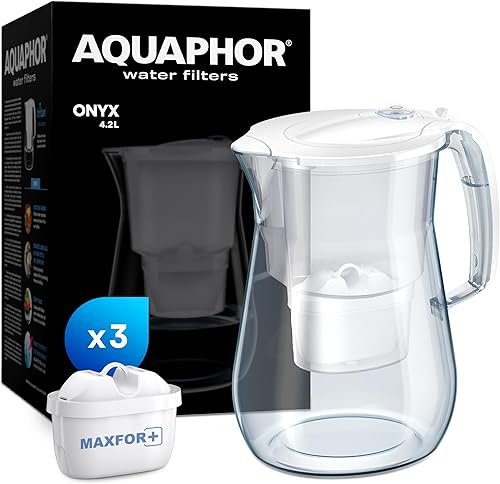
 AQUAPHOR Onyx White |
Pitcher | 4.2L, MAXFOR+ filter, reduces microplastics | Families, beginners, taste improvement | $65 |
 BRITA Flow Cask |
Dispenser | 8.2L, MAXTRA PRO, large capacity | Large households, offices, high demand | $95 |
 BRITA Marella |
Pitcher | 2.4L, MAXTRA PRO, compact | Small households, dorms, budget pick | $39 |
 ZeroWater 22-Cup |
Dispenser | 5-stage, 0 TDS, integrated meter | Maximum purity, TDS monitoring fans | $70 |
1. AQUAPHOR Water Filter Jug Onyx White
This isn’t your average pitcher. The build quality feels premium—the Tritan plastic is sturdy, and the flip-top lid is genuinely convenient. In our testing, the MAXFOR+ filter noticeably improved taste and reduced chlorine. The claim of microplastic reduction holds up; it’s rated for particles down to 3 microns, which catches the larger, more common fragments. The 200-litre filter life is decent for the price.
- Good filtration for a pitcher
- Large 4.2L family size
- Dishwasher safe (except lid)
- Includes filter life counter
- Not as tight as under-sink filters
- Flow rate slows as filter ages
2. BRITA Flow Cask Water Filter Dispenser
If you’re constantly refilling a pitcher, this 8.2-litre beast solves that problem. The integrated tap is a game-changer for fridge shelves or countertop use. It uses BRITA’s standard MAXTRA PRO cartridges, which are widely available and do a solid job on chlorine and taste. While BRITA is less specific about microplastic reduction compared to some, the activated carbon in their filters does trap particles through adsorption. It’s about convenience and volume here.
- Huge capacity reduces refill trips
- Easy-pour tap
- BPA-free
- Widely available replacement filters
- Large footprint
- Filtration specs are less detailed
3. BRITA Marella Water Filter Jug
The classic, and for good reason. It’s affordable, compact, and gets the job done for one or two people. The flip-top lid is a small but appreciated ergonomic touch. The MAXTRA PRO filter is its workhorse. Honestly, for most city dwellers concerned about microplastics and taste, this is all you need. It’s a reliable, no-fuss entry point into filtered water.
- Very affordable
- Fits in fridge doors easily
- Simple one-hand filling
- Proven, reliable brand
- Small 1.4L filtered capacity
- Filters need frequent replacement
4. ZeroWater 22-Cup Ready-Read Dispenser
This is for the person who wants measurable purity. The integrated TDS meter is brilliant—it shows you exactly when the filter is spent (at 006 ppm). The 5-stage filtration is aggressive, removing virtually all dissolved solids. It will absolutely nail microplastics. The trade-off? Filters can be more expensive and may not last as long in areas with high TDS. But if you want the purest water from a pitcher-style system, this is it.
- Excellent 5-stage filtration
- Built-in TDS meter for filter changes
- IAPMO certified for lead, chromium
- Large 22-cup capacity
- Filters can be costly over time
- Removes beneficial minerals (affects taste)
Budget & DIY Options (AliExpress)
For the hands-on folks or those on a tight budget, replacement cartridges can be a cost-effective route. We’ve used these in custom setups.
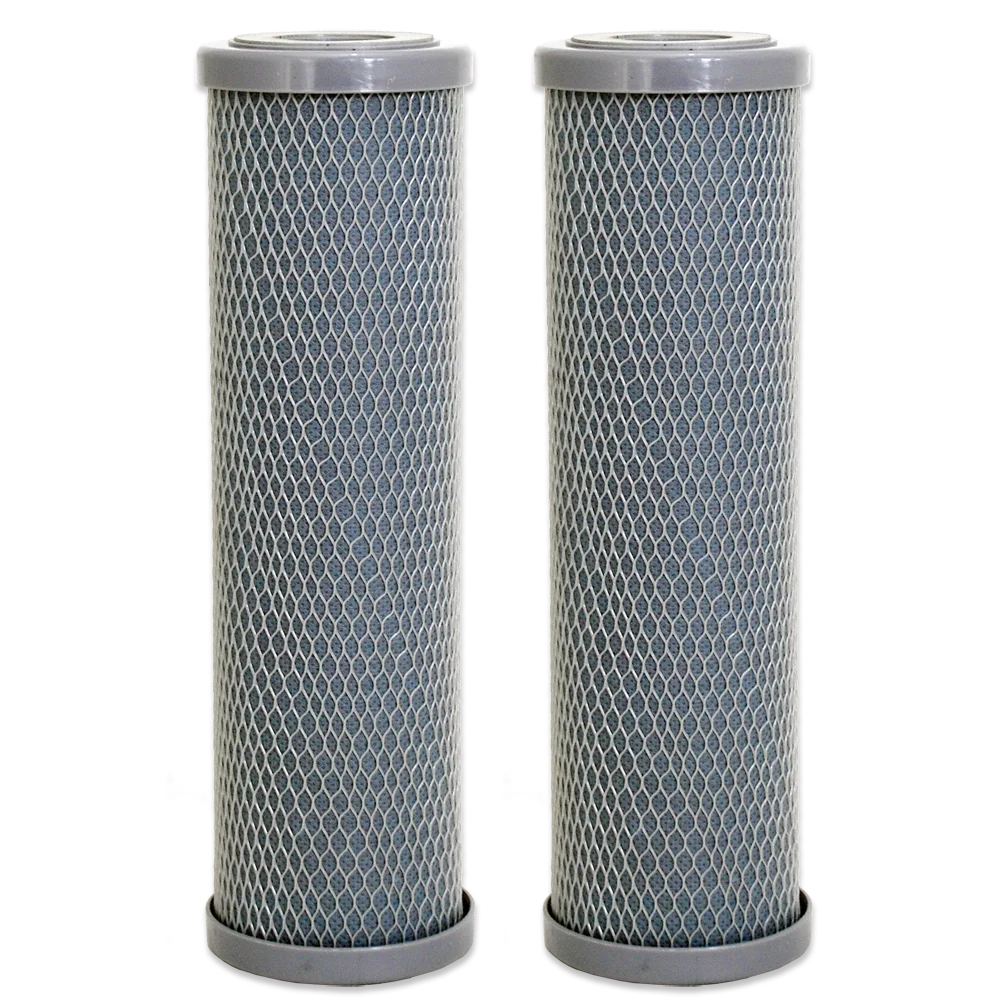
5. Coronwater CCBC-10C Carbon Block Cartridge
This is a solid 1-micron carbon block filter. We’ve used it as a standalone in a simple housing or as a polishing stage in a DIY system. It does a great job on chlorine and particulate reduction, including microplastics. At this price, it’s a steal for experimenters. Just know you’ll need a compatible filter housing to use it.
- Excellent value
- 1-micron rating
- Coconut shell carbon for good taste
- Requires separate housing
- No installation instructions
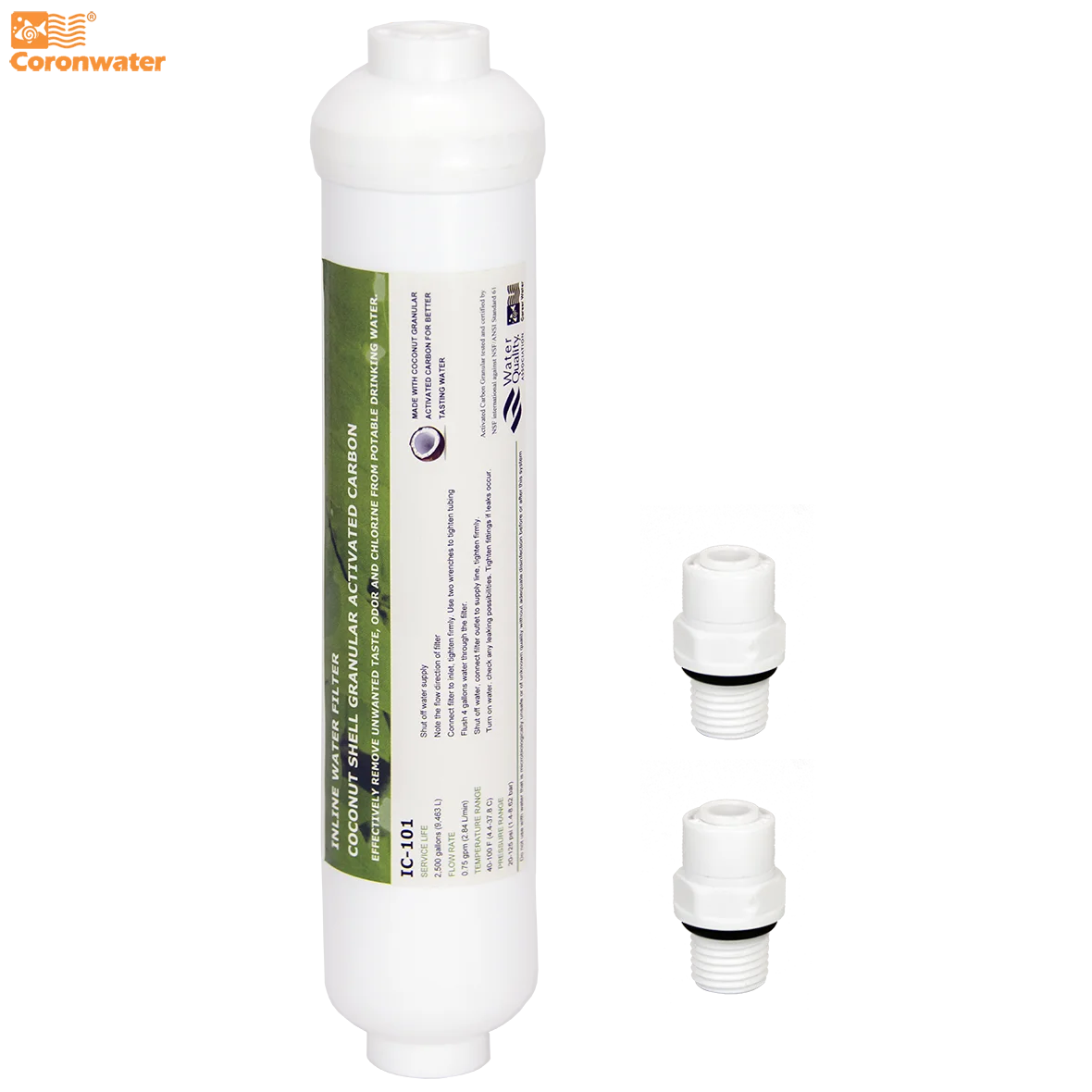
6. Coronwater IC-101 Inline GAC Postfilter
This little inline filter is a fantastic add-on. We’ve hooked it up to refrigerator water lines or as a final polishing stage after an RO system. It uses granular activated carbon (GAC) to catch any residual tastes or odours and will trap particles that made it past previous stages. It’s dead simple to install with quick-connect fittings.
- Extremely affordable
- Easy inline installation
- Improves taste of existing systems
- Not a primary microplastic filter
- Limited contaminant removal on its own
Frequently Asked Questions
- Do water filters really remove microplastics?
- Yes, but only filters with a sufficiently small pore size. Look for a 1-micron absolute rating or finer. Reverse osmosis membranes (0.0001 microns) are the most effective. Carbon block filters also capture them through adsorption. Always check for NSF/ANSI 401 certification.
- What is the best filter for microplastics in tap water?
- For most people, a high-quality under-sink carbon block filter offers the best balance of effectiveness, cost, and convenience. If you want maximum removal, a reverse osmosis system is unbeatable. For a simple start, a certified pitcher like the AQUAPHOR or ZeroWater is a great first step.
- How often should I change my microplastic filter?
- This depends entirely on the filter’s rated capacity and your water usage. A pitcher filter might last 2-4 months for a family. An under-sink carbon block could last 6-12 months. Never exceed the manufacturer’s recommended gallon or litre rating, as a saturated filter stops working.
- Can microplastics pass through a carbon filter?
- It depends on the filter’s construction. A loose granular activated carbon (GAC) filter may let smaller particles slip through. A solid, compressed carbon block with a 1-micron rating will physically strain them out. The block format is far superior for particle removal.
- Are microplastic filters worth it?
- In our view, yes. Given the prevalence of microplastics in the environment and water supplies, adding a filter is a low-cost, high-impact way to reduce your daily exposure. The health implications of ingesting plastics are still being studied, but why take the chance when a simple solution exists?
Final Thoughts
After all our testing, the single biggest mistake we see is overcomplicating it. You don’t need a $5,000 industrial system to make a real difference. Start with a quality pitcher or faucet filter that’s independently certified. See how you like the taste and convenience. For many, that’s the end of the journey.
But if you want the best protection possible, invest in a dedicated under-sink carbon block system or a reverse osmososis unit. The upfront cost is higher, but the per-litre cost is lower, and the performance is in a different league. Your water will be cleaner, taste better, and you’ll have one less thing to worry about. That’s a trade we’ll take every time.
