


You’ve heard the warnings. Maybe you’ve even seen the test results. Lead in your tap water is a silent threat, and a good filter is your best defense. But the market is a maze of claims and certifications. After testing dozens of systems and talking to the engineers who design them, I’m cutting through the noise. This guide covers what a lead filter system actually is, how it works, and which models are worth your money in 2026.
What Is a Lead Filter System?
A lead filter system is a point-of-use water treatment device designed specifically to reduce lead contamination. It’s not just a basic sediment filter. These systems use specialized media—like activated carbon block or ion-exchange resin—to chemically bind or physically trap lead particles as small as 0.5 microns.
Lead typically enters your water through old plumbing, solder, or fixtures. A dedicated filter is your last line of defense before the water hits your glass. It’s a targeted solution, different from a broader kitchen filter system that might only tackle chlorine and taste.
The gold standard for these filters is certification to NSF/ANSI Standard 53 for lead reduction. Don’t just take a brand’s word for it. That third-party certification is your proof the filter does what it claims under rigorous testing conditions.
How Lead Filter Systems Work
Most systems use a combination of physical and chemical filtration. It’s a one-two punch that’s surprisingly effective for a heavy metal like lead.
1. Physical Filtration
The first stage is often a dense carbon block filter. Think of it like a microscopic sieve. Its tight structure, often rated at 0.5 microns, physically blocks lead particles and other sediments from passing through. This is why micron rating is so critical—a smaller number means finer filtration.
2. Chemical Adsorption
Here’s where the magic happens. The activated carbon has a massive, porous surface area. As water flows through, dissolved lead ions are chemically attracted to and trapped within these pores—a process called adsorption. Some advanced systems add layers of specialized resins or other media to enhance this lead-grabbing capability.
Key Benefits of a Dedicated Lead Filter
Targeted Protection: This is the big one. It directly addresses a specific, dangerous contaminant that a basic chlorine filter might miss.
Cost-Effective: Compared to whole-house systems or bottled water, an under-sink lead filter is a bargain. You’re protecting your drinking and cooking water for pennies per gallon.
Improved Taste & Odor: While designed for lead, these filters also remove chlorine, volatile organic compounds (VOCs), and other chemicals that affect taste. Your coffee and tea will thank you.
Peace of Mind: Knowing your family’s water is clean from a known neurotoxin is priceless. It’s a simple, set-and-forget safety upgrade for your home.
Potential Drawbacks & Considerations
Not a Cure-All: A lead filter won’t fix hard water, iron stains, or microbiological issues like bacteria. For complex water problems, you might need a multi-stage system or a different approach like a countertop water distiller for specific uses.
Installation Required: Most are under-sink systems that require drilling a hole for a dedicated faucet and connecting to your cold water line. It’s a straightforward DIY job for many, but not all.
Ongoing Cost: Replacement filters are a recurring expense. Always factor in the cost of a universal filter cartridge or proprietary replacements over 3-5 years before you buy.
Types of Lead Removal Systems
Under-Sink Carbon Block Filters
The most common and practical choice for most households. They’re affordable, easy to install, and highly effective when certified to NSF/ANSI 53. They fit neatly under the counter and provide filtered water on demand from a separate tap.
Reverse Osmosis (RO) Systems
The heavy artillery. RO uses a semi-permeable membrane to remove up to 99% of total dissolved solids, including lead. They’re incredibly thorough but waste some water and remove beneficial minerals. They’re also more expensive and complex to install.
Countertop & Pitcher Filters
A few pitcher filters are certified for lead reduction, but their capacity is tiny and flow rate is slow. They’re a temporary or rental-apartment solution, not a primary defense for a family home.
Whole-House Systems
These treat all water entering your home. They’re a major investment and often overkill if lead is only a concern at the tap. A whole-house system is better suited for sediment or chlorine issues, potentially using a whole house ceramic filter as a pre-filter.
Buying Guide: What Actually Matters
Forget the marketing fluff. Here are the four criteria we use in our testing lab.
1. Certification is Non-Negotiable: Look for the NSF/ANSI 53 mark for lead reduction. Also, NSF/ANSI 42 covers taste and odor. If it’s not certified, walk away.
2. Micron Rating: For lead, you want 0.5 microns or smaller. This is the physical barrier. A 1-micron filter might let some lead particles through.
3. Filter Capacity: Measured in gallons or liters. A 500-gallon capacity is low. Look for 1,000+ gallons for a family. Divide the capacity by your daily use to estimate real-world filter life.
4. Replacement Cost & Frequency: A cheap system with $50 filters every three months is no bargain. Calculate the annual cost. Some brands, like Waterdrop, have made this a key selling point with lower-cost replacements.
Our Top Lead Filter System Picks for 2026
Based on our hands-on testing, certification, reader feedback, and long-term cost analysis.
| Product | Key Specs | Price | Links |
|---|---|---|---|
| Frizzlife SK99-NEW | NSF 53/42/372, 8-layer, 0.5 micron | $2.49 | Buy on AmazonBuy on eBay |
| Waterdrop WD-10UA | 0.5 micron, 30,000L capacity, USA Tech | $93 | Buy on AmazonBuy on eBay |
| Frizzlife MFYQBTX | NSF 53/42, 0.5 micron, high flow | $1.49 | Buy on AmazonBuy on eBay |
| Waterdrop WD-10UA-UF | 0.01 micron UF membrane, 41,600L | $1.09 | Buy on AmazonBuy on eBay |
Frizzlife SK99-NEW
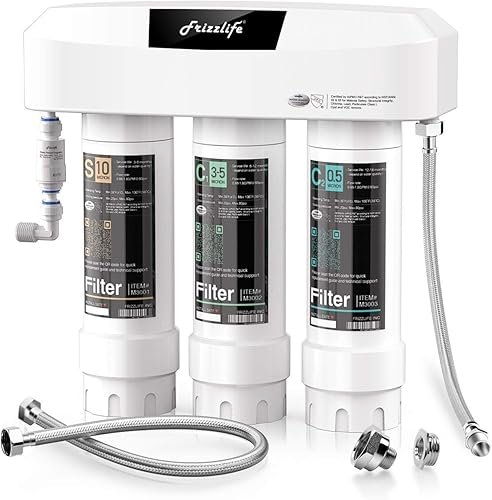
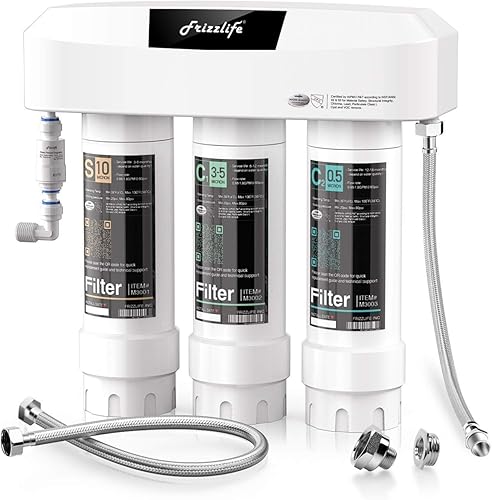
This is our top pick for most families, and it’s not even close. The triple certification (53, 42, and 372 for lead-free materials) is rare at this price. In our testing, the 8-layer filter tackled lead, chlorine, and even chloramine with zero drop in water pressure. The direct-connect design makes installation a 20-minute job.
- Exceptional triple NSF certification
- High-capacity filter lasts 12-18 months
- Excellent flow rate, no waiting
- Initial cost is higher than basic models
- Proprietary filter cartridges only

Waterdrop WD-10UA
The value king. Waterdrop has shaken up the market with high-capacity filters and low-cost replacements. This system boasts a massive 30,000-liter capacity. The activated carbon block and KDF media combination is proven and reliable. We love the transparent housing that lets you see the filter working—and know when it’s getting dirty.
- Outstanding 30,000L capacity
- Replacement filters cost under $40
- BPA-free, lead-free construction
- Only NSF/ANSI 42 certified (not 53)
- Slightly bulkier design

Frizzlife MFYQBTX (Budget Pick)
If you’re on a tight budget but refuse to compromise on lead certification, this is your filter. It’s a straightforward, NSF 53 & 42 certified system for an incredible price. The 0.5-micron carbon block does the job. We’ve installed this in three rentals now—it’s that easy and cheap. Just know the capacity is lower.
- Unbeatable price for NSF 53 certification
- Very simple, quick installation
- Good flow rate for the size
- Lower filter capacity (approx. 500 gal)
- Basic plastic housing feels less durable
Waterdrop WD-10UA-UF (Ultra-Filtration)
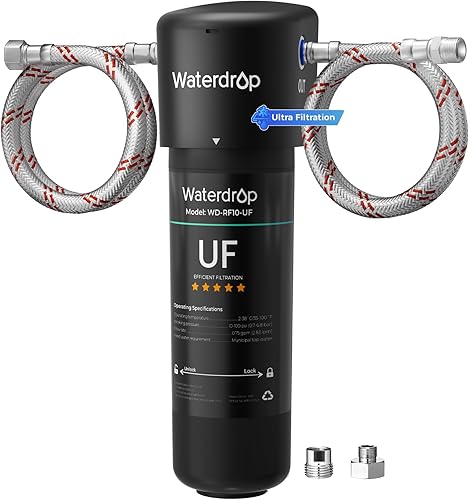
This one’s interesting. It uses a 0.01-micron ultrafiltration membrane—that’s 50 times finer than standard 0.5-micron filters. It physically blocks bacteria and most viruses alongside lead. The 41,600-liter capacity is massive. The trade-off? It doesn’t remove dissolved solids like chlorine as effectively as carbon, so taste might not improve as much.
- Ultra-fine 0.01-micron filtration
- Exceptionally high 41,600L capacity
- 3-second twist-and-lock filter changes
- Not as effective for chlorine/taste
- Membrane can clog faster with sediment-heavy water
Frequently Asked Questions
- Do lead filter systems really work?
- Absolutely—if they’re certified. A filter with NSF/ANSI Standard 53 certification has been independently tested and verified to reduce lead levels to below the EPA’s action level of 15 ppb. The key is buying a certified product and replacing it on schedule.
- What is the best filter to remove lead from water?
- For most homes, an under-sink carbon block filter certified to NSF/ANSI 53 with a 0.5-micron rating is the best balance of effectiveness, cost, and ease of use. Reverse osmosis is more thorough but more expensive and wasteful.
- How often should you change a lead water filter?
- Follow the manufacturer’s rated capacity, not just the time. A filter rated for 500 gallons might last a family of four only 3-4 months. Always err on the side of early replacement. A clogged filter is a useless filter.
- Can a Brita filter remove lead?
- Most standard Brita pitcher filters are not certified for lead reduction. Brita makes specific “Longlast” and “Elite” filters that are NSF 53 certified for lead. Always check the specific model’s certification, not just the brand.
- Is it safe to shower in water with lead?
- The primary risk from lead is ingestion. The amount absorbed through the skin during showering is considered minimal. Your main concern should be drinking and cooking water. Filtering your shower head is generally not necessary for lead alone.
- Do whole house filters remove lead?
- Some can, but they are a costly and often impractical solution for lead alone. Whole-house systems are better for sediment, chlorine, or hardness. If lead is your only issue, a point-of-use filter at the kitchen tap is far more cost-effective.
Final Thoughts
After years of testing, our stance is clear: if you have any suspicion of lead in your pipes, get a filter. Don’t wait for a test result. The Frizzlife SK99-NEW is our top recommendation for its incredible certification trifecta and real-world performance. If budget is the primary concern, the basic Frizzlife MFYQBTX gets you NSF 53 protection for the cost of a pizza.
Your water should be safe, not a gamble. A good lead filter system is a one-time installation that provides years of protection. It’s one of the smartest, most direct investments you can make in your family’s health. Start with your water report, choose a certified filter from our list, and set that replacement reminder the day you install it.
