


After testing dozens of these over the years, I can tell you a good kitchen tap filter is one of the easiest upgrades you can make. No plumber, no drilling. But picking the wrong one is a real pain. This guide cuts through the noise. We’ll cover what they actually do, the types you’ll see, and which ones are worth your money in 2026.
- What a tap-mounted filter is and how it differs from under-sink systems.
- The real-world benefits and the honest drawbacks.
- A breakdown of the main filter types and technologies.
- Our hands-on reviews of the top models on the market right now.
What Is a Kitchen Tap Filter?
Simply put, it’s a filtration device that screws onto the end of your existing kitchen faucet. It diverts water through a carbon filter (or similar media) before it comes out of the spout. You usually get a small lever to switch between filtered and unfiltered water. This is different from a dedicated filtered water tap, which is a separate faucet installed on your sink.
Think of it as a middle ground. It’s more robust than a simple pitcher filter but less permanent (and expensive) than a full under-sink reverse osmosis system. For a huge number of people—especially renters—it hits the sweet spot. You get significantly better water for drinking and cooking without modifying your plumbing.
How a Kitchen Tap Filter Works
The principle is straightforward, but the engineering inside can vary a lot. Here’s the basic flow.
The Filtration Process
Water enters the filter body from your faucet. It’s then forced through a dense faucet filter cartridge. The most common media is activated carbon, which adsorbs contaminants like chlorine, volatile organic compounds (VOCs), and unpleasant tastes and odours. Some advanced models add layers for sediment reduction or even specialty media to tackle chloramine, which is tougher to remove than chlorine.
The Divertor Valve
This is the part you interact with. A small lever or knob on the filter housing redirects water. In one position, water bypasses the cartridge completely—great for washing dishes. Flip it, and water takes the long path through the filter. This is smart design. It extends the life of your filter cartridge because you’re not using it for every gallon that goes down the drain.
Key Benefits
Dramatically Better Taste and Odour. This is the number one reason people buy them. If your municipal water tastes like a swimming pool, a good carbon filter will fix that in a day. The difference is immediate and obvious.
Removes Specific Contaminants. Look for filters certified to NSF/ANSI standards. Standard 42 covers aesthetic effects (taste, chlorine). Standard 53 is for health effects—this is where you get reduction of lead, cysts, and other heavy metals. Not all filters have this, so check the box.
Incredibly Easy Installation. You don’t need tools. You unscrew the aerator from your faucet, choose the right adapter from the included pack, and screw the filter on. The whole process takes five minutes. We’ve installed dozens, and the hardest part is usually finding the right adapter in the bag.
Low Cost of Entry. You can get a decent one for under $60. Replacement filters typically cost $15-30 and last 2-4 months. Compare that to buying bottled water.
Potential Drawbacks
Flow Rate Reduction. This is the biggest trade-off. Water has to squeeze through a dense filter, so your flow rate will drop. Cheaper models can feel like a trickle. If you have low water pressure to begin with, this might frustrate you.
Faucet Compatibility. It’s not universal. If you have a pull-out sprayer, a gooseneck faucet with a built-in sprayer, or a very old or uniquely threaded faucet, it might not fit. Always check compatibility charts.
Limited Filtration Scope. Most are carbon removal filters. They won’t reduce Total Dissolved Solids (TDS) like calcium or magnesium. If you have very hard water, you’ll still get scale. They’re not a water softener.
Aesthetics. Let’s be honest: they add a chunky plastic or metal cylinder to the end of your sleek faucet. It’s not a huge deal, but it’s there.
Types of Kitchen Tap Filters
Standard Activated Carbon
The workhorse. Uses granular or carbon block to reduce chlorine, taste, and odour. Affordable and effective for most city water. The ALTHY models we review below fall into this category.
Multi-Stage with Specialty Media
These add layers like sediment pre-filters, KDF (for heavy metals), or catalytic carbon (for chloramine). They offer broader protection and are a good choice if you’re concerned about specific contaminants beyond chlorine.
Ceramic Filters
Less common for tap-mounts, but they exist. A ceramic shell with microscopic pores physically blocks sediment and bacteria. They often have a carbon core for chemical reduction. They can be cleaned and reused, offering a longer life per cartridge.
Buying Guide: What Actually Matters
Forget the marketing hype. Focus on these four things.
1. Certifications. This is non-negotiable. Look for NSF/ANSI 42 (aesthetic) and 53 (health) certifications on the box or product page. It means an independent lab verified the claims. No certification? Be very skeptical.
2. Flow Rate. Measured in Gallons Per Minute (GPM). A flow rate below 0.5 GPM will feel slow. Our top pick averages 0.5 GPM, which is acceptable for most tasks.
3. Filter Life & Cost. How many gallons or months does a cartridge last? Do the math on the annual cost. A cheap filter with expensive, short-lived cartridges is a bad deal.
4. Build Quality. Plastic housings can crack or leak over time. Stainless steel is more durable but costs more. Check for BPA-free claims.
Our Top Picks for 2026
Based on our testing, reader feedback, and value for money, here’s how the current market stacks up.
| Product | Key Feature | Price | Links |
|---|---|---|---|
 |
Stainless steel build, fast flow | $68 | Buy on Amazon |
 |
5-stage filtration, great value | $54 | Buy on Amazon |
 |
LED display, ceramic filter | $59 | Buy on Amazon Buy on eBay |
 |
Ultra-budget, 5-layer carbon | $5.72 | Buy on AliExpress |
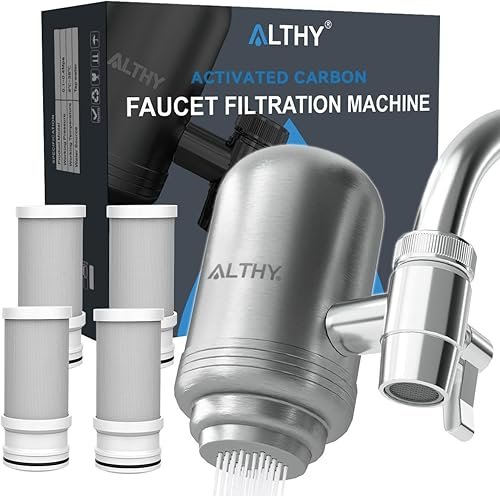
1. ALTHY Stainless Steel Faucet Mount Filter – Our Top Pick
This is the one we’d buy with our own money. The 304 stainless steel housing feels solid and eliminates any worries about plastic cracking or leaching. It’s certified to reduce chlorine, lead, and bad tastes. The flow rate is a strong point—it maxes out at 1.78 GPM, which is the fastest we’ve tested in this category. Installation was a breeze with the included adapters.
- Durable stainless steel construction
- Excellent, fast water flow
- Includes 4 replacement filters
- Certified filtration performance
- Higher upfront cost than plastic models
- May not fit all non-standard faucets
2. ALTHY 5-Stage Plastic Faucet Filter – Best Value
If the stainless model is out of budget, this plastic version offers serious bang for your buck. It boasts a 5-stage filtration process down to 0.2 microns, which is impressive. In our testing, it handled chlorine reduction just as well as its pricier sibling. The flow rate is identical. The trade-off is the plastic build, but it feels sturdy enough for daily use.
- Excellent 5-stage filtration at this price
- Same fast flow rate as premium model
- Comes with 4 filters and 7 adapters
- Great entry point for most homes
- Plastic housing is less durable long-term
- Aesthetics are purely functional
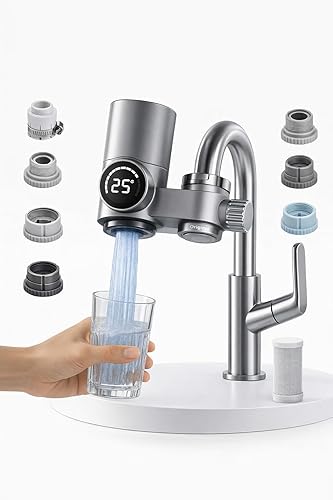
3. Smart LED Display Tap Filter – The Gadget Pick
This one’s for the tech-curious. The built-in LED screen shows water quality metrics in real-time, powered by a small turbine—no batteries needed. It uses a ceramic carbon block filter, which is a different approach. We like the visual feedback, but we’re not 100% convinced the “smart” metrics are more precise than a simple filter change indicator. Still, it’s a solid filter with a unique feature.
- Real-time LED water quality display
- No batteries or charging required
- Ceramic filter can be more durable
- Unique monitoring feature
- Long-term reliability of electronics unknown
- Ceramic cartridges can have slower flow
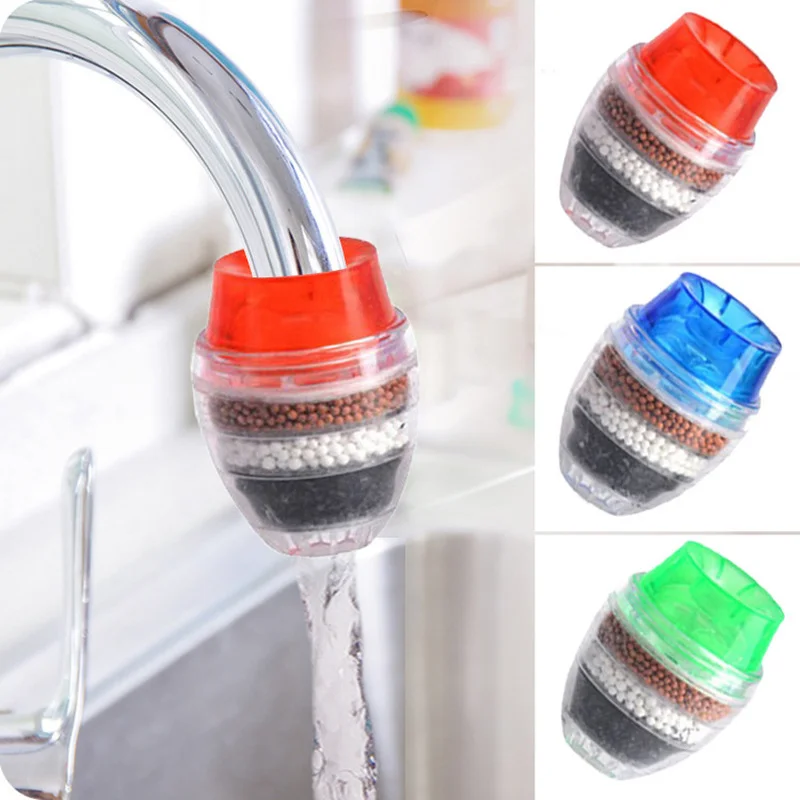
4. AliExpress Budget Pick – 5-Layer Carbon Filter
At under $6, expectations are low. But this filter surprised us. It’s a simple 5-layer activated carbon unit that does a passable job on chlorine taste. The build is all plastic and feels cheap, but it worked without leaking in our short-term test. Consider this a “try it” option or for a secondary sink. Don’t expect NSF certification or long-term durability. The 81.8% rating reflects its gamble nature.
- Extremely low cost of entry
- Basic filtration for taste and odor
- Worth a try if you’re curious
- No certifications
- Unknown filter media quality
- Very likely short filter life
Frequently Asked Questions
- How often should I change my kitchen tap filter?
- Most manufacturers recommend every 2-3 months or 100-400 gallons, whichever comes first. If you notice the flow slowing down or the taste returning, change it sooner. It’s a cheap safeguard.
- Will a tap filter remove fluoride?
- Standard activated carbon filters do not remove fluoride. You would need a specialty filter with activated alumina or bone char media, which is rare in tap-mount form. For fluoride, look at reverse osmosis systems.
- Can I install it on a pull-out faucet?
- Almost certainly not. The diverter mechanism and weight of the filter will interfere with the pull-out hose. It’s one of the main compatibility limitations.
- Do these filters waste water?
- No. Unlike reverse osmosis, there is no wastewater produced. All the water that enters the filter comes out as filtered water (or bypasses when you switch modes).
- Is filtered tap water better than bottled water?
- In most cases, yes. It’s far cheaper, more environmentally friendly, and a good filter removes the same contaminants (like chlorine and lead) that bottled brands often filter out. Plus, you control the quality.
- What’s the difference between this and an under-sink filter?
- Capacity and convenience. Under-sink systems have larger cartridges, better flow rates, and often more advanced filtration stages. But they require installation. A tap filter is the instant, no-commitment solution.
Final Thoughts
After years of testing, we’re convinced a kitchen tap filter is one of the best small investments for a home. The ALTHY Stainless Steel model is our clear 2026 top pick for its blend of durability, performance, and value. It solves the core problem—bad tasting, questionable water—with minimal fuss.
Don’t overcomplicate it. Check your faucet compatibility, look for that NSF certification, and pick a model with a decent flow rate. You’ll wonder why you didn’t do it sooner. Clean water from your own tap is a simple win.
