


Kitchen Faucet Filter: The Practical Guide & Top Picks (2026)
Forget the bulky pitcher taking up fridge space. If you want cleaner water straight from the tap, a faucet-mounted filter is your simplest upgrade. We’ve installed, tested, and lived with dozens of these units. This guide cuts through the marketing to show you what actually works, what to avoid, and which models are worth your money in 2026.
- What a faucet filter actually removes (and what it doesn’t)
- How to choose the right type for your water concerns
- Our hands-on reviews of the top contenders
- Installation tips and maintenance must-knows
What Is a Kitchen Faucet Filter?
It’s a compact filtration device that screws onto the end of your existing kitchen faucet. A diverter valve lets you switch between unfiltered tap water (for washing dishes) and filtered water (for drinking and cooking). No plumbing modifications, no separate hole in your countertop. Most install in under two minutes.
These filters primarily use activated carbon filter media to reduce contaminants through adsorption. They’re not for removing everything—a common misconception. Their main job is improving taste and odor by reducing chlorine, and tackling specific health-related contaminants like lead, depending on the certification. Think of it as a first line of defense, not a full purification system.
How a Faucet Filter Works
The Filtration Process
When you flip the switch, water flows from the faucet into the filter housing. It passes through a cartridge packed with filtration media—usually a blend of activated carbon and other specialized materials. Contaminants bind to the carbon’s porous surface as water flows through. The filtered water then exits through a separate spout.
What It Actually Removes
This is where you need to read the fine print. A basic filter might only tackle chlorine (NSF/ANSI 42). A good one will also reduce lead, asbestos, and some pesticides (NSF/ANSI 53). Some advanced models add a sub-micron membrane to catch cysts like giardia. But none will remove dissolved minerals (TDS), so a TDS meter won’t show a drop—that’s normal and not a flaw.
Key Benefits of Installing One
Instant Access to Better-Tasting Water. No waiting, no refilling pitchers. You’ll drink more water, which is always a win.
Cost-Effective Compared to Bottled Water. A $30 filter cartridge can replace hundreds of dollars worth of plastic bottles. The math is simple.
Reduces Specific Health Risks. If your home has old pipes, a filter certified for lead reduction (NSF/ANSI 53) provides crucial peace of mind. It’s a targeted solution for known problems.
Minimal Space & Simple Install. It lives on your faucet. No under-sink space required. Renters love them because they leave no trace.
Potential Drawbacks to Consider
Filter Life Varies Wildly. A 100-gallon filter in a family home might last a month. Check the capacity and set a replacement reminder.
Not a Total Solution. If you have serious well water issues with iron, sulfur, or very high TDS, you need a more robust system like a dedicated iron and sulfur filter.
Types of Faucet Filtration Systems
Basic Carbon Filters
The most common and affordable type. They use a simple carbon removal filter to reduce chlorine, odors, and some VOCs. Great for municipal water that just tastes of chlorine.
Multi-Stage with Specialty Media
These combine carbon with other media. Some add KDF for heavy metals, or a fluoride removal filter media if that’s a concern in your area. They offer broader protection but cost more.
Sub-Micron Membrane Filters
The top tier for faucet mounts. They include a physical membrane (often 0.1-0.5 micron) that blocks bacteria and cysts. Essential if you’re on a boil-water advisory or have questionable source water.
Buying Guide: What Actually Matters
1. Certification is Non-Negotiable. Ignore fancy marketing. Look for NSF/ANSI 42 (aesthetic effects like chlorine) and 53 (health effects like lead). This is your only guarantee.
2. Filter Capacity & Cost. Calculate the cost per gallon. A 200-gallon filter for $25 is a better deal than a 100-gallon filter for $20. Always check the price of the filter cartridge replacement.
3. Build Quality & Adapter Fit. Plastic threads can strip. Metal adapters are more durable. Ensure it comes with the right aerator adapter for your faucet (most do).
4. Filter Change Indicator. Life gets busy. A simple LED light or countdown timer takes the guesswork out of replacements, which is critical for performance.
Our Top Picks for 2026
| Product | Key Feature | Price | Best For |
|---|---|---|---|
 Smart Tap UV Filter |
Smart LED Display, Ceramic Cartridge | $59 | Tech lovers wanting real-time water quality data. |
 Philips Water Ontap Filter |
Ultrafiltration (0.1µm), 1200L capacity | $47 | Those wanting bacteria/cyst removal without a separate system. |
 360° Rotating Filter |
Ultra-low cost, transparent body | $12 | Budget-conscious users on safe municipal water. |
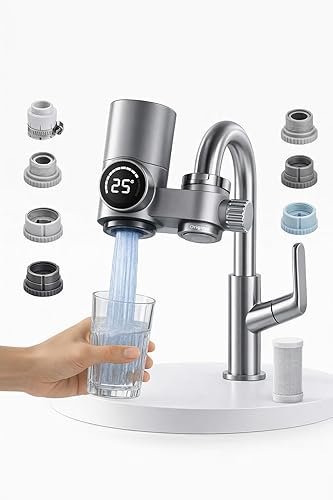
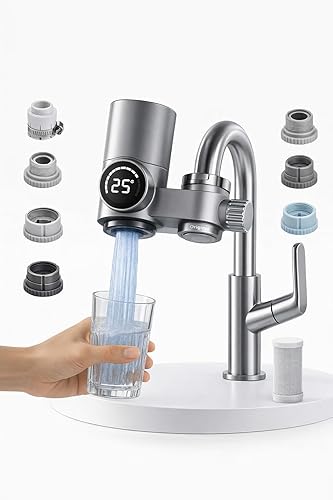
Smart Tap UV Water Purifier Filter
This one surprised us. The LED display showing water quality feels like a gimmick, but it’s oddly motivating—you actually see the filter working. The ceramic cartridge is a nice touch for longevity. Installation was straightforward, though the unit is bulkier than a standard filter. It’s powered by water flow, so no batteries needed.
- Real-time quality feedback
- No battery required
- Durable ceramic filter element
- Larger physical size on faucet
- Higher upfront cost
- LED can be hard to see in bright light
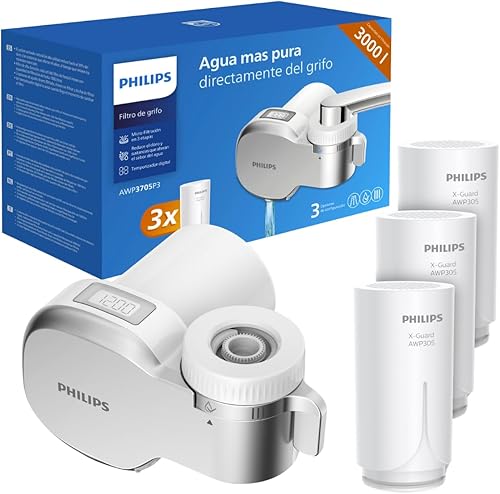
Philips Water Ontap Filter AWP3754/10
Philips brings its appliance credibility here. The 0.1-micron ultrafiltration membrane is the real deal for bacteria and microplastics. The three-mode selector (filtered, jet, spray) is genius—why don’t all filters have this? It feels well-built. The 1200-liter capacity is decent for a household. This is our top pick for most people who want serious filtration without going under-sink.
- True sub-micron filtration (0.1µm)
- Excellent 3-mode water selector
- Good 1200L capacity
- Higher price than basic carbon filters
- Replacement filters are proprietary
- May reduce flow rate noticeably
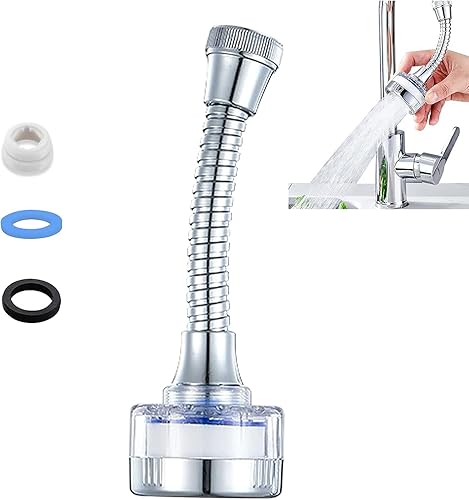
360° Rotating Faucet Filter
At $12, what do you expect? Honestly, for the price, it’s not bad. The transparent body lets you see the filter getting dirty, which is a handy visual cue. The 360-degree rotation is convenient. But don’t expect miracles—it’s a basic carbon filter for chlorine taste and odor. We’d only recommend this if your water is already safe and you just want taste improvement.
- Extremely affordable
- Transparent filter monitoring
- Full 360° rotation
- Basic filtration only (no health claims)
- Short filter life
- Plastic construction feels cheap
Frequently Asked Questions
- How often should I change my kitchen faucet filter?
- Follow the manufacturer’s guideline, usually based on gallon capacity or months. For a typical 100-200 gallon filter in a family home, that’s every 2-3 months. If your water has high sediment, it may clog sooner. A filter change indicator removes all guesswork.
- Do faucet filters reduce water pressure?
- Yes, always. The filtered water stream will be noticeably weaker than your unfiltered tap. How much depends on the model and your home’s water pressure. Higher-quality filters with larger membranes tend to maintain better flow rates.
- Can I install a faucet filter myself?
- Absolutely. No tools are usually needed. You unscrew your faucet’s aerator, screw on the provided adapter, and click the filter into place. The whole process takes 1-2 minutes. If you have a non-standard faucet, check the included adapter sizes first.
- Will a faucet filter remove fluoride?
- Most standard carbon filters do not. You need a filter specifically certified for fluoride reduction, which often uses activated alumina media. Always check for NSF/ANSI certification for fluoride if that’s your primary concern.
- Are these filters good for well water?
- It depends on your well water report. For basic sediment and taste issues, maybe. But for iron, sulfur bacteria, or very hard water, a dedicated whole house filter cartridge system is a much better investment. A faucet filter is a final polishing step, not a primary treatment for problematic well water.
Final Thoughts
After testing everything from $12 generics to $60 smart filters, our advice is simple: don’t overcomplicate it. For most people on municipal water, the Philips Water Ontap Filter hits the sweet spot of proven filtration, useful features, and reasonable cost. Its 0.1-micron membrane offers real protection that basic carbon filters can’t match.
If your budget is tight and your water is already decent, start with a basic certified carbon filter. It’s a low-risk way to improve your daily water. Whatever you choose, remember the golden rule: check the NSF certification. That little number tells you more than any marketing buzzword ever will.
