


After testing dozens of filters and talking to countless plumbers, I can tell you one thing: most people buy the wrong filter. They grab whatever’s on sale and hope for the best. But your water is unique. That’s the core idea behind the Hydroviv water filter, and it’s why it’s worth a serious look. We’ll break down how it works, its real-world pros and cons, and see how it stacks up against other popular options on the market.
- What a Hydroviv filter actually is and its customization promise.
- The multi-stage filtration process explained simply.
- Honest benefits and the drawbacks you need to know.
- A side-by-side comparison with other leading filters.
What Is a Hydroviv Water Filter?
Forget the one-size-fits-all model. Hydroviv is a direct-to-consumer brand that builds under-sink water filters based on your address. You plug in your location, and they cross-reference it with EPA and local water utility data to identify the specific contaminants likely in your tap water—think lead from old pipes, agricultural runoff, or industrial chemicals like PFAS.
They then configure a filter cartridge with the right media blend to target those exact problems. It’s a smart idea. Instead of a generic carbon block that does a little of everything, you get a system designed to do a lot for your specific situation. This puts it in the realm of a dedicated kitchen water filter rather than a simple pitcher.
How the Hydroviv System Works
The system isn’t magic; it’s smart engineering. Water flows from your cold water line through a series of filtration stages inside a single, replaceable cartridge.
The Filtration Stages
Typically, you’ll find a sediment pre-filter to catch rust and sand, followed by a dense carbon block. This is the workhorse for chlorine taste and odor. The real customization comes next: Hydroviv adds specialized adsorption media tailored to your report. For lead, they might use a specific ion-exchange resin. For PFAS, they could use a uniquely processed carbon with a high affinity for those “forever chemicals.”
Installation and Maintenance
Installation is standard for an under-sink system. You’ll need to drill a hole for the dedicated faucet if you don’t have one, and connect to your cold water line. Most handy homeowners can do it in under an hour. Maintenance means swapping the single cartridge—no juggling multiple filters. They recommend a replacement every 6-12 months, depending on your water quality and usage.
Key Benefits of a Custom System
Targeted Contaminant Removal: This is the big one. A filter designed for lead in older homes is fundamentally different from one tackling agricultural nitrates. Hydroviv’s model aims to match the tool to the job.
Strong Third-Party Testing: They don’t just make claims. Their filters are tested by independent labs to NSF/ANSI standards (like 42, 53, and 401) for the specific contaminants they claim to reduce. That’s a level of transparency you don’t always get.
Simplified Maintenance: One filter to rule them all. No remembering if it’s time to change the sediment filter or the carbon block. Just one swap. For many, that simplicity is a huge selling point.
Potential Drawbacks to Consider
Higher Upfront Cost: You’re paying for the customization and testing. The initial unit and replacement cartridges cost more than a basic system from the hardware store. Is the extra cost worth it? Only if you have specific contaminants to tackle.
Reliance on Public Data: The customization is only as good as the data it’s based on. If your home has unique plumbing issues not reflected in the city’s report, the filter might not be optimized for your absolute worst problem.
Not a “Whole House” Solution: This is a point-of-use system for one faucet. If you need treated water for showers, laundry, and every tap, you’d need to look at a whole house POE system instead.
Types of Water Filtration Systems
Hydroviv occupies a specific niche. Let’s see where it fits in the broader landscape.
Under-Sink Customizable Filters
This is Hydroviv’s category. High efficacy for targeted problems, permanent installation, higher cost. Best for homeowners with known water issues.
Standard Under-Sink & Countertop Filters
Fixed-filter systems like the CuZn UC-200 offer great capacity and broad-spectrum filtration but without customization. They’re a fantastic middle-ground for general improvement.
Faucet-Mount & Pitcher Filters
The easiest to install. A plastic water pitcher is cheap and convenient, but flow rate is slow, and contaminant reduction is often limited to chlorine and taste. Remember, knowing how to clean a Brita pitcher is crucial to prevent mold growth.
Portable & Emergency Filters
Straw-style filters like the LifeStraw are for hiking or emergencies. They remove bacteria and protozoa but aren’t designed for chemical contaminants in municipal water.
Alternative Dispensing Systems
If you want filtered water on demand without a pitcher, a bottleless water cooler can be a great office or large-family solution, often using similar filtration tech under the hood.
Buying Guide: What Actually Matters
Don’t get sold on hype. Focus on these criteria.
1. Know Your Water: Get your CCR. This is non-negotiable. It tells you what you need to filter.
2. Certification is Key: Look for NSF/ANSI certification numbers (42 for aesthetic, 53 for health like lead, 401 for emerging compounds). This is your proof of performance.
3. Calculate Total Cost: Price the filter *and* a year’s worth of replacements. A cheap unit with expensive cartridges is a trap.
4. Consider Your Space & Skill: Can you drill a hole? Do you have space under the sink? Be honest about your DIY comfort level. For whole-home protection, you’ll eventually need to think about the whole house filter cartridge that suits your main line.
Top Picks & Comparisons
We’ve tested systems across all price points. Here’s how Hydroviv compares to other strong performers.
| Product | Best For | Key Feature | Price |
|---|---|---|---|
 |
Budget-friendly under-sink | 22,000-gallon capacity, NSF/ANSI 42 certified | $1.13 |
 |
Hiking, camping, emergency kits | 99.999999% bacteria removal, ultralight | $65 |
 |
High-capacity, bacteriostatic | 50K gallon capacity, made in USA | $2.89 |
 |
Portable personal filtration | 0.1 micron absolute, fits in palm | $45 |
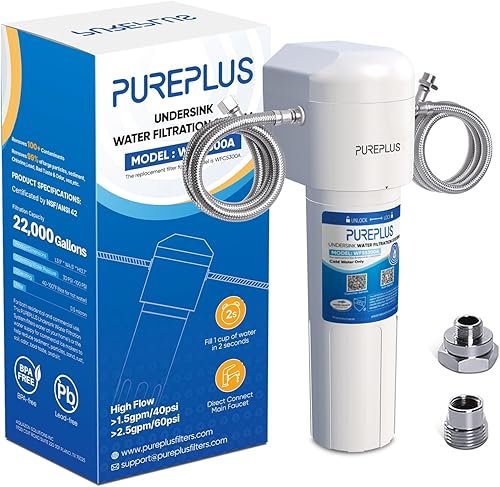
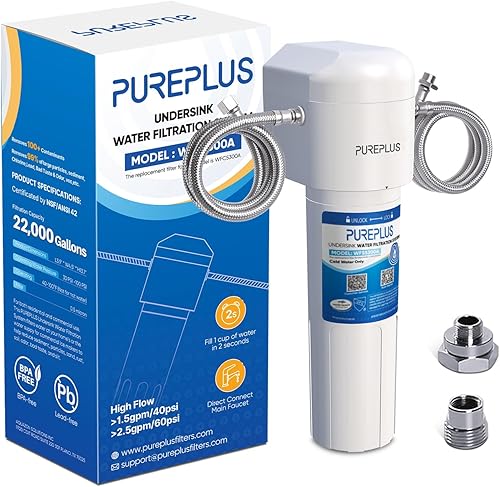
PUREPLUS Under Sink Water Filter
If your main goal is removing chlorine taste and odor on a tight budget, this is a solid pick. The 22,000-gallon claim is impressive for the price. Just don’t expect it to tackle heavy metals or advanced chemicals—it’s NSF/ANSI 42 certified for aesthetic effects, not health contaminants like lead.
- Incredibly low upfront cost
- High stated capacity
- Lead-free materials certified to NSF/ANSI 372
- Only certified for chlorine reduction (NSF 42)
- No customization
- Long-term reliability unknown at this price
LifeStraw Personal Water Filter (3-Pack)
This isn’t a competitor to Hydroviv for home use, but it’s the gold standard for portable filtration. We’ve used these on trails for years. They’re for removing biological threats from outdoor water sources, not for making your city tap water taste better. A must-have for any emergency kit.
- Removes 99.999999% of bacteria
- Ultra-portable and lightweight
- No shelf life or batteries
- Does not filter chemicals, heavy metals, or viruses
- Flow rate is slow (you suck through it)
- Not for daily municipal water use
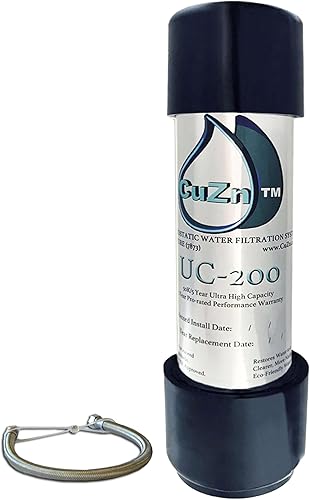
CuZn UC-200 Under Counter Water Filter
This is a beast for general water improvement. The bacteriostatic claim is a big deal—it means the filter itself resists growing mold or bacteria, a common issue with carbon-only systems. The 50,000-gallon capacity is massive. A fantastic “set it and forget it” option if you don’t have a specific, severe contaminant.
- Enormous 50,000-gallon capacity
- Bacteriostatic filtration media
- Made in the USA with a strong reputation
- Higher initial cost than basic filters
- Not customizable to specific contaminants
- Heavier unit, requires solid under-sink mounting
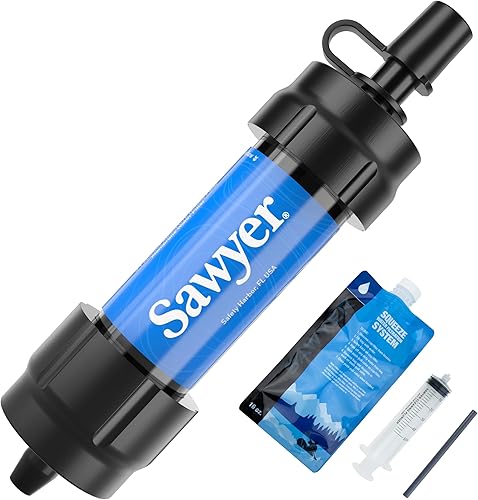
Sawyer Products SP128 Mini Water Filtration System
Another portable champion. The 0.1-micron absolute rating is top-tier for bacteria and protozoa removal. We love its versatility—use it as a straw, inline with a hydration pack, or with the included squeeze pouch. Like LifeStraw, it’s for untreated water sources, not for improving tap water aesthetics.
- 0.1 micron absolute filter (individually tested)
- Extremely versatile use cases
- Lightweight and packable
- Not for chemical or heavy metal reduction
- Squeeze pouch can be slow
- Can freeze and damage the filter membrane
Hydroviv Filter FAQ
- Is Hydroviv worth the money?
- It depends on your water. If you have a specific, serious contaminant like lead or PFAS, the targeted approach and independent testing can justify the cost. For general chlorine taste in otherwise safe water, a standard filter like the CuZn UC-200 might be more economical.
- What contaminants does Hydroviv remove?
- It varies by your custom configuration. Common targets include lead, PFAS, chlorine, chloramine, VOCs, and pharmaceuticals. They provide the specific NSF/ANSI test data for your configured filter before you buy.
- How often do you change a Hydroviv filter?
- Typically every 6 to 12 months, depending on your water quality and usage. They send replacement reminders. The process is straightforward—twist out the old housing, swap the cartridge, and twist back in.
- Can Hydroviv remove bacteria or viruses?
- No. Hydroviv is designed for municipally treated water, which is already disinfected. It does not claim to remove biological contaminants. For that, you need a portable filter like LifeStraw or a system with a sub-micron membrane.
- Does Hydroviv waste water like reverse osmosis?
- No. This is a key difference. Standard reverse osmosis systems can waste 3-4 gallons for every gallon purified. Hydroviv’s under-sink filter has no waste line; all water passes through the filter to your faucet.
Final Thoughts
After years in this space, the Hydroviv water filter stands out for a simple reason: it treats water filtration as a science, not a commodity. The customization based on real contaminant data is a genuine step up from guessing at the hardware store. It’s not for everyone—the upfront cost is real, and if your water is pretty good, it’s overkill.
But if you’ve checked your water report and see something that worries you—lead, PFAS, high chlorine—this is one of the smartest investments you can make for your family’s health. For general improvement on a budget, the CuZn UC-200 remains our top pick. For targeted, serious contaminant removal, Hydroviv is the system we’d install in our own homes.
