


Thinking about getting a water filter for your home? You’re not alone. After testing dozens of systems and talking to countless plumbers, I can tell you the market is flooded with options—and not all of them are worth your money. This guide cuts through the noise. We’ll cover what these systems actually do, how to pick the right one, and which models we’d actually install in our own homes.
- What a household water filter system is and why you might need one
- The different types available and how they work
- Key benefits and honest drawbacks
- Our top product picks for 2026 with hands-on insights
What Is a Household Water Filter System?
Simply put, it’s a device or set of devices installed in your home to remove unwanted substances from your water before you drink, cook, or bathe with it. These systems range from simple pitchers with a carbon filter to complex multi-stage setups that treat every drop entering your house.
The need for one isn’t universal. If your municipal water is pristine and you’re happy with the taste, you might skip it. But for many of us, tap water carries a faint chlorine odor, visible sediment, or trace contaminants we’d rather avoid. A good filter tackles that. It’s a proactive step for your health and your home’s plumbing—and it can save you a fortune compared to buying bottled water. For a deeper look at the purification step that comes before filtration, our guide on drinking water treatment explains the broader process.
How Household Water Filters Work
Most filters don’t work like a simple screen. They use a combination of physical and chemical processes to trap or neutralize impurities. Here’s a breakdown of the common mechanics.
Physical Filtration
This is the most straightforward method. Water is forced through a porous material—like a pleated sediment cartridge or a dense block of carbon. The pore size, measured in microns, determines what gets caught. A 5-micron filter stops sand and rust. A 0.5-micron one can trap some cysts. It’s like a series of increasingly fine nets.
Adsorption (Activated Carbon)
This is the workhorse for taste and odor. Activated carbon has a massive surface area riddled with tiny pores. As water passes, contaminants like chlorine, volatile organic compounds (VOCs), and some pesticides stick to the carbon through a process called adsorption. It’s incredibly effective, but the carbon eventually gets saturated and needs replacement. The quality of the carbon block matters immensely—a cheap one won’t last.
Reverse Osmosis (RO)
RO is the heavy artillery. It uses pressure to push water through a semi-permeable membrane with pores so small (around 0.0001 microns) that only water molecules get through. It strips out dissolved salts, heavy metals like lead, fluoride, and even some microorganisms. The downside? It also removes beneficial minerals and creates wastewater (brine). You’ll often see RO systems paired with a final carbon filter and sometimes a remineralization stage. The is distilled water safe debate touches on similar concerns about demineralized water.
Key Benefits of Filtering Your Water
Better Taste and Odor: The most immediate change. Removing chlorine and sulfur compounds makes water more pleasant to drink. You’ll actually want to drink from the tap.
Contaminant Reduction: A certified filter can significantly reduce lead, mercury, asbestos, and certain bacteria. This is crucial if you have old pipes or live near agricultural runoff.
Cost Savings: The math is simple. A whole-house system might cost a few hundred dollars upfront, but it eliminates the endless cycle of buying bottled water and refrigerator filtered water cartridges, which add up fast.
Appliance Protection: Sediment filters protect your water heater, washing machine, and dishwasher from scale and grit buildup, extending their lifespan. This is especially true for a dedicated filter housing system on your main line.
Potential Drawbacks to Consider
Don’t ignore the maintenance. Every filter has a lifespan. Forgetting to change cartridges can lead to bacterial growth on a saturated filter or a drop in water pressure. It’s a recurring cost and chore.
Not all filters are equal. A basic pitcher won’t remove heavy metals. You must match the filter’s capabilities to your water report. Buying the wrong type is a waste of money.
RO systems waste water. For every gallon of pure water produced, a traditional RO system might send 3-4 gallons down the drain. Newer, more efficient models exist, but it’s a factor to weigh.
Types of Household Water Filter Systems
Pitcher & Faucet-Mount Filters
The entry point. Cheap and require no installation. Great for improving taste in a rental. But their small size means limited contaminant reduction and frequent refills. We see them as a temporary solution, not a serious one.
Countertop & Under-Sink Systems
This is where performance gets real. Under-sink systems connect directly to your cold water line and dispense through a dedicated faucet. They can house multiple filter stages, including powerful carbon blocks and RO membranes. Countertop versions offer similar filtration without permanent installation—perfect for renters or offices. The Waterdrop CoreRO we review below is a prime example.
Whole-House Systems
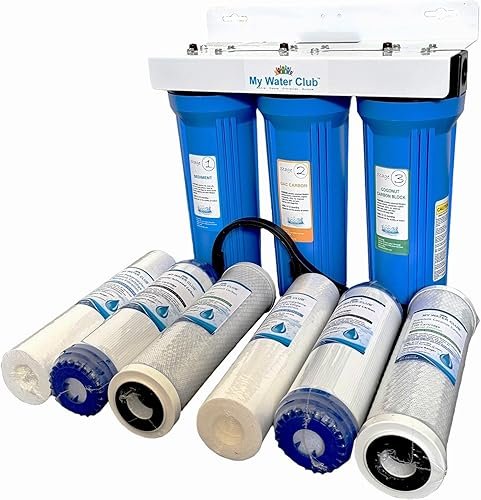
Installed at the point where water enters your home, these treat every tap, shower, and appliance. They’re primarily for sediment, chlorine, and scale reduction. Don’t expect a whole-house system to remove all drinking water contaminants—you’ll often pair it with an under-sink unit for the kitchen. Our top pick, the MyWaterClub system, is a classic 3-stage whole-house unit.
For targeted shower filtration to reduce chlorine exposure during bathing, a dedicated aquasana filter shower head is a popular add-on.
Reverse Osmosis (RO) Systems
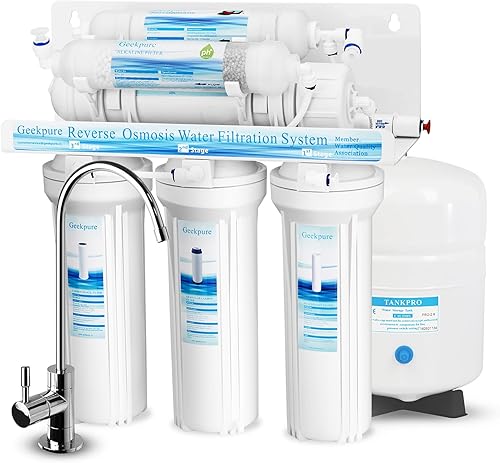
The gold standard for purity at the tap. They typically have 4-7 stages: sediment pre-filter, carbon pre-filter(s), the RO membrane, a carbon post-filter, and sometimes an alkaline water treatment or UV stage. They produce exceptionally clean water but require more space and maintenance.
Buying Guide: How to Choose
1. Get Your Water Tested. This is non-negotiable. You can’t fix what you don’t know is broken. A simple test kit reveals hardness, chlorine, pH, and common contaminants.
2. Identify Your Goal. Is it just better-tasting coffee? Or do you need to remove lead and PFAS? Your goal dictates the filter type and micron rating.
3. Check Certifications. Look for NSF/ANSI Standards 42 (aesthetic effects like chlorine), 53 (health effects like lead), and 58 (for RO systems). Certification means independent verification.
4. Consider Flow Rate & Capacity. A whole-house system needs a high flow rate (measured in liters per minute) to avoid pressure drops. An under-sink system’s capacity tells you how many gallons it treats before needing a filter change.
5. Calculate Total Cost. Factor in the unit price, replacement filter costs, and frequency. A cheap system with expensive filters is a bad deal.
Our Top Picks for 2026
| Product | Type | Key Feature | Price |
|---|---|---|---|
 MyWaterClub 3-Stage |
Whole House | 3-stage filtration, extra filters included | $3.14 |
 20″ Big Blue Triple Stage |
Whole House | High 75L/min flow, WaterMark certified | $6.75 |
 Geekpure 6-Stage RO |
Under-Sink RO | 75 GPD, alkaline remineralization | $2.39 |
 Waterdrop CoreRO |
Countertop RO | No installation, NSF/ANSI 372 certified | $3.99 |
1. MyWaterClub Whole House Water Filter System, 3-Stage
This is the no-fuss, get-it-done whole-house system we recommend for most homes on municipal water. The 3-stage process—sediment, GAC, then a carbon block—effectively knocks out chlorine, dirt, and odors for every tap. The fact that it comes with two extra sets of filters is a huge value win. It’s not fancy, but it’s reliable and incredibly cheap upfront.
- Exceptional value with extra filters
- Simple, proven 3-stage design
- Effectively improves taste and clarity
- Manufacturer warranty may not apply
- Basic plastic housing
- Not for heavy metal removal
2. 20” x 4.5” Big Blue Triple Stage Whole House System
If you have a larger home or want a more robust, certified setup, this Big Blue system is the step up. The 75L/min flow rate means you won’t notice any pressure drop in the shower. We love the brass ports and WaterMark certification—it feels built to last. The three cartridges (pleated sediment, antibacterial sediment, and 0.5μm carbon block) offer finer filtration than most entry-level systems.
- High flow rate for large households
- Durable brass fittings, WaterMark certified
- Finer 0.5μm carbon block filtration
- Higher upfront cost
- Replacement cartridges are specific size
- Requires more installation space
3. Geekpure 6-Stage Reverse Osmosis System
This is a classic under-sink RO workhorse. The 6 stages, including a final alkaline remineralization filter, address the common complaint that RO water tastes flat. The NSF-certified membrane and lead-free faucet show attention to quality. It’s a solid, traditional choice for anyone serious about purifying their drinking water. Installation is straightforward if you’re handy.
- Comprehensive 6-stage purification
- Alkaline filter improves taste
- NSF-certified components
- Requires under-sink space and drilling
- Produces wastewater
- More maintenance stages
4. Waterdrop CoreRO Countertop RO System
This is the future for renters and the installation-averse. You get genuine reverse osmosis filtration without touching your plumbing. Just plug it in. The NSF/ANSI 372 certification for lead-free materials is a big trust signal. We were skeptical about countertop RO, but the performance here is legit. It’s perfect for an apartment, office, or even a dorm room.
- Zero installation, plug and play
- NSF/ANSI 372 certified
- Compact and portable
- Still produces some brine water
- Needs to be refilled manually
- Higher price for countertop convenience
DIVEDEER on AliExpress
RO Membrane on AliExpress
Frequently Asked Questions
- How often should I change my water filter cartridges?
- It varies wildly. A sediment filter might last 6-12 months. A carbon block filter, 6-12 months. An RO membrane, 2-4 years. Always follow the manufacturer’s schedule based on your water usage and quality. A clogged filter is an ineffective filter.
- Do water filters remove healthy minerals?
- Standard carbon filters do not. Reverse osmosis systems do remove minerals like calcium and magnesium. That’s why many RO systems now include a final remineralization stage to add them back in for taste.
- Can a whole-house filter make my water safe to drink?
- It depends on the filter. Most whole-house systems are designed for sediment and chlorine reduction, not for removing all bacteria or viruses. For guaranteed safe drinking water, you typically need a point-of-use system like an RO unit at your kitchen sink.
- Is a more expensive filter always better?
- Not necessarily. You’re paying for certifications, build quality, and filter capacity. A $200 certified filter that lasts a year is often a better deal than a $50 uncertified one that needs replacing every three months. Always look at the cost per gallon.
- What’s the difference between NSF/ANSI 42 and 53?
- Standard 42 covers aesthetic effects—taste, odor, and chlorine. Standard 53 covers health effects—contaminants like lead, asbestos, and cysts that can make you sick. Always check which standards a filter is certified against.
Final Thoughts
Choosing a household water filter system doesn’t have to be overwhelming. Start with your water test, define your goal, and pick a certified system that fits your budget and installation willingness. For most homeowners, a quality whole-house sediment and carbon system paired with an under-sink RO unit for drinking water is the ultimate combo. It protects your plumbing and your health.
Based on our testing and reader feedback, the MyWaterClub 3-Stage is a fantastic value for whole-house basics. For pure drinking water, the Geekpure 6-Stage RO is a proven under-sink workhorse. And if you can’t install anything, the Waterdrop CoreRO countertop unit is a game-changer. Don’t overcomplicate it—just get the right tool for the job.
