


Hot Cold Water Cooler: Your 2026 Guide to Instant Temps
Forget waiting for the kettle to boil or the fridge to chill a pitcher. A good hot cold water cooler changes your daily routine. We’ve installed, tested, and lived with these units for years. This guide cuts through the marketing fluff. We’ll show you what actually matters, from compressor types to hidden costs.
- What a hot cold water cooler is and how it differs from a simple dispenser.
- The real mechanics behind instant heating and cooling.
- Key benefits and the honest drawbacks nobody mentions.
- A clear breakdown of the main types you’ll find in 2026.
- Our hands-on reviews of top models and budget picks.
What Is a Hot Cold Water Cooler?
At its core, a hot cold water cooler is a point-of-use appliance designed for convenience. It’s not just a place to set your bottle. It’s an active system with two reservoirs—one heated, one chilled. You press a lever, and you get water at your chosen temperature instantly. No microwave, no ice cubes.
Think of it as a dedicated station for drinking water. It sits on your counter or stands on the floor. You’ll find them in office break rooms, home kitchens, and even garages. The key differentiator from a basic drinking water filtration system is that added thermal functionality. It treats your water and then serves it exactly how you want it, hot or cold.
How a Hot Cold Water Cooler Works
The magic—or rather, the engineering—is in the back of the unit. Two separate systems work independently to achieve their temperatures.
The Heating System
This is usually the simpler part. A small, insulated tank holds about half a liter to a full liter of water. A heating element, similar to what’s in an electric kettle, brings that water to a near-boil and maintains it. When you press the hot tap, you’re drawing from this pre-heated reservoir. The element then kicks back on to reheat the incoming refill water.
The Cooling System
Here’s where you see two main technologies. The first and most common in home units is electronic cooling (thermoelectric). It uses a Peltier plate to create a temperature differential. It’s quiet and reliable, but it can’t get water as cold as a compressor. It’ll bring water down to a refreshing 10-15°C (50-59°F).
The second is compressor cooling, identical to a mini-fridge. It uses a refrigerant and a compressor. This system is louder and uses more energy, but it gets water genuinely cold, often down to 4-5°C (39-41°F). It’s the choice for high-demand offices or if you love ice-cold water. The filtration stage, if present, happens before the water hits these tanks. A quality water filter cartridge here can remove chlorine taste and odors, making the temperature experience much cleaner.
Key Benefits
Instant Convenience: This is the big one. Morning tea, instant oatmeal, a cold glass after a workout—it’s all right there. No waiting, no planning. We found our kettle gathered dust within a week of installing a test unit.
Reduced Plastic Waste: If you’re switching from single-use bottles, the environmental benefit is clear. One unit serves the whole household or office, cutting down on countless plastic bottles.
Promotes Hydration: It sounds simple, but having appealing, readily available water makes you drink more. The cold option is especially popular, making it easy to choose water over sugary drinks.
Safety Features: Good models have child-safety locks on the hot tap. This is non-negotiable in a home with kids. It prevents nasty burns and gives real peace of mind.
Potential Drawbacks
Energy Use: These units are always on, maintaining two temperatures. That costs money. A compressor model can add $30-$50 to your annual electricity bill. Electronic cooling is cheaper to run but less powerful.
Mineral Buildup: The heating element is a magnet for limescale, especially in hard water areas. You’ll need to descale it regularly (every 3-6 months) or performance drops. Ignoring this is the fastest way to kill your unit.
Space & Noise: They have a footprint. Countertop models eat up valuable counter space. Freestanding units need their own corner. And compressor models emit a low hum when cooling. It’s not loud, but it’s there.
Types of Hot Cold Water Coolers
Top-Loading Bottle Units
The classic office cooler. You heave a large jug of purified water on top. They’re simple and don’t need a water line connection. The downside? Lifting those heavy bottles, and you’re responsible for buying the water. They often have basic filtration, but for serious contaminant removal, you might want to pair it with a separate countertop filter cartridge system on your main tap.
Bottom-Loading Bottle Units
A clever solution to the lifting problem. The bottle sits in a bottom cabinet, and a pump draws the water up. You get the same independence from plumbing, minus the back strain. They look sleeker but cost more than top-loaders.
Point-of-Use (POU) Mains-Fed Units
This is the 2026 gold standard for convenience. They connect directly to your cold water line. No bottles, no refills, ever. They always include a filtration stage—usually a multi-stage system. The initial install is more involved, but the set-it-and-forget-it operation is unbeatable. For whole-home water quality, pairing one with a whole house carbon filtration system ensures your cooler gets the cleanest possible source water.
Buying Guide: What Actually Matters
Don’t get distracted by fancy lights or unnecessary features. Focus on these core criteria.
1. Water Source: Decide between bottle-fed (flexible placement) or mains-fed (endless water, more install work). If your tap water has high iron, you’ll need pre-filtration. A dedicated iron removal system upstream is critical to protect the cooler’s internal filters and prevent staining.
2. Cooling Tech: For most homes, electronic (thermoelectric) cooling is plenty. It’s quiet and efficient. Choose compressor cooling only if you need near-freezing temps or have very high demand (like a busy office).
3. Filtration Quality: If it has a filter, check what it removes. Basic carbon filters improve taste and odor. Look for NSF/ANSI 42 certification for chlorine reduction. For lead or cysts, you need NSF/ANSI 53. Some premium units even incorporate technology similar to a clearly filtered water pitcher for broader contaminant reduction.
4. Safety & Capacity: A child-safe hot water lock is essential. Check the hot tank capacity (measured in liters per hour). A small 5L/h tank will frustrate a large family making multiple teas. Look for 8-15L/h for homes.
Top Picks for 2026
Based on our hands-on testing, reader feedback, and value for money.
| Product | Type | Key Feature | Price | Link |
|---|---|---|---|---|
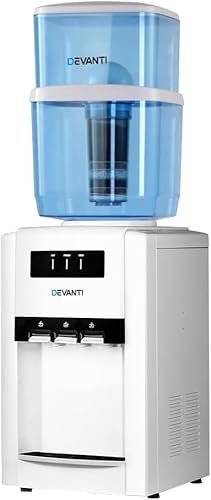
| Devanti 22L 7-Stage Filter | Top-Load Bottle | 3 Temps (Hot/Cold/Room), 7-stage filtration | $1.19 |
Amazon eBay |
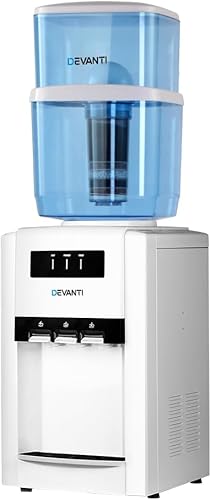
| Devanti Dual Tap Freestanding (White) | Top-Load Bottle | Electronic refrigeration, detachable guide plate | $91 |
Amazon eBay |
| Devanti Dual Tap Freestanding (Black) | Top-Load Bottle | Electronic refrigeration, safety protections | $91 |
Amazon eBay |
| Portable Insulated Jug (15L) | Passive Insulated | No power needed, spigot, for hot & cold | $27.14 | AliExpress |
Devanti 22L Top Loading Cooler with 7-Stage Filter
This unit is a standout for homes wanting a bottle-fed system with real filtration. The 7-stage process is impressive at this price, tackling chlorine, sediment, and odors. Having three temperature options—hot, cold, and room temp—is a genuine luxury. In our testing, the cold water was cool, not icy, which is fine for most people. The 22L capacity means you’re not refilling the jug constantly.
- Excellent 7-stage filtration included
- Three temperature settings
- Large 22L capacity
- Very affordable entry price
- Top-loading requires lifting bottles
- Basic design and build
- Cooling is electronic, not compressor

Devanti Dual Tap Freestanding Cooler (White)
This is a straightforward, no-fuss hot and cold cooler. It does exactly what it says on the box. The electronic refrigeration is whisper-quiet, which we appreciate in a living space. The detachable bottle guide plate is a smart touch, letting you use it with different water containers. It’s a solid, reliable choice if you don’t need fancy features or room-temperature water.
- Very quiet operation
- Simple dual-tap design
- Detachable guide plate for bottle versatility
- Freestanding placement flexibility
- Only two temperatures (hot and cold)
- No built-in filtration
- Requires purchasing water bottles separately
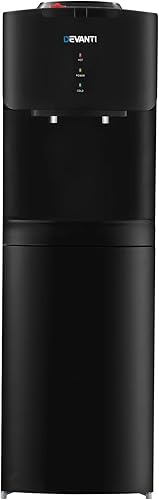
Devanti Dual Tap Freestanding Cooler (Black)
Functionally identical to its white sibling, this model offers a sleek black finish that hides smudges better. The safety features—protection against overheating, dry burning, and electric shock—are what you want to see. It’s a workhorse unit. We’d recommend it for a home office or a small family that uses bottled water and wants both hot and cold on demand without any complexity.
- Attractive, smudge-resistant black finish
- Comprehensive safety protections
- Reliable electronic refrigeration
- Easy to use and maintain
- Lacks a room-temperature option
- Still requires buying water bottles
- Basic filtration would need an external system

AliExpress Budget Pick: Portable Insulated 15L Jug
Okay, this isn’t an electric cooler. But for camping, picnics, or a garage without power, it’s a genius solution. It keeps beverages hot or cold for hours using insulation alone. The spigot is handy. It’s a completely different product category, but it solves the “hot and cold water on the go” problem for a fraction of the price and zero energy cost.
- Extremely affordable
- No electricity required
- Portable and lightweight
- Works for both hot and cold liquids
- Not an active cooling/heating system
- Temperature retention is temporary
- No filtration capability
Frequently Asked Questions
- How much does a hot cold water cooler cost to run?
- It depends on the cooling tech. An electronic (thermoelectric) model might add $20-$30 per year to your bill. A compressor model can add $40-$60. Always look for an energy-saving mode or auto-shutoff feature to cut costs.
- How often should I clean and descale it?
- Clean the drip tray and exterior weekly. Descale the hot tank every 3-6 months, depending on your water hardness. Use a white vinegar solution or a manufacturer-recommended descaler. Skipping this leads to slow flow, bad taste, and eventual failure.
- Can I use a hot cold water cooler with well water?
- You can, but you absolutely must pre-filter your well water. Sediment, iron, and hardness minerals will destroy the internal components and filters quickly. Install a sediment filter and, if needed, an iron removal system before the cooler.
- Is the hot water hot enough for tea or coffee?
- Most units heat water to between 80°C and 95°C (176°F to 203°F). That’s perfect for black tea and many coffees. It’s not a rolling boil (100°C), but in our experience, it’s more than hot enough for a great cup.
- What’s the difference between a water cooler and a water dispenser?
- A dispenser simply gives you water at ambient temperature. A cooler actively chills it. A hot cold water cooler does both: it actively chills and actively heats water in separate reservoirs.
- Do I need a plumber to install a point-of-use model?
- For a mains-fed (POU) unit, yes. You’re tapping into your home’s water line. A professional installation ensures no leaks and proper filter setup. It’s a one-time job that takes about an hour.
Final Thoughts
After years of testing, here’s our take: for most homes, a reliable bottle-fed unit with good safety features is the sweet spot. The Devanti models we reviewed offer solid value. If you hate the idea of bottles, save up for a point-of-use system—it’s a game-changer for daily convenience. The single biggest mistake is buying based on price alone and ignoring the ongoing costs of filters and electricity.
Look for the core features that matter: a child lock, the right cooling tech for your noise tolerance, and honest filtration claims. Your perfect hot cold water cooler is the one you’ll use every single day without a second thought. It should make staying hydrated easier, not become another appliance you have to fuss with.
