


Hard water is a silent budget killer. It leaves crusty scale on your showerhead, makes your water heater work harder, and turns your laundry stiff. We’ve tested systems that claim to fix this for years. This guide cuts through the noise. We’ll cover what actually works, the real benefits, and how to choose a system that fits your home without wasting money.
What Is a Home Water Softener System?
A water softener is a whole-house filtration system that tackles “hardness”—those dissolved calcium and magnesium ions in your water supply. It’s not about making water safe to drink; it’s about making it kinder to your plumbing, skin, and appliances. Think of it as a preventive maintenance tool for your entire home’s water line.
Hardness is measured in grains per gallon (GPG) or parts per million (PPM). Anything above 3.5 GPG is considered hard. If you see white, chalky spots on your glasses or feel a film on your skin after showering, you’ve got it. A softener swaps those problematic minerals for sodium or potassium ions, or it conditions them so they can’t stick to surfaces.
How Water Softeners Actually Work
Most systems use one of two main technologies. The method dictates maintenance, cost, and what comes out of your tap.
Ion Exchange (Salt-Based)
This is the classic, most effective method. Your water flows through a tank filled with resin beads. These beads are coated with sodium ions. The hardness minerals in your water have a stronger positive charge, so they stick to the beads, displacing the sodium which then enters your water. Eventually, the beads get full of calcium and magnesium. That’s when the system flushes a brine solution (from a second tank) through the resin, washing the hardness away and “recharging” it with sodium. This cleaning cycle is called regeneration.
Template Assisted Crystallization (TAC) / Salt-Free
Often called a “descaler” or “conditioner,” this method doesn’t remove minerals. Instead, it changes their form. Water passes through a catalytic media that turns dissolved hardness ions into microscopic crystals. These crystals stay in the water but can’t bond to surfaces, so scale doesn’t form. No salt, no electricity, no wastewater. But your water still tests “hard.” For homes with very high hardness or specific issues like iron, you might need a dedicated iron filter system in addition to a conditioner.
Key Benefits of Softer Water
Protects Your Plumbing & Appliances: Scale buildup is insidious. It narrows pipes, reduces water pressure, and forces your water heater to use way more energy. We’ve seen heating elements caked with an inch of scale. A softener can extend the life of your dishwasher, washing machine, and water heater by years.
Cleaning Becomes Easier: Soap and detergents actually lather. You’ll use less shampoo, laundry soap, and dish detergent. Your glasses will come out of the dishwasher spot-free, and your clothes will feel softer without fabric softener.
Skin and Hair Feel Better: This is subjective, but the feedback is consistent. Hard water leaves a soap scum residue on skin, which can cause dryness and irritation. Many people notice their hair is more manageable and less brittle with soft water.
Saves Money Long-Term: The upfront cost stings, but the savings are real. Lower energy bills, fewer appliance repairs, and spending less on cleaning products add up. It’s a boring investment that pays for itself.
Potential Drawbacks to Consider
Salt-Based Systems Add Sodium: For every grain of hardness removed, a small amount of sodium is added to your water. It’s usually a tiny amount, but if you’re on a strict low-sodium diet, you might want to use potassium chloride pellets instead (they’re more expensive) or consider a salt-free conditioner.
Maintenance is Non-Negotiable: Salt-based units need you to keep the brine tank filled with salt or potassium. You’ll also need to check it occasionally for “bridging” (a hardened salt crust). Both types may need their media replaced every few years.
Doesn’t Improve Taste or Safety: A softener is not a drinking water filter. It won’t remove chlorine, sediment, bacteria, or heavy metals. For clean-tasting water at the tap, you’ll still want a point-of-use filter. Pairing a whole-house softener with a dedicated kitchen filtration system is a common and effective combo.
Environmental Concerns: The regeneration process for ion-exchange systems creates salty wastewater that goes down your drain. Some municipalities have restrictions. Salt-free conditioners have an edge here as they produce no brine discharge.
Types of Water Softener Systems
Traditional Ion-Exchange Softener
The workhorse. Two tanks (resin and brine), highly effective, requires salt and electricity for the control valve. Best for households with moderate to very high hardness levels. You can find models that are highly efficient, using less salt and water during regeneration.
Salt-Free Water Conditioner (TAC)
Gaining popularity for low-maintenance appeal. Single tank, no salt, no electricity, no drain line needed. Excellent for preventing scale. However, if your water is extremely hard (over 15 GPG) or has high iron content, its effectiveness can drop. It’s a scale inhibitor, not a true softener.
Dual-Tank Softeners
For large families or homes with very high water use. While one tank is regenerating, the other is online, so you never have a period without soft water. They cost more and take up more space.
Magnetic or Electronic Descalers
We’re skeptical. These devices wrap around your pipe and claim to alter mineral properties with a magnetic field. In our testing and based on reader feedback, results are wildly inconsistent. They might work marginally on very low hardness, but for serious problems, they’re not a reliable solution. Save your money.
Buying Guide: What Matters Most
1. Size it Right: This is critical. Measure your water hardness (GPG) and multiply by the number of people in your home, then by 75 (average gallons per person per day). That gives you grains per day. A system should regenerate about once a week. So, a family of 4 with 10 GPG water needs a system that handles at least 4 x 10 x 75 = 3,000 grains per day, or a 21,000-grain capacity unit.
2. Check the Control Valve: The valve is the brain. Timer-based valves regenerate on a schedule, wasting salt and water. Look for a metered or on-demand valve. It tracks your actual water use and regenerates only when needed. This saves a ton on salt and water bills.
3. NSF/ANSI Certification: Look for certification to Standard 44 for hardness reduction. This verifies the manufacturer’s claims. Don’t just trust marketing.
4. Consider Your Space: Measure where it will go—usually near the main water line entry. You need space for two tanks (for ion-exchange), access to a power outlet, and a drain for the regeneration hose.
Our Top Water Softener Picks
Here’s a quick comparison of systems that cover different needs and budgets.
| Product | Type | Key Feature | Price |
|---|---|---|---|
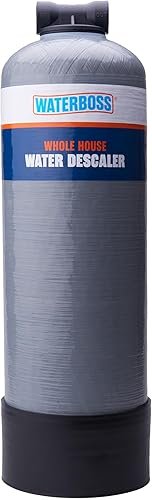
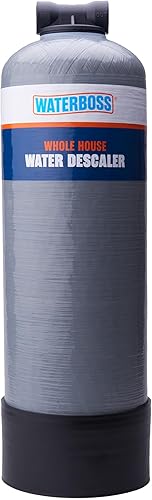 WaterBoss Salt-Free Descaler |
Salt-Free Conditioner | 600,000 gal capacity, 6-yr warranty, no salt/electric | $8.65 |
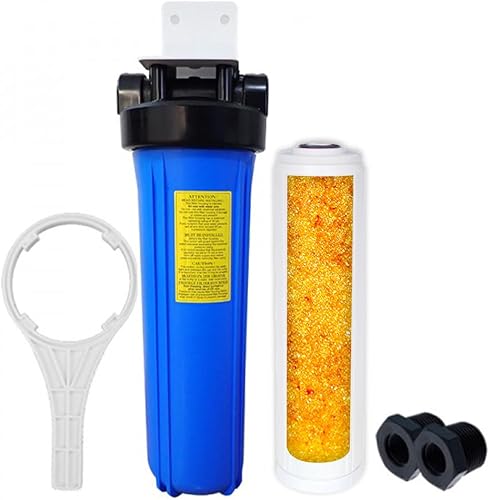 Whole House Softener/Filtration 20×4.5 |
Combination System | Addresses hardness + contaminants like PFAS, heavy metals | $1.99 |
 AliExpress Salt-Free Descaler |
Salt-Free Conditioner | Budget-friendly, big flow rate for whole house | $101.23 |
WaterBoss Whole House Water Softener Alternative – Salt Free Descaler System
If you’re dead set on avoiding salt and maintenance, this is a solid choice. The 600,000-gallon capacity is impressive, and the 6-year warranty shows confidence. It’s a true set-and-forget system for scale prevention. But remember, your water will still test hard—it’s a conditioner, not a softener.
- No salt, no electricity, no brine discharge
- Very low maintenance
- Protects pipes and appliances from scale
- Does not remove hardness minerals
- Less effective on extreme hardness or iron-rich water
- Higher upfront cost than basic salt tanks
Whole House Water Softener Filtration System 20×4.5
This is interesting—a combination system that claims to tackle both hardness and a scary list of contaminants like PFAS, heavy metals, and arsenic. It’s a big promise. For homes with multiple water quality issues, it could be a space-saver. But verify those filtration claims independently; a dedicated pleated filter cartridge or carbon block might be more reliable for specific pollutants.
- Addresses hardness and chemical contaminants in one
- Large 20-inch housing for high flow
- Potentially comprehensive solution
- Unverified filtration claims need scrutiny
- Complexity may mean more maintenance
- Performance can vary based on influent water
AliExpress Budget Pick: Whole House Salt Free Descaler System
For the truly budget-conscious, this AliExpress option offers salt-free conditioning at a fraction of the name-brand cost. The big flow rate is appealing for whole-house use. But buyer beware: quality control, warranty support, and long-term media efficacy are huge question marks. You’re taking a gamble. It might work okay for low hardness, but we’d hesitate to trust it for a primary residence with serious scale issues.
- Extremely low price point
- Salt-free and low maintenance
- Handles high flow rates
- Unknown brand reliability and longevity
- Warranty and support likely difficult to claim
- Performance data is scarce
Water Softener FAQ
- Will a water softener make my water safe to drink?
- No. A softener removes hardness minerals, not contaminants like bacteria, lead, or chlorine. For drinking water safety, you need a separate point-of-use filter, like a reverse osmosis system under your sink. It’s a common misconception we see all the time.
- How often do I need to add salt?
- For a typical family of four with moderately hard water, you might add a 40-pound bag of salt to the brine tank every 4-8 weeks. Check it monthly. The system’s manual will have a more precise estimate based on your settings and water usage.
- Do salt-free conditioners really work?
- They work well for scale prevention. Independent studies show TAC media can reduce scale formation by over 90%. However, they do not provide the “slippery” feel of soft water or improve soap lathering in the same way. They’re a great low-maintenance option if scale is your only concern.
- Can I install a water softener myself?
- If you’re handy with plumbing, yes, especially with modern quick-connect fittings. You’ll need to cut into the main water line, install bypass valves, and connect a drain hose. But if you’re unsure, hire a plumber. A leak can cause thousands in damage. Some brands, like Culligan under sink water filtration systems, often offer professional installation.
- What’s the difference between a softener and a best water conditioner?
- A softener (ion-exchange) physically removes hardness minerals, replacing them with sodium. A conditioner (like TAC) alters the minerals so they can’t form scale but leaves them in the water. Softeners give you chemically soft water; conditioners give you scale-free, but still technically hard, water.
- Is soft water safe for septic systems?
- Yes, according to the Water Quality Association. The small amount of sodium in the regeneration brine is not harmful to the bacterial action in a septic tank. In fact, by reducing detergent use, soft water can benefit septic systems. Always check local regulations, though.
Final Thoughts
After years of testing and talking to homeowners, our stance is clear: for most people dealing with hard water, a traditional, metered ion-exchange softener is the most effective solution. Yes, it requires salt and occasional attention. But the payoff in protected appliances and daily comfort is undeniable. The WaterBoss salt-free system is our top recommendation for those who prioritize zero maintenance and have scale as their main issue.
Don’t overcomplicate it. Get your water tested, size the system correctly, and invest in a quality unit with a good valve. Your pipes, your water heater, and your wallet will thank you in the long run. And if you’re curious about the purity of your drinking water itself, a common question we get is is distilled water safe—it’s a different topic, but worth understanding as part of your whole-home water quality strategy.
