


Hard water is a silent nuisance. It leaves spots on your dishes, crust on your faucets, and can make your skin feel dry. After testing systems and talking to plumbers for years, I know a good water softener solves these problems. This guide covers what they are, how they work, and which models are worth your money in 2026.
- What a home water softener actually does.
- The science behind ion exchange and salt-free conditioners.
- Clear benefits and honest drawbacks.
- How to choose the right size and type for your house.
What Is a Home Water Softener?
A home water softener is a point-of-entry system installed where water enters your house. Its main job is to remove hardness minerals—primarily calcium and magnesium. These minerals aren’t a health risk, but they cause scale. That’s the chalky white buildup inside your kettle, on shower doors, and worst of all, inside your pipes and water heater.
Think of it as a preventative appliance. A good residential water softener system protects your plumbing investment. It also makes daily life smoother. Soap lathers better. Your hair feels less brittle. Dishes come out of the dishwasher spot-free. It’s a quality-of-life upgrade that also saves money on repairs and energy bills over time.
How Water Softeners Work
The Ion Exchange Process (Salt-Based)
This is the traditional, most effective method. Your cold water line feeds into a mineral tank filled with tiny resin beads. These beads are charged with sodium ions. As hard water flows through, the calcium and magnesium ions are attracted to the resin and swap places with the sodium. The now-softened water continues into your home.
Eventually, the resin beads become saturated with hardness minerals. That’s where the second tank, the brine tank, comes in. A concentrated salt water solution (brine) flushes through the mineral tank, knocking off the calcium and magnesium and “recharging” the beads with sodium. This regeneration cycle usually runs automatically every few days, often at night.
Template-Assisted Crystallization (Salt-Free)
Salt-free “conditioners” don’t actually remove minerals. Instead, they change the minerals’ form. Water passes through a catalytic media that converts dissolved calcium and magnesium into microscopic crystals. These crystals stay in the water but won’t stick to surfaces to form hard scale. It’s a physical change, not a chemical removal.
Our testing shows these are great for preventing scale on heating elements, like in your water heater. But the water still contains the minerals. You won’t get the same slick, soapy feel. It’s a scale inhibitor, not a true softener. For a deeper dive into whole-house options, check our guide on whole-house water filtration.
Key Benefits of Softened Water
Protects Your Plumbing and Appliances. Scale buildup is insidious. It narrows pipe diameter, reduces water pressure, and insulates heating elements, making your water heater work 20-30% harder. A softener stops this at the source, extending the life of your dishwasher, washing machine, and water heater.
Makes Cleaning Easier. Soap and detergents react with hardness minerals to form soap scum. With soft water, soap lathers instantly. You’ll use less shampoo, laundry detergent, and dish soap. Shower doors stay cleaner longer, and laundry comes out softer.
Can Improve Skin and Hair Feel. Many people report less dryness and irritation after switching. The minerals in hard water can disrupt the skin’s natural barrier. Removing them often leads to smoother skin and more manageable hair. This depends on your water quality and personal sensitivity.
Potential Drawbacks to Consider
Ongoing Maintenance and Cost. Salt-based systems need salt. That’s a recurring purchase and a bit of physical labor to refill the brine tank every month or two. They also use water during regeneration, which can slightly increase your water bill.
Environmental Considerations. The regeneration process flushes salty wastewater into your septic or sewer system. This is a concern in some areas with strict regulations. Salt-free systems avoid this issue entirely.
Not a Filter. A water softener does not remove contaminants like chlorine, lead, bacteria, or PFAS. It only targets hardness minerals. For comprehensive treatment, you’ll need a separate house water filtration system alongside your softener.
Types of Water Softening Systems
Traditional Ion Exchange Softeners
The workhorse of the industry. These are two-tank systems (mineral tank + brine tank) that use salt. They are the most effective for truly softening water and are rated by grain capacity (e.g., 32,000 or 48,000 grains). The higher the capacity, the longer between regenerations and the more hardness it can handle.
Salt-Free Water Conditioners
Best described as anti-scale systems. Ideal for people who want to prevent scale without adding sodium or dealing with salt maintenance. They require no electricity and produce no wastewater. However, they struggle with very high hardness levels (above 15-20 GPG).
Dual-Tank Softeners
These have two mineral tanks. When one is regenerating, the other is online. This means you have soft water 24/7, even during the regeneration cycle. Essential for large households or homes with high water usage where a single tank might run out of capacity at an inconvenient time.
Magnetic and Electronic Descalers
We’re skeptical. These devices wrap around your pipe and claim to alter mineral properties with magnetic or electronic fields. In our experience, results are inconsistent at best. Save your money. If you’re on a very tight budget, a portable pitcher-style softener for your RV or boat might be a better test of the concept.
Buying Guide: What Actually Matters
1. Test Your Water First. This is non-negotiable. You need to know your hardness level in Grains per Gallon (GPG) or Parts per Million (PPM). A simple test kit will tell you. Don’t guess.
2. Size It Correctly. Capacity is key. Multiply your number of people by 75 gallons (average daily use per person) by your water hardness (GPG). A family of four with 15 GPG water needs a system that can handle about 4,500 grains per day. Look for a unit with a capacity that allows regeneration about once a week.
3. Choose Your Type. For true soft water, go ion exchange. For scale prevention only, consider salt-free. For a complete solution, pair a softener with the best house water filtration system you can afford.
4. Check the Controls. Look for a metered or demand-initiated regeneration valve. It regenerates based on actual water use, not a timer. This saves salt and water.
Our Top Picks for 2026
We’ve looked at everything from budget-friendly portables to whole-house systems. Here’s a quick comparison, followed by our detailed thoughts.
| Product | Type | Key Feature | Price | Links |
|---|---|---|---|---|
| VEVOR RV Water Softener | Portable Ion Exchange | 16,000 grain, brass fittings | $1.73 |
Amazon eBay |
| Filterelated RV Softener | Portable Ion Exchange | 16,000 grain, custom hose | $2.60 |
Amazon eBay |
| Whole House Softener/Filtration | Whole House System | 20×4.5″ filter, contaminant reduction | $1.99 |
Amazon eBay |
| Water Hardness Test Kit | Test Strips | 150 strips, double color pads | $18 |
Amazon eBay |
| Apollo-M Magnetic Softener | Magnetic Descaler | 7500 gauss, salt-free | $26.57 | AliExpress |
| Salt-Free Whole House System | Salt-Free Conditioner | Descaler, scale & chlorine removal | $101.23 | AliExpress |
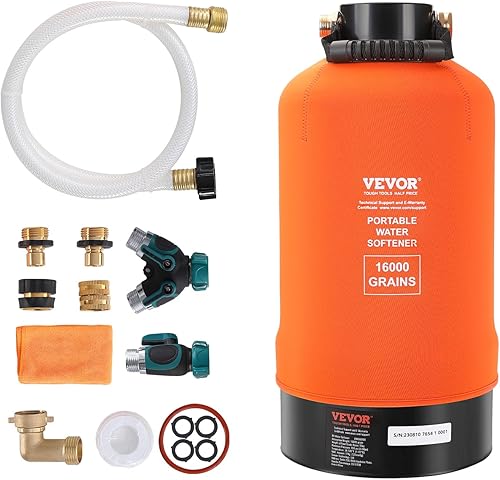
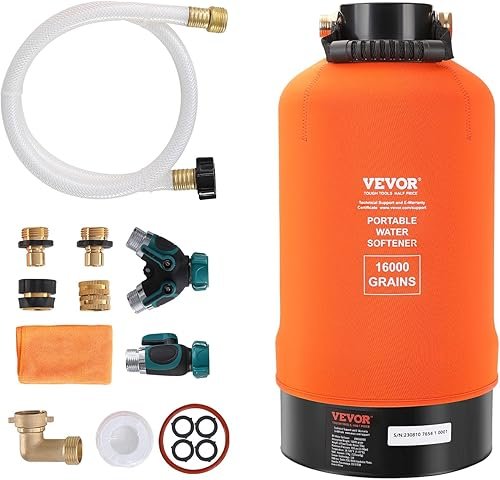
VEVOR RV Water Softener, 16,000 Grain
This is a nifty little portable unit. We’ve used similar models for RVs and boats, and the concept is solid. The 16,000 grain capacity is decent for mobile use or a very small cabin. The brass fittings are a nice touch—they won’t crack like plastic can. It’s a true ion exchange softener, so it will deliver genuinely soft water.
The price is absurdly low, which makes us raise an eyebrow. Long-term resin quality and valve durability are question marks. But for occasional use, camping, or as a test to see if you like soft water, it’s a low-risk entry point. The manufacturer warranty situation is vague, so know your consumer rights.
- Extremely affordable entry point
- True ion exchange softening
- Brass fittings are durable
- Portable for RVs, boats, washing
- Very low price raises durability questions
- Limited capacity for whole-house use
- Warranty terms are unclear
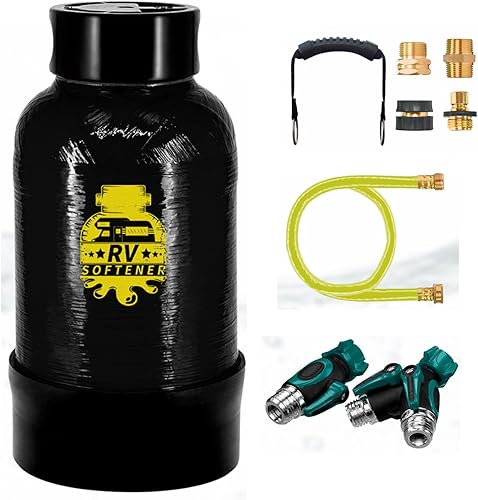
Filterelated RV Water Softener -16000 Grain
Very similar to the VEVOR unit above, both in capacity and price. The marketing mentions reducing heavy metals like iron and radium, which is a stretch for a standard softening resin. Its main job is calcium and magnesium removal. The included hose is a nice bonus if you don’t have one.
Like the VEVOR, treat this as a portable, entry-level device. It’s perfect for a mobile car wash setup or an RV. For a permanent home installation, you’ll want something with a proper control valve, a larger tank, and a clearer warranty. But for the price, it’s hard to complain.
- Includes custom hose for easy setup
- Very budget-friendly
- Claims to help with skin/hair feel
- Good for non-traditional applications
- Heavy metal reduction claims are overstated
- Not designed for permanent whole-house use
- Long-term reliability is unknown
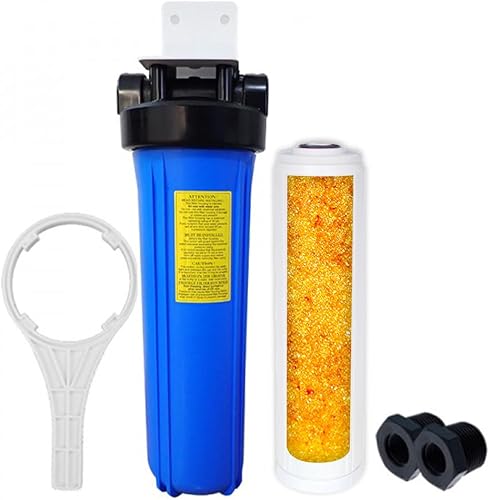
Whole House Water Softener Filtration System 20×4.5″
This listing is confusing, and we want to be clear. Based on the description and image, this appears to be a large-capacity filter housing, not a traditional water softener. It likely holds a sediment or carbon block filter, which can reduce some contaminants listed (like chlorine, some heavy metals, PFAS) but will not soften water by removing calcium and magnesium.
It could be a component of a larger system. If you need filtration for chlorine, taste, and odor, a big blue housing like this is a great start. But you would need to add a separate softening tank for hardness. Clarify your goal: filtration or softening? They are different.
- Large 20×4.5″ housing for high flow
- Can reduce a wide range of contaminants
- Good foundation for a multi-stage system
- Misleadingly labeled as a “softener”
- Will not remove hardness minerals
- You need to buy filter cartridges separately
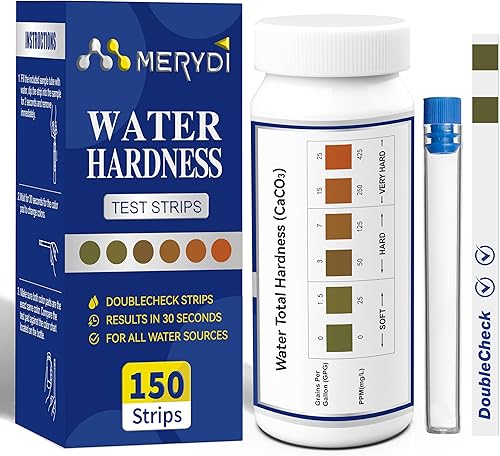
Water Hardness Test Kit, 150 Strips
Before you buy any softener, buy this. Seriously. Knowing your exact hardness level is step one. These double-color-pad strips are a smart design—if the two pads give you wildly different colors, you know the test is faulty and you should use a new strip. That’s a feature we appreciate.
With 150 strips, you can test multiple faucets, test before and after installation, and monitor your system over time. It’s a small investment that prevents you from buying an undersized or oversized system. Don’t skip this step.
- Double pads increase accuracy
- 150 strips is a great value
- Quick results in seconds
- Essential for proper system sizing
- Only tests hardness, not other contaminants
- Color matching can be subjective
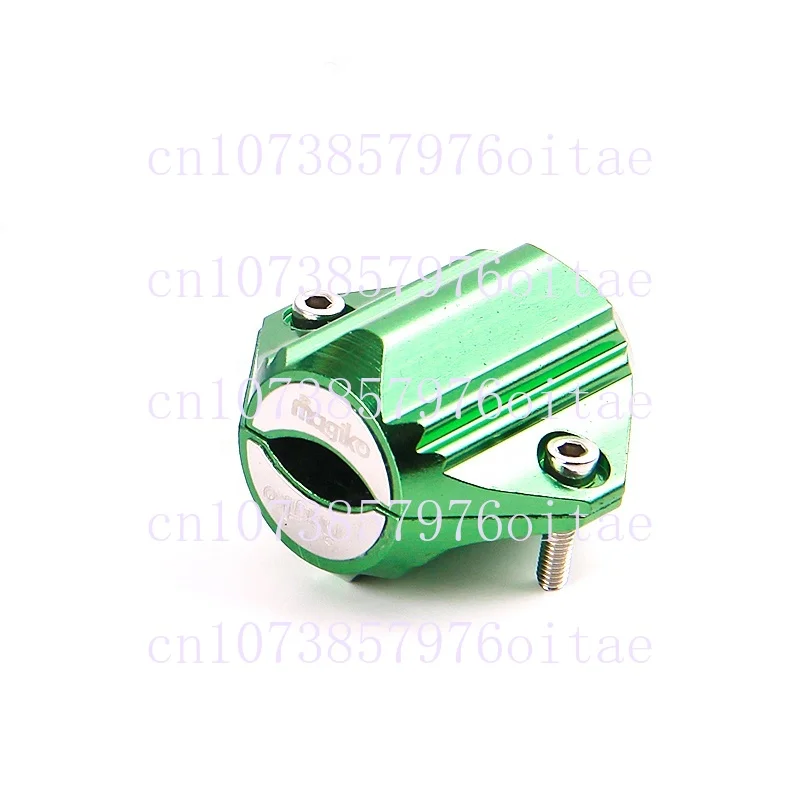
Apollo-M 7500gauss Water Softener Magnet & Conditioner
Here’s our contrarian take: magnetic descalers are the crystals-and-essential-oils of the water treatment world. The theory is that a strong magnetic field alters the charge of mineral ions so they don’t stick. In our years of testing, we’ve seen inconsistent results. Sometimes scale seems reduced; often it doesn’t.
The 96.9% rating is from buyers who likely haven’t done a proper before-and-after test. For $26, it’s a cheap experiment. But we can’t recommend it as a reliable solution for hard water problems. If you’re curious, try it on a single appliance like your water heater, but manage your expectations.
- Extremely low cost to try
- No salt, no maintenance, no wastewater
- Easy to install (just clamp on pipe)
- Scientific evidence for effectiveness is weak
- Results are highly variable
- Does not actually soften water

Whole House Water Softener System, Salt Free Descaler
This is a more substantial salt-free conditioner. It uses a catalytic media (likely Template-Assisted Crystallization or TAC) to prevent scale. The listing also mentions chlorine removal, which suggests it has a carbon component—this is a nice two-in-one feature for city water users.
At $101, it’s a serious investment compared to the magnetic gimmick. If you have moderate hardness (under 15 GPG) and your main goal is protecting your water heater and pipes from scale without adding sodium, this is a legitimate option. Just remember, your water won’t feel “soft” in the traditional sense.
- Salt-free, no ongoing cost or maintenance
- Combines scale reduction with chlorine removal
- No electricity or wastewater
- Good for scale prevention
- Does not remove hardness minerals
- Water won’t have “soft” feel
- Effectiveness drops at very high hardness
Water Softener FAQ
- How long do water softeners last?
- A well-maintained ion exchange softener can last 15-20 years. The control valve is often the first component to need service, typically after 10-15 years. Salt-free media usually has a lifespan of 6-10 years before it needs replacement.
- Will a water softener increase my water bill?
- Slightly. A salt-based system uses water during its regeneration cycle (backflushing the resin). This can add 20-50 gallons per cycle, which might total 50-100 extra gallons a week for a typical family. Metered systems minimize this.
- Can I drink softened water?
- Yes, it’s safe. The sodium added is minimal—about 20-40 mg per 8 oz glass for moderately hard water. If you’re on a doctor-restricted low-sodium diet, use a separate drinking water filter at your kitchen tap.
- Do I need a plumber to install a water softener?
- If you’re comfortable with basic plumbing and have accessible main water lines, you can DIY. It involves cutting into the main line, installing bypass valves, and connecting the drain. For most people, hiring a plumber is worth the peace of mind.
- What’s the difference between a water softener and a water filter?
- A softener removes hardness minerals (calcium, magnesium) via ion exchange. A filter removes contaminants (chlorine, sediment, lead, bacteria) via physical or chemical filtration. They address different problems and are often used together.
- How often do I need to add salt?
- For a family of four with moderate hardness, check the brine tank monthly. You’ll likely need to add one or two 40-lb bags of salt every 4-8 weeks. Keep the salt level above the water level in the tank.
Final Thoughts
Choosing a water softener comes down to a simple decision tree. First, test your water. If you have serious hardness (over 10 GPG) and want the slick, soapy feel of truly soft water, a traditional salt-based ion exchange system is your best bet. Size it correctly, and it’s a set-and-forget appliance for years.
If your main goal is just to stop scale buildup in your water heater and you’re wary of salt, a quality salt-free conditioner is a solid alternative. Avoid the magnetic magic boxes. And whatever you do, don’t confuse a filter housing with a softener—they do different jobs. Start with that test kit. Your pipes and your skin will thank you.
