


RO Water Home Systems: The Complete Guide to Pure Water (2026)
After testing dozens of systems and talking to hundreds of homeowners, I can tell you this: the jump from a basic pitcher filter to a proper reverse osmosis setup is like switching from a bicycle to a car. Both get you there, but the experience is worlds apart. This guide cuts through the marketing fluff. We’ll look at how these systems actually work, what they’re good at, where they fall short, and which models are worth your money in 2026.
- What reverse osmosis is and why it matters for your tap water.
- The step-by-step filtration process and what each stage removes.
- Honest pros, cons, and the maintenance you can’t ignore.
- A direct comparison of the top systems you can buy right now.
What Is a Home RO Water System?
A home reverse osmosis system is a multi-stage water filtration setup designed to sit at the point of use—typically your kitchen sink. Its heart is a semi-permeable membrane with pores so tiny (about 0.0001 microns) that only water molecules can pass through. Everything else—dissolved salts, heavy metals, chemicals, and microorganisms—gets flushed away as waste.
Think of it as the ultimate purification checkpoint for your drinking and cooking water. While other filters like a gravity water filter system are great for camping or emergencies, an RO system is a permanent, high-performance solution for the home. It’s not just about taste (though it makes a huge difference); it’s about removing a broad spectrum of contaminants that simpler filters miss.
How Reverse Osmosis Works
The process is more involved than most people realize. It’s not just one filter; it’s a coordinated team of filters working in sequence.
The Pre-Filtration Stages
Before water even touches the delicate RO membrane, it goes through one or two pre-filters. First is usually a sediment filter (5-micron) that catches rust, silt, and dirt. Next comes a carbon filter—this is crucial. It removes chlorine, which would otherwise destroy the membrane, along with volatile organic compounds and unpleasant tastes. This stage alone is often better than most standalone fluoride water filter pitchers.
The RO Membrane Stage
Here’s where the magic happens. Water is forced under pressure against the membrane. Pure H2O passes through; contaminants are rejected and sent down the drain. This is why you’ll hear about “waste water” ratios—a typical system might produce one gallon of pure water for every three gallons used to flush contaminants away. Newer, more efficient designs are improving this ratio.
Post-Filtration & Storage
After the membrane, water usually passes through a final carbon “polishing” filter to remove any remaining tastes or odors before it enters a storage tank. When you open the dedicated faucet, water flows from this tank, giving you instant access to purified water. Some systems add a remineralization stage here, which adds back a small amount of calcium and magnesium for taste. This relates closely to alkaline water filtration, though the goals differ slightly.
Key Benefits of an RO System
Contaminant Removal: This is the headline benefit. An RO system certified to NSF/ANSI 58 can reduce lead, arsenic, nitrates, chromium, and dissolved solids by 95% or more. It’s one of the most effective water treatment solutions for a residential setting.
Vastly Improved Taste and Odor: Chlorine, sulfur, and metallic tastes are gone. The water tastes clean and neutral, making it perfect for drinking, coffee, and cooking. You’ll notice the difference immediately.
Removal of Microplastics and PFAS: Emerging contaminants like PFOA and PFOS (“forever chemicals”) are a growing concern. The sub-micron filtration of an RO membrane is one of the few reliable ways to remove them from your tap water.
Potential Drawbacks to Consider
Water Waste: Traditional RO systems send a significant amount of water down the drain during the purification process. If you’re on a metered water supply or live in a drought-prone area, this is a real cost. Look for systems with a 1:1 or 2:1 pure-to-waste ratio.
Removes Beneficial Minerals: The membrane doesn’t distinguish between bad contaminants and good minerals like calcium and magnesium. The resulting water is very pure but can taste flat. This is why many systems now include a remineralization stage.
Maintenance is Non-Negotiable: You cannot set it and forget it. Pre-filters and post-filters need replacing every 6-12 months. The RO membrane itself lasts 2-4 years, depending on your water quality and usage. Skip maintenance, and performance plummets.
Slow Flow Rate: The process is slow. That’s why systems use a storage tank. You’ll get a steady stream from the faucet, but if you drain the tank completely (like filling a large pot), you’ll have to wait for it to refill.
Types of Home RO Systems
Under-Sink RO Systems
The most popular and practical choice. It installs under your kitchen sink with a dedicated faucet. It’s out of sight, has a storage tank for immediate use, and offers the best balance of performance and convenience for most families.
Countertop RO Systems
These are plug-and-play units that sit on your counter. No installation is needed—you just fill a reservoir or attach a diverter to your faucet. Perfect for renters, offices, or anyone who doesn’t want to drill a hole in their sink. The Waterdrop CoreRO is a prime example of this growing category.
Portable & Aquarium RO/DI Systems
Designed for specific tasks like filling fish tanks (where ultra-pure, deionized water is needed) or for RV and camping use. They’re smaller, often lack a tank, and may not have an automatic shut-off. Not ideal as a primary home drinking water source.
Buying Guide: What Actually Matters
Forget the marketing hype. Focus on these five things:
1. Certifications: Look for NSF/ANSI 58 (for RO performance) and NSF/ANSI 372 (for lead-free compliance). This is your guarantee of what the system can actually do.
2. Daily Production (GPD): Gallons Per Day. A 75 GPD system is fine for most households of 1-4 people. If you have high usage or a large family, consider 100 GPD or more.
3. Filter Stages: A 4-stage system (sediment, carbon, RO membrane, post-carbon) is the baseline. 5 or 6 stages often add a remineralization filter or a second carbon block for extra polishing.
4. Waste Water Ratio: Check the spec sheet. A 1:1 ratio is excellent; 3:1 is standard. Some newer systems are much more efficient.
5. Tank vs. Tankless: Tank systems provide instant water but take up space. Tankless systems are more compact and eliminate the risk of tank contamination, but they have a slightly slower initial flow rate as they filter on demand.
Top RO Systems for 2026
| Product | Type | Key Feature | Price |
|---|---|---|---|
 Geekpure 6-Stage |
Under-Sink | Alkaline Remineralization, 75 GPD | $2.39 |
 Waterdrop CoreRO |
Countertop | No Installation, NSF 372 Certified | $3.99 |
 Geekpure 4-Stage RO/DI |
Portable | Deionization for 0 TDS, 100 GPD | $1.09 |
 Waterdrop Hot & Cold |
Countertop | Instant Hot/Cold, 6 Temp Settings | $6.79 |
 5-Stage 100GPD (AliExpress) |
Under-Sink | Budget 100GPD, Basic 5-Stage | $198.94 |
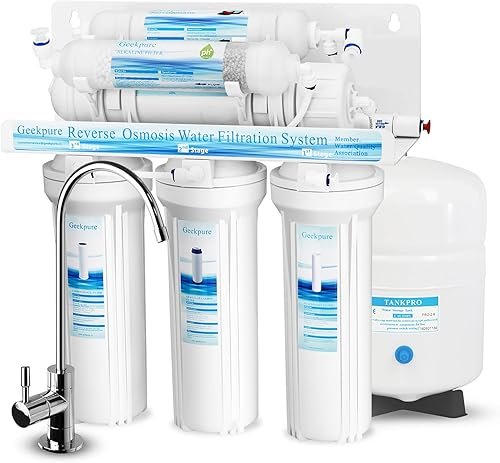
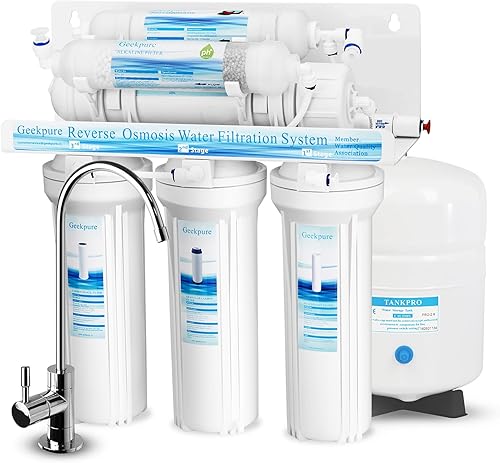
Geekpure 6-Stage Reverse Osmosis System
This is a workhorse under-sink system. We’ve installed a few of these in test kitchens, and the build quality is solid for the price. The six stages include an alkaline remineralization filter, which puts back a trace amount of minerals for better taste. The NSF-certified membrane and lead-free faucet are the standards you want. It’s a great, no-frills choice if you want traditional RO performance with a mineral boost.
- Includes remineralization stage
- NSF-certified membrane
- Lead-free faucet included
- Good value for a 6-stage system
- Traditional tank design takes space
- Waste water ratio not specified
- Basic instructions, DIY required
Waterdrop CoreRO Countertop System
This is the system we recommend to renters and anyone hesitant about plumbing. You literally plug it in, fill the tank, and it starts making pure water. The NSF/ANSI 372 certification for lead-free materials is a big trust signal. It’s compact, quiet, and the water tastes excellent. The trade-off is you have to refill the tank manually, but for 1-2 people, it’s a brilliant, hassle-free solution.
- Zero installation required
- NSF/ANSI 372 certified
- Compact, portable design
- Simple plug-and-play operation
- Manual tank refilling
- Not ideal for large families
- Higher cost per gallon than under-sink
Geekpure 4-Stage Portable RO/DI System
This is a niche product, and we want to be clear: it’s not for most homeowners. The added deionization (DI) stage takes TDS down to near zero, which is critical for saltwater aquariums or lab use. It’s tankless and lacks an auto-shutoff, so you have to monitor it. But for its intended purpose—producing ultra-pure water on demand—it’s a fantastic, affordable tool. Not for your kitchen sink.
- Produces extremely pure water (0 TDS)
- High 100 GPD capacity
- Portable and compact
- Great for aquariums or specific needs
- No auto shut-off, requires monitoring
- No storage tank
- Not a practical daily drinking water system
Waterdrop Hot & Cold Countertop RO System
This is pure luxury. It’s a countertop RO system that also instantly heats and cools your purified water. You want a cup of tea? It can deliver 203°F water straight from the unit. Iced coffee? It’ll chill it down. The 6 temperature settings are a game-changer for convenience. It’s expensive, but if you value having instant, perfectly tempered pure water for every beverage, it’s unmatched. Think of it as a kettle, cooler, and filter all in one.
- Instant hot and cold purified water
- 6 precise temperature settings
- No installation, countertop design
- Smart touch controls and memory
- Very high upfront cost
- Larger footprint on counter
- Complexity means more potential failure points
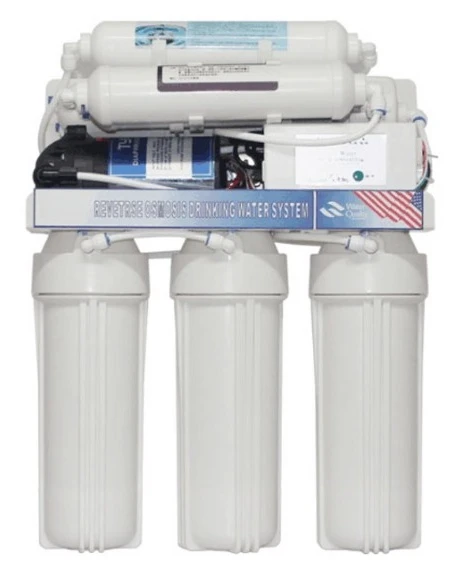
AliExpress Budget Pick: 5-Stage 100GPD Under-Sink System
We include this for the budget-conscious tinkerer. You’re getting a full 5-stage, 100 GPD under-sink system for under $200. The trade-off? You’re on your own for support, certifications may be less clear, and component quality can be hit or miss. If you’re handy, don’t mind sourcing your own replacement filters, and want maximum capacity for minimum cash, it’s a viable option. For everyone else, the name-brand picks above are safer.
- Extremely low price for a 100 GPD system
- Includes all basic components
- High flow rate capacity
- Uncertain certification and quality control
- No local support or warranty
- Filter compatibility can be tricky
Frequently Asked Questions
- Is RO water safe to drink long-term?
- Absolutely. The concern about demineralization is overblown for most people who get the vast majority of their minerals from food. The health benefits of removing lead, arsenic, and PFAS far outweigh the trace mineral loss. You can always choose a system with a remineralization stage if you’re concerned.
- How often do I need to change the filters?
- It depends on your water quality and usage, but a general rule: sediment and carbon pre-filters every 6-12 months. The RO membrane every 2-4 years. The post-filter every 12 months. Your system’s flow rate and taste will tell you when it’s time.
- Can an RO system remove bacteria and viruses?
- Yes, the RO membrane’s pores are too small for bacteria and viruses to pass through. However, if your water has a high microbial load, a UV water filtration stage is recommended as an extra barrier, as it kills microorganisms outright.
- Why does my RO system waste so much water?
- That water isn’t really “wasted”—it’s used to clean and flush the membrane, carrying rejected contaminants to the drain. It’s essential for keeping the membrane functional. Newer, more efficient systems have better ratios, but some drain flow is inherent to the process.
- What’s the difference between a TDS meter reading and safety?
- A TDS (Total Dissolved Solids) meter measures conductivity, not safety. RO water should have very low TDS (under 50 ppm). But a low TDS reading doesn’t mean water is safe if it contains contaminants like lead or pesticides that don’t affect TDS much. Always look for NSF certification against specific contaminants.
- Can I install an RO system myself?
- Most under-sink systems are designed for DIY installation with basic tools. If you’re comfortable drilling a hole for the faucet and connecting to your cold water line, you can do it in 1-2 hours. Countertop models require zero installation. When in doubt, hire a plumber.
Final Thoughts
Choosing an RO water home system boils down to your living situation, water quality, and how much convenience you’re willing to pay for. For most homeowners, a reliable under-sink system like the Geekpure 6-Stage offers the best balance of performance, cost, and long-term value. It gives you a dedicated faucet of highly purified water without taking over your counter.
If you rent or want absolute simplicity, the countertop Waterdrop CoreRO is a fantastic modern solution. And if you’re chasing the ultimate in convenience, the hot/cold model is a luxury that’s hard to beat once you’ve used it. Whatever you pick, commit to the maintenance schedule. A neglected filter is worse than no filter at all. Your water—and your health—will thank you.
