


After testing dozens of shower filters over the years, I can tell you the difference between a good one and a cheap gimmick is night and day. A proper handheld shower filter isn’t just a fancy gadget—it’s a frontline defense for your skin and hair against the stuff in your tap water.
In this guide, we’ll cover what these filters actually do, how they work, and what to look for. We’ll also break down our top picks for 2026 based on real-world testing.
What Is a Handheld Shower Filter?
Think of it as a mini water treatment plant for your shower. It’s a cylindrical cartridge that screws directly onto your shower arm, and then your handheld shower hose attaches to the other end. Water flows through the filter media inside before it ever hits your skin.
The goal is simple: remove or reduce the chlorine, chloramines, sediment, and dissolved minerals that municipal treatment plants leave in—and that well water often has too much of. We’re talking about stuff that can dry out your skin, make hair brittle, and leave that stubborn soap scum on your glass doors.
Unlike a full whole house chlorine removal system, this is a targeted, affordable fix. It only treats the water at one point of use: your shower. For renters or anyone not ready for a big plumbing project, that’s a huge plus.
How a Handheld Shower Filter Works
It’s not magic, it’s chemistry and physics. Water pressure forces your tap water through a blend of filtration stages packed inside the cartridge. Each layer has a job.
The Filtration Media Stack
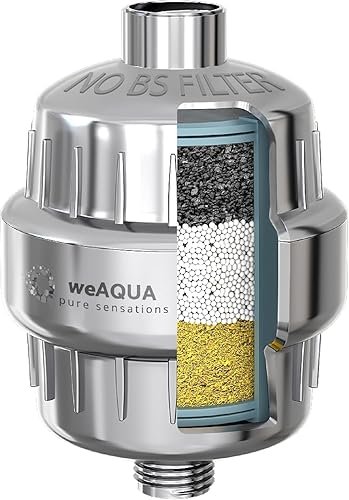
Most decent filters use a combination. First, a physical barrier—often a sediment filter layer—catches rust, sand, and big particles. Then, the water hits the chemical removers. KDF (Kinetic Degradation Fluxion) is a copper-zinc alloy that’s great at knocking out chlorine and heavy metals through a redox reaction. Calcium sulfite is another common one, highly effective at chlorine reduction even in hot water.
Activated carbon is the workhorse for grabbing organic compounds and improving taste and odor. Some premium filters throw in additional media for fluoride or specific contaminants. The key is that the water has enough contact time with the media as it flows through—this is why filter design and density matter more than the media list alone.
Installation and Flow
Installation is tool-free and takes two minutes. You unscrew your current handheld showerhead from the hose, screw the filter onto the hose, then screw your showerhead onto the filter’s output. Done. A good filter maintains at least 90% of your original water pressure. If it drops significantly, you’ve got a clog or a poorly designed unit.
Key Benefits of Using One
Skin and Hair Relief: This is the number one reason people buy them. Chlorine strips natural oils. By reducing it, you’ll likely notice less dryness, itchiness, and flakiness within a week or two. Hair feels softer and color-treated hair fades slower.
Reduced Limescale Buildup: If you have hard water, you know the white crusty stuff on fixtures and glass. Filters that include calcium sulfite or other scale-inhibiting media can dramatically reduce this, making cleaning easier.
Breathing Easier: Hot showers create steam. You inhale what’s in that steam, including chlorine byproducts. Filtering the water reduces your inhalation exposure to these volatile compounds—something often overlooked.
It’s an Easy Upgrade: No plumber needed. Takes less time than making coffee. You can take it with you if you move. It’s the lowest-friction way to improve your shower water quality.
Potential Drawbacks to Consider
- They have a lifespan. The media gets exhausted. You must replace the cartridge every 6 to 12 months, depending on your water quality and usage. Forgetting this means you’re showering in unfiltered water again.
- They don’t soften water. A shower filter reduces some minerals but does not remove the calcium and magnesium ions that define “hard water.” For actual soft water, you need a ion-exchange softener. The filter helps with the effects but not the root cause.
- Pressure can drop. Cheap filters with tight pores or poor design can restrict flow. Test the pressure before and after installation.
Types of Handheld Shower Filters
Inline Cartridge Filters
This is the most common type—the cylindrical cartridge that sits between the hose and head. They’re discreet and use replaceable cartridges. The filtration quality varies wildly based on the media blend inside. This is where you need to read specs, not just marketing claims.
All-in-One Filtered Showerheads
These have the filter built directly into the showerhead handle or a bulky section before the spray plate. They can be convenient but often use less effective filtration media due to space constraints. The showerhead itself is usually the weak point, not the filter.
Multi-Setting Combo Units
Like the Ngardk model we tested, these combine a filter with a showerhead offering multiple spray patterns (jet, mist, massage). The appeal is versatility. The risk is that the filter is an afterthought. Always check what’s inside.
Buying Guide: What Actually Matters
Forget the flashy marketing. Here’s what we look at after years of testing.
1. Filtration Media & Certifications: Look for specific media names: KDF-55, Calcium Sulfite, Granular Activated Carbon (GAC). NSF/ANSI Standard 42 certification is for aesthetic effects (chlorine, taste, odor). Standard 53 is for health contaminants like lead. If a brand lists these, they’re serious. Some filters also tackle chloramine, which is tougher to remove than chlorine.
2. Capacity & Lifespan: Measured in gallons or months. A 6-month filter for a family of four is standard. A 12-month claim might be for a single person. We test to real-world lifespans.
3. Flow Rate Impact: Good filters state a maximum flow rate (e.g., 2.5 GPM). They should not reduce your pressure by more than 10-15%. If you have a low-pressure system already, this is critical.
4. Build Quality: Chrome-plated ABS plastic is fine. Metal housings are nicer but cost more. Check the connector threads—cheap plastic ones can crack or cross-thread.
Our Top Handheld Shower Filter Picks for 2026
| Product | Key Features | Price | Links |
|---|---|---|---|
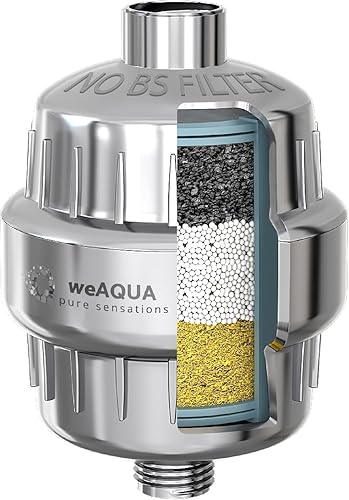 |
weAQUA Premium Heavy Duty Media: Sediment, Carbon, KDF, Calcium Sulfite. Claims 99% removal. 6-month capacity. Chrome-plated ABS. |
$35 |
Buy on Amazon Buy on eBay |
 |
Ngardk Filtered Handheld Head 10 spray functions, built-in power wash modes. Replaceable cartridge design. All-in-one unit. |
$49 |
Buy on Amazon Buy on eBay |
 |
Turbo Vortex Filter Set (10-pack) Basic PP-Cotton sediment filters. For turbo/vortex showerheads only. Budget multi-pack. |
$15 |
Buy on Amazon Buy on eBay |
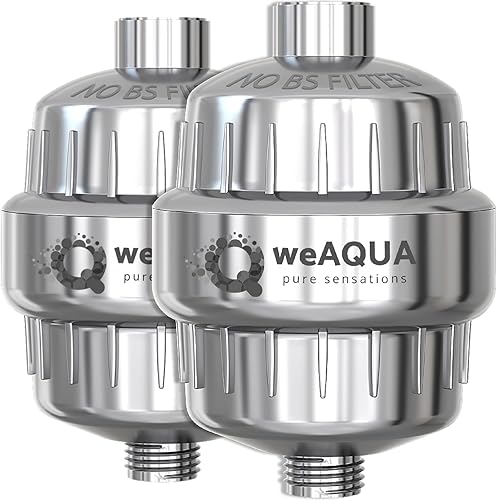 |
weAQUA Family 2-Pack Same premium media as single pack. 12-month total capacity. Best value for families. |
$69 |
Buy on Amazon Buy on eBay |
AliExpress Budget Picks

High Pressure Square Combo ($69.02 USD)
This is a full showerhead and filter combo in a modern matte black design. Five settings give you some versatility. The filtration is likely a basic carbon/KDF blend—fine for chlorine reduction in municipal water, but don’t expect it to tackle heavy-duty well water issues. The build looks solid for the price.
- All-in-one solution
- Modern aesthetic
- Multiple spray settings
- Filter media unspecified
- Higher upfront cost
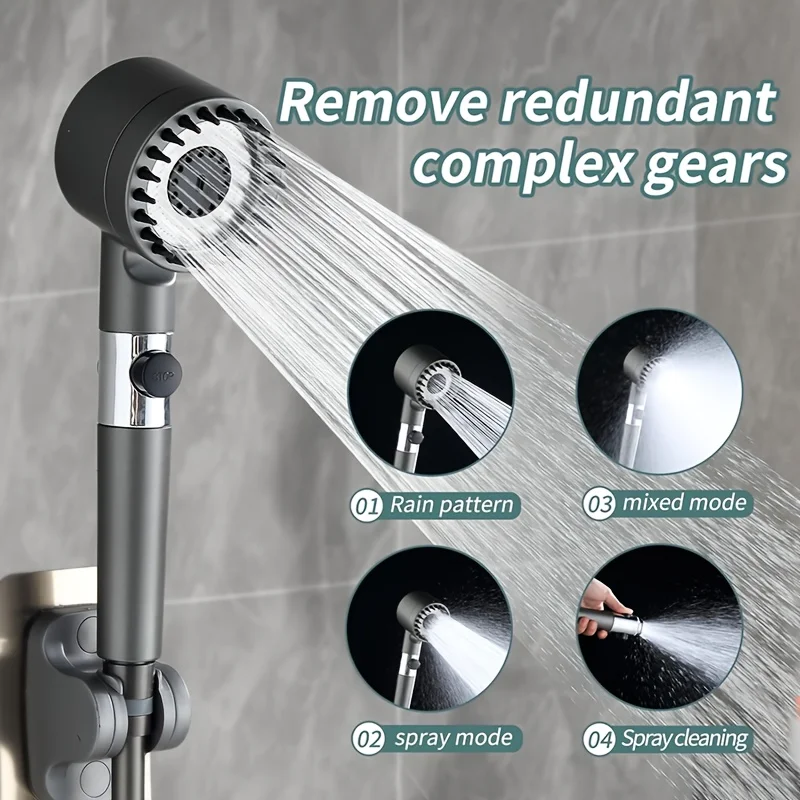
4-Speed High-Pressure Set ($14.43 USD)
At this price, it’s almost an impulse buy. The ABS resin construction is standard, and the 4-speed selector is a nice touch. The filter here is almost certainly a simple PP cotton or carbon block for sediment and basic chlorine. Think of it as a starter filter or a travel option. Manage your expectations on lifespan and contaminant removal.
- Extremely affordable
- Water-saving claims
- Simple installation
- Unknown filter quality
- Likely short lifespan
Handheld Shower Filter FAQ
- Do handheld shower filters actually work?
- Yes, but with clear limits. They are very effective at reducing free chlorine, some volatile organic compounds, and sediment. This leads to noticeable improvements in skin and hair feel. They are not water softeners and won’t remove all dissolved minerals or contaminants like a reverse osmosis system would.
- How often should I change my shower filter cartridge?
- Follow the manufacturer’s guideline, usually between 6 to 12 months. If you have very hard water or a household of four or more, err on the shorter side. A good rule: when you notice the water pressure drop or the smell of chlorine returning, it’s time.
- Will a shower filter reduce water pressure?
- A well-designed one will have minimal impact, typically less than a 15% reduction. Cheap filters with dense media or poor internal pathways can cause a significant drop. If pressure is a concern, look for filters that explicitly state “high flow” or “maintains pressure.”
- Can a shower filter help with eczema or dry skin?
- Many users report relief. Chlorine is a known skin irritant that strips natural oils. By removing it, you reduce a major source of irritation. It’s not a cure, but it’s a simple environmental change that dermatologists often recommend alongside other treatments. It also helps to have a proper iron and sulfur filter on your well if those are your water issues.
- What’s the difference between a shower filter and a filtered showerhead?
- A shower filter is a separate cartridge you add between your existing hose and showerhead. A filtered showerhead has the filtration built into the showerhead itself. Filters usually offer better, more replaceable filtration media. Filtered showerheads are more convenient but often have less effective filtration and force you to replace the entire head when the filter expires.
- Are these filters compatible with all handheld showers?
- Most use standard ½-inch threading, which is universal in North America and many other regions. Always check the product specifications. If you have an unusual system, you might need an adapter. For whole-home solutions, consider a dedicated sediment filter system or a large jumbo filter housing for pre-filtration.
Final Thoughts
After all our testing, we keep coming back to one conclusion: a good inline cartridge filter with known media is the most reliable choice for most people. The weAQUA single or family pack represents the best balance of transparent specs, proven media, and value. If you want spray versatility, the Ngardk combo is a solid all-in-one, just know you’re trading some filtration depth for convenience.
Start with a filter that clearly states its media and capacity. Replace it on schedule. That’s it. You’ll spend less than a dollar a week for noticeably better showers. Your skin and hair will thank you.
