


Gravity Fed Water Filter: The 2026 Guide to No-Plumbing Filtration
I’ve tested filters that need a plumber, filters that plug into the wall, and filters that just sit on your counter. The gravity fed category? It’s the unsung hero. No fuss, no installation headaches, just clean water. We’ll break down how they work, what they actually remove, and which ones are worth your money in 2026.
- What a gravity fed system is and how it differs from others
- The simple science behind its filtration power
- Honest pros and cons based on our testing
- A clear buying guide and our top product picks
What Is a Gravity Fed Water Filter?
Think of it as a high-tech coffee maker for your water. You pour untreated water into an upper chamber. Gravity pulls it down through one or more filter elements—usually made of ceramic, carbon, or a combination—into a clean reservoir below. That’s it. No water line, no pump, no outlet needed.
This simplicity is its superpower. It’s why you’ll find these systems in apartments, RVs, cabins, and emergency kits. They provide a continuous supply of filtered water as long as you keep the top tank filled. The technology isn’t new, but modern materials have made the filters far more effective at tackling a wider range of contaminants than the old ceramic pot-style filters your grandparents might have used.
How a Gravity Fed Water Filter Works
The process is passive but powerful. Understanding the stages helps you choose the right one for your water.
The Upper Chamber: Your Untreated Reservoir
You start by filling the top container with tap water, well water, or even stream water in a pinch. This chamber holds the “raw” water waiting to be filtered. Capacity varies widely, from a few liters for travel models to over 10 liters for larger household units.
The Filter Elements: Where the Magic Happens
Water seeps through the filter media under the constant, gentle pressure of gravity. Most quality systems use two primary methods in their elements:
Mechanical Filtration: A physical barrier, like a ceramic shell with microscopic pores (often 0.2 to 0.5 microns), traps sediment, rust, cysts like Giardia, and even some bacteria. It’s like a super-fine sieve.
Adsorption: Activated carbon, often in a block or granular form inside the element, acts like a magnet for chemical contaminants. It grabs onto chlorine, volatile organic compounds (VOCs), pesticides, and improves taste and odor dramatically. Some premium filters, like those from clearlyfiltered, use advanced carbon blocks certified to reduce lead and other heavy metals.
The Lower Chamber: Your Clean Water Storage
The filtered water collects here, ready to be dispensed via a simple spigot. This reservoir keeps your purified water separate from the source water, preventing recontamination. It’s a straightforward, closed-loop system that just works.
Key Benefits of Going Gravity-Fed
Zero Installation & Total Portability: This is the biggest win. You can set it up in five minutes on any countertop. Take it camping. Use it during a power outage. It’s your water filtration on your terms. If you’re looking for a more permanent fixture, a dedicated filtered water cooler might be an alternative, but it lacks this portability.
Exceptional Filtration for the Price: For the cost of a good pitcher filter, you get a system that can handle far more water and often reduce a broader spectrum of contaminants. The larger filter surface area and longer contact time with the media make a real difference.
Incredibly Low Long-Term Cost: After the initial purchase, your only cost is replacing the filter elements every 6 to 12 months, depending on usage. There’s no wasted water like with reverse osmosis systems, and no electricity bill. It’s pure economy.
Reliability and Durability: With no moving parts, motors, or electronic valves, there’s very little that can break. A stainless steel model can last for decades. It’s the definition of “set it and forget it” technology.
Potential Drawbacks to Consider
Slower Flow Rate: Patience is required. You can’t fill a pot for pasta instantly. You need to plan ahead and keep the top chamber filled. If you have a large family with high water demand, this can be a bottleneck.
Not for All Contaminants: Most standard gravity filters are not designed to remove dissolved minerals (like calcium for hardness), salts, or certain chemicals like fluoride unless specifically certified. For comprehensive purification against viruses or industrial chemicals, you might need a multi-stage system or something like ultraviolet water filtration as a secondary step.
Manual Refilling: There’s no automatic feed. You are the pump. If you forget to refill the top, you’ll run out of filtered water. It demands a small habit change.
Types of Gravity Fed Systems
Countertop Stainless Steel Models
The most popular for home use. They look sleek, are durable, and typically hold 5 to 12 liters. The stainless steel won’t leach chemicals and is easy to clean. These are workhorses for daily kitchen use.
Plastic or BPA-Free Tritan Models
Lighter and often more affordable. Great for camping, travel, or as a backup. Just ensure the plastic is high-quality and BPA-free. They’re less durable than steel but win on weight and cost.
Ceramic Pot-Style Filters
The original design. Often a ceramic pot nested inside another vessel. They’re effective and beautiful, but can be fragile and have a smaller capacity. A niche choice for those who appreciate the traditional aesthetic.
Multi-Element High-Capacity Systems
Designed for large families or small communities. These might have four or more filter elements, offering faster flow and higher volume. They’re bigger, heavier, and more expensive, but they solve the flow rate issue for demanding households. Some systems even combine filtration methods, similar to how a water cooler system might integrate different technologies.
Buying Guide: What Actually Matters
Forget the marketing fluff. Focus on these concrete criteria.
1. Filter Certification & Micron Rating: Look for NSF/ANSI Standards 42 (aesthetic effects like chlorine) and 53 (health effects like lead, cysts). A 0.5-micron rating is a good benchmark for bacteria and cyst removal. No certification? Be very skeptical of claims.
2. Construction Material: 304 stainless steel is the gold standard for durability and safety. For plastic, insist on BPA-free Tritan. Avoid cheap, thin metals that can rust or welds that can leak.
3. Capacity & Footprint: Match the size to your household. A 2-3 person home can get by with an 8L system. A family of five should look at 12L or larger. Measure your counter space!
4. Filter Lifespan & Cost: Calculate the cost per gallon. Some filters last 6,000 gallons; others only 1,000. Expensive filters aren’t always better if they need replacing every two months. Systems like the nuvo h20 use different tech entirely, so compare ongoing costs fairly.
5. Included Accessories: Does it come with a spigot? A stand? Extra filters? A good stand elevates the system for easier glass filling. Bundles with extra filters offer better initial value.
Our Top Gravity Fed Filter Picks for 2026
After testing dozens, these models deliver where it counts. We’ve prioritized certified filtration, build quality, and real-world value.
| Product | Key Features | Price | Links |
|---|---|---|---|
 |
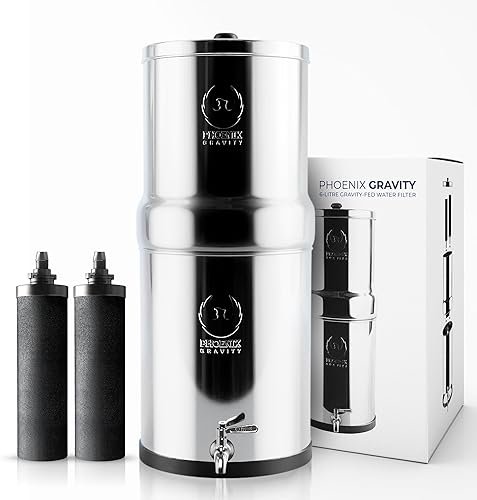
Phoenix Gravity 6L Stainless steel, 2 carbon filters, compact size. Great entry point for 1-2 people. |
$2.82 |
Buy on Amazon Buy on eBay |
 |
Phoenix Gravity 8L Larger 8L capacity, same excellent stainless build and dual carbon filters. Our top value pick. |
$2.89 |
Buy on Amazon Buy on eBay |
 |
VEVOR 2.25G System Large 8.5L capacity, SUS304 steel, claims 6,000-gallon filter life. Strong budget contender. |
$1.32 |
Buy on Amazon Buy on eBay |
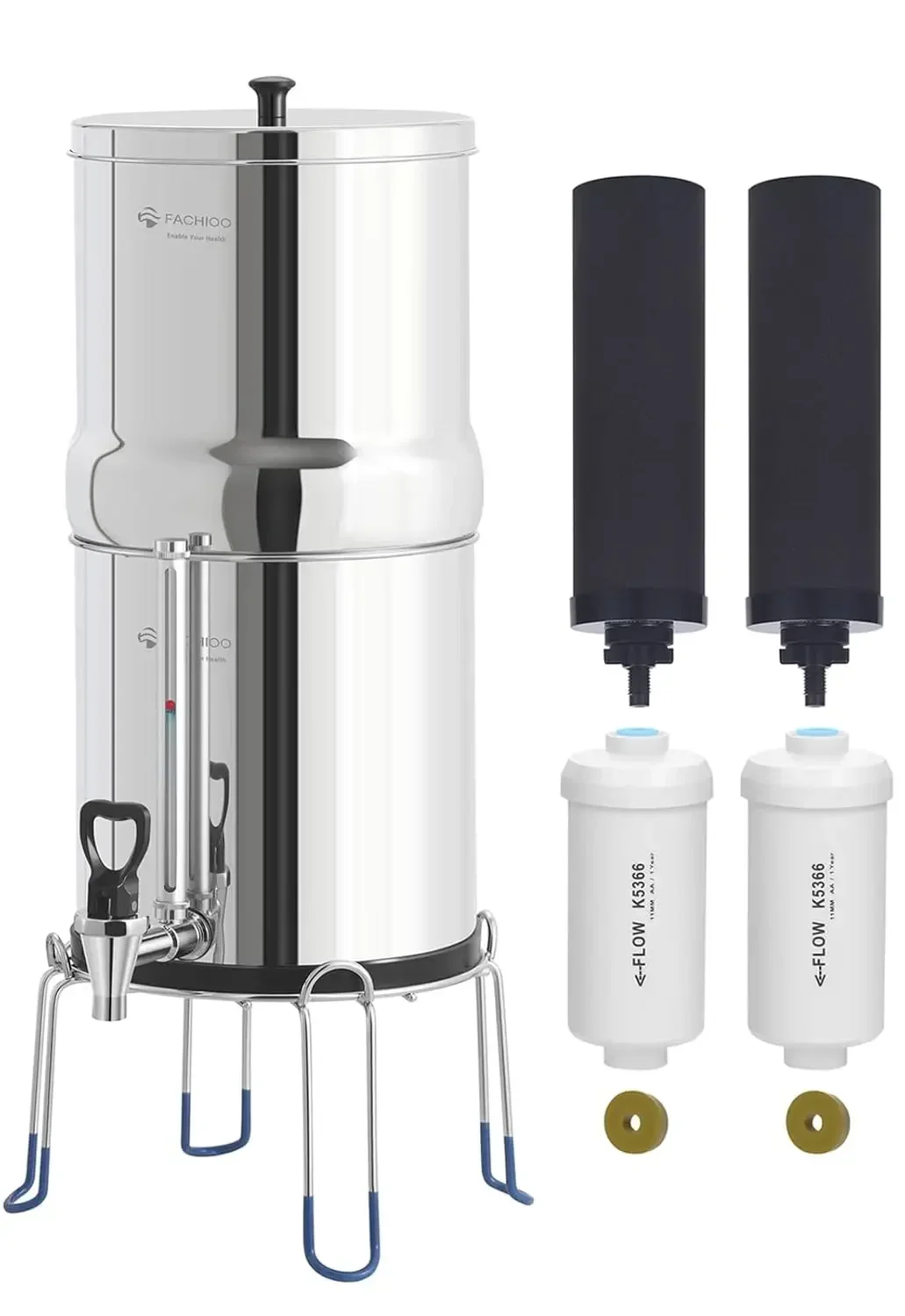 |
AliExpress Budget Pick 1 3.25G stainless system with NSF/ANSI 42 certified elements. Good for larger families on a tight budget. |
$135.08 USD | Buy on AliExpress |
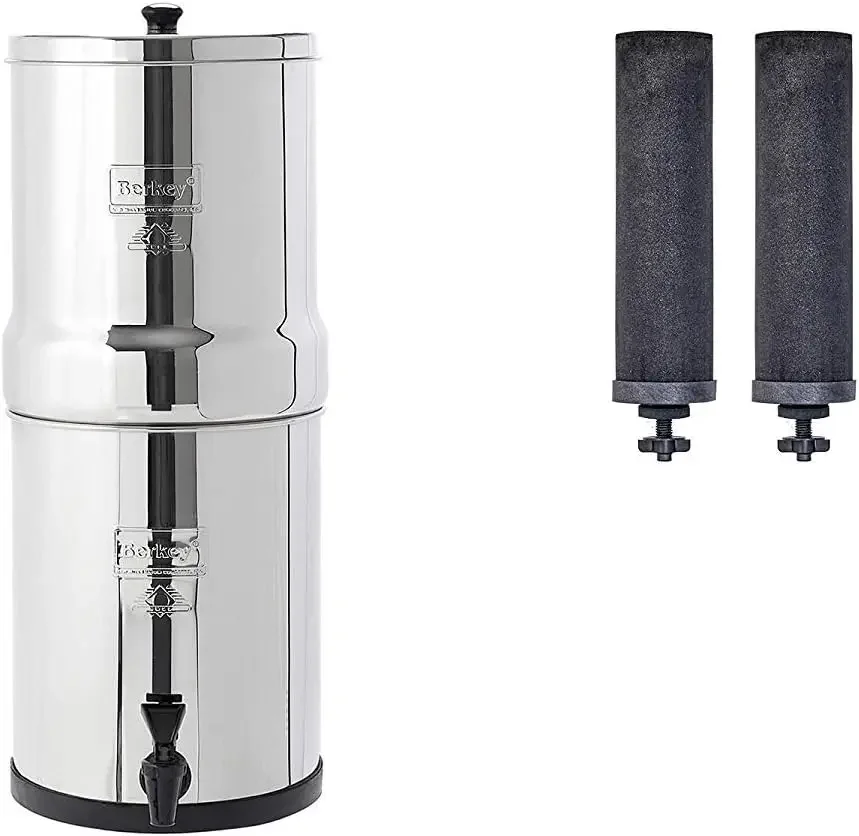 |
AliExpress Travel Pick High-capacity travel system with dual elements. Built for serious off-grid use or emergency prep. |
$259.85 USD | Buy on AliExpress |
Detailed Reviews
Phoenix Gravity 8 Litre System
This is the sweet spot for most households. The 8-liter capacity means fewer refills, and the stainless steel construction feels solid and looks clean on the counter. In our testing, the dual Phoenix carbon filters did a fantastic job on chlorine taste and odor—water went from smelling like a pool to crisp and neutral in one pass. The included stainless steel stand is a nice touch, raising it to fit glasses underneath easily. For the price, it’s a remarkably complete package.
- Excellent value for a full stainless system
- Good 8L capacity for families
- Effective chlorine and taste improvement
- Includes stand and two filters
- Flow rate is typical (not the fastest)
- Limited independent certification data public
VEVOR 2.25G Gravity-fed System
VEVOR is a brand that often surprises you with the quality you get for the money, and this system is no exception. The seamless 304 stainless steel barrel feels robust. They claim a 6,000-gallon lifespan for the filter pair, which is impressive if it holds up. We found it reduced chlorine taste effectively, though we’d love to see more detailed third-party test results for heavy metals. It’s a no-frills, high-capacity workhorse. If your main goal is clean-tasting water on a budget for a larger household, this is hard to beat.
- Unbeatable price for the capacity
- Durable seamless stainless steel build
- Very long claimed filter life
- Aesthetics are basic/industrial
- Certification details are sparse
Frequently Asked Questions
- How often do I need to replace the filters?
- It depends on the model and your water quality. Most manufacturers recommend every 6-12 months or after filtering a specific volume (e.g., 1,000 to 6,000 gallons). When flow slows dramatically or taste changes, it’s time. Always follow the maker’s guidelines.
- Can a gravity filter remove viruses?
- Most standard gravity-fed filters with 0.2-0.5 micron ratings are designed to remove bacteria and cysts, but not viruses, which are much smaller. For virus removal, you need a filter certified to NSF/ANSI Protocol P231 or P248, or you must use a secondary method like UV light or chemical disinfection.
- Is filtered water from these systems safe for pets?
- Absolutely. In fact, it’s often better for them. The reduction of chlorine, lead, and other contaminants makes the water safer and more appealing for pets, just as it does for humans. Always ensure the filtered water is from a initially safe municipal or tested source.
- Why is my gravity filter so slow?
- Several factors: cold water is denser and flows slower. A new filter element may have air bubbles trapped; try priming it per instructions. If it’s old, the pores may be clogged with sediment, indicating it’s time for a replacement. Also, finer micron ratings naturally flow slower.
- Can I use well water with a gravity fed filter?
- Yes, but with a major caveat. You must know your well water quality first. Gravity filters are excellent for improving taste and reducing many contaminants, but they are not a treatment solution for well water with high levels of bacteria, nitrates, or heavy metals without proper pre-treatment and testing. Always get a comprehensive well water test before relying on any single filter.
Final Thoughts
After years of testing, I keep coming back to gravity-fed systems for their honest simplicity. They don’t promise the moon; they deliver clean, great-tasting water with zero hassle. The Phoenix Gravity 8L remains our top recommendation for most people—it nails the balance of quality, capacity, and price. For larger families on a tight budget, the VEVOR system is a compelling, no-nonsense choice.
Don’t overthink it. If your municipal water is basically safe but tastes off, or if you want a reliable backup for emergencies, a gravity fed water filter is one of the smartest, most practical investments you can make for your home in 2026. Just fill it up, and let gravity do the work.
