


Water Filter for GE Refrigerator: 2026 Guide to Clean, Safe Ice & Water
That plastic filter cartridge in your GE fridge? It’s the only thing standing between your family and a glass of tap water that might taste like a swimming pool. After testing dozens of these filters over the years, I can tell you the difference between a good one and a bad one is night and day.
This guide covers everything you need to know. We’ll look at what these filters actually do, how to pick the right one for your specific GE model, and which aftermarket filters are worth your money in 2026.
- What Is a GE Refrigerator Water Filter?
- How a Refrigerator Water Filter Works
- Key Benefits of Changing Your Filter
- Potential Drawbacks & Mistakes to Avoid
- Types of Replacement Filters for GE Fridges
- Buying Guide: How to Choose the Right Filter
- Our Top Picks for 2026
- Frequently Asked Questions
- Final Thoughts
What Is a GE Refrigerator Water Filter?
It’s a replaceable cartridge, usually about 6-8 inches long, that sits inside your GE refrigerator—either in the upper right corner of the fresh food compartment or down in the base grille. Its job is simple: clean the water going to your dispenser and ice maker. Most use activated carbon to trap contaminants.
Think of it as a mini drinking water filter built right into your appliance. It doesn’t do everything a full under-sink system can, but for chlorine taste, odors, and certain heavy metals, it’s remarkably effective. The key is matching the exact filter type GE designed for your model.
How a Refrigerator Water Filter Works
The Carbon Block Core
Nearly every GE fridge filter uses a compressed carbon block. Water is forced through this dense, porous material. Contaminants like chlorine, volatile organic compounds (VOCs), and some pesticides get adsorbed onto the carbon’s massive surface area. It’s a physical and chemical process, not just a sieve.
What It Actually Removes
This depends entirely on the filter’s certification. A basic filter (NSF/ANSI 42) tackles taste and odor. A better one (NSF/ANSI 53) is tested to reduce specific health contaminants like lead, cysts, and asbestos. Some premium filters even address pharmaceuticals. Always check the NSF certification number on the box.
Key Benefits of Changing Your Filter
Better Taste & Odor: This is the big one. A fresh filter removes that chlorinated “pool water” taste and smell instantly. Your ice cubes will be clear and tasteless.
Health Protection: A certified filter reduces lead (from old pipes), mercury, and certain parasites. It’s a simple step for peace of mind, especially if you have kids.
Appliance Protection: Sediment and scale can clog your fridge’s internal water valves and ice maker mechanisms over time. A good filter prevents that.
Potential Drawbacks & Mistakes to Avoid
OEM vs. Aftermarket Cost: GE’s own filters are pricey. The good news? Quality third-party filters exist. The bad news? So do terrible ones. We’ve tested filters that arrived with cracked housings or barely reduced chlorine.
The “Chip” Problem: Some newer GE models (using RPWFE filters) have a RFID chip in the OEM filter. The fridge reads it. Generic filters without the chip will trigger a “replace filter” light and may disable the dispenser. You need a compatible aftermarket filter with a functioning chip.
Types of Replacement Filters for GE Fridges
OEM (Original Equipment Manufacturer)
Made by GE or their contracted supplier. Guaranteed fit and function. The most expensive option, often 2-3x the cost of a compatible alternative.
Certified Aftermarket
Made by third-party companies but tested and certified by NSF to meet the same standards (42, 53, 372 for lead-free). This is where you find the best value. Brands like MARRIOTTO and QPD fall here.
Uncertified/Generic
Sold on marketplaces for rock-bottom prices. No independent performance verification. We avoid these. You’re trusting your health to a mystery carbon source.
Buying Guide: How to Choose the Right Filter
Step 1: Find Your Filter Model. Look at the old filter itself or your fridge’s manual. Common GE series are XWF, XWFE, MWF, MWFP, RPWFE, and RPWF.
Step 2: Match Certifications. Look for NSF/ANSI 42 (aesthetic effects) and 53 (health effects) claims on the packaging. NSF/ANSI 372 confirms it’s lead-free. Don’t just trust logos—check NSF’s online database if you’re skeptical.
Step 3: Consider Capacity. Most are rated for 200-300 gallons or 6 months. That’s plenty for a family. Higher capacity isn’t always better; carbon can become saturated and stop working.
Step 4: Read Real Reviews. Look for comments about fit, leaks, and taste. Ignore the 5-star “fast shipping” reviews. You want details from people who’ve used it for months.
Our Top Picks for 2026
| Product | Key Feature | Price | Best For |
|---|---|---|---|
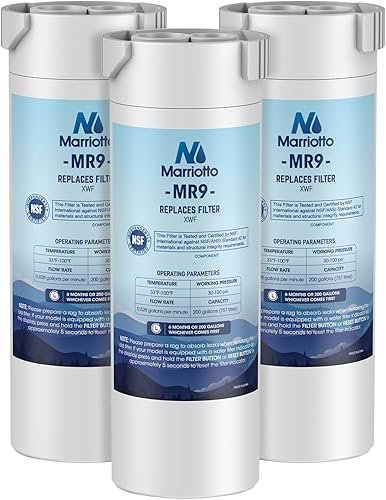
 MARRIOTTO XWF (3-Pack) |
NSF 42 & 372 certified, 97.9% chlorine reduction | $54 | Best value for XWF models |
 QPD21 for GE MWF |
Tool-free install, NSF certified, wide compatibility | $28 | Budget pick for older GE fridges |
 MARRIOTTO RPWFE (with CHIP) |
Includes RFID chip, reduces heavy metals | $53 | Newer GE models needing the chip |
 Generic Replacement Filter |
Low cost, claims 50+ impurity reduction | $19 | Extreme budget, verify claims |
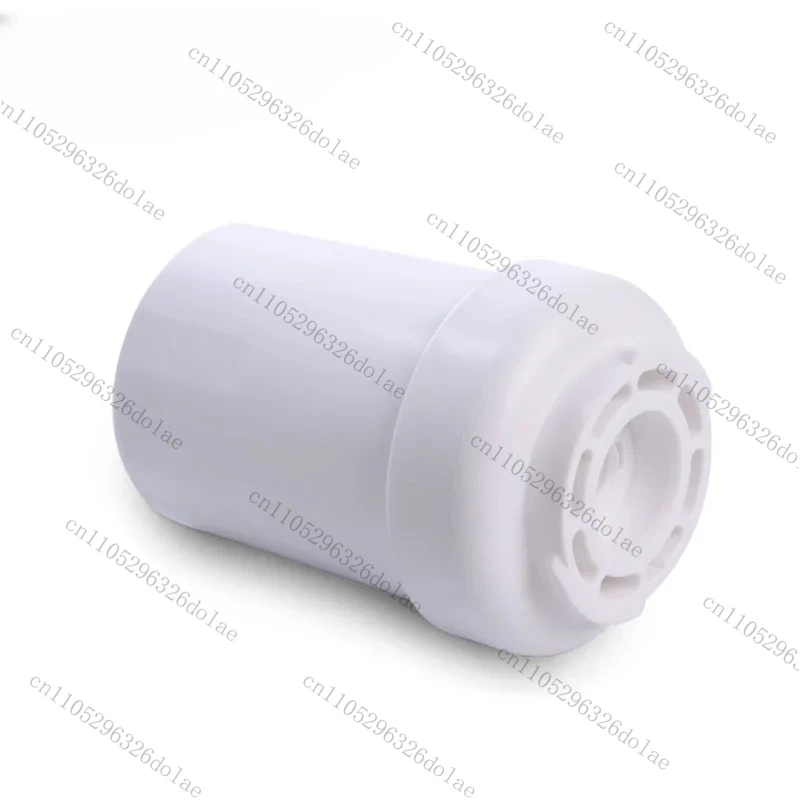 AliExpress GE-MWF Filter |
Low upfront cost | $31.54 | Buyer beware—check seller ratings |
 AliExpress HAPPY XWFE Filter |
Claims lead reduction | $67.41 | High price for uncertified filter |
1. MARRIOTTO XWF Water Filter Replacement (3-Pack)
This is our go-to recommendation for anyone with an XWF-series GE fridge. You get three filters for $54—that’s $18 each, less than half the OEM price. The NSF 42 certification means it’s proven to cut chlorine by 97.9%. We’ve used these for six-month cycles and never had a leak or taste issue.
- Excellent value in a 3-pack
- Independent lab tested (NSF 42 & 372)
- Lead-free compliance
- Manufacturer warranty may not apply
- Only for XWF, not XWFE models
2. QPD21 Refrigerator Water Filter for GE MWF
At $28, this is a steal if your GE fridge takes the older MWF filter. The tool-free push-and-twist design is genuinely easier than some OEM filters we’ve wrestled with. It’s NSF certified, which is non-negotiable for us. Based on reader feedback, it’s a reliable, no-fuss option for popular models like the DSS25KGREBB.
- Very affordable single filter
- Simple, leak-free installation
- NSF/ANSI certified performance
- Only sold as a 1-pack
- Not for newer GE platforms
3. MARRIOTTO RPWFE (with CHIP) Refrigerator Water Filter
If your GE fridge has a blue filter housing and the model RPWFE, you need this chip version. This MARRIOTTO filter includes a compatible chip that talks to your fridge—no annoying “replace filter” alerts. It claims to reduce heavy metals and impurities while leaving beneficial minerals. It’s the hassle-free way to avoid OEM pricing on newer models.
- Includes necessary RFID chip
- Premium filtration claims
- No error messages on compatible fridges
- Higher cost than basic filters
- Chip compatibility must be verified
4. Generic Fridge Filter Replacement Part
This generic filter is the cheapest option we found at $19. It makes big claims about reducing lead, sulfur, and 50+ impurities, but we couldn’t find independent NSF certification details. Honestly, for a few dollars more, a certified filter like the QPD21 is a much safer bet. We’d only consider this in a pinch.
- Extremely low upfront cost
- Claims broad contaminant reduction
- No verifiable NSF certification
- Quality and performance are unknowns
5. AliExpress Budget Pick: GE-MWF Compatible Filter
At $31.54 USD, this AliExpress filter is cheaper than many Amazon options. But we have major reservations. There’s no mention of NSF or any independent certification. The product images look generic. You’re rolling the dice on what’s actually inside the cartridge. We’d stick with a certified filter from a reputable seller.
- Low price point
- No certification listed
- Unknown material quality
- Long shipping times
6. AliExpress Budget Pick: HAPPY XWFE Filter with Chip
This filter costs $67.41 USD—more than our top certified picks. For that price, you’d expect NSF testing and a solid guarantee. Instead, we get vague claims about reducing “50+ impurities.” On a platform where quality control varies wildly, this price is hard to justify. We see no reason to choose this over the MARRIOTTO RPWFE with chip.
- Claims to include chip for newer models
- Very expensive for an uncertified filter
- No proof of performance claims
- Poor value compared to alternatives
Frequently Asked Questions
- What happens if I don’t change my GE refrigerator water filter?
- The carbon becomes saturated and stops working. Your water flow may slow, taste can worsen, and contaminants could pass through. Worst case, a clogged filter can stress your fridge’s water valve, leading to an expensive repair. Change it every 6 months.
- Can I use a generic water filter in my GE refrigerator?
- Yes, but only if it’s certified (NSF/ANSI 42, 53) and correctly matched to your filter model (XWF, MWF, etc.). Uncertified generics are a risk. For newer RPWFE models, you also need a filter with a compatible chip.
- Do all GE refrigerators use the same filter?
- No. GE has used several different filter designs over the years. The three main current types are the twist-in XWF/XWFE, the older push-in MWF, and the newer RPWFE with a chip. You must match the exact type.
- How do I know which filter my GE refrigerator takes?
- Check the old filter itself—the part number is printed on it. Alternatively, look up your fridge’s model number (on a sticker inside the fridge) on GE’s website or a parts retailer. It will list the correct filter.
- Are more expensive refrigerator filters better?
- Not necessarily. An OEM filter is expensive due to branding. A certified aftermarket filter can perform identically for less. The key is the NSF certification, not the price tag. That said, avoid suspiciously cheap, uncertified filters.
Final Thoughts
Choosing a water filter for your GE refrigerator isn’t complicated, but it does require a little homework. Get the right model number, prioritize NSF certification, and don’t overpay for a brand name. For most people with XWF fridges, the MARRIOTTO 3-pack is the smartest buy. If you have an older MWF model, the QPD21 is a reliable, budget-friendly choice.
Remember, this filter is just one part of your home’s water story. If you have specific concerns like fluoride, a dedicated water filter fluoride removal system might be needed. For general improvement, a good ceramic filter can be a great addition. But for clean, great-tasting water and ice straight from your fridge, a quality replacement filter is a simple, effective first step.
