


After testing dozens of systems and talking to countless plumbers, I can tell you this: a good whole-house filter changes how your home feels. The water is cleaner, your appliances last longer, and you stop worrying about what’s coming out of the tap. But picking the wrong system is a expensive mistake. Let’s make sure you get it right.
This guide covers:
- What a full house system actually is and how it works
- The real benefits and honest drawbacks
- How to choose between different types and stages
- Our top tested picks for different budgets and needs
What Is a Full House Water Filter System?
A full house water filter system is a point-of-entry filtration setup installed where the main water line enters your property. Its job is simple but big: treat every drop of water before it flows to a single faucet, showerhead, or appliance. That means filtered water for home use—from brushing your teeth to running the dishwasher—is guaranteed.
Unlike a small under-sink unit that only serves one tap, this is your home’s first line of defense. We’ve seen them stop sediment from wrecking hot water heaters and remove the chlorine smell that makes showering unpleasant. It’s about protecting your plumbing, your appliances, and your family with one central system.
How a Whole-House Filter System Works
The process is straightforward but effective. Water from your municipal supply or well enters the system under pressure. It then passes through one or more filtration stages housed in large, durable containers—often called “Big Blue” housings for their size and color.
The Filtration Stages Explained
Most systems use a multi-stage approach. The first stage is almost always a sediment filter, grabbing dirt, rust, and sand. Think of it as a bouncer at the door, stopping the big stuff. After that, water typically flows through an activated carbon filter cartridge. This is the workhorse that tackles chlorine, volatile organic compounds (VOCs), and bad tastes. Some advanced systems add a third stage, like a finer sediment filter or a specialized media for specific contaminants.
Flow Rate and Pressure
A critical spec is flow rate, measured in litres per minute (L/min). A system rated for 75 L/min can easily supply a large home with multiple showers running without a noticeable pressure drop. The key is matching the system’s capacity to your home’s peak demand. Too small, and you’ll feel it when someone flushes a toilet while you’re showering.
Key Benefits of Filtering All Your Water
Protects Your Entire Plumbing System: Sediment and scale are brutal on pipes, water heaters, and washing machines. A whole-house filter stops that gunk at the source, potentially adding years to the life of your appliances. That’s money saved on repairs and replacements.
Improves Water for Bathing and Cleaning: Chlorine isn’t great for your skin or hair. Filtering it out of your shower water can reduce dryness and irritation. Your laundry will also come out softer and brighter without harsh chemicals interfering with the detergent.
Convenience and Peace of Mind: You install it once, maintain it periodically, and forget about it. Every tap delivers cleaner water. No more worrying about what’s in the water when you fill a pot for pasta or a bath for your kids. It’s a single solution for the whole home.
Potential Drawbacks to Consider
Upfront Cost and Installation: This isn’t a $20 pitcher filter. Quality systems require a significant initial investment, and professional installation is often recommended (or required by code) since it ties into your main water line. You’re paying for whole-home coverage.
Doesn’t Remove Everything: Standard sediment and carbon filters are fantastic for particles and chlorine, but they won’t touch dissolved minerals (like calcium for hard water) or specific contaminants like fluoride. For that, you need a dedicated fluoride filtration stage or a reverse osmosis system at specific taps.
Types of Whole House Filtration Systems
Sediment Filters
The most basic and essential type. They use a pleated, spun, or melt-blown cartridge to physically trap particles. You’ll see ratings like 5-micron or 1-micron—the smaller the number, the finer the particles it catches. A great first stage for any home, especially on well water.
Carbon Filters
These are your taste-and-odor champions. A solid activated carbon filter cartridge uses adsorption to grab chlorine, pesticides, and organic chemicals. They’re a must for municipal water treated with chlorine. Look for coconut-shell carbon for the best performance.
Multi-Stage Systems
Most popular systems combine the above. A common setup is a 3-stage: a 5-micron sediment filter, a 1-micron sediment filter for finer particles, and a carbon block filter. This layered approach provides thorough protection for typical town water supplies.
Specialized Media Filters
Need to target something specific? Systems can be customized with media like KDF for heavy metals or catalytic carbon for chloramine. This is where talking to a water specialist pays off—they can tailor a system based on your actual water report.
Buying Guide: How to Choose
1. Test Your Water First. Seriously, don’t skip this. You can’t fix what you don’t know is broken. A basic test reveals your sediment level, chlorine, pH, and hardness. This dictates the filter stages you need.
2. Match the Flow Rate to Your Home. Count your bathrooms and consider peak usage. A 3-bedroom, 2-bath home usually needs a system handling at least 50-75 L/min. Undersizing is the single biggest mistake we see—it leads to frustrating pressure drops.
3. Check the Filter Housing and Connections. Look for durable, food-grade filter housing with brass ports. Double O-ring seals prevent leaks. Certifications like WaterMark or NSF/ANSI 42 indicate quality construction and material safety.
4. Consider Maintenance. How often do filters need changing? Are replacements affordable and easy to find? A system with standard 20″x4.5″ cartridges gives you more choice and better prices than proprietary filters.
Our Top Picks for 2026
| Product | Key Specs | Best For | Price |
|---|---|---|---|
 20” Triple Stage Big Blue |
3-stage, 75L/min, WaterMark Certified | Town water, large homes | $6.75 |
 Twin 10” System |
2-stage, 99.99% chlorine removal | Smaller homes, budget-conscious | $99 |
 Aqua-Plus 2 Stage Jumbo |
2-stage, 20”x4.5” cartridges | Value seekers, DIY installs | $1.92 |
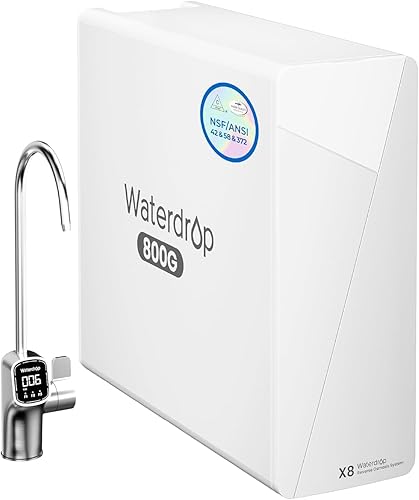 Waterdrop X8 RO System |
9-stage RO, 800 GPD, NSF Certified | Under-sink, ultimate purity | $7.19 |
 ALTHY Spin Down Pre-filter |
Stainless steel mesh, backwash | Well water, pre-filtration | $49.88 |
20” x 4.5” Triple Stage Big Blue System
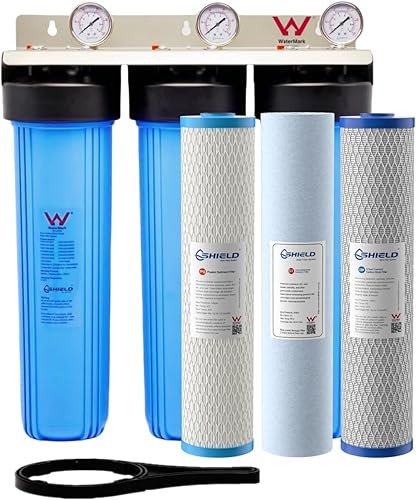
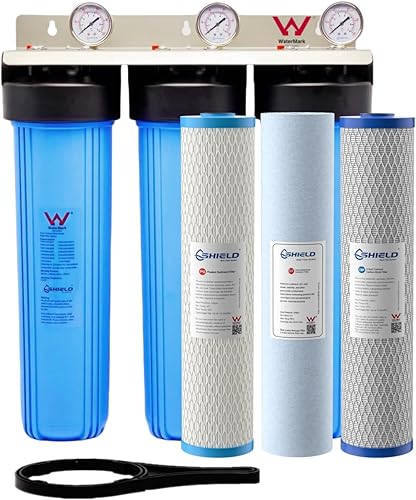
This is our top recommendation for most homes on town water. The three-stage filtration—5μm pleated, 1μm antibacterial, and a 0.5μm carbon block—handles sediment and chlorine like a champ. The 75L/min flow rate means you’ll never feel a pressure loss. We love the heavy-duty brass ports and WaterMark certification; it’s built to last and compliant with plumbing standards. Honestly, for the price, it’s a steal.
- Excellent 3-stage filtration for municipal water
- High flow rate supports large households
- Durable, certified construction
- Requires wall mounting and plumbing access
- Replacement cartridges are a recurring cost
Twin Whole House Water Filter System 10” x 2.5”
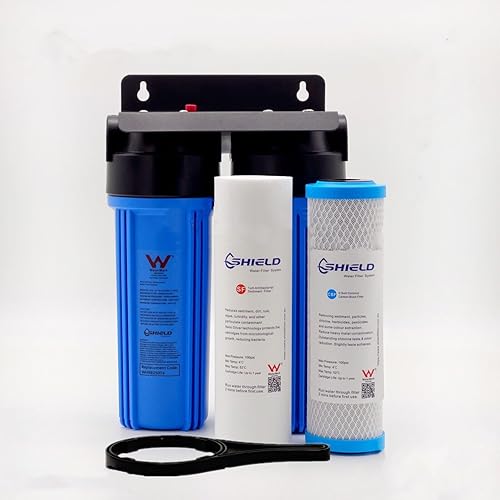
A solid, compact choice for smaller households or tighter budgets. The two-stage system with carbon cartridges does a fantastic job removing chlorine—up to 99.99% according to the specs. It’s simpler to install and maintain than the big 20″ systems. The brass ports and WaterMark approval are big pluses at this price point. Just know the smaller cartridges will need more frequent changes in a busy home.
- Very effective chlorine removal
- More affordable entry point
- Heavy-duty housing with brass ports
- Lower flow capacity than 20″ systems
- Smaller cartridges mean shorter lifespan
Aqua-Plus 2 Stage Jumbo Big Blue System
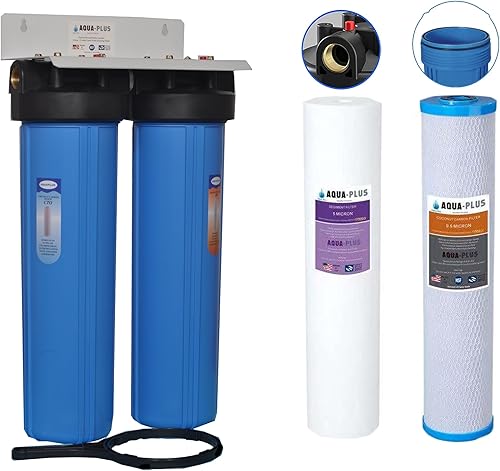
For the DIYer who wants standard, affordable cartridges, this is a great starting point. The 2-stage system with a 5-micron sediment filter handles the basics well. The price is almost unbelievable—just a couple of dollars for the housing. But heads up: you get what you pay for. The included filters are basic, and you’ll likely want to upgrade the carbon cartridge immediately for better performance. It’s a blank canvas.
- Extremely low initial cost
- Uses common 20″x4.5″ cartridges
- Food-grade material and pressure release valve
- Included filters are very basic
- May require additional fittings or upgrades
Waterdrop X8 Reverse Osmosis System
This isn’t a whole-house system, but we’re including it because it’s the gold standard for drinking water purity at a single tap. The 9-stage filtration with a 0.0001μm RO membrane tackles everything from lead to PFAS. The 800 GPD capacity and 2:1 pure-to-waste ratio are impressive. If your main concern is ultra-pure water for cooking and drinking, and you don’t want to filter every shower, this under-sink unit is phenomenal. Our hydroviv reviews show similar high-performance undersink options, but this one’s efficiency is hard to beat.
- Exceptional purification for a wide range of contaminants
- High daily capacity and low wastewater
- NSF/ANSI certified performance
- Only filters water at one faucet
- Requires under-sink installation and a drain connection
ALTHY Spin Down Sediment Pre-filter
This is a different beast—a pre-filter. It’s the first guard in line, using a stainless steel mesh to catch sand, rust, and large debris before they even hit your main filter cartridges. The backwash function lets you clean it without disassembly. Brilliant for well water or areas with heavy sediment. Think of it as a bodyguard for your more expensive carbon filters. The 93.7% positive rating on AliExpress speaks to its reliability.
- Protects and extends the life of downstream filters
- Reusable, cleanable mesh screen
- Great for high-sediment water sources
- Does not improve taste or remove chemicals
- Must be installed before other filters
Frequently Asked Questions
- How often do I need to change the filters?
- It depends on your water quality and usage. Sediment filters might need changing every 3-6 months, while carbon filters can last 6-12 months. Always check the manufacturer’s guidelines and monitor your water pressure—a noticeable drop usually means a filter is clogged.
- Can a whole-house system soften hard water?
- No. Standard sediment and carbon filters do not remove dissolved minerals like calcium and magnesium that cause hard water. You need a dedicated water softener, which uses ion exchange, for that. Some combo systems exist, but they are distinct technologies.
- Is professional installation required?
- It’s highly recommended. Installation involves cutting into your main water line and ensuring proper sealing and compliance with local plumbing codes. A mistake can lead to leaks or contamination. If you’re not experienced with plumbing, hire a pro.
- Will it reduce my water pressure?
- A properly sized system should not cause a noticeable pressure drop. The key is matching the system’s flow rate (L/min) to your home’s peak demand. An undersized filter will restrict flow. Always choose a system with a capacity greater than your maximum simultaneous usage.
- Do I still need a filter for drinking water?
- Possibly. A whole-house system improves all water, but for the highest purity at the kitchen tap—especially for removing dissolved solids, lead, or fluoride—an additional under-sink reverse osmosis system is a smart upgrade. They work together perfectly.
Final Thoughts
After years of testing and seeing the difference in homes, our stance is clear: a full house water filter system is one of the best investments you can make for your property and health. It’s not just about taste—it’s about protection. For most homes on municipal water, our top pick remains the 20” Triple Stage Big Blue System. It offers the best balance of thorough filtration, high flow rate, and certified build quality.
Start with a water test. Then, use this guide to match a system to your actual needs. Don’t overbuy for contaminants you don’t have, and don’t undersize your flow rate. Get it right, and you’ll enjoy clean, safe water from every tap for years to come.
