


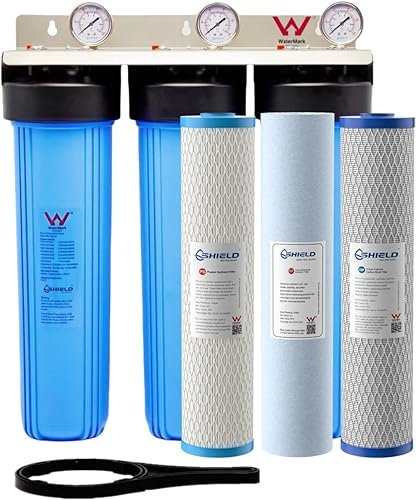
So you’re tired of worrying about what’s in your water. Not just from the kitchen tap, but in the shower, the laundry, even the water your kids splash around in during bath time. You’ve come to the right place. After testing systems, interviewing plumbers, and hearing from countless homeowners, we’re breaking down everything you need to know about installing a full house water filter.
- What these systems actually are and how they differ from under-sink filters
- The real-world benefits and the honest drawbacks you should consider
- A clear guide to choosing the right type and capacity for your home
- Our hands-on reviews of top systems for 2026
What Is a Full House Water Filter?
A full house water filter is a point-of-entry filtration system installed where your main water line enters your house. Its job is simple but big: treat every single drop of water before it reaches any faucet, showerhead, or appliance. This is a fundamentally different approach than installing a dedicated sink filter in the kitchen or a showerhead filter.
The single biggest mistake we see is people confusing these with under-sink units. A whole-house system protects your entire plumbing infrastructure—your water heater, washing machine, and pipes—from sediment and scale. It means cleaner water for bathing, which is important because your skin absorbs contaminants during a shower. Honestly, for many homeowners on municipal water, this is the only filter they’ll ever need.
How a Whole House System Works
Think of it as a multi-stage security checkpoint for your home’s water. The water from your municipal supply or well passes through a series of filters housed in large, durable canisters—often called “Big Blue” housings due to their size and color.
The Filtration Stages
Most systems use a combination of sediment and carbon filters. The first stage is usually a sediment filter (rated at 5 or 1 microns) that catches dirt, rust, and sand. Next, a carbon block or granular activated carbon filter tackles chlorine, volatile organic compounds (VOCs), and bad tastes. Some advanced systems add a third stage, like a finer 0.5-micron carbon block for extra chemical removal. The filtered water then continues, under normal household pressure, to every outlet in your home.
Flow Rate & Pressure
This is critical. The system must be able to handle your home’s peak water demand without a noticeable drop in pressure. Flow rate is measured in litres per minute (L/min). A system rated for 75 L/min is suitable for most medium to large households. If you have multiple bathrooms and high simultaneous usage, you need a high-flow unit.
Key Benefits of Filtering All Your Water
Whole-Home Protection: Every tap delivers cleaner water. You’re not just drinking filtered water; you’re showering in it and cooking with it. This reduces your family’s overall exposure to chlorine, sediment, and other contaminants.
Appliance Longevity: Sediment is brutal on appliances. It clogs water heaters, reduces efficiency, and shortens their lifespan. A good whole-house filter acts as a first line of defense, saving you money on repairs and energy bills.
Better Bathing Experience: Chlorine strips natural oils from skin and hair. Filtering it out can lead to softer skin and less brittle hair. Many people with eczema or sensitive skin notice a significant improvement.
Convenience: It’s a “set it and mostly forget it” solution. You maintain one system instead of juggling multiple under-sink and shower filters. Speaking of maintenance, timely filter cartridge replacement is the key to keeping performance high.
Potential Drawbacks & Honest Considerations
Upfront Cost & Installation: This is the biggest hurdle. Systems cost more than pitcher filters, and installation often requires a plumber, especially if you’re not comfortable cutting into your main water line. It’s an investment.
Doesn’t Remove Everything: Standard carbon/sediment filters won’t remove dissolved minerals (like calcium for hardness), heavy metals, or微生物. For that, you need specialized systems like a iron filter system for well water or a best reverse osmosis system under sink for drinking water.
Space Requirements: Those big blue housings need room. You need a dry, accessible area near your main water shut-off valve—typically a garage, basement, or utility closet.
Types of Whole House Filtration Systems
Sediment Filters
The most basic type. They use a pleated, spun, or string-wound cartridge to physically block particles. Ideal as a pre-filter or for homes with visibly rusty or sandy water.
Carbon Filters
The workhorse for municipal water. They use activated carbon to adsorb chlorine, pesticides, herbicides, and VOCs. A solid carbon block filter offers more contact time and better removal than granular carbon.
Specialized & Combination Systems
These are for specific problems. UV purifiers kill bacteria and viruses. Water softeners address hardness. Acid neutralizers fix low pH. For most folks on treated town water, a quality sediment + carbon combo is the sweet spot. If your goal is ultra-pure drinking water, a dedicated distillation system at the kitchen tap can complement your whole-house setup.
Buying Guide: How to Choose
1. Know Your Water: Get a basic water quality report. Is your main issue chlorine taste, sediment, or something else? This dictates your filter stages.
2. Flow Rate (L/min): Count your bathrooms and consider peak usage. A 3-bedroom home with 2 bathrooms typically needs a minimum of 50-75 L/min. Don’t undersize this.
3. Filter Size & Micron Rating: 20″ x 4.5″ “Big Blue” housings are the standard for high flow and long cartridge life. For micron rating, 5-micron is a good general-purpose start; 1-micron is better for finer sediment.
4. Certifications: Look for independent certifications like NSF/ANSI 42 (aesthetic effects—chlorine, taste, odor) and NSF/ANSI 53 (health effects—lead, cysts). In some regions, WaterMark certification ensures plumbing compliance.
5. Build Quality: Brass ports are more durable than plastic. Double O-ring seals prevent leaks. A pressure relief valve makes filter cartridge replacement safer and easier.
Our Top System Picks for 2026
| Product | Key Specs | Price | Links |
|---|---|---|---|
20” Big Blue Triple Stage |
3-stage (5µm, 1µm, 0.5µm Carbon), 75L/min, Brass Ports, WaterMark Certified | $6.75 | Buy on Amazon Buy on eBay |
Aqua-Plus 2 Stage Big Blue |
2-stage (5µm Sediment + Carbon), Food-Grade Housings, Pressure Release | $1.92 | Buy on Amazon Buy on eBay |
Shield Water Filters 3-Stage |
3-stage, Stainless Steel UV-Resistant Cover, 75L/min, Brass Ports | $9.75 | Buy on Amazon Buy on eBay |
Twin 10” System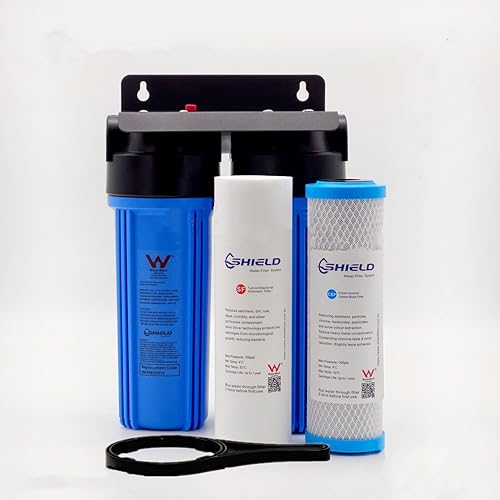 |
2-stage (10”x2.5”), Heavy Duty, Brass, Removes 99.99% Chlorine | $99 | Buy on Amazon Buy on eBay |
20” x 4.5” Triple Stage Big Blue – Our Top Pick for Town Water
This is the system we recommend to most readers on municipal water. The three-stage filtration is thorough, tackling sediment down to 1 micron and then chlorine with a 0.5-micron carbon block. The 75L/min flow rate won’t leave you waiting for the shower to warm up while the dishwasher runs. We appreciate the WaterMark certification and solid brass ports—they signal a unit built to last, not just to a price point.
- Excellent 3-stage filtration for taste and sediment
- High flow rate supports large homes
- Robust build with brass and double O-rings
- Higher upfront cost than 2-stage units
- Requires more space for three large housings
Shield Water Filters 3-Stage with Stainless Steel Cover
If your filter system will be installed in a garage or a spot exposed to sunlight, this Shield model is worth a serious look. The UV-resistant stainless steel cover isn’t just for looks—it protects the housings from degradation. Performance-wise, it matches our top pick with a 75L/min flow and three stages of filtration. The trade-off? You’re paying a premium for that durable exterior. For indoor, protected installations, you can save money with a standard blue housing model.
- Stainless steel cover is great for outdoor or garage installs
- Same high flow and filtration performance
- Heavy-duty construction throughout
- Most expensive option in our lineup
- Overkill if installed in a conditioned, indoor space
Twin 10” System – A Compact, Budget-Friendly Contender
Not every home needs or has space for massive 20-inch housings. This twin 10-inch system is a smart, compact solution for smaller households or as a dedicated point-of-use pre-filter. It claims to remove 99.99% of chlorine, which is excellent for taste and odor. The heavy-duty housing and brass ports are surprising at this price. Just know the smaller cartridges will need more frequent changes, and the flow rate may be lower than the big 20-inch systems.
- Very affordable entry point
- Compact size fits in tighter spaces
- Solid build quality for the price
- Smaller cartridges mean shorter lifespan
- Flow rate may be limiting for large homes
Budget Picks from AliExpress
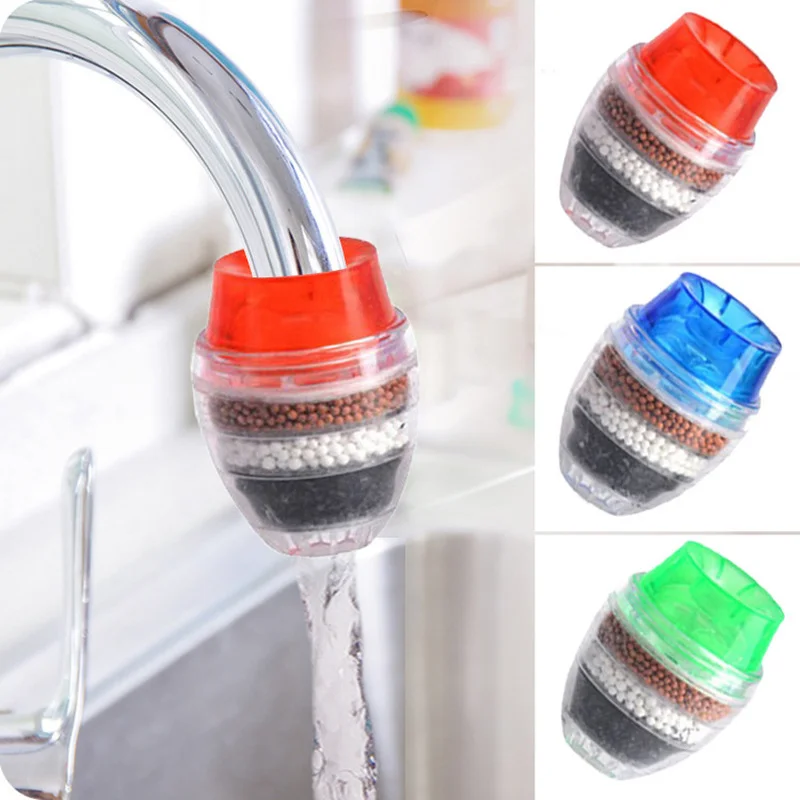
For renters or those on an extreme budget, a faucet-mounted filter like this 5-layer carbon unit can be a temporary solution. It installs in minutes. But let’s be clear: this is not a whole-house filter. It only treats water at one tap. The filtration quality and flow rate won’t compare to an installed system. Consider it a stepping stone.
Frequently Asked Questions
- How often do I need to change the filters?
- It depends on your water quality and usage. For a typical household on municipal water, sediment filters last 6-12 months. Carbon filters usually need replacement every 12 months. Always follow the manufacturer’s guidelines and monitor your water pressure—a noticeable drop often means a clogged filter.
- Will a whole house filter reduce my water pressure?
- A properly sized system should not cause a noticeable pressure drop. The key is matching the system’s flow rate (L/min) to your home’s peak demand. Undersizing the system is the main cause of pressure issues.
- Can I install it myself?
- If you’re experienced with plumbing, yes. It involves cutting the main water line and installing the filter housing with bypass valves. For most people, hiring a licensed plumber is the safer, faster choice. It ensures proper installation and compliance with local codes.
- Do I still need a drinking water filter?
- Possibly. A whole-house filter improves overall water quality but may not remove all dissolved contaminants like lead or nitrates. For the purest drinking water, many people pair a whole-house system with a dedicated under-sink unit, like a reverse osmosis system, at the kitchen tap.
- What’s the difference between a 2-stage and 3-stage system?
- A 2-stage system typically has one sediment filter and one carbon filter. A 3-stage system adds an extra filter—often a finer sediment filter (1 micron) or a second carbon block (0.5 micron) for enhanced chemical removal. For most city water, a good 2-stage is sufficient; 3-stage offers extra peace of mind.
- Are these systems good for well water?
- Standard carbon/sediment systems are not enough for most well water, which can contain iron, manganese, bacteria, and hardness minerals. Well water requires a tailored solution, often starting with a comprehensive water test. You may need a dedicated iron filter system for well water or other specialized treatment.
Final Thoughts
After years in this space, our stance is clear: a whole house water filter is one of the best investments you can make for your home’s health and infrastructure. It’s not just about taste—it’s about protecting your family and your appliances from the ground up. For most homes on treated municipal water, a reliable 2 or 3-stage Big Blue system will serve you well for years.
Don’t overcomplicate it. Start with your water report, size the system correctly for your flow rate, and choose a model with solid construction. The systems we’ve highlighted above are proven performers. Your future self—enjoying cleaner showers and longer-lasting appliances—will thank you.
