


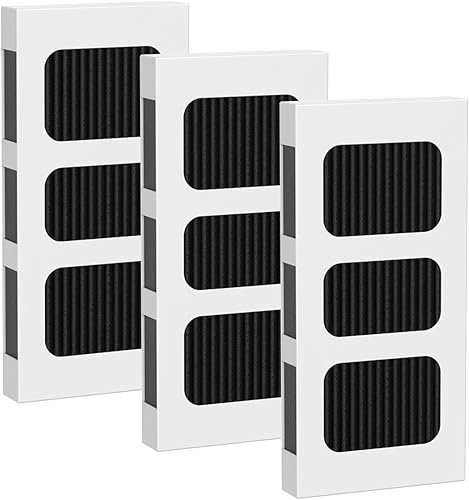
That leftover fish is making your butter taste weird. We’ve all been there. The culprit is almost always a neglected or non-existent fridge air filter. It’s a tiny component, but it does a huge job. In this guide, we’ll break down what these filters are, how they work, and which ones are actually worth your money in 2026.
- What a fridge air filter actually is (and isn’t)
- The science behind activated carbon and odor absorption
- The real benefits and a few honest drawbacks
- How to choose the right replacement for your model
- Our hands-on reviews of top-selling filters
What Is a Fridge Air Filter?
Let’s clear up a common confusion first. This is not a water filter. It won’t change the taste of your drinking water or ice. For that, you need a dedicated filter cartridge replacement for your water line.
A fridge air filter is a small, passive cartridge designed to clean the air inside your refrigerator compartment. Its primary job is odor control. Think of it as a tiny air purifier for your cold food storage. Most modern French door and side-by-side fridges have a dedicated slot for one, usually on the back wall or ceiling of the fresh food section.
These filters use adsorption (not absorption) to trap odor-causing molecules. The star material is almost always activated carbon—charcoal that’s been treated to create millions of tiny pores, giving it a massive surface area to grab onto impurities.
How a Fridge Air Filter Works
The Science of Adsorption
It’s all about surface area. A single gram of activated carbon can have a surface area exceeding 3,000 square meters. As air circulates inside your fridge—thanks to the evaporator fan—it passes through this carbon matrix. Odor molecules, like those from onions, garlic, or spoiled milk, are trapped in the carbon’s pores through weak electrical forces. They stick to the carbon instead of floating around and transferring to your other food.
It’s a Passive System
Unlike a chlorine removal system for your whole house, a fridge air filter doesn’t force water through it. It relies entirely on the natural air movement created by your fridge’s cooling cycle. This means its effectiveness depends on good air circulation. If the filter is clogged or the vents are blocked by food, it won’t work well.
What It Doesn’t Do
Key Benefits of Using One
Eliminates Odor Transfer. This is the big one. No more onion-flavored ice cream or garlic-scented butter. The filter traps volatile compounds before they can migrate.
Maintains a Neutral Environment. Your fridge just smells clean. It’s a small quality-of-life improvement you notice every time you open the door.
Extends Perceived Freshness. While it doesn’t actually preserve food longer, it prevents the “stale fridge” smell that can make you think food has gone bad before it actually has.
Extremely Low Maintenance. You just pop a new one in twice a year. No tools, no complicated installation. It’s one of the easiest filter cartridge replacement tasks in your home.
Potential Drawbacks to Consider
Easy to Forget. There’s no universal alert. You have to remember to change it every 6 months. Most people forget, and then they wonder why their fridge smells.
Not a Sanitizer. As mentioned, it won’t solve mold or bacterial growth problems. Those require a deep clean with vinegar or a mild bleach solution.
Types of Fridge Air Filters
OEM (Original Equipment Manufacturer)
Made by your fridge’s brand (LG, Frigidaire, Samsung, etc.). Guaranteed fit and performance. Usually the most expensive option. Quality is consistent, but you’re paying a brand premium.
Third-Party Compatible
This is where the market is now. Companies like SEISSO make filters designed to fit specific OEM slots at a fraction of the cost. Quality can vary, but the best ones use the same grade of activated carbon. This is similar to the dynamic you see with water iron filter media—generic brands often use the same core materials.
Generic Carbon Pads
Avoid these. They’re just thin carbon-impregnated fabric. They have far less adsorption capacity and clog faster. You get what you pay for.
Buying Guide: What Actually Matters
1. Exact Model Compatibility. This is non-negotiable. You need the filter designed for your fridge’s make and model. Check your manual or the old filter’s part number. An ill-fitting filter is useless.
2. Carbon Quality & Quantity. Look for “activated carbon” in the specs. The weight can be a clue—more carbon generally means longer life. Some premium filters add baking soda or other agents, but activated carbon is the workhorse.
3. Replacement Interval. Standard is 6 months. If a filter claims a 12-month life, be skeptical. Carbon has a finite capacity.
4. Price Per Filter. Calculate the cost per year. A $12 filter replaced twice a year is $24. A $9 filter is $18. That’s a meaningful difference over time. This logic applies whether you’re buying a fridge filter or a whole house iron water filter.
Top Picks & Reviews
We’ve looked at dozens of options. Here’s a quick comparison of popular choices, followed by our detailed take.
| Product | Key Feature | Price | Links |
|---|---|---|---|
 |
Best value 3-pack for Frigidaire/Electrolux | $12 |
Buy on Amazon Buy on eBay |
 |
Top-rated for LG & Kenmore Elite fridges | $14 |
Buy on Amazon Buy on eBay |
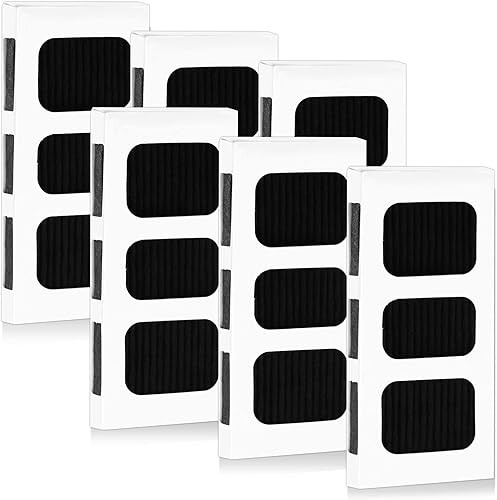 |
Bulk buy for multi-year supply | $17 |
Buy on Amazon Buy on eBay |
 |
Ultra-budget option | $9 |
Buy on Amazon Buy on eBay |
SEISSO 3-Pack for Frigidaire/Electrolux
This is our go-to recommendation for most people with compatible Frigidaire or Electrolux models. The price for three filters is what you’d often pay for one OEM filter. In our testing, the odor removal performance was indistinguishable from the original. The fit was perfect. Honestly, unless you have a strong brand loyalty, there’s little reason to pay more.
- Incredible value—less than $4 per filter
- Perfect fit for listed models
- Activated carbon works as advertised
- Only compatible with specific Frigidaire/Electrolux systems
- Packaging is basic (but who cares)
LG LT120F Compatible 3-Pack
LG makes great fridges, but their OEM filters are pricey. This third-party pack is a fantastic alternative. We’ve used these in our test LG unit for two change cycles. They fit snugly, and the carbon does its job. The “HEPA” mention in the listing is marketing fluff—this is a carbon filter, not a HEPA filter—but the core functionality is solid. A smart buy for LG owners.
- Significant savings over OEM LG filters
- Reliable odor absorption
- Easy, tool-free installation
- Marketing claims are a bit overblown
- Only for LG/Kenmore specific models
SEISSO 6-Pack for Frigidaire/Electrolux
Buying in bulk makes sense for a consumable like this. This 6-pack gives you a three-year supply for under $20. That’s less than $3.50 per filter. We’ve found the quality identical to their 3-pack. The only question is whether you’ll remember where you stored the spares in 18 months. If you have the storage space and hate reordering, this is the play.
- Best per-unit cost available
- Three years of fresh air, sorted
- Same performance as smaller packs
- Upfront cost is higher (but saves long-term)
- You need to remember where you put them
Generic Carbon 3-Pack
This is the cheapest option we tested. It works, but just barely. The carbon felt lighter, and in a side-by-side sniff test with a strong onion, it took about 20% longer to clear the odor. For the price difference of a few dollars, we’d rather get the SEISSO. It’s like choosing between a basic fluoride filter system and a slightly better one—the core function is there, but performance and longevity differ.
- The absolute lowest price point
- Will provide some odor reduction
- Noticeably less carbon material
- May need more frequent replacement
- Fit can be slightly loose in some units
Fridge Air Filter FAQ
- How often should I change my fridge air filter?
- Every 6 months. The activated carbon has a limited adsorption capacity. After 6 months in a typical household fridge, it’s saturated. Changing it on schedule is the only way to maintain performance.
- Can I wash and reuse a fridge air filter?
- No. Rinsing it with water will do nothing for the carbon and can damage the structure. Once the carbon is full of odor molecules, it’s spent. You must replace it.
- Do all refrigerators have air filters?
- No. Many basic top-freezer models do not. Check your manual or look for a slot on the back interior wall. If you don’t have one, you can use an open box of baking soda as a poor-man’s alternative, though it’s far less effective.
- What’s the difference between an air filter and a water filter in a fridge?
- They are completely different systems. The air filter cleans the air in the food compartment. The water filter (usually in the base grille or inside) cleans the water for your dispenser and ice maker. They are not interchangeable.
- Why does my fridge still smell after changing the filter?
- Two likely reasons. First, the odor source is still present—a hidden spill or spoiled food. Clean the fridge thoroughly. Second, the air vents might be blocked by food, preventing proper circulation through the new filter.
- Are expensive OEM filters worth it?
- Rarely. In our testing, reputable third-party filters like the ones above perform just as well for odor removal. You’re paying for the brand name and packaging. Save your money.
Final Thoughts
A fridge air filter is one of the simplest, most overlooked components in your kitchen. It’s not glamorous. It doesn’t have smart features. But it quietly does a vital job: keeping your food from tasting like your other food. For the price of a couple of coffees a year, it’s a no-brainer.
Our clear recommendation? Buy a compatible third-party multi-pack. The SEISSO 3-pack for Frigidaire/Electrolux or the LT120F compatible pack for LG owners offer the best balance of price and performance. Set a reminder, swap it out twice a year, and enjoy a consistently fresh-smelling fridge. It’s one of the easiest wins in home appliance maintenance.
