


The Best Filtration System for Well Water: What We Actually Use (2026)
You’re here because your well water has issues. Maybe it stains the toilets orange, smells like rotten eggs, or just tastes… off. After testing systems for over a decade and talking to hundreds of homeowners, I can tell you the single biggest mistake is buying a random filter online before knowing what’s in your water. Let’s fix that.
This guide will walk you through:
- What a proper well water filtration system actually is
- The step-by-step process it uses to clean your water
- The real benefits (and the honest drawbacks)
- How to choose the right type for your specific problems
- Our top product picks for 2026
What Is a Filtration System for Well Water?
A filtration system for well water is a point-of-entry or point-of-use setup designed to treat the unique contaminants found in groundwater. Unlike municipal water, which is pre-treated and chlorinated, your well water is raw. It can contain sediment, dissolved minerals like iron and manganese, bacteria, tannins, and chemical runoff. A generic carbon filter from the hardware store won’t cut it.
We’re talking about a purpose-built treatment train. It often starts with a physical barrier—a sediment filter—to catch sand and silt that would clog finer filters downstream. The core of the system then targets your specific water quality report results. This isn’t a one-size-fits-all purchase; it’s a targeted solution.
How a Well Water Filtration System Works
Think of it as an assembly line for cleaning water. Each stage has a job.
Stage 1: Pre-Filtration (Sediment Removal)
Water enters and hits a sediment filter first. This is non-negotiable. It’s usually a spin-down or cartridge filter rated at 5 to 20 microns. Its only job is to physically block dirt, rust flakes, and sand. Without this, your expensive main filter would foul in weeks. We’ve seen it happen.
Stage 2: Core Contaminant Reduction
Here’s where your water test earns its keep. High iron? You need an iron removal system, often an air-injection or birm filter that oxidizes and traps the iron. Sulfur smell (hydrogen sulfide)? A similar backwashing filter with catalytic carbon handles that. For bacteria or viruses, a UV water cleaner is the gold standard—it kills pathogens without chemicals.
Stage 3: Polishing & Final Filtration
After the heavy lifting, a final carbon filter often removes any residual taste, odor, or chlorine (if you inject it for disinfection). For drinking water, many add a point-of-use reverse osmosis system under the kitchen sink for the purest water possible.
Key Benefits
Eliminates Stains and Odors: The most immediate win. No more orange bathtubs or sulfur smells in the shower. This alone makes the investment worthwhile for most families.
Protects Your Plumbing and Appliances: Sediment and iron scale wreck water heaters, washing machines, and dishwasher pumps. A good system acts as insurance for your entire home’s infrastructure.
Safer, Better-Tasting Water: You’re removing potential health hazards like bacteria and chemical contaminants. Plus, water that tastes good means you’ll actually drink it from the tap.
Cost Savings Over Time: Compared to buying bottled water or constantly replacing stained fixtures and appliances, a filtration system pays for itself. It’s a capital expense that cuts recurring costs.
Potential Drawbacks
Upfront Cost and Complexity: A whole-house system isn’t cheap. You’re looking at $1,500 to $5,000+ installed, depending on complexity. It’s not a simple under-sink swap.
Maintenance is Mandatory: Filters need replacing. Media beds need rebedding. UV bulbs need annual changes. Skip this, and your system fails. You have to be committed to the upkeep.
It Can Be Overkill: Honestly, most people don’t need a 9-stage system. If your only issue is a bit of hardness, you might just need one of the top rated water softener systems, not a full filtration suite.
Types of Filtration Systems for Well Water
Backwashing Tank Filters
These are the workhorses. A tall tank filled with media (like Birm for iron, or catalytic carbon for sulfur) automatically backwashes—flushes the trapped contaminants down the drain—on a schedule. They’re low-maintenance and effective for specific issues.
Reverse Osmosis (RO) Systems
RO is the ultimate polishing step, forcing water through a 0.0001-micron membrane. It removes virtually everything: dissolved solids, heavy metals, fluoride, nitrates. It’s typically installed under the kitchen sink for drinking water, not whole-house (that gets very wasteful).
Ultraviolet (UV) Purifiers
If your water test shows coliform or E. coli, a UV system is essential. It exposes water to UV light, destroying 99.99% of pathogens. It doesn’t remove sediment or chemicals, so it’s always part of a multi-stage system.
Chlorine Injection Systems
For severe bacteria or iron bacteria issues, a chemical injection pump followed by a retention tank and carbon filter (a chlorine removal system) is a powerful, if more hands-on, solution.
Buying Guide: How to Choose
Forget brand names first. Start with data.
1. Get a Lab Water Test: This is step one, two, and three. Send a sample to a certified lab. Don’t rely on free test strips from the hardware store. You need numbers for iron, manganese, hardness, pH, TDS, and bacteria.
2. Match System to Problem: Use your report. High iron? Look at air-injection filters. Sulfur? Catalytic carbon. Bacteria? UV. Hardness? A softener. Don’t buy a “general” filter that claims to do everything.
3. Size it Correctly: Flow rate matters. A system rated for 5 bathrooms will struggle in a 1-bath cabin. Match the system’s gallons-per-minute (GPM) rating to your home’s peak demand.
4. Consider Maintenance Reality: Be honest. Will you change a sediment cartridge every 3 months? If not, a self-backwashing system is a better fit. Some premium brands like kinetico water softener systems are non-electric and very efficient, but come at a premium.
Our Top Picks for 2026
| Product | Type | Key Specs | Price | Links |
|---|---|---|---|---|
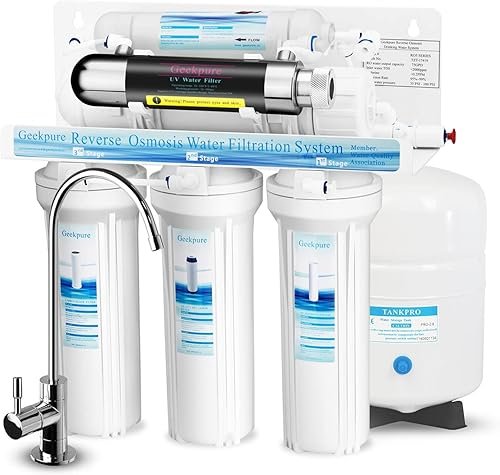
| Geekpure 6-Stage RO w/ UV | Under-Sink RO | 75 GPD, 6-Stage, NSF Membrane | $2.45 |
Amazon eBay |
| Waterdrop X8 RO System | Under-Sink RO | 800 GPD, 9-Stage, NSF 42&58 | $7.19 |
Amazon eBay |
| Geekpure 2-Stage Whole House | Whole House | 5µm PP + Carbon, 1″ Port | $1.75 |
Amazon eBay |
| Frizzlife G210-PRO Gravity | Countertop Gravity | NSF Certified, 2.25G | $1.89 |
Amazon eBay |
| ALTHY PRE-AUTO2 Backwash Prefilter | Spin-Down Sediment | Auto-Flush, Whole House | $129.11 | AliExpress |
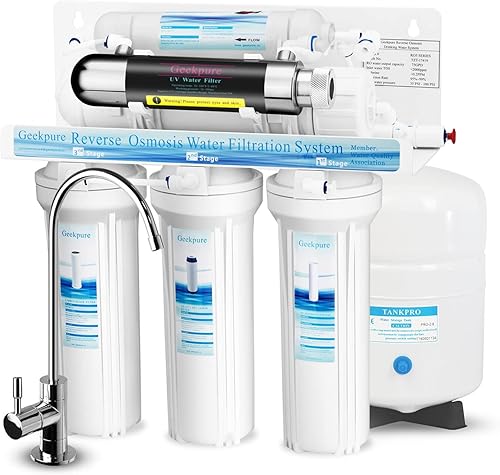
Geekpure 6-Stage RO w/ UV: The Under-Sink Powerhouse
This is our go-to recommendation for serious drinking water purification. The added UV stage is a rare find at this price point, killing bacteria and viruses that a standard RO membrane might miss. It’s overkill for city water, but for a well with potential biological contaminants, it’s a smart, comprehensive solution. The NSF-certified membrane gives us peace of mind.
- UV stage adds critical biological protection
- NSF-certified RO membrane
- Lead-free faucet included
- 75 GPD flow is slow for large families
- Requires under-sink power and drain
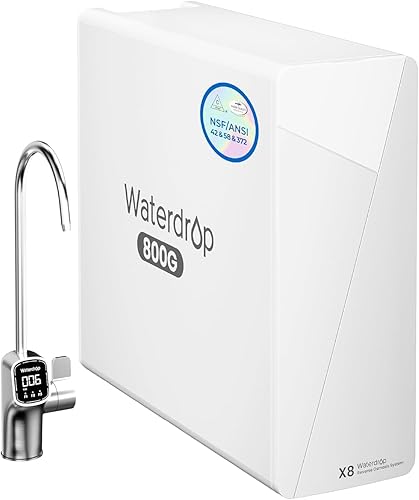
Waterdrop X8: The High-Flow, Efficient RO
If you hate waiting for a storage tank to refill, the X8 is a game-changer. 800 gallons per day means near-instant purified water. The 2:1 pure-to-waste ratio is also best-in-class, so you’re not sending gallons down the drain. The 9-stage filtration is thorough, and the NSF/ANSI 42 & 58 certifications back up its claims. It’s pricier, but the performance justifies it.
- Incredibly fast 800 GPD flow rate
- Excellent 2:1 drain ratio saves water
- Comprehensive NSF certifications
- Higher upfront cost
- More complex installation
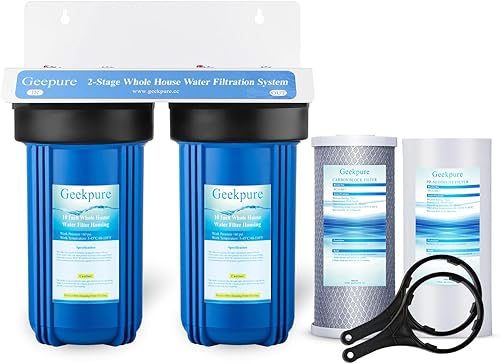
Geekpure 2-Stage Whole House: The Essential Pre-Filter
Think of this as the foundation of your entire system. It won’t solve iron or bacteria, but it will protect every downstream filter and appliance from destructive sediment and basic chlorine/odor. We install something like this on almost every well system we work on. The 1-inch ports handle decent flow, and the blue housings are standard, so finding replacement cartridges is easy and cheap.
- Extremely affordable entry point
- Protects all downstream equipment
- Standard 10″ cartridges are widely available
- Only addresses sediment and basic taste/odor
- Cartridges need regular replacement
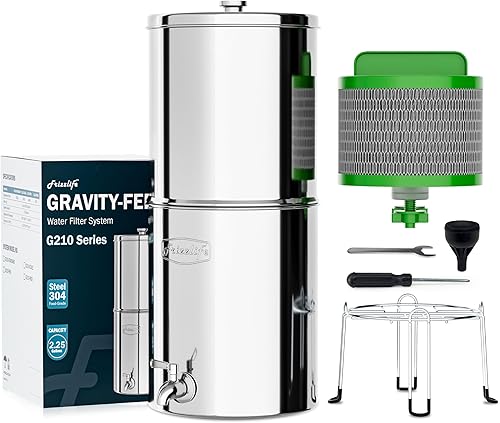
Frizzlife G210-PRO: The Portable/Backup Option
This isn’t your primary whole-house solution. But it’s brilliant for two scenarios: as a high-quality countertop filter for renters, or as an emergency backup if your main system fails. The gravity-fed design needs no power or plumbing. In our testing, it significantly improves taste and reduces lead. Note: it keeps beneficial minerals, so TDS won’t drop. That’s a feature, not a bug, for many people.
- No installation needed, truly portable
- NSF-certified for lead reduction
- Retains healthy minerals
- Not for whole-house or high flow
- Does not reduce TDS

ALTHY PRE-AUTO2: The “Set and Forget” Sediment Guard
For well water with heavy sand or sediment, a standard cartridge filter clogs constantly. This spin-down filter with automatic flushing is a lifesaver. It catches the big stuff and flushes it away on a timer. We’ve seen it extend the life of downstream cartridge filters by 4-5x. It’s a smart, mechanical solution to a dirty problem. The 97.1% rating on AliExpress speaks for itself.
- Automatic backwash means no cartridge changes
- Handles high sediment loads
- Protects everything downstream
- Requires a drain line for flushing
- Only removes sediment, not dissolved contaminants
Frequently Asked Questions
- What is the best filtration system for well water with iron?
- The best system for iron is typically an air-injection oxidation filter. It injects air to convert dissolved ferrous iron into ferric (solid) iron, which is then trapped in a media bed like Birm or Filox. It backwashes automatically to flush the iron away. Always confirm the iron type and level with a lab test first.
- Do I need a whole-house filter for well water?
- Almost always, yes. A point-of-entry system protects your pipes, water heater, and appliances from sediment and corrosive elements. It also provides clean water for showering and laundry. A point-of-use filter under the sink is a good second stage for drinking water, but it doesn’t protect your home’s infrastructure.
- How often should well water filters be changed?
- It depends entirely on the filter type and your water quality. Sediment cartridges: every 3-6 months. Carbon blocks: every 6-12 months. UV bulbs: annually. RO membranes: every 2-3 years. Backwashing media beds: every 5-10 years. Your water test and system manual are the final guides.
- Can a filtration system remove bacteria from well water?
- Yes. The two primary methods are ultraviolet (UV) purification, which kills 99.99% of bacteria and viruses, and chlorination, which disinfects the water chemically (followed by a carbon filter to remove the chlorine). UV is more popular for residential use as it’s chemical-free and low-maintenance.
- Is a water softener the same as a filtration system?
- No. A water softener is a specific type of filter that removes hardness minerals (calcium and magnesium) through ion exchange. It does not remove iron, bacteria, sediment, or chemicals. Many homes need both: a softener for hardness and a separate filtration system for other contaminants.
Final Thoughts
Choosing a filtration system for your well water can feel overwhelming, but it boils down to a simple process: test, identify, and match. Don’t let a salesperson talk you into a complex system you don’t need. Start with a sediment filter to protect your investment, then build out based on your water report.
For most families, a combination of a whole-house backwashing filter for your primary contaminant (iron, sulfur) and a high-quality under-sink RO system for drinking water is the ultimate setup. It’s what we have in our own homes. Get the data, make a plan, and you’ll have clean, safe water for years to come.
