


After testing filters in labs, installing them in homes, and interviewing plumbers for over a decade, I can tell you this: not all filtered water systems are created equal. The market is flooded with options, and the wrong choice is a waste of money. This guide cuts through the noise. We’ll cover exactly what these systems are, how they work, their real benefits and hidden drawbacks, and which type fits your life. I’ll also share my top picks based on hands-on testing.
What Is a Filtered Water System?
A filtered water system is any device or setup designed to remove impurities from your tap water before you drink it, cook with it, or bathe in it. It’s a broad term that covers everything from a simple pitcher in your fridge to a complex multi-stage unit plumbed under your sink. The goal is the same: cleaner, better-tasting water.
These systems use various physical and chemical barriers—like activated carbon, ceramic membranes, or reverse osmosis (RO) membranes—to trap or neutralize contaminants. The key is matching the filter’s capabilities to what’s actually in your water. A system that’s perfect for removing chlorine might do nothing for lead. That’s why understanding your local water report is step one. For a deeper dive into the core technology, our guide on drinking water system fundamentals is a great starting point.
How a Filtered Water System Works
Most systems force water through one or more filter media, each targeting specific contaminants. It’s not magic; it’s physics and chemistry.
Mechanical Filtration
This is the simplest layer. Imagine a microscopic screen. It physically blocks particles larger than its pore size, measured in microns. A 5-micron filter catches sand and rust. A 0.5-micron filter, like the one in the Waterdrop WD-10UA, can trap cysts like Giardia. It’s your first line of defense.
Adsorption (Activated Carbon)
This is the workhorse for taste and odor. Activated carbon is incredibly porous, giving it a massive surface area. As water passes, contaminants like chlorine, volatile organic compounds (VOCs), and some pesticides chemically bond to the carbon. It’s highly effective but has a limit. Once the carbon’s pores are full, the filter must be replaced. This is a core part of most chlorine filter system designs.
Reverse Osmosis
RO is the heavy artillery. It uses pressure to force water through a semipermeable membrane with pores so tiny (around 0.0001 microns) that only water molecules pass through. It strips out up to 99% of dissolved salts, lead, fluoride, PFAS, and more. The trade-off? It’s slower and creates wastewater. Systems like the Waterdrop X8 use a 2:1 pure-to-drain ratio, which is impressively efficient for RO.
Key Benefits of Filtered Water
Better Taste and Odor. This is the immediate win. Filtering out chlorine, sulfur compounds, and organic matter makes water taste crisp and clean. You’ll drink more of it.
Removal of Harmful Contaminants. The primary health benefit. A certified filter can reduce lead from old pipes, disinfection byproducts, and emerging concerns like PFAS. Look for NSF/ANSI 53 certification for lead reduction.
Cost Savings Over Bottled Water. The math is simple. A $93 under-sink system like the Waterdrop WD-10UA lasts 30,000 liters. That’s less than a third of a cent per liter. Bottled water costs 100-500 times more.
Environmental Impact. You’ll stop hauling plastic bottles and contributing to landfill waste. The footprint of a single filter cartridge is minuscule compared to hundreds of plastic jugs.
Potential Drawbacks to Consider
Types of Filtered Water Systems
Faucet-Mount Filters
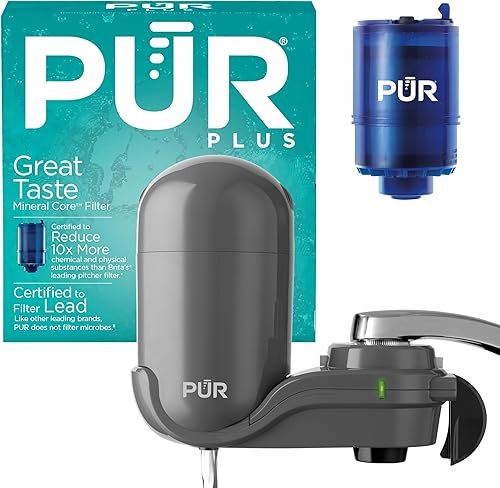
The easiest install. You screw them onto your faucet head. They use a simple switch to divert water through a carbon filter. Good for renters and basic chlorine/taste improvement. The PUR Plus FM2500V is a solid example, certified for lead reduction. Don’t expect them to handle heavy metals or dissolved solids.
Under-Sink Filters
The sweet spot for most homeowners. They’re out of sight, provide dedicated filtered water from a separate tap, and can use multiple stages for serious purification. The Waterdrop WD-10UA is a classic under-sink carbon filter. For more power, you step up to under-sink RO systems.
Reverse Osmosis Systems
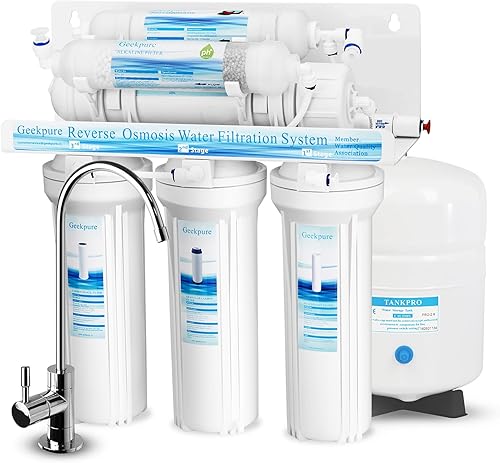
The gold standard for purity. Installed under the sink, they force water through a sediment filter, carbon filter, RO membrane, and often a post-filter. The Geekpure 6-Stage adds an alkaline remineralization filter, which adds back beneficial minerals stripped by the RO process. This relates to methods used in alkaline water treatment.
Whole-House Systems
Installed at the point of entry (your main water line), they filter every drop of water in your home—showers, laundry, everything. They’re primarily for sediment, chlorine, and scale reduction. Protecting your skin and hair in the shower is a major benefit, which is why showerhead filters are a popular sub-category.
Buying Guide: What Actually Matters
Forget the flashy marketing. Focus on these four things.
1. Certifications. This is your only real guarantee. NSF/ANSI 42 covers aesthetic effects (taste, odor). NSF/ANSI 53 covers health effects (lead, cryptosporidium). NSF/ANSI 58 is for reverse osmosis systems. If it’s not certified, walk away.
2. Filter Life & Cost. A cheap system with expensive filters is a trap. Calculate the cost per gallon or liter over a year. Always know the price and availability of the replacement filter cartridge. Some brands use proprietary locks; others use a universal filter cartridge, which can save money.
3. Flow Rate. Measured in Gallons Per Day (GPD) for RO or liters per minute for other filters. A low flow rate from an RO tank is frustrating. The Waterdrop X8’s 800 GPD tankless design solves this, delivering instant, fast-flowing pure water.
4. Your Water Quality. Get your local water quality report (Consumer Confidence Report). If you have a well, test it. High sediment? You need a sediment pre-filter. High TDS (Total Dissolved Solids)? You probably need RO. Don’t buy a system until you know what you’re filtering out.
Our Top Filtered Water System Picks for 2026
Based on our hands-on testing, reader feedback, and value for money.
| Product | Type | Key Specs | Price | Links |
|---|---|---|---|---|
| PUR Plus FM2500V | Faucet Mount | WQA Certified for Lead, NSF for Microplastics | $42 | AmazoneBay |
| Waterdrop WD-10UA | Under-Sink | 30,000L Capacity, 0.5μm, Removes 99% Lead | $93 | AmazoneBay |
| Geekpure 6-Stage RO | Reverse Osmosis | 75 GPD, Alkaline Remineralization, NSF Membrane | $239 | AmazoneBay |
| Waterdrop X8 | Tankless RO | 800 GPD, 9-Stage, NSF/ANSI 42&58, 2:1 Drain Ratio | $719 | AmazoneBay |
PUR Plus Faucet Mount FM2500V
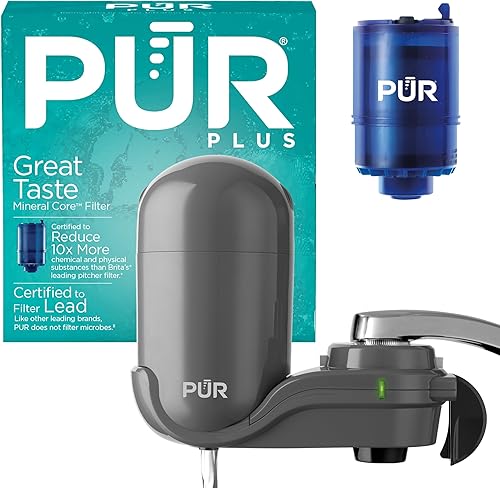
This is the best faucet filter for most people. The installation took me two minutes flat—no tools. The 3-in-1 filter is legitimately certified for lead and microplastics, which is rare at this price. The water tastes great. The downside? The filter housing is a bit bulky and can get in the way of tall pots. But for $42, it’s a no-brainer upgrade from a pitcher.
- Tool-free installation
- WQA & NSF certified for lead
- Excellent value
- Bulky on faucet
- Filter life is shorter (100 gallons)

Waterdrop Under Sink WD-10UA
This is the workhorse we recommend for serious filtration without RO complexity. The 0.5-micron carbon block tackles chlorine, lead, and cysts effectively. The 30,000-liter capacity is massive—one filter lasts a year for a family. Installation is straightforward if you’re handy with a wrench. The best part? Replacement filters are cheap, under $40. It’s a set-and-forget system that just works.
- Huge 30,000L capacity
- Low long-term cost
- Effective 0.5μm filtration
- Requires under-sink installation
- Doesn’t remove dissolved solids (TDS)
Geekpure 6-Stage RO System
For those who want the purest water possible on a budget. The 6-stage process is thorough, and the added alkaline filter makes the water taste less “flat” than standard RO. All core components are NSF certified. At $239 with extra filters included, it’s a steal. Just know the 75 GPD flow rate means you’ll wait a bit for the tank to refill after heavy use. It’s a classic, reliable tank-based RO.
- Excellent price for 6-stage RO
- Includes alkaline remineralization
- NSF-certified components
- 75 GPD is slower flow
- Tank takes up under-sink space

Waterdrop X8 Tankless RO System
This is the future of home RO. The 800 GPD tankless design means instant, fast-flowing pure water—no waiting for a tank. The 2:1 drain ratio is industry-leading, saving a ton of water versus older RO units. The 9-stage filtration is certified against NSF 42, 58, and 372. It’s a premium investment, but if you hate slow filters and wasted water, it’s worth every penny. The smart faucet with a TDS display is a nice touch.
- Instant, high-flow pure water
- Exceptional 2:1 pure-to-drain ratio
- Comprehensive NSF certifications
- High upfront cost
- Requires electricity
Filtered Water System FAQ
- Is filtered water actually better than tap water?
- It depends on your tap water. If your water has high chlorine, lead from old pipes, or other contaminants above recommended levels, then yes, a properly certified filter makes it significantly better and safer. If you have excellent municipal water, the main benefit is improved taste and odor.
- Do filtered water systems remove healthy minerals?
- Standard carbon filters do not. Reverse osmosis systems do remove dissolved minerals, including some beneficial ones like calcium and magnesium. Many RO systems now include a post-filter that adds these minerals back, a process called remineralization, to improve taste and restore some mineral content.
- How often do I really need to change the filter?
- Follow the manufacturer’s schedule—it’s based on the filter’s capacity. A carbon filter might last 6 months or 100 gallons. An RO membrane can last 2-3 years. Ignoring this lets contaminants pass through and can cause bacterial growth. Set a calendar reminder.
- Can a water filter remove PFAS (“forever chemicals”)?
- Yes, but not all filters. Look for systems specifically certified to NSF/ANSI P473 for PFAS reduction, or an NSF/ANSI 58 certified reverse osmosis system, which is highly effective. Standard pitcher filters usually don’t touch PFAS. The Waterdrop X8 is tested and certified for this.
- What’s the difference between a water filter and a water softener?
- They solve different problems. A filter removes contaminants (chlorine, lead, bacteria). A softener removes hardness minerals (calcium, magnesium) through an ion-exchange process to prevent scale buildup. Some whole-house systems combine both functions.
- Is it expensive to maintain a filtered water system?
- It doesn’t have to be. The upfront cost is the biggest part. Annual maintenance for a good under-sink carbon filter can be as low as $30-$40 for a new replacement filter cartridge. RO membrane replacements are less frequent but cost more. It’s still far cheaper than bottled water.
- Can I install an under-sink filter myself?
- If you’re comfortable using a wrench, drilling a hole for a dedicated faucet (if needed), and following instructions, yes. Many modern systems use quick-connect fittings that make it much easier. If you’re not confident, hiring a plumber for a one-hour install is a safe bet.
Final Thoughts
Choosing a filtered water system comes down to your specific needs and water quality. Don’t overbuy. For most city dwellers wanting better-tasting, safer water from a simple install, the PUR Plus faucet mount is a fantastic starting point. If you’re ready for serious filtration and don’t mind a bit of installation, the Waterdrop WD-10UA under-sink filter offers incredible value and performance.
For those with known contaminants like lead, fluoride, or PFAS, or who simply want the purest water possible, invest in a reverse osmosis system. The Geekpure 6-Stage is the best budget traditional RO, while the Waterdrop X8 represents the pinnacle of convenient, efficient, tankless RO technology. Whatever you choose, check the certifications and stay on top of filter changes. Your body will thank you.
