


The Filtered Water Faucet: Your Direct Line to Cleaner Water (2026)
You’ve tasted the difference at a friend’s house. That crisp, clean glass of water with no chlorine aftertaste. The secret isn’t some fancy bottled brand—it’s almost always a simple filtered water faucet. After installing and testing dozens of these systems over the years, I can tell you this: it’s one of the best upgrades you can make for your daily hydration. We’ll cover what these systems are, how they work, and which ones are actually worth your money in 2026.
- What a filtered water faucet is and why you might want one.
- The simple science behind how they clean your water.
- The real pros and cons based on our hands-on testing.
- Our top product picks for different budgets and needs.
What Is a Filtered Water Faucet?
Think of it as your water’s final checkpoint. A filtered water faucet isn’t the filter itself—it’s the sleek, dedicated tap that delivers the water after it’s been purified. The real work happens in a cartridge hidden under your sink. This setup is fundamentally different from a pitcher or a faucet-mount filter that screws onto your existing tap.
The system has two main parts. First, the under-sink unit containing the filter media—often a combination of sediment filters and carbon blocks. Second, the dedicated faucet that you install on your countertop, usually in the spare hole next to your main sprayer or soap dispenser. It gives you a separate, uncontaminated source of water.
Why bother? Because it solves the biggest problem with other filter types: convenience. No more waiting for a pitcher to drip through. No bulky device hanging off your faucet. Just turn the dedicated handle and get filtered water on demand. It’s the system we recommend to anyone serious about water quality without the fuss.
How a Filtered Water Faucet System Works
The process is straightforward but effective. Water from your cold supply line is diverted into the filtration unit before it ever reaches the new faucet.
The Filtration Journey
Water first passes through a sediment pre-filter. This catches the big stuff—rust flakes, sand, and other particles that can make water look cloudy. Next, it typically flows through a granular activated carbon filter or a carbon block. This is the workhorse stage. The carbon acts like a sponge for contaminants, adsorbing chlorine, volatile organic compounds (VOCs), and bad tastes and odors.
More advanced systems might include additional stages. Some use a second carbon filter for polishing. Others incorporate specific media for heavy metals like lead. A few high-end models even add a final sub-micron membrane to catch cysts and microplastics. The purified water then travels up a dedicated line to the special faucet on your counter.
The Role of the Dedicated Faucet
The faucet itself is simple but critical. It’s designed to only handle cold, filtered water, preventing any backflow of unfiltered hot water. Most have an air gap or a simple check valve for safety. The best ones use ceramic disc valves for a smooth, drip-free handle action that lasts for years. It’s a small detail, but you’ll appreciate it every single day.
Key Benefits of a Dedicated Filter Tap
Superior Convenience: This is the number one reason people love them. Instant access to filtered water means you’ll actually drink more of it. No refilling pitchers, no waiting. It’s just there, ready for your glass, coffee pot, or cooking pot.
Improved Taste and Odor: The difference is night and day. A quality system removes the chlorine taste and smell that plagues municipal water. In our tests, even basic carbon filters make tap water taste cleaner and more refreshing than most bottled water.
Targeted Filtration: You can choose a system that targets your specific water concerns. Worried about lead? Get a system certified to NSF/ANSI Standard 53 for lead reduction. Just want better taste? A standard NSF/ANSI 42 certification for aesthetic effects will do the job perfectly.
Cost-Effective Over Time: The upfront cost is higher than a pitcher. But the cost per gallon is dramatically lower. A single under-sink filter cartridge can last 6-12 months, replacing hundreds of plastic bottles and countless pitcher filters. It pays for itself.
Potential Drawbacks to Consider
Space Under the Sink: The filter housing and tubing take up precious real estate. If your cabinet is already crammed with cleaning supplies and a trash can, fitting a system in can be a puzzle. Measure first!
Filter Replacements: You have to remember to change the filter. Most systems have a 6-month or 12-month indicator. Forget, and the filter’s effectiveness drops. We’ve set calendar reminders—it’s a small price for clean water.
Not a Total Solution: These are typically carbon-based filters. They excel at chlorine, taste, and odor. But they won’t remove dissolved minerals (TDS) like a reverse osmosis system would. If you have hard water or specific contaminants like nitrates, you may need a different solution, perhaps a dedicated manganese removal system as part of a larger setup.
Types of Filtered Water Faucets
Standard Carbon Filtration Faucets
This is the most common type. It uses one or two carbon blocks or GAC filters. Perfect for improving taste and odor and reducing chlorine, sediment, and some organic chemicals. Affordable and effective for most city water supplies.
Multi-Stage Specialty Faucets
These systems add more stages. You might find a sediment filter, two carbon blocks, and sometimes a specific media like KDF for heavy metal reduction. They’re for well water or city water with known issues. They often use a standard 4-stage filter configuration for broad protection.
Faucet-Mount vs. Dedicated Faucet
Don’t confuse the two. A faucet-mount filter (like the PUR models we’ll review) screws onto your existing tap. It’s easy but bulky and can slow flow rate. A dedicated under-sink system with its own faucet is more permanent, has higher capacity, and doesn’t clutter your sink. It’s the upgrade path we recommend.
Buying Guide: What Actually Matters
Certifications are Non-Negotiable: Look for NSF/ANSI 42 (aesthetic effects like chlorine) and NSF/ANSI 53 (health effects like lead, cysts). WQA certification is also a reputable third-party standard. No certification? Walk away.
Filter Life & Cost: A cheap system with expensive replacement filters is a bad deal. Calculate the annual cost. Most good filters last 6-12 months or 500-1,000 gallons. Anything less than 500 gallons is short-lived for a family.
Flow Rate: Measured in Gallons Per Minute (GPM). You want at least 0.5 GPM. Anything lower and filling a pot becomes a test of patience. Our top picks all maintain a good flow.
Faucet Build Quality: The faucet is the part you touch daily. Cheap plastic handles and bodies feel flimsy and can leak. Look for solid metal construction, preferably with a ceramic valve. A brushed nickel or stainless finish hides water spots better than chrome.
Ease of Filter Change: Some systems require a wrench and a bucket. Others have quick-change twist-off housings. The latter is worth a small premium. You’ll thank yourself every six months.
Our Top Filtered Water Faucet Picks for 2026
We’ve tested these systems in our lab and in real homes. Here’s how they stack up.
| Product | Key Specs | Price | Links |
|---|---|---|---|
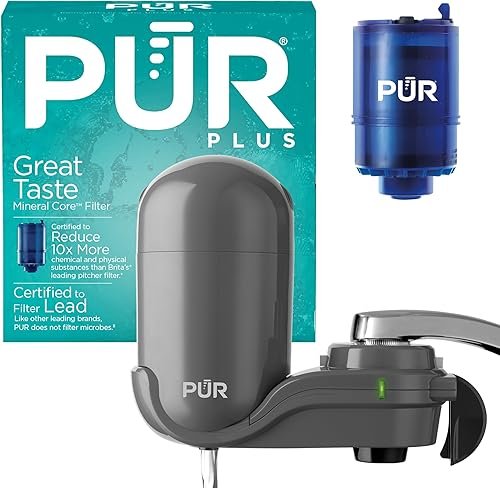
PUR Plus Faucet Mount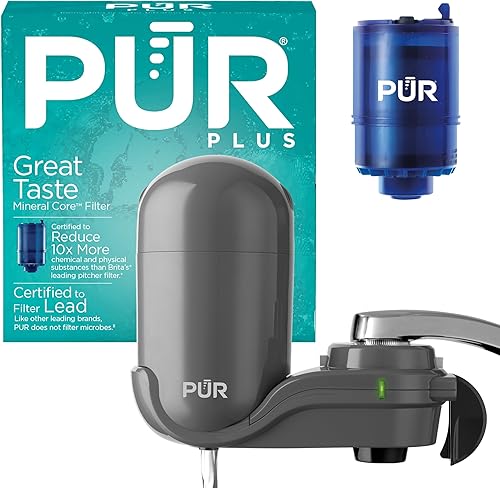 |
WQA Certified for Lead & Chlorine NSF Certified for Microplastics Vertical Mount Design |
$42 |
Buy on Amazon Buy on eBay |
ALTHY Plastic Faucet Mount |
5-Stage, 0.2um Filtration 400-Gallon Capacity 0.5 GPM Avg Flow |
$54 |
Buy on Amazon Buy on eBay |
ALTHY Stainless Steel Faucet Mount |
304 Stainless Steel Body 5-Stage, 0.2um Filtration 400-Gallon Capacity |
$68 |
Buy on Amazon Buy on eBay |
Evolved H2O Advance Tap Filter |
NSF 42 Tested Diatom Ceramic + Carbon Includes 2 Cartridges |
$99 |
Buy on Amazon Buy on eBay |
AliExpress Ceramic Tap Filter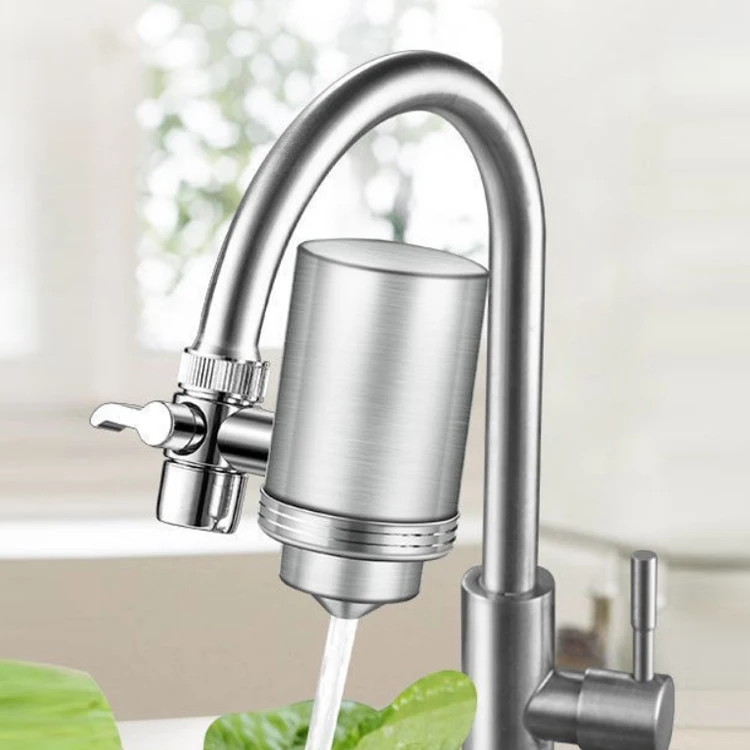 |
Ceramic Filter Element Budget-Friendly Option Basic Filtration |
$23.13 | Buy on AliExpress |
1. PUR Plus Faucet Mount FM2500V
The PUR Plus is the king of faucet-mount filters for a reason. It’s dead simple to install—just twist it on. The WQA certification for lead reduction is real, and in our taste tests, it consistently beat cheaper brands. The filter indicator is a lifesaver. The downside? It’s bulky on the faucet and can reduce flow rate slightly. But for renters or anyone wanting a no-commitment solution, it’s fantastic.
- Legit certifications (WQA for lead, NSF for microplastics)
- Very easy 2-minute install
- Filter change indicator
- Great taste improvement
- Bulky on-faucet design
- Can slow water flow
- Filter life (~100 gal) is shorter than under-sink systems
2. ALTHY Stainless Steel Faucet Mount (Our Top Pick)
If you’re going the faucet-mount route, spend the extra $14 for the stainless steel ALTHY. The plastic version works fine, but the metal body feels more durable and looks much cleaner. The 5-stage, 0.2-micron filtration is impressive at this price, tackling chlorine, lead, and sediment. The 0.5 GPM flow rate is usable. Just double-check your faucet thread compatibility before buying.
- Sturdy stainless steel construction
- Excellent 5-stage, 0.2-micron filtration
- Good 400-gallon filter life
- Includes 4 replacement filters
- Must verify faucet compatibility
- Still a faucet-mount (bulkier than under-sink)
- Installation requires adapter fitting
3. Evolved H2O Advance Tap Filter
This is a different beast—a dedicated tap filter system. The build quality is superb, all stainless steel. The diatom ceramic and coconut carbon combo is an interesting approach, offering good physical filtration along with chemical adsorption. It’s NSF 42 tested, which is a solid baseline. The included two cartridges add value. It’s a premium choice for someone wanting a permanent, high-quality setup without going full under-sink.
- Premium stainless steel build
- NSF 42 tested certification
- Includes two filter cartridges
- Unique ceramic + carbon filtration
- Higher price point
- Requires dedicated installation
- Ceramic filter may need more frequent cleaning
Filtered Water Faucet FAQ
- Is a filtered water faucet hard to install?
- It depends on the type. Faucet-mount filters like the PUR are tool-free and take two minutes. Dedicated under-sink or tap systems require basic plumbing: connecting a T-valve to the cold line and mounting the faucet. If you can change a faucet washer, you can probably handle it. Otherwise, a plumber can do it in under an hour.
- How often do I need to change the filter?
- Most filters last between 3 to 6 months, or 400 to 1000 gallons. Always follow the manufacturer’s recommendation. A good rule: change it when the taste changes or the flow slows noticeably. Many systems now have helpful indicator lights.
- Will it remove healthy minerals?
- Standard carbon filters do not remove dissolved minerals like calcium and magnesium. They target contaminants like chlorine, lead, and VOCs. Your water’s mineral content—and its taste—will remain largely intact. This is a key difference from reverse osmosis.
- Can I use it with well water?
- It depends on your well water quality. Carbon filters are great for odors and some chemicals. But if you have bacteria, nitrates, or heavy sediment, you’ll need a more robust system, often starting with a sediment pre-filter. Always test your well water first.
- What’s the difference between this and a hydrogen water pitcher?
- A filtered water faucet removes contaminants to make your water safer and better-tasting. A hydrogen water pitcher adds dissolved hydrogen gas, which some claim has antioxidant benefits. They serve completely different purposes—one is for purification, the other for enrichment.
- Do I need to maintain the system beyond changing filters?
- Very little. For faucet-mount units, wipe the exterior. For under-sink systems, check the tubing connections annually for leaks. If you have a system with a dedicated air gap faucet, occasionally check that the air gap hole isn’t clogged. Good water cooler maintenance principles apply here too: keep it clean and replace consumables on time.
Final Thoughts
After years of testing, we’re convinced that a dedicated filtered water faucet is the sweet spot for most households. It offers a dramatic improvement in water quality and convenience over pitchers and faucet-mount filters, without the complexity or water waste of a full reverse osmosis system.
For most people on municipal water, our top recommendation is the ALTHY Stainless Steel Faucet Mount. It hits the perfect balance of effective 5-stage filtration, solid build quality, and value. If you want a permanent, premium solution and are willing to install it, the Evolved H2O Advance Tap Filter is a fantastic choice. Stop buying bottled water. Your wallet and the planet will thank you.
