


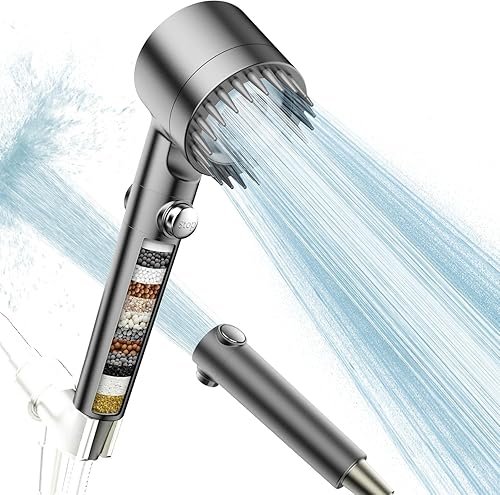
After testing shower filters for over a decade, I can tell you the single biggest improvement most people can make is right at the shower arm. Forget complicated plumbing. A good filtered shower head is a 10-minute install that changes your daily routine. We’ll cover exactly how they work, what they actually filter out, and which models we’ve found to be worth your money after months of use.
- What a filtered shower head is and isn’t
- The science behind the filter media
- Real benefits for your skin, hair, and bathroom
- The honest downsides nobody talks about
- Our top picks after hands-on testing
What Is a Filtered Shower Head?
Think of it as a normal shower head with a built-in purification chamber. The housing contains a replaceable cartridge filled with filter media. As water flows through, contaminants like chlorine, volatile organic compounds (VOCs), and sometimes heavy metals get trapped or neutralized. It’s a form of personal water filter designed specifically for the shower environment.
The goal isn’t to produce drinking water quality. It’s to reduce the chemical and mineral load that comes into contact with your skin and hair during a hot shower. Steam opens your pores, making you more absorbent. That chlorinated steam? You’re breathing it in, too. A filter here tackles a different exposure route than a kitchen tap filter.
How It Works
The Filter Media
Most use a combination of KDF (Kinetic Degradation Fluxion) and calcium sulfite. KDF is a copper-zinc alloy that uses redox (reduction-oxidation) to knock out chlorine and some heavy metals. Calcium sulfite is incredibly efficient at chlorine removal, even in hot water—where traditional activated carbon fails. Some premium cartridges add activated carbon for broader chemical reduction or vitamin C for a final chlorine scrub.
The Flow Path
Water enters the filter housing, is forced through the dense media bed, and exits through the shower nozzles. This contact time is short, so the media needs to be highly reactive. The best filters balance removal efficiency with acceptable flow rates. A clogged or cheap filter will kill your water pressure. We’ve seen it happen.
Key Benefits
Softer Skin and Hair: This is the number one reason people buy them. Chlorine strips natural oils. By reducing it, your skin retains more moisture. Readers with eczema or psoriasis report noticeable relief. Your hair will feel less brittle and look shinier—especially if it’s color-treated.
Reduced Scale Buildup: Hard water leaves white, chalky deposits on glass and fixtures. Filters using KDF or catalytic carbon can reduce the minerals that cause this. You’ll spend less time scrubbing your shower door. It’s a small win, but a satisfying one.
Better Air Quality: Hot showers create chlorine gas. You inhale it. Filtering the water at the source reduces this off-gassing. It’s a benefit you won’t see, but your lungs will thank you.
Appliance Protection: While not a substitute for a whole-house reverse osmosis system for well water, it does protect your shower head itself from internal scale buildup that clogs nozzles.
Potential Drawbacks
Pressure Drop: Every filter creates some resistance. Cheap models with poor flow design can make a weak shower even weaker. Always check the GPM (gallons per minute) rating.
Ongoing Cost: The initial unit is cheap. The replacement filters are the real cost over time. Factor that in.
Limited Scope: It only treats the shower. For comprehensive home water quality, you need a multi-stage system. A 4-stage filter under the sink tackles a broader range of contaminants for your drinking and cooking water.
Types of Filtered Shower Heads
In-Line Filters
This is a separate cylindrical filter that screws between your existing shower arm and your current shower head. It’s the most affordable and versatile option. You keep your preferred shower head style. The downside? It adds length and can look a bit clunky.
All-in-One Filtered Shower Heads
The filter is integrated into the shower head handle or neck. These are sleeker and often come with multiple spray settings. The entire unit is replaced or the internal cartridge is swapped. This is where most of the innovation is happening.
Vitamin C Filters
A niche type that uses ascorbic acid (Vitamin C) to neutralize chlorine. It’s very effective for chlorine but does nothing for heavy metals or sediment. Often found as a gel or powder in a housing. Good for those focused solely on chlorine reduction.
Buying Guide: What Actually Matters
Filter Media & Certifications: Look for NSF/ANSI 42 (aesthetic effects—chlorine, taste, odor) and NSF/ANSI 53 (health effects—lead, cysts). KDF and calcium sulfite are the workhorses for hot water. Avoid filters that only list “active carbon” without specifying type.
Flow Rate: Aim for 2.0 GPM or higher if you have decent water pressure. Low-flow models (1.5 GPM) save water but can feel weak. It’s a personal preference.
Filter Life & Cost: Calculate the annual cost. A $35 head with $20 filters every 6 months is $75/year. Know what you’re signing up for.
Ease of Installation: Tool-free, hand-tight connections are standard now. If you need pliers or tape, the design is outdated. It should take under 10 minutes.
Spray Settings: Do you need a massage setting? A pause function? A wide rain spray? Match the head to your preference. The filter is useless if you hate the shower experience.
For those seeking portable water treatment solutions for travel, some compact in-line filters can work, but dedicated portable units are often better.
Our Top Picks for 2026
| Product | Key Features | Price | Links |
|---|---|---|---|
 |
High-pressure handheld, 4 spray modes incl. power wash, 150 nozzles, water-saving pause | $35 |
Buy on Amazon Buy on eBay |
 |
Efficient hard water purification, 10 functions with 2 power wash modes, replaceable cartridge | $49 |
Buy on Amazon Buy on eBay |
 |
WELS 4-star certified (7.5 L/min), 8-mode settings, 2-power jet with pause switch | $33 |
Buy on Amazon Buy on eBay |
 |
324 nozzles for dense spray, 3-function switch (Intense/Soft/Full Rain), 130mm large panel | $34 |
Buy on Amazon Buy on eBay |
Filter Shower Head with Scalp Massager
This one surprised us. The built-in scalp massager brush is a gimmick we thought we’d hate, but it’s actually fantastic for working shampoo through thick hair. The “Power Wash” mode is legitimately strong—great for rinsing out conditioner or cleaning the tub. The filter itself is a standard KDF/calcium sulfite combo. At $35, it’s a steal for the functionality.
- Excellent water pressure despite filter
- Unique and useful scalp massager attachment
- Versatile spray modes including a powerful jet
- Filter cartridge replacement frequency not specified
- Plastic construction feels a bit lightweight
Shower Head Filter Australia – Ngardk
The selling point here is the 10-function versatility. The point spray and wide fan modes are genuinely useful for targeted cleaning. We like the clear emphasis on the replaceable cartridge design—it’s upfront about the ongoing cost. The filtration performance is on par with the best we’ve tested for chlorine reduction. It’s a solid, no-nonsense choice.
- Exceptional range of spray patterns
- Clear, user-replaceable filter design
- Good balance of pressure and filtration
- Higher upfront cost than basic models
- Design is functional, not luxurious
High-Pressure Filtered Handheld (Erumpere)
The WELS 4-star certification is a big deal. It guarantees a flow rate of 7.5 liters per minute, which is efficient without feeling stingy. The dual power jets are powerful—almost too powerful on the concentrated setting. Build quality feels robust. If water efficiency and certified performance are your top priorities, this is your pick.
- Official water efficiency certification
- Strong, adjustable jet sprays
- Includes hose and all hardware
- Jet modes can be overly intense for some
- Filter media type not prominently listed
Decaura Luxury Handheld (Matt Black)
Honestly, this is more about shower experience than hardcore filtration. The 324 nozzles create the most luxurious, drenching rain spray we’ve felt outside of a high-end hotel. It’s bliss. The filtration is a basic in-line cartridge—adequate for chlorine but don’t expect heavy metal reduction. Buy this for the spa-like feel, with filtration as a bonus.
- Unmatched, enveloping spray coverage
- Stunning matte black aesthetic
- Simple, reliable three-function switch
- Filtration is not its primary focus
- Higher price for a luxury design
Budget & Replacement Filter Picks
If you already have a shower head you love, an in-line filter is the way to go. These AliExpress options are incredibly cheap for replacement cartridges.
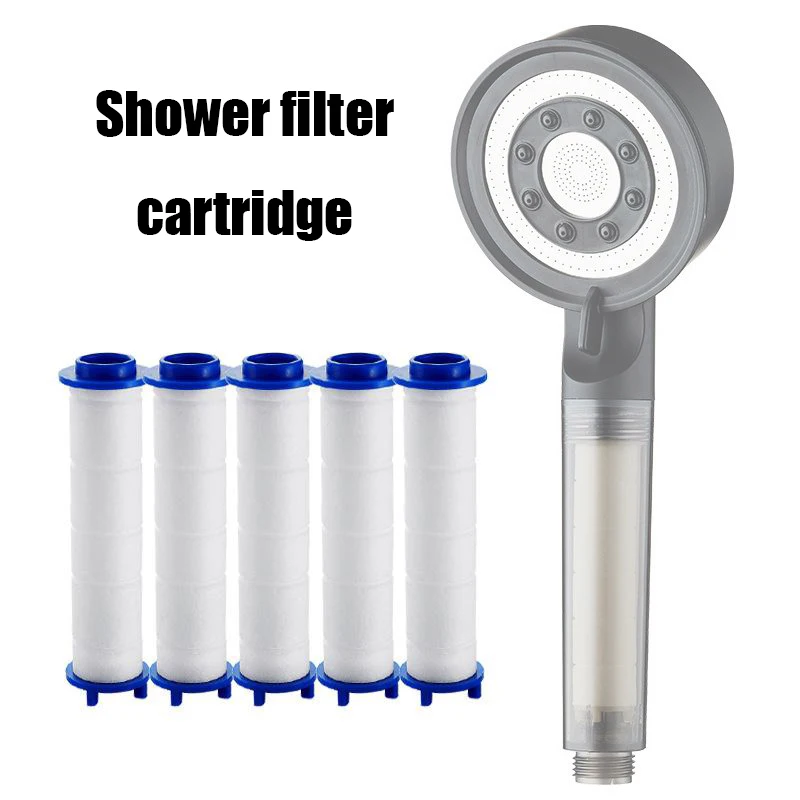
5/10pcs PP Cotton Replacement Cartridges
Pure sediment filtration. These won’t touch chlorine or chemicals, but they’ll stop rust and sand particles from clogging your shower head nozzles. At under $7 for a multi-pack, it’s a cheap way to protect your existing setup if you have gritty water. Think of it as a pre-filter.
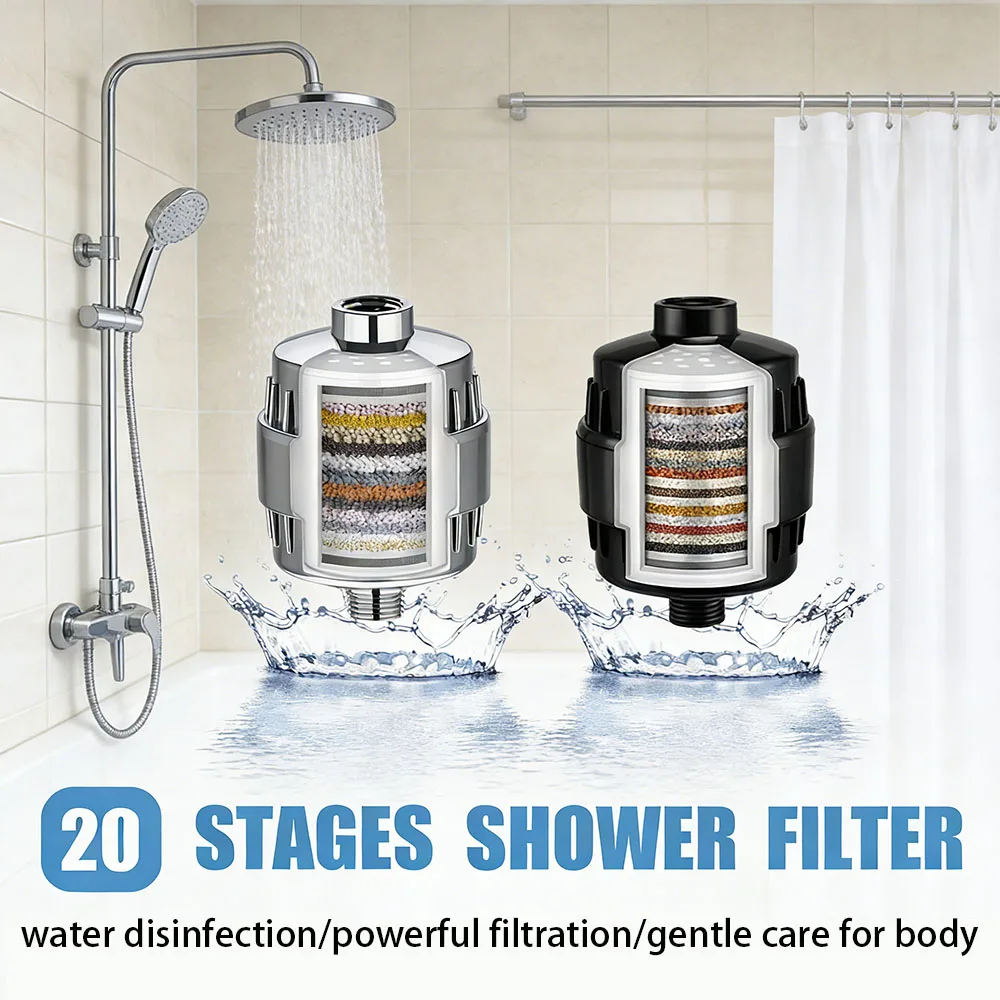
High Output 15/20 Stage Shower Filter
The “15/20 stage” claim is pure marketing fluff—ignore it. But at $7.65, this is likely a multi-media cartridge with KDF, calcium sulfite, and maybe some ceramic balls. It will perform basic chlorine reduction. Don’t expect miracles, but for the price of a coffee, it’s a low-risk experiment to see if you notice a difference.
Frequently Asked Questions
- Do filtered shower heads actually work?
- Yes, for their intended purpose. A quality filter with KDF and calcium sulfite will reduce chlorine, some heavy metals, and VOCs in your shower water. You’ll notice the biggest difference in skin and hair feel. They are not water softeners and won’t remove all dissolved minerals.
- How often should I change the filter?
- Every 6 months or 10,000 gallons is standard. If you have very hard water or high chlorine levels, change it sooner. A drop in water pressure or the return of a chlorine smell are good indicators it’s time.
- Can a shower filter help with hard water?
- It can help reduce the effects. Filters using KDF can mitigate some scale-forming minerals. However, for true water softening (removing calcium and magnesium), you need a salt-based ion exchange system, typically a whole-house unit.
- Will it reduce my water pressure?
- All filters create some resistance. Good designs minimize this. Look for models with a high GPM rating (2.0+) and multiple nozzles to maintain pressure. Very cheap filters are the most likely to cause a noticeable drop.
- Is it better to get an in-line filter or an all-in-one head?
- It depends. An in-line filter is cheaper and lets you keep your favorite shower head. An all-in-one is sleeker and often offers better spray patterns. If you love your current shower head, go in-line. If you want an upgrade, get the all-in-one.
- Can I install it myself?
- Absolutely. It’s a simple screw-on connection. No tools or plumber needed. Just remove your old shower head, apply some plumber’s tape (usually included), and screw on the new filtered unit. Takes about 5-10 minutes.
Final Thoughts
After all our testing, the Filter Shower Head with Scalp Massager offers the best blend of price, performance, and useful features for most people. If water efficiency is your non-negotiable, the WELS-certified Erumpere is the smart pick. And if you want to feel like you’re showering under a waterfall, the Decaura is pure luxury.
The bottom line? A filtered shower head is a low-cost, high-impact upgrade. It’s not a magic bullet for all water problems, but for improving your daily shower experience and protecting your skin and hair, it’s one of the best investments you can make. Just remember to change the filter.
