


Your well water has a unique fingerprint. After testing dozens of systems and talking to countless homeowners, I can tell you the single biggest mistake is buying a filter before knowing what’s actually in the water. This guide cuts through the noise. We’ll cover how these systems work, the real pros and cons, and help you pick the right setup for your home.
- What a well water filter system actually does and why you need one.
- The step-by-step process from murky tap to clean water.
- Honest benefits and the drawbacks salespeople won’t mention.
- A breakdown of the different system types and our top picks for 2026.
What Is a Filter System for Well Water?
It’s a dedicated treatment setup designed to tackle the specific contaminants found in groundwater, not the regulated city supply. Well water is raw. It can contain sediment that clogs pipes, iron that stains your sinks orange, manganese that leaves black specks, and sometimes even bacteria. A proper system is your personal water treatment plant.
Unlike a simple pitcher filter, these are multi-stage solutions. Think of it as a defense-in-depth strategy. You might have a big sediment filter at the point where water enters your house, followed by specialized media to remove iron, and finally a high-precision filter under your kitchen sink for drinking water. The goal is to protect your plumbing, appliances, and most importantly, your health.
How a Well Water Filtration System Works
The process is sequential. Water from your well pump first hits a pre-filter, then passes through one or more treatment stages before reaching your tap. Here’s the typical flow.
Stage 1: Sediment Pre-Filtration
This is your first line of defense. A large cartridge filter, usually rated between 20 to 5 microns, catches dirt, sand, and rust particles. We’ve seen systems fail simply because this cheap, basic filter was neglected. It protects all the more expensive filters downstream from getting clogged and overwhelmed.
Stage 2: Targeted Contaminant Removal
This is where you customize based on your water test. Got orange stains? You need an iron and manganese filter. Hard water causing scale? A water softener might be next. For sulfur smells (that rotten egg odor), an oxidizing filter or activated carbon stage works wonders. This stage uses specialized media like Birm, KDF, or catalytic carbon to chemically remove or oxidize contaminants.
Stage 3: Final Polishing & Disinfection
For water you drink and cook with, a final barrier is wise. A 0.5-micron carbon block filter removes finer particles and improves taste. If bacteria are a concern, an ultraviolet (UV) light disinfection stage is a non-chemical way to kill viruses and microbes. For the absolute purest water, a reverse osmosis system under the sink provides a 0.0001-micron barrier—this is the gold standard for drinking water.
Key Benefits of a Dedicated System
Protects Your Plumbing and Appliances: Sediment and iron will wreck your water heater, dishwasher, and washing machine over time. A good filter system saves you thousands in premature appliance replacements.
Eliminates Stains and Odors: No more orange bathtub rings, black streaks in the toilet, or that sulfur smell. This alone is a game-changer for most homeowners we talk to.
Provides Safe, Great-Tasting Water: You get peace of mind. A properly sized system, especially one with a final RO or UV stage, delivers water that’s often cleaner than bottled water. Your morning coffee will thank you.
Potential Drawbacks to Consider
Upfront Cost and Complexity: A whole-house system isn’t cheap. Between the tanks, controllers, and professional installation, you can easily spend over $2,000. It’s an investment, not a quick fix.
Ongoing Maintenance: Filters need replacing. Media beds need occasional replacement or regeneration. If you’re not handy, you’ll need a plumber for some tasks. We’ve seen many systems fail simply because the maintenance schedule was ignored.
Space Requirements: These systems take up space—often a corner of your basement or garage. You need to plan for the footprint and access for filter changes.
Types of Filter Systems for Well Water
Whole-House Point-of-Entry (POE) Systems
These treat all the water coming into your home. They’re installed right after your well pressure tank. This is what protects your pipes and appliances. A whole house water softener is a common POE system for hardness, but you can also get whole house iron filter tanks that use air injection or chemical-free media to oxidize and trap iron.
Point-of-Use (POU) Drinking Water Systems
These are installed at a specific tap, usually the kitchen sink. Reverse osmosis systems are the most popular here. They provide an ultra-fine barrier for the water you consume. Countertop models are also gaining popularity for renters or those not wanting installation hassle.
Specialized Single-Contaminant Filters
Sometimes you only need to solve one problem. A dedicated manganese water filter or a sediment filter can be a cost-effective first step. The key is knowing your water profile. For complex issues, you’ll often need a combination, which is where understanding multi level filtration principles becomes crucial.
Buying Guide: What Actually Matters
1. Start with Your Water Report. I can’t stress this enough. The report dictates everything. High hardness needs a softener. High iron needs an oxidizing filter. Bacteria requires UV or chlorination.
2. Flow Rate (GPM). This is critical for whole-house systems. Calculate how many fixtures might run at once (shower + dishwasher + faucet). Undersizing leads to terrible water pressure. A typical 3-bathroom home needs at least 10-12 GPM.
3. Filter Capacity & Micron Rating. Look at how many gallons a filter cartridge lasts before needing replacement. A 5-micron sediment filter is standard for pre-filtration. For drinking water, you want sub-micron (like 0.5 or 0.0001 for RO).
4. Certifications. Look for NSF/ANSI certifications. NSF/ANSI 42 covers aesthetic effects (taste, odor). NSF/ANSI 53 covers health contaminants like lead and cysts. NSF/ANSI 58 is for reverse osmosis systems.
5. Maintenance Reality. Calculate the annual cost of replacement filters and media. Can you do it yourself, or will you need to call a pro every time?
Our Top Picks for 2026
Based on our testing, reader feedback, and value for money, here are systems that consistently perform.
| Product | Key Specs | Best For | Price |
|---|---|---|---|
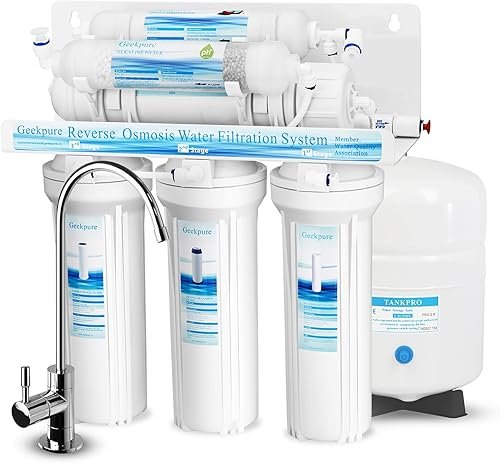
 Geekpure 6-Stage RO |
75 GPD, Alkaline Remineralization, NSF Membrane | Under-sink drinking water with pH boost | $239 |
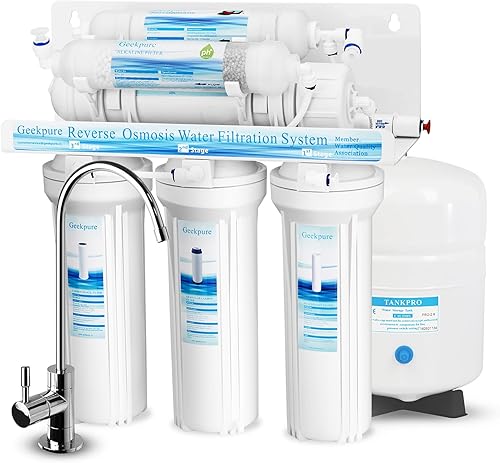
 Geekpure 5-Stage RO |
75 GPD, Extra 7 Filters, NSF Membrane | Budget-friendly under-sink RO with long-term filter supply | $239 |
 Waterdrop CoreRO Countertop |
NSF/ANSI 372, 6-Stage, No Installation | Renters or no-plumbing situations | $399 |
 Waterdrop X8 Under Sink |
800 GPD, 9-Stage, NSF 42&58&372, 2:1 Drain Ratio | High-capacity under-sink for families | $719 |
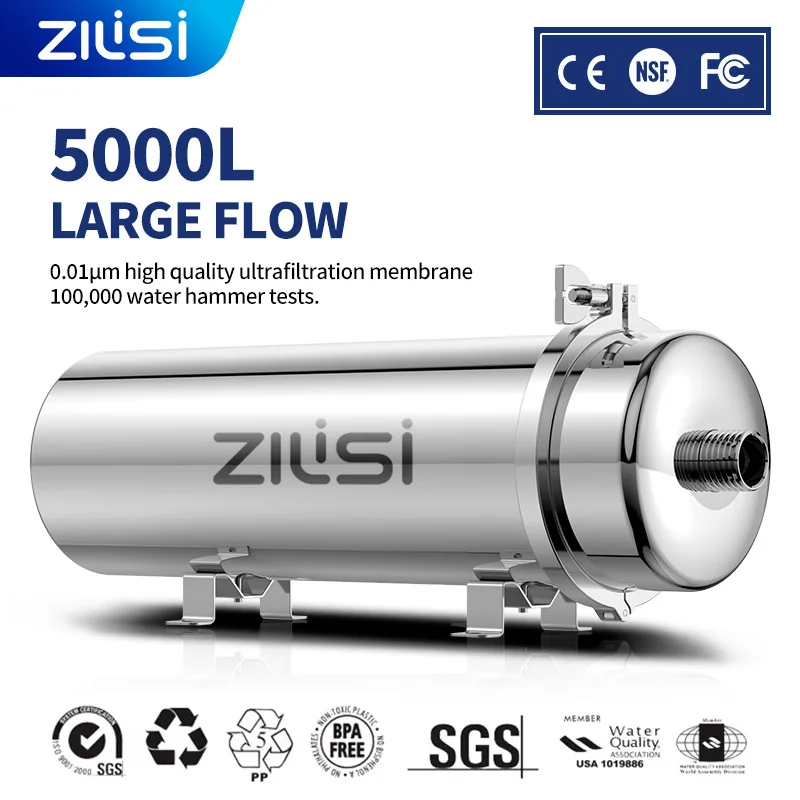 ZILISI Whole House System |
Stainless Steel, PVDF Membrane, 5000L Capacity | High-flow whole-house sediment & particle filtration | $353 |
Geekpure 6-Stage Reverse Osmosis System
This is a solid workhorse for under-sink drinking water. The sixth stage adds minerals back after the RO process, which improves taste for those who find pure RO water too flat. In our testing, installation was straightforward with the quick-connect fittings, and the lead-free faucet feels more premium than the price suggests. The NSF-certified membrane is the real deal.
- Excellent value for a 6-stage system
- Alkaline filter improves taste noticeably
- NSF-certified RO membrane
- Includes extra filters
- 75 GPD is on the lower end for flow rate
- Storage tank takes up under-sink space
Geekpure 5-Stage Reverse Osmosis System
The value proposition here is unbeatable. You get the core 5-stage RO system plus seven extra filters, which should cover you for about two years. That’s huge. The 0.0001-micron membrane tackles everything from lead to fluoride. Honestly, most people don’t need more than this for their drinking water. It’s the system we recommend to friends who ask for a no-fuss, budget-friendly RO.
- Incredible value with 2-year filter supply
- Proven 5-stage filtration
- NSF-certified components
- Universal standard filter sizes
- No remineralization stage
- Basic faucet design
Waterdrop CoreRO Countertop System
This is for the renter or the person who absolutely cannot install anything under their sink. Plug it in, fill the tank, and you have RO water. The 6-stage filtration is serious, and it’s NSF/ANSI 372 certified for lead-free materials. The trade-off? You have to manually refill the tank and empty the waste water. It’s a brilliant solution for a specific problem.
- Zero installation required
- True 6-stage RO filtration
- Compact and portable
- NSF/ANSI 372 certified
- Requires manual tank filling
- You must empty the waste water tank
- Higher cost per gallon than under-sink
Waterdrop X8 Under Sink RO System
If you have a large family and hate waiting for the RO tank to refill, this is your answer. 800 gallons per day is massive—that’s on-demand, high-flow pure water. The 2:1 pure-to-waste ratio is also best-in-class, meaning less water goes down the drain. The 9-stage filtration with NSF 42, 58, and 372 certifications covers every base. It’s a premium system with a price to match.
- Extremely high 800 GPD capacity
- Excellent 2:1 drain ratio saves water
- Triple NSF certification (42, 58, 372)
- Tankless design saves space
- Premium price point
- Requires under-sink power outlet
ZILISI High Flow Whole House Filter
This is a different beast—a stainless steel, whole-house system designed for high flow and sediment/particle removal. The PVDF membrane is reusable, which is great for the environment and your wallet long-term. It’s not for removing dissolved contaminants like iron or hardness; think of it as a super-duty, final barrier sediment filter for your entire home. The 100% positive rating on AliExpress is impressive.
- Durable stainless steel construction
- Reusable PVDF membrane filter
- High flow rate for whole house
- Excellent user ratings
- Primarily for sediment, not dissolved minerals
- Higher upfront cost
- Does not address taste/odor or bacteria
Frequently Asked Questions
- What is the best filtration system for well water?
- There is no single “best” system—it depends entirely on your water test results. A common effective setup is a sediment pre-filter, a dedicated filter for your main contaminant (like iron), and a reverse osmosis system for drinking water. Always test first.
- Do I really need a filter for my well water?
- Almost certainly, yes. Well water is not treated by a municipal plant. Even if it looks clear, it can contain harmful bacteria, heavy metals, or high levels of minerals that damage plumbing and appliances. Testing is the only way to know for sure.
- How often do well water filters need to be changed?
- It varies wildly. Sediment pre-filters might need changing every 3-6 months. Carbon filters every 6-12 months. RO membranes every 2-5 years. Follow the manufacturer’s schedule, but also watch for signs like reduced water pressure or a change in taste.
- Can a water filter remove bacteria from well water?
- Yes, but you need the right technology. An ultraviolet (UV) light system is the most common and effective way to disinfect well water and kill bacteria, viruses, and cysts. Some ultra-fine filters (0.2 micron absolute) can also remove cysts like Giardia.
- Is reverse osmosis good for well water?
- RO is excellent as a final polishing stage for drinking and cooking water. It removes an incredible range of contaminants. However, it should not be the first filter in line. Always protect an RO system with sediment and carbon pre-filters to prevent premature membrane fouling.
Final Thoughts
After years in this field, my advice is simple: don’t guess, and don’t cheap out on the core components. That $200 “whole house” filter online might not touch your specific iron problem. Invest in a proper water test, understand your flow rate needs, and build a system in stages if budget is tight. Start with a good sediment filter and a quality drinking water system like the Geekpure 5-Stage RO—it solves the most immediate concerns for most families.
Your well water is your lifeline. Treating it properly isn’t just about convenience; it’s about protecting your home and your health for the long term. Get the data, make a plan, and you’ll have clean, safe water for years to come.
