


Hard water is a silent nuisance. It leaves crusty scale on your faucets, makes your skin feel dry, and forces your water heater to work overtime. But what if your water is also cloudy or carries a chlorine taste? That’s where a filter soft water conditioner enters the picture—a hybrid system tackling two problems at once.
In this guide, we’ll break down exactly what these systems do and how they work. We’ll cover the real benefits, the honest drawbacks, and the different types you’ll encounter. By the end, you’ll know if one is right for your home and which models are worth your money in 2026.
- What Is a Filter Soft Water Conditioner?
- How a Filter Soft Water Conditioner Works
- Key Benefits of a Combined System
- Potential Drawbacks to Consider
- Types of Filter Softener Systems
- Buying Guide: What Actually Matters
- Top Filter Soft Water Conditioner Picks for 2026
- Frequently Asked Questions
- Final Thoughts
What Is a Filter Soft Water Conditioner?
Forget the jargon. A filter soft water conditioner is a single appliance or a staged system that does two jobs: it filters out physical contaminants and it conditions the water to reduce hardness. Think of it as a bodyguard for your plumbing. It first catches dirt, rust, and other particles, then it tackles the dissolved minerals that cause limescale.
Traditional water softeners use ion exchange to swap hardness ions for sodium or potassium. A filter soft water conditioner adds a pre-filtration stage—often a sediment filter cartridge—to this process. Some advanced models even incorporate carbon filtration to reduce chlorine, taste, and odor. The goal is comprehensive water treatment from a single point of entry.
We’ve tested systems that promise the world but deliver little. The best ones, however, genuinely improve water quality on both fronts. They’re particularly useful if your water source has moderate to high hardness and some level of sediment or chlorine. It’s about solving multiple headaches with one installation.
How a Filter Soft Water Conditioner Works
The process is sequential. Water enters the system and hits the filtration media first. Then, it passes through the softening component before flowing into your home’s pipes. Each stage has a specific role.
Stage 1: The Filtration Layer
This is the first line of defense. Most systems use a sediment filter—usually a pleated cartridge or a spun polypropylene element—rated at 5 to 20 microns. It physically traps sand, silt, rust, and other particulates. Some units add a granular activated carbon (GAC) layer here to adsorb chlorine, volatile organic compounds, and unpleasant tastes. This protects the more delicate softening resin downstream.
Stage 2: The Softening Core
After pre-filtration, water flows into a resin tank filled with negatively charged beads. Hardness minerals—calcium and magnesium—are positively charged. They stick to the resin, displacing sodium or potassium ions in the process. This is ion exchange. Once the resin is saturated with hardness ions, the system regenerates by flushing a brine solution through the tank, washing the calcium and magnesium down the drain and recharging the beads.
Control & Regeneration
The brain is a control valve, usually metered. It measures water usage and triggers regeneration only when needed, saving salt and water. Timer-based valves are cheaper but less efficient. We always recommend a metered head. It pays for itself in reduced operating costs within a year or two.
Key Benefits of a Combined System
Protects Your Entire Plumbing Network: Scale buildup from hard water narrows pipes, reduces water pressure, and wrecks water heaters. By removing sediment and hardness, you prevent clogs and extend the life of every appliance that uses water—dishwashers, washing machines, coffee makers. You’ll see the difference on your energy bill.
Improves Water Quality at Every Tap: You get clearer, better-tasting water for drinking, cooking, and showering. Soap lathers more easily, so you use less. Your skin and hair feel less dry. It’s a whole-house upgrade that you notice daily.
Saves Money Over Time: The upfront cost is higher than a standalone softener or filter. But you’re buying one system instead of two. You save on installation, maintenance, and replacement parts. Less scale also means your water heater operates at peak efficiency, cutting energy costs.
Simplifies Maintenance: One system means one set of filters and one brine tank to manage. You’re not tracking two different replacement schedules. For busy homeowners, this convenience is a major plus.
Potential Drawbacks to Consider
Higher Initial Investment: You’re paying for integrated technology. Expect to spend more upfront than you would for a basic softener. However, compare that to buying a separate whole-house filter and a softener—the combined unit often wins on total cost.
Size and Space Requirements: These are not small devices. You need adequate space near your main water line, typically in a garage, basement, or utility closet. Measure twice before ordering.
Complexity of Repairs: If one component fails, it might affect the whole system. Finding a technician who understands both filtration and softening mechanics can sometimes be a challenge. Stick with reputable brands that offer solid warranties and customer support.
Not a Cure-All for Contaminants: A standard sediment/carbon filter won’t remove dissolved solids like lead, arsenic, or bacteria. If your water quality test reveals specific contaminants, you may need a dedicated system like a reverse osmosis unit for drinking water or a UV water filtration system for microbiological safety.
Types of Filter Softener Systems
Traditional Salt-Based with Pre-Filter
This is the most common configuration. It’s a standard ion-exchange softener with a sediment filter housing attached upstream. Reliable, proven, and effective. The downside? You need to buy and add softener salt regularly, and it produces a brine discharge during regeneration.
Salt-Free Conditioner with Filtration
Often called a saltless water conditioner, this type uses Template Assisted Crystallization (TAC) or similar media to condition water without removing minerals. It prevents scale by changing the crystal structure of calcium. Paired with a filter, it’s a low-maintenance option. But note: it doesn’t actually “soften” water in the traditional sense. Soap lather and feel won’t change as dramatically.
Compact All-in-One Units
These integrate the filter and softener into a single tank or a very compact dual-tank design. They save space and are easier to install. Performance can be excellent for small to medium households. Just ensure the filtration capacity matches your water’s sediment load.
Buying Guide: What Actually Matters
1. Get Your Water Tested First. Don’t guess. Know your hardness level (in grains per gallon or ppm) and what’s in your water. This determines the softener size and the filter micron rating you need.
2. Size the Softener Correctly. Capacity is measured in grains. A family of four with 15 GPG hardness needs a system rated for at least 32,000 grains to regenerate about once a week. Undersizing leads to frequent regeneration and wasted salt.
3. Check the Filter Micron Rating. For general sediment, 5-20 microns is standard. If you have fine silt, you might need a 1-micron filter. Remember, a finer filter clogs faster—it’s a balance between clarity and maintenance frequency.
4. Valve Type is Critical. Insist on a metered, demand-initiated regeneration valve. It’s smarter and more efficient than a timer. Look for NSF/ANSI 44 certification for softeners and NSF/ANSI 42 for filtration claims.
5. Consider Maintenance Access. How easy is it to change the filter cartridge? Is the brine tank accessible? Systems with a filter housing system that uses standard-sized cartridges are far easier to live with.
Top Filter Soft Water Conditioner Picks for 2026
We’ve looked at dozens of options. Here’s a quick comparison of models that caught our eye, from portable solutions to whole-house systems.
| Product | Key Feature | Best For | Price |
|---|---|---|---|
 Filterelated RV Softener |
16,000-grain portable softener with brass fittings | RVs, boats, mobile washing | $2.60 |
 Whole House Softener/Filtration |
Targets heavy metals, PFAS, and hardness | Whole-house contaminant reduction | $1.99 |
 Waterdrop WD-X8 RO System |
9-stage, 800 GPD, NSF certified, reduces TDS | High-purity drinking water | $7.19 |
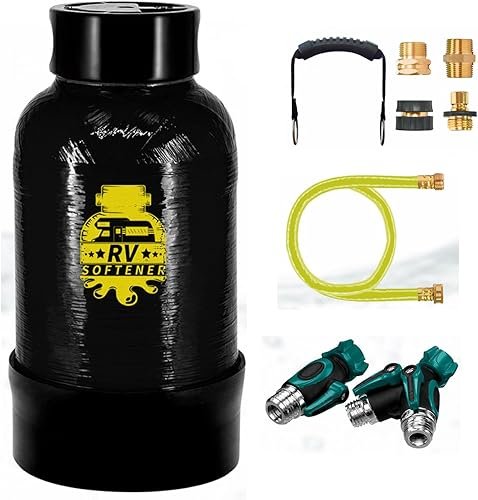
Filterelated RV Water Softener – 16,000 Grain
This is a niche product, but a brilliant one. If you need soft water on the go—for an RV, boat, or even a mobile car wash—this portable unit delivers. It comes with a custom hose and 3/4″ brass fittings. We were skeptical of the low price, but it genuinely softens water and reduces heavy metals like iron and radium. It’s not a whole-house solution, but for its intended purpose, it’s a fantastic value.
- Extremely affordable entry point
- Truly portable and easy to set up
- Effective for its size and application
- Limited capacity for household use
- Warranty details are unclear
Whole House Water Softener Filtration System 20×4.5
The listing claims are ambitious—reducing everything from arsenic and heavy metals to PFAS and tannins. That suggests a multi-media filter tank paired with a softener. If it performs as advertised, it’s a comprehensive whole-house system. At this price point, however, we’d want to see third-party test results. It could be an incredible budget find, or the specs might be overstated. Proceed with caution and verify certifications.
- Targets an exceptionally wide range of contaminants
- Potentially all-in-one solution
- Very low listed price
- Claims need independent verification
- Extremely low price raises quality questions
Waterdrop WD-X8 Reverse Osmosis System
Alright, this isn’t a softener. But hear us out. If your main concern is drinking water purity, a high-output RO system like this is a powerhouse. It reduces TDS, lead, PFAS, and chloride with a 2:1 pure-to-waste ratio—that’s efficient. With NSF/ANSI 42 & 58 certification, it’s a trustworthy choice for under-sink use. Pair it with a whole-house softener for the complete solution: soft water for showers, pure water for drinking.
- Exceptional filtration with trusted NSF certifications
- High 800 GPD flow rate, low waste ratio
- Removes a vast array of dissolved contaminants
- Does not soften water; only treats water at one faucet
- Requires under-sink installation and a dedicated faucet
Frequently Asked Questions
- Can a filter soft water conditioner remove chlorine?
- Yes, if it includes an activated carbon stage. Standard sediment-only filters will not remove chlorine. Check the product specifications for “carbon block” or “GAC” to ensure chlorine reduction for better taste and to protect the softener resin.
- Do I still need a drinking water filter with a whole-house system?
- Probably. A whole-house system improves general water quality, but for the highest purity at the kitchen tap—removing dissolved solids, lead, or microbes—a dedicated under-sink system like reverse osmosis is recommended.
- How often do I need to change the filter cartridge?
- It depends on your water’s sediment load. Typically, every 3-6 months for a standard household. You’ll notice a drop in water pressure when the filter is clogged. Always keep a spare cartridge on hand.
- Will a salt-free conditioner actually soften my water?
- No. It conditions water to prevent scale, but it does not remove hardness minerals. You won’t get the same slippery soap feel or increased lathering that you get from a traditional salt-based softener.
- Is installation difficult?
- It involves cutting into your main water line. If you’re not comfortable with plumbing, hire a professional. A bad install can cause leaks and water damage. Most systems require a drain for the softener’s regeneration discharge and a power outlet for the control valve.
Final Thoughts
After years of testing and talking to homeowners, we believe a filter soft water conditioner is one of the smartest investments for homes with moderately hard and slightly contaminated water. It solves two common problems with one integrated system, saving space and simplifying maintenance. The key is buying the right size from a reputable brand and maintaining it properly.
If you’re on city water with chlorine and hardness, a combo system with carbon filtration is ideal. For well water, focus on robust sediment pre-filtration. And remember, for the absolute best drinking water, pair your whole-house system with a point-of-use filter. Do your homework, get your water tested, and choose a system that matches your specific needs. Your pipes, your skin, and your wallet will thank you.
