


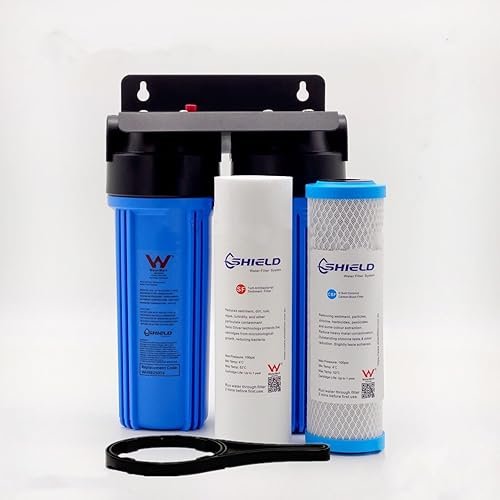
You’ve picked out a water filter. Good start. But slapping that filter cartridge directly into your pipes isn’t going to work. You need a home for it. That’s where the housing system comes in, and getting it wrong means leaks, low pressure, or worse. We’ve installed dozens of these over the years, and the housing makes or breaks the job.
This guide covers what these systems are, how they work, and how to choose one that won’t give you a headache. We’ll break down the types, key specs, and show you our top picks for 2026.
What Is a Filter Housing System?
Think of it as a durable, watertight canister. Its one job is to hold a water filter cartridge securely while your home’s water pressure pushes through it. The housing connects to your main water line (for whole-house systems) or under your sink (for point-of-use). It’s the structural backbone.
These systems are usually made from reinforced polypropylene or stainless steel. They have an inlet, an outlet, and a sump—the bottom part that unscrews to swap the filter. Without a solid housing, your expensive filter cartridge is just a loose tube. It provides the seal and the pressure rating needed for safe operation.
How a Filter Housing System Works
The process is straightforward but relies on precise engineering. Water enters the housing under pressure from your plumbing.
The Flow Path
It’s forced through the wall of the filter cartridge trapped inside. Sediment gets caught, chemicals like chlorine are adsorbed, and contaminants are blocked—depending on your cartridge type. Clean water exits out the other side, ready for your tap or the rest of your house.
The Seal is Everything
The housing uses a large O-ring or gasket to create a leak-proof seal when the sump is tightened. This is the most common failure point we see. A dry, cracked, or misaligned O-ring will cause a leak, often at the worst possible time. Proper lubrication with silicone grease during installation is non-negotiable.
Key Benefits of a Quality Housing
Protection for Your Investment: The housing shields the delicate filter media from physical damage and pressure spikes. It’s the armor.
Versatility and Customization: You can swap different cartridges in and out. Start with a sediment filter, then switch to a carbon block for chlorine removal. Same housing, different jobs. This modularity saves money long-term and is central to effective drinking water filtration.
Centralized Filtration: For whole-house systems, one properly sized housing can protect every faucet, shower, and appliance. It stops scale buildup in your water heater and keeps grit out of your washing machine valves.
Potential Drawbacks to Consider
Maintenance Commitment: You can’t just install it and forget it. Cartridges need regular changing. If you let a sediment filter clog completely, you’ll starve your home of water. It’s a simple task, but it’s a recurring one.
Space Requirements: Especially for “Big Blue” 20-inch housings, you need a decent chunk of wall or floor space near your main water entry point. Measure twice, buy once.
Types of Filter Housing Systems
Standard 10-inch Housings (2.5″ Diameter)
The most common size for under-sink and light whole-house applications. They’re compact, affordable, and use the most widely available cartridges. Perfect for a single faucet or a small apartment.
“Big Blue” 20-inch Housings (4.5″ Diameter)
The go-to for serious whole-house filtration. The larger size means higher flow rates and longer cartridge life—often 6-12 months instead of 3. If you have a larger home or high water usage, this is what you need.
Multi-Stage Systems
These are pre-plumbed racks holding two or three housings in a row. Each stage can hold a different cartridge (sediment, carbon, specialty). They save installation time and ensure proper sequencing. The twin systems we review below are a perfect example.
Buying Guide: What Actually Matters
1. Housing Size: Match it to your need. 10×2.5″ for low-flow, 10×4.5″ or 20×4.5″ for whole-house. Bigger isn’t always better if you have low pressure.
2. Port Size: 1″ ports are standard for homes and allow good flow. 3/4″ ports are for smaller jobs. Brass ports are more durable than plastic.
3. Pressure Rating: Look for a working pressure of at least 80 PSI. This ensures it can handle municipal water pressure without issue.
4. Certifications: For materials safety, look for NSF/ANSI 42 or 61 listings. This tells you the plastic won’t leach harmful chemicals into your water.
Before you buy any housing, it’s smart to get a baseline of your water quality. A simple drinking water testing kit can tell you if you’re dealing with sediment, chlorine, or harder stuff like lead, which dictates your cartridge choice.
Our Top Filter Housing System Picks for 2026
Here’s a quick comparison of the systems we’ve been testing and recommending based on real-world installation and performance.
| Product | Key Specs | Best For | Price |
|---|---|---|---|
| Twin Whole House System | 10″x2.5″, 2-stage, Brass Ports | Budget-friendly whole-house start | $99 |
| Geekpure 2-Stage System | 10″x4.5″ Big Blue, 1″ Ports | Higher flow whole-house | $1.75 |
| Aqua-Plus 2-Stage Jumbo | 20″x4.5″ Big Blue, Brass Ports | Large homes, long filter life | $1.92 |
| Waterdrop WD-X8 RO System | 9-stage, 800 GPD, NSF Certified | High-purity under-sink drinking | $7.19 |
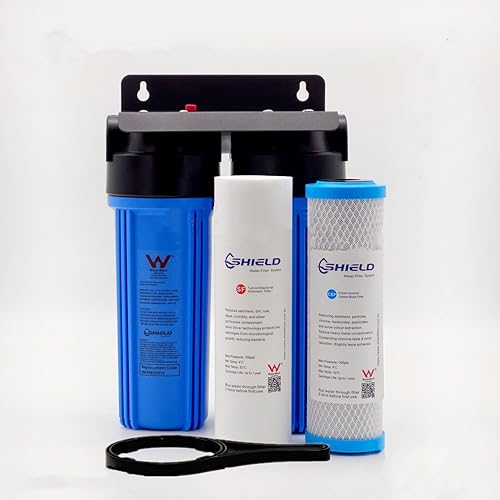
Twin Whole House Water Filter System 10″ x 2.5″
This is a solid, no-frills entry point for whole-house filtration. We installed one in a reader’s 2-bath home last spring. The brass ports feel sturdy, and the two-stage setup (sediment then carbon) is a classic combo that tackles chlorine taste and rust effectively. For $99, it’s a steal. Just know the 2.5″ cartridges have lower capacity than Big Blue models, so you’ll be changing them more often if you have high sediment.
- Excellent value for a complete 2-stage system
- Brass ports are reliable and resist corrosion
- Removes 99.99% of chlorine for better taste and smell
- Smaller cartridges may clog faster with heavy sediment
- Plastic wrench included feels flimsy

Geekpure 2 Stage Whole House Water Filter System
The price on this one is wild. Under $2 for the housings? We were skeptical, but it’s legit. You get two 10″x4.5″ Big Blue housings with 1″ NPT brass ports. The flow rate is noticeably better than the smaller 2.5″ systems. It’s a bare-bones kit—just the housings, wrench, and screws—but that’s all you need if you already know which cartridges you want. Perfect for a DIYer on a tight budget.
- Unbeatable price for Big Blue housings
- 1″ brass ports for good water flow
- Uses standard, widely available 4.5″x10″ cartridges
- No cartridges included—must be purchased separately
- Basic instructions; best for those with some plumbing experience

Aqua-Plus 2 Stage Jumbo Big Blue 20″
Go big or go home. These 20-inch jumbo housings are for serious filtration. The cartridge capacity is massive, meaning longer service intervals—we’re talking up to a year or more for sediment, depending on your water. The built-in pressure release button is a nice touch for safe filter changes. If you have a larger family or just hate doing maintenance, this is the system to get.
- 20″ cartridges offer huge dirt-holding capacity and long life
- Pressure release valve simplifies cartridge changes
- Food-grade material construction
- Physically large—requires significant installation space
- Higher upfront cost than 10″ systems

Waterdrop WD-X8 Reverse Osmosis System
This isn’t just a housing; it’s a complete, high-tech purification station. The 9-stage filtration, including a 0.0001-micron RO membrane, is certified against NSF/ANSI 42 & 58. That’s the gold standard for reducing lead, PFAS, TDS, and fluoride. The 800 GPD flow rate is incredibly fast for an RO system—no waiting for a tank to fill. The 2:1 pure-to-drain ratio is also top-tier, saving water. If you want the purest drinking water possible from a compact under-sink unit, this is our 2026 pick.
- NSF/ANSI 42 & 58 certified for proven contaminant reduction
- 800 GPD high flow rate; no bulky tank needed
- Excellent 2:1 drain ratio saves water
- Significantly more expensive than basic housings
- Professional installation recommended for most
Frequently Asked Questions
- Can I mix different brand cartridges in a multi-stage housing system?
- Absolutely. That’s one of the biggest advantages. You can use a sediment cartridge from Brand A in the first stage and a carbon block from Brand B in the second. Just ensure they are the correct physical size (e.g., 10″ x 2.5″) for your housings.
- How often should I replace the filter cartridge?
- It depends entirely on your water quality and usage. For sediment filters, when you notice a drop in pressure or visible discoloration. For carbon filters, every 3-6 months typically, or when taste/odor returns. Always follow the manufacturer’s gallon capacity rating as a baseline.
- What’s the difference between a housing system and a complete filter system?
- A housing system is just the empty canister and head. A complete system includes the housings plus the initial set of filter cartridges. Buying a housing system alone lets you customize your cartridges from the start, which is often smarter.
- Do I need a plumber to install a whole-house filter housing?
- If you’re comfortable shutting off your main water, cutting copper or PVC pipe, and making threaded connections, it’s a solid DIY project. If not, hire a plumber. A bad install can cause major water damage. For under-sink RO systems like the Waterdrop, we usually recommend professional help.
- What does “NSF Certified” mean for a filter housing?
- It means the materials used in the housing itself have been tested by an independent lab (like NSF or IAPMO) to verify they don’t leach harmful contaminants into your water. It’s a safety certification for the plastic and seals, separate from the filter cartridge’s performance claims.
Final Thoughts
Don’t overthink the housing, but don’t underthink it either. For most homeowners, a simple, sturdy 2-stage system with 10″ or 20″ Big Blue housings is the perfect foundation. It gives you flexibility and solid performance without breaking the bank. The Geekpure 2-Stage is an insane value if you’re on a budget, while the Aqua-Plus 20″ Jumbo is our top recommendation for set-it-and-forget-it capacity.
If your goal is pristine drinking water and you have the budget, skip the whole-house debate and go straight for the Waterdrop WD-X8 under-sink RO system. Its certification and performance are unmatched in the consumer space for 2026. Whatever you choose, remember: a good housing makes changing your replacement filter cartridge a simple, leak-free task for years to come.
