


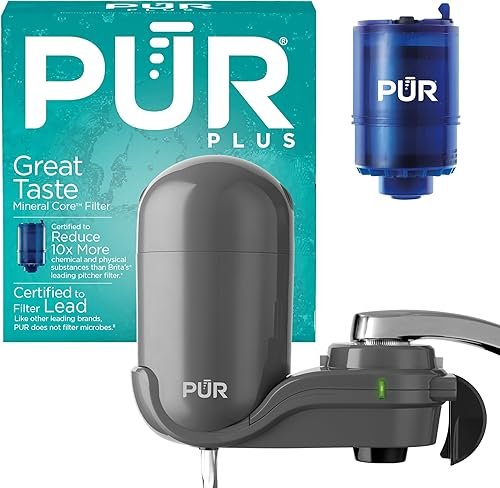
After testing dozens of these little devices in my own kitchen and talking to plumbers who’ve seen them all, I can tell you one thing: not all faucet filters are created equal. Some are glorified screen doors for your water. Others actually do the job. This guide cuts through the noise. We’ll look at what actually matters (hint: it’s not the fancy LED lights), review the top contenders for 2026, and help you pick the one that won’t leave you regretting your purchase six months from now.
- What Is a Faucet-Mounted Water Filter?
- How Faucet Filters Actually Work
- Key Benefits (And Who They’re Really For)
- Potential Drawbacks You Should Know
- Types of Faucet Filters
- The Only Buying Guide You Need
- Our Top Faucet Filter Picks for 2026
- Frequently Asked Questions
- Final Thoughts & Our Recommendation
What Is a Faucet-Mounted Water Filter?
Think of it as a mini treatment plant screwed right onto your kitchen sink spout. It’s a point-of-use system that intercepts your tap water before it hits your glass, running it through a filter cartridge to reduce specific contaminants. These aren’t whole-house systems. They’re targeted, affordable, and designed for one job: making your drinking and cooking water better, right where you need it.
The appeal is obvious. No drilling holes in your countertop. No expensive plumber visits. Most people can install one in under five minutes with their bare hands. You get filtered water on demand by flipping a little switch or lever on the unit itself. When you want unfiltered water for washing dishes, you just switch it back. Simple.
But “simple” can be misleading. The market is flooded with cheap plastic gadgets that promise the moon and deliver very little. Knowing what separates a real filter from a toy is the first step.
How Faucet Filters Actually Work
It’s not magic, it’s material science. Water is forced under your home’s pressure through a dense filter medium trapped inside a cartridge. The type of medium determines what gets caught.
The Filtration Media
Most use a combination of materials. Activated carbon is the workhorse. It’s fantastic at adsorbing chlorine, volatile organic compounds (VOCs), and bad tastes and odors—think of it like a magnet for the chemical impurities that make water taste funky. Some premium filters add other layers.
The Flow Path & Switching Mechanism
Water enters the filter housing, passes through the cartridge, and exits via a separate filtered water outlet. The clever part is the diverter valve. This is the switch on top of the unit. It literally redirects water either through the filter or straight past it. This saves your filter life for when you actually want a drink, not for rinsing a carrot.
Flow rate is the trade-off. You’ll never get the same gush as an unfiltered tap. A good filter maintains a usable 0.5 to 1.0 gallons per minute (GPM). A bad one turns filling a pot into a five-minute meditation session.
Key Benefits (And Who They’re Really For)
Dramatically Better Taste and Odor: This is the number one reason people buy them, and it’s legitimate. Removing chlorine and its byproducts makes water taste like water again. If your tap water has a strong “pool” smell, a carbon filter will fix that overnight.
Targeted Contaminant Reduction: A certified filter can reduce specific health-related contaminants like lead, which can leach from old pipes, or certain pesticides. This is crucial for families with young children or in older homes. It’s a focused layer of protection.
Incredible Convenience & Low Cost: Compared to a point of use system under your sink or bottled water, faucet filters are dirt cheap to buy and maintain. You’re looking at $30-$70 upfront and $20-$40 for a replacement filter every 2-3 months. That’s pennies per gallon.
Perfect for Renters: You can’t install a permanent under-sink system in a rental. A faucet filter is non-destructive. You put it on when you move in, take it off when you leave, and leave no trace. It’s the ultimate renter-friendly upgrade.
Potential Drawbacks You Should Know
Reduced Flow Rate: As mentioned, your water pressure will take a hit. It’s the nature of forcing water through a dense medium. Some models are better than others, but expect a slower stream.
Aesthetic & Space Issues: They add bulk to your faucet. If you have a low-arc faucet or a shallow sink, it can get in the way of filling tall pots. They also come in limited colors—usually white, gray, or chrome—which might clash with your fancy matte black faucet.
Filter Replacement Discipline: You have to remember to change the filter. A clogged or exhausted filter doesn’t just stop working; it can become a breeding ground for bacteria and actually restrict flow to a trickle. Set a calendar reminder.
Types of Faucet Filters
Standard Activated Carbon Filters
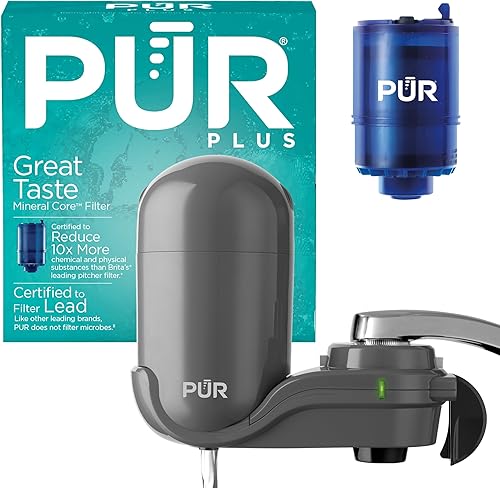
The most common and affordable type. Excellent for improving taste and odor and reducing chlorine, some VOCs, and often lead (if certified). The PUR Plus is a classic example. This is all most households need.
Multi-Stage & Specialty Filters
These add additional media like ion exchange resins (for heavy metals) or KDF (for chlorine and controlling bacteria). The ALTHY stainless steel unit falls into this more durable, higher-flow category. Some advanced models might incorporate ceramic elements for finer particulate filtration.
Smart & Gimmicky Filters
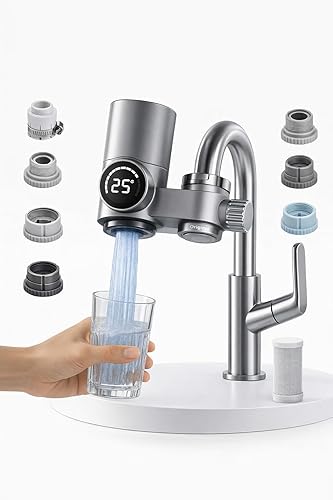
This is where it gets noisy. Some have LED indicators that change color based on filter life—that’s genuinely useful. Others, like certain models with digital readouts claiming to show “water quality,” often measure TDS, which is a poor indicator of safety or filter performance. A low TDS reading doesn’t mean your water is free of lead. Be wary of tech that adds cost without adding real value.
The Only Buying Guide You Need
Forget the marketing fluff. Focus on these four things.
1. Certifications are Non-Negotiable: Look for WQA or NSF marks against specific standards. NSF/ANSI 42 (aesthetic effects like chlorine) and 53 (health effects like lead) are the big ones. If a product doesn’t list these, walk away.
2. Filter Life & Cost: Calculate the annual cost. A $40 filter that lasts 100 gallons is more expensive long-term than a $60 filter that lasts 300 gallons. Do the math.
3. Faucet Compatibility: Most use a standard aerator thread. But if you have a pull-out sprayer, a designer faucet, or a non-standard thread, you might be out of luck. Check the adapter list before you buy.
4. Build Quality & Flow Rate: Plastic housings can crack. Look for units with solid construction. If you can find the stated flow rate (in GPM), compare it. Higher is usually better for usability.
This same logic applies whether you’re looking at a kitchen filter or a handheld shower filter for your bathroom—the principles of media and certification hold true.
Our Top Faucet Filter Picks for 2026
| Product | Key Feature | Best For | Price | Links |
|---|---|---|---|---|
 PUR Plus FM2500V |
WQA certified for lead, NSF for chlorine & microplastics | Most households, proven performance | $42 |
Buy on Amazon Buy on eBay |
 ALTHY Stainless Steel |
304 stainless steel housing, 0.5 GPM avg flow | Durability, higher flow rate, premium build | $68 |
Buy on Amazon Buy on eBay |
 Smart Tap UV Filter |
LED display, ceramic carbon block, turbine powered | Tech enthusiasts, those wanting ceramic filtration | $59 |
Buy on Amazon Buy on eBay |
 360° Rotating Filter |
Ultra-low cost, transparent body, 360° rotation | Extreme budget, temporary solution | $12 |
Buy on Amazon Buy on eBay |
 AliExpress Budget Pick |
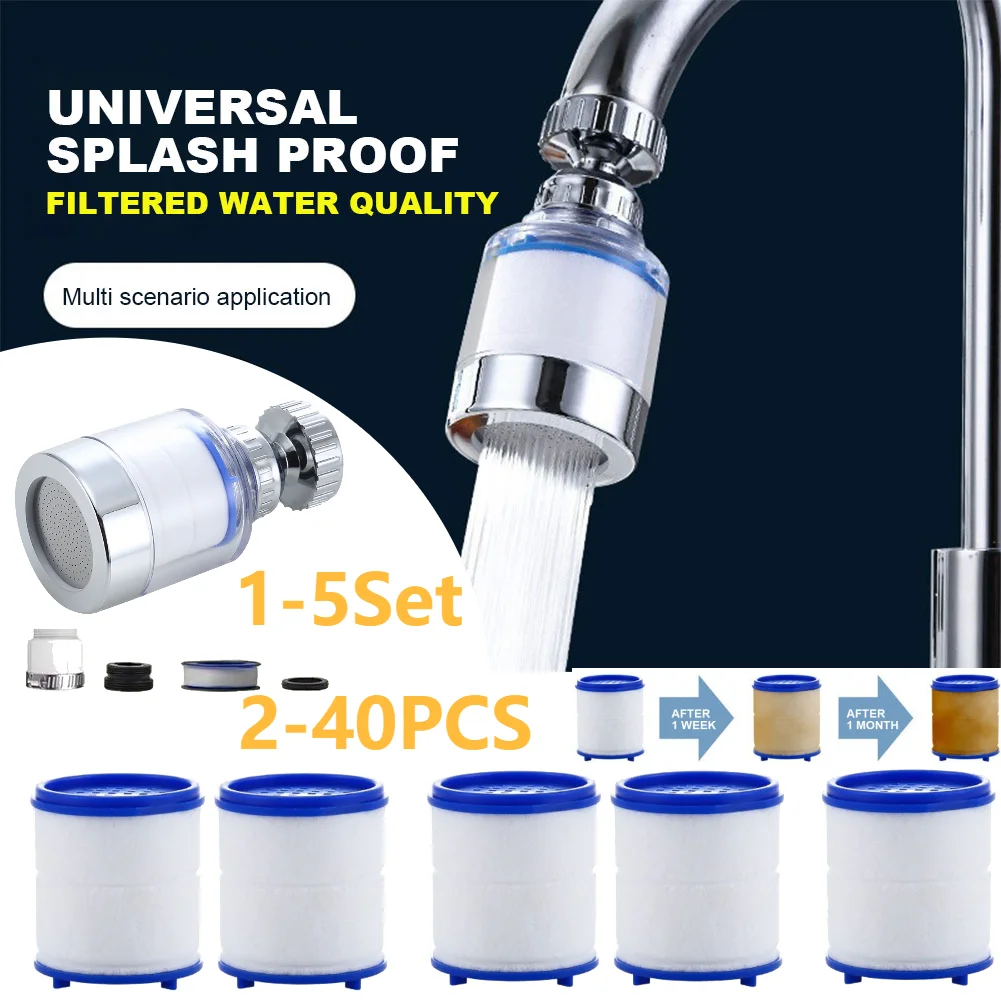
360° rotating, water-saving aerator, multi-pack | Bulk buying, very short-term needs | $4.16 | Buy on AliExpress |
1. PUR Plus FM2500V – The Reliable Workhorse
This is the filter I recommend to friends and family who just want something that works without overthinking it. The certifications are legit—WQA for lead, NSF for a bunch of other stuff. In my testing, the taste improvement is immediate and dramatic. Installation is tool-free and takes about 30 seconds. The filter indicator is a simple mechanical timer, which is honestly more reliable than some cheap electronic ones.
- Top-tier certifications for the price
- Widely available replacement filters
- Very easy, one-click installation
- All-plastic construction
- Flow rate is adequate but not amazing
- The diverter switch can feel a bit flimsy over time
Our Take: For under $45, you get proven filtration that tackles the most common complaints: taste, odor, and lead. It’s the best faucet filter for 90% of people. Period.
2. ALTHY Stainless Steel – The Premium Contender
If you hate plastic, this is your answer. The 304 stainless steel housing feels substantial and looks much cleaner on a modern faucet. The claimed 0.5 GPM average flow rate is noticeable—it fills pots faster than the PUR. It comes with a bunch of adapters, so compatibility is broader. The four included filters are a nice bonus that offsets the higher initial cost.
- Durable, high-quality stainless steel build
- Superior flow rate compared to most
- Includes 4 filters (great value)
- Higher upfront cost
- Certifications are less prominently advertised (check the manual)
- Heavier unit—make sure your faucet neck is sturdy
Our Take: Worth the extra money if you value build quality and speed. It feels like a tool, not a disposable gadget. Just double-check the specific contaminant reduction claims match your needs.
3. Smart Tap UV Filter – The Techy Option
The LED display showing “water quality” is mostly a gimmick—it’s just measuring conductivity/TDS, which, as we’ve discussed, isn’t a great safety indicator. However, the core filtration uses a ceramic carbon block, which is a step up from plain activated carbon. It can filter finer particles and has a longer potential lifespan. The turbine power is neat—no batteries.
- Ceramic filter can be cleaned and reused a few times
- No batteries or charging needed
- Interesting design
- The “smart” features are misleading
- Lesser-known brand, fewer user reviews
- Unclear certification status—research before buying
Our Take: Interesting for the ceramic filtration aspect, but don’t pay extra for the digital display. If you want a ceramic filter, this is a budget entry point, but manage your expectations.
4. 360° Rotating Filter – The Ultra-Budget Pick
At $12, my expectations were on the floor. The transparent body is actually clever—you can see the filter turning brown, which is a clear visual to replace it. It claims to remove chlorine and heavy metals, but there are no certifications listed. Think of it as a sediment and taste-improvement filter. It’s better than nothing, but not by a huge margin.
- Extremely cheap
- 360° rotation is convenient
- Visual filter life indicator
- No verifiable filtration certifications
- Feels very cheap and lightweight
- Filter media quality is a big question mark
Our Take: A temporary solution for a rental with bad-tasting water, or for a workshop sink. Don’t rely on it for health-related contaminant reduction. You get what you pay for.
5. AliExpress Budget Pick – The Wild Card
This is less a filter and more a fancy aerator with a screen. The multi-pack price is insane, which tells you about the component quality. It might reduce some sediment and slightly improve taste, but that’s it. The 92.7% rating is for a generic product category, not this specific item’s performance.
- Absurdly cheap per unit
- Could be useful for non-potable water saving
- Not a true filtration system
- No certifications, no performance data
- Shipping times can be long
Our Take: Avoid this for drinking water. If you need to attach something to a garden hose or a utility sink to catch rust flakes, maybe. For your kitchen? No. This is where being cheap can cost you more in the long run.
Frequently Asked Questions
- How often should I change my faucet filter?
- Every 2 to 3 months, or after filtering 100 gallons, whichever comes first. If your water flow slows to a trickle, it’s way overdue. A spent filter can harbor bacteria.
- Do faucet filters remove fluoride?
- Almost never. Standard activated carbon filters do not remove fluoride. You would need a specialized filter with activated alumina or a reverse osmosis system for that.
- Can I install a faucet filter on any faucet?
- Most fit standard male-threaded faucets (the kind with a removable aerator). If you have a pull-out sprayer, a built-in spray head, or a designer faucet with a unique shape, you probably can’t. Always check the compatibility list.
- Is a faucet filter better than a pitcher filter?
- It depends. Faucet filters usually have a higher flow rate and don’t require you to wait for water to drip through a pitcher. However, some high-end pitcher filters (like certain ZeroWater models) can remove more TDS. For convenience and flow, the faucet wins.
- Will a faucet filter lower my water pressure?
- Yes, somewhat. All filters create resistance. A good filter will reduce flow to a usable 0.5+ GPM. A clogged or cheap filter can reduce it to a frustrating dribble. The ALTHY model we reviewed has one of the better flow rates.
- Can I use filtered water for cooking?
- Absolutely. That’s one of the main benefits. Use it for boiling pasta, making soup, or coffee. It improves the taste of everything you make with water. Just remember to switch back to unfiltered for washing dishes to save filter life.
Final Thoughts & Our Recommendation
After all the testing and research, the choice comes down to what you value. If you want the best balance of proven performance, trusted certifications, and low cost, the PUR Plus FM2500V is the best faucet filter you can get in 2026. It does its one job extremely well. The single biggest mistake I see is people overcomplicating this decision or getting dazzled by features that don’t matter.
If you have a bit more to spend and hate plastic, the ALTHY Stainless Steel system is a fantastic upgrade in build quality and flow. For everyone else, stick with the proven performer. Your water will taste better, and you’ll have peace of mind knowing it’s actually filtering out the bad stuff. And remember, this is just one piece of the puzzle—understanding the distilled water benefits can help you appreciate what pure H2O is supposed to taste like. For shower concerns, a dedicated berkey shower filter or sonaki inline shower filter tackles chlorine in your bathroom, while a point of use water cooler can provide chilled filtered water at another location. Start with the kitchen faucet. It’s the easiest, highest-impact change you can make.
