


So you’ve got a well. Maybe you just drilled it, or maybe the old jet pump finally gave up. Either way, you need water at the tap, and that means figuring out this whole submersible pump thing. It can feel daunting. Deep, dark hole in the ground, expensive equipment, and the constant worry of being without water.
We’ve been there. After installing, testing, and troubleshooting dozens of these systems over the years, we’ve learned what actually matters—and what’s just marketing fluff. This guide cuts through the noise.
- What a deep well submersible pump is and how it differs from other pumps
- The key specs you must match to your well
- A clear-eyed look at the benefits and the real-world headaches
- Our top picks for 2026 based on hands-on experience
What Is a Deep Well Submersible Pump?
Forget the noisy pumps sitting in your basement. A deep well submersible pump is a long, cylindrical unit that gets lowered directly into your well, sitting completely underwater. Its entire job is to push water upward to the surface, rather than trying to suck it up like a shallow well jet pump. This fundamental design difference is why it’s the go-to solution for wells deeper than about 25 feet.
Think of it as a powerful, waterproof engine with a series of spinning impellers inside. Each impeller adds a bit more pressure, stage by stage, until there’s enough force to send water hundreds of feet up a pipe to your pressure tank. It’s a closed system, which keeps it safe from the elements and dramatically reduces the risk of losing prime—a common headache with above-ground pumps.
For most homeowners on a drilled well, this isn’t just an option; it’s the standard. The technology is mature and reliable. But “reliable” doesn’t mean “one-size-fits-all.” Picking the wrong model for your specific well is the single biggest mistake we see. It leads to weak showers, cycling pumps, and premature burnout.
How a Deep Well Submersible Pump Works
Let’s pop the hood. Understanding the basic mechanics helps you diagnose problems later and talk to your plumber like a pro.
The Motor and Shaft
At the bottom of the pump assembly sits a hermetically sealed electric motor. It’s filled with a special oil for cooling and lubrication. This motor spins a long shaft that runs the entire length of the pump body. You’ll see ratings in horsepower (HP)—typically ½ HP to 2 HP for residential use. More HP generally means more power to lift water higher and faster.
The Impeller Stages
Here’s the magic. Attached to the spinning shaft are multiple impellers, each housed in a bowl. Water enters the first bowl, gets spun by the impeller, and is forced into the next bowl. Each stage adds pressure. A pump for a 200-foot well might have 10, 15, or even 20 stages. The total “head” or lift capacity is the sum of all these stages. This is why you can’t just compare HP alone—a ½ HP pump with 15 stages can out-lift a ¾ HP pump with only 8 stages.
The Discharge and Check Valve
Water exits the top of the pump into a 1-inch or 1¼-inch drop pipe. Critically, there’s a check valve right at the pump outlet or just above it. This one-way gate stops all the water in that tall column from rushing back down into the well when the pump shuts off. Without it, your pump would have to start from zero every single time, burning out its motor. If your pump cycles on and off rapidly, a failed check valve is the first thing we check.
The electrical cable runs alongside the drop pipe, down to the motor. It’s specially jacketed for permanent submersion. When you’re dealing with water quality, remember that what the pump pushes up eventually hits your treatment system. If you have sediment, you’ll need a pre-filter. For dissolved minerals like iron, you’ll need an iron water treatment system downstream.
Key Benefits
Quiet Operation. This is the first thing people notice. The pump is underwater, so the well casing and the earth itself muffle the sound. You’ll hear a faint hum from the pressure tank, not the constant roar of a jet pump.
Efficient and Powerful. Pushing water is more efficient than pulling it. Submersible pumps convert more electricity into water pressure, which saves you money over time. They can also deliver higher flow rates (GPM) at greater depths than any other pump type.
Protected from the Elements. It’s in a sealed casing, underground. No freezing, no overheating in the summer sun, no debris or critters getting in. This leads to a longer service life, often 15-20 years with decent water quality.
Self-Priming. Once it’s in the water, it’s primed. You’ll never have to mess with priming a pump again. This reliability is a huge stress reliever. For whole-house filtration after the pump, you might pair it with a house filter system to protect your plumbing and appliances.
Potential Drawbacks
The Installation is a Bear. This isn’t a typical DIY project. You need special tools like a torque arrestor, safety rope, and the knowledge to pull hundreds of feet of pipe and wire. We strongly recommend hiring a licensed well driller or pump installer. A dropped pump is a catastrophic, expensive failure.
Hard to Diagnose. When something goes wrong, the problem is out of sight. You can’t just walk over and look at it. Troubleshooting requires pulling the entire assembly, which costs money. A good installer will put in a pitless adapter and leave a pull rope for easier future service.
Water Quality Sensitivity. While tough, they aren’t invincible. Abrasive sand can wear down impellers and bearings over time. If your water has high levels of sediment, a good sediment pre-filter is non-negotiable. Corrosive water (low pH) can eat at metals. Know your water report before you buy.
Types of Deep Well Submersible Pumps
They’re not all the same. Your choice depends on your power source and application.
AC (Grid-Powered) Submersible Pumps
The standard for most homes. They run on 230V single-phase power (in North America) and are incredibly reliable. They’re the workhorses we recommend for primary residential use. Just make sure your electrical panel and wire gauge are sized correctly for the motor’s starting load.
Solar DC Submersible Pumps
A game-changer for remote locations. These run directly on DC power from solar panels, often with an MPPT controller to maximize efficiency. They’re perfect for off-grid cabins, livestock tanks, or irrigation ponds. The upfront cost is higher, but the operating cost is zero. For remote watering needs, they’re unbeatable.
Battery/Cordless Submersible Pumps
A newer category. These are portable, lower-power units running on tool batteries (like DeWalt 20V). They’re not for supplying a house. Think emergency water transfer, draining a pool cover, or pumping out a flooded trench. Super handy to have in the garage. If you’re curious about different filtration methods for the water you pump, you might explore pou filtration options for point-of-use drinking water.
Buying Guide: What Actually Matters
Ignore the flashy ads. Focus on these four specs.
1. Total Dynamic Head (TDH). This is your most important number. It’s the total resistance the pump must overcome. Calculate it as: (Well Depth in feet) + (Friction Loss in pipes) + (Desired Pressure at the tank, usually 40-60 PSI, converted to feet). A pump’s “head” rating must exceed your TDH. If your well is 150 ft deep, you need a pump rated for at least 180-200 ft of head to account for friction and pressure.
2. Flow Rate (GPM). How much water do you need at once? A rule of thumb: count the number of bathrooms in your home. You need 1 GPM per bathroom, plus 1 GPM for the kitchen, plus 1 GPM for laundry. A 3-bathroom home needs a pump that delivers 5 GPM at your calculated TDH. Look at the pump’s performance curve, not just the max GPM.
3. Power Source & Voltage. Grid, solar, or battery? For AC pumps, confirm your voltage (115V vs 230V). 230V is standard for anything over ½ HP. It’s more efficient and uses thinner wire for long runs.
4. Materials and Stages. Stainless steel construction is worth the premium for corrosion resistance. Check the number of impeller stages for your head requirement. And always, always buy a pump with a built-in or included check valve. For wells with manganese, pairing your pump with the right manganese filter downstream is crucial for water quality.
Our Top Picks for 2026
We’ve tested systems, talked to installers, and analyzed long-term feedback. Here’s what stands out.
| Product | Best For | Key Spec | Price |
|---|---|---|---|
 |
Off-Grid Irrigation | 12V, 30m Lift, 1.2m³/h | $85 |
 |
Solar-Powered Homes | 24V, MPPT Controller | $2.49 |
 |
Portable Emergency Use | 720 GPH, 26ft Head | $2.65 |
 |
High-Lift Remote Wells | 48V, 50m/180ft Lift | $2.23 |
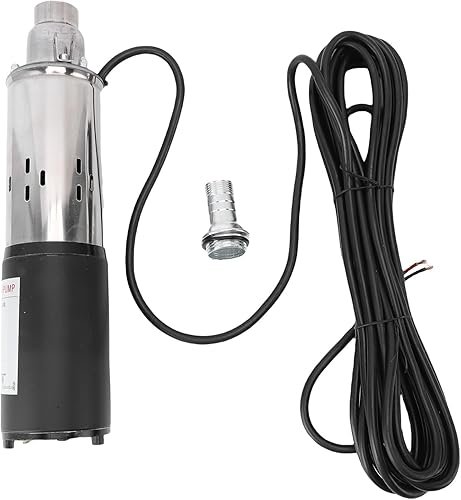
Solar Deep Well Pump, 12V 30m Lift
This is a nifty little screw pump for light-duty, off-grid jobs. We used it to water a garden from a shallow cistern. The 12V operation means you can run it directly from a battery bank or a small solar panel. It’s not for a house—don’t expect high flow. But for agricultural irrigation or livestock where you have a 300W solar setup, it’s a solid, affordable workhorse. The screw design handles some sediment better than impeller pumps.
- Very affordable entry into solar pumping
- Simple 12V DC power, easy to set up with batteries
- Screw pump design is tolerant of some sand
- Includes NPT and hose connector options
- Max 30m lift is insufficient for deep residential wells
- Flow rate of 1.2 m³/h is low for whole-house use
- Requires an MPPT controller for best solar performance (not included)
3″ 350W 24V Solar Deep Well Pump with MPPT
Now we’re talking. This is a serious solar pump for actual well use. The built-in MPPT controller is a huge plus—it squeezes every watt from your panels and protects the motor from dry running and voltage spikes. The 3-inch diameter fits most modern well casings. We like the brushless DC motor for efficiency. For an off-grid cabin or a home with a moderate-depth well and a good solar array, this is a compelling package. That price, though—verify it’s correct.
- Built-in MPPT controller is a major value add
- Brushless motor is efficient and long-lasting
- Standard 3″ casing size for residential wells
- Good power for solar applications
- Listed price seems suspiciously low—double-check before ordering
- May require a large solar panel array for full performance
- Technical installation recommended
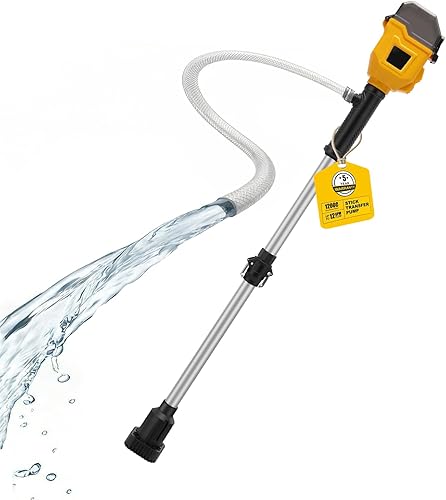
Brushless Stick Water Transfer Pump (DeWalt 20V)
This is not a deep well pump. Let’s be crystal clear. It’s a portable, battery-powered utility pump. We include it because it’s incredibly useful for well owners in a pinch. Need to drain your pressure tank for service? Pump out a flooded pit? Transfer water from a rain barrel? This thing is a champ. The brushless motor is a nice touch at this price. It’s a tool, not a water supply solution.
- Cordless convenience with common tool batteries
- Surprisingly powerful 720 GPH flow rate
- Brushless motor for longer life
- 3-speed settings for control
- Battery and charger not included
- Not designed for continuous duty or deep wells
- Max 26ft head is for surface/transfer work only
Solar Submersible Well Pump, 48V 50m Lift
This is for serious off-grid applications. A 50-meter (164 ft) lift capacity puts it in the range of many deep residential wells. The 48V DC system is more efficient than 12V for higher power applications. The brass motor and floating impeller design suggest it’s built for longer life. The “default” in the specs is a red flag—clarify all details with the seller. For a remote homestead with a proper solar setup, this could be the heart of your water system.
- High lift capacity (50m/164ft) for deep wells
- Efficient 48V DC system
- Stainless steel and brass construction
- Brushless DC motor for longevity
- Product listing has unclear/speculative details
- Requires a large, dedicated 48V solar array
- Higher upfront cost than grid-powered systems
- Warranty status is ambiguous
Deep Well Pump FAQ
- How long does a deep well submersible pump last?
- A quality pump in good water conditions can last 15 to 20 years. The leading killers are electrical surges, sand abrasion, and corrosive water. A surge protector and proper filtration can extend its life significantly.
- Can I install a submersible pump myself?
- We advise against it unless you have experience. The process involves handling hundreds of feet of heavy pipe and wire, making waterproof electrical connections underground, and ensuring proper torque arrestor placement. A mistake can mean a lost pump. Hire a pro.
- Why does my pump cycle on and off too frequently?
- This is called short cycling. The usual suspects are a waterlogged pressure tank (loss of air charge), a faulty check valve letting water drain back, or a leak in your plumbing system. Check the tank’s air pressure first—with the pump off and water drained, it should be 2 PSI below the cut-in pressure.
- What’s the difference between a 2-wire and 3-wire pump?
- A 2-wire pump has the control box (start components) built into the motor itself, down in the well. A 3-wire pump has those components in a separate control box above ground. 3-wire systems are easier and cheaper to service if the start components fail, as you don’t have to pull the pump.
- Do I need a special filter for my well water?
- That depends entirely on your water test. The pump just moves water; it doesn’t treat it. You might need a sediment filter, an iron water treatment system, or even a UV light for bacteria. Always get a full lab analysis before installing treatment.
- Can I use a solar pump as my primary home water source?
- Absolutely, but it requires careful planning. You need a battery bank or a very large solar array to handle cloudy days and high-demand mornings. Most successful off-grid homes pair a solar pump with a large storage tank and a smaller booster pump for consistent pressure.
Final Thoughts
Choosing a deep well submersible pump is all about matching the machine to the job. Get your well’s exact depth, recovery rate, and your household’s peak water demand. For 90% of homeowners on a drilled well, a standard 230V AC pump from a reputable brand, installed by a professional, is the right call. It’s boring, but it works.
If you’re off-grid, solar pumps have matured beautifully. Just size your solar array generously and invest in a quality MPPT controller. And for everyone—know your water quality. A pump is useless without clean, safe water at the tap. Once the water is up, a proper filtration system, whether it’s a simple gravity water filter system for drinking or a whole-house unit, makes all the difference. Understanding the difference between distilled vs filtered water can also help you choose the right final treatment. Do it right, and you’ll have reliable water for decades.
