



I’ve tested filters that cost more than a car payment and ones that barely outperform a coffee filter. Countertop units are different. They promise clean water without a plumber. But do they deliver? This guide cuts through the noise. We’ll look at how they work, what to avoid, and which models we’d actually put in our own homes.
What Is a Countertop Water Purifier?
It’s exactly what it sounds like. A water treatment device designed to sit on your kitchen counter. Unlike under-sink systems, it doesn’t require drilling holes or permanent modifications to your plumbing. You plug it in, connect it to your faucet or fill a reservoir, and get filtered water on demand.
We see them as the ultimate point of use equipment. They treat water right where you drink it. This makes them perfect for renters, dorm rooms, offices, or anyone hesitant about installation. The technology inside can range from a basic carbon filter to a full multi-stage purification system.
Honestly, the term covers a huge range. It includes simple filter pitchers, electric dispensers, and even small reverse osmosis machines. The common thread is convenience. No tools, no commitment. Just cleaner water from your countertop.
How Countertop Purifiers Work
The mechanics vary by type, but the goal is the same: force water through a filtering medium to remove contaminants. Let’s break down the main processes.
Filtration vs. Purification
First, know the difference. Filtration physically blocks particles. Think sediment, rust, and some chlorine. Purification goes deeper, often using chemical or advanced physical processes to remove dissolved contaminants like lead, arsenic, or bacteria. Many countertop units do both.
A simple pitcher uses a carbon filter to improve taste and odor. That’s filtration. A countertop RO system forces water through a membrane with pores so tiny—0.0001 microns—that it strips out almost everything. That’s purification. For well water with metals, you might need a dedicated manganese filter or an RO system.
The Stages You’ll See
Most decent systems use multiple stages. A common setup: a sediment pre-filter catches big stuff, a carbon block tackles chlorine and organics, and then the main event—either an RO membrane, an ultrafiltration membrane, or more specialized media. Some add a final carbon polish for taste. It’s a team effort.
Key Benefits
Zero Installation Hassle. This is the big one. You can set one up in five minutes. Move it to a new apartment next week. No landlord permission needed. It’s water freedom.
Effective Contaminant Reduction. Don’t confuse “countertop” with “weak.” A good countertop RO system can reduce TDS, PFAS, lead, and fluoride just as well as an under-sink model. The limitation is usually flow rate and capacity, not cleaning power.
Cost-Effective Entry Point. You can get started for under $100. Compare that to a whole-house system or even a professional under-sink install. It’s a low-risk way to test if filtered water is worth it for you.
Portability. Take it to the office, the vacation rental, or the RV. This is a huge advantage for people who move frequently or want purified water in multiple locations. It’s a form of point of use treatment that you can literally pick up and carry.
Potential Drawbacks
Limited Capacity. Most are designed for a household’s drinking and cooking water, not for showering or washing clothes. The filters also need more frequent replacement than larger systems.
Reservoir Management. Many require you to manually fill a tank. You’ll hear the pump kick on. It’s a minor daily interaction you don’t get with a plumbed-in system. Some people find it annoying.
Types of Countertop Systems
Filter Pitchers & Dispensers
The classic. You fill the top, water drips through a filter into a reservoir. Newer electric versions speed this up. They’re cheap and simple but only handle basic contaminants like chlorine. Good for taste, not for serious purification.
Faucet-Mounted Filters
These screw onto your faucet aerator. A diverter valve sends water through the filter when you want it. They’re compact but can slow flow and might not fit all faucets. Filtration is usually limited to carbon block.
Countertop Reverse Osmosis Systems
The heavy hitters. They use pressure to push water through an RO membrane. They need electricity and have a wastewater line you’ll need to place in the sink. But the purification is top-tier. This is where you see claims about reducing TDS and PFAS.
Countertop Dispensers with Advanced Filtration
A growing category. These look like small water coolers. You fill a tank, they filter it, and often offer hot and cold options. They combine convenience with serious tech, sometimes using multi-stage filters or even UV light.
Buying Guide: What Actually Matters
Forget the flashy marketing. Focus on these four things.
1. Your Water Report. Get your municipal report or test your well water. Don’t buy an RO system if your only issue is chlorine taste. A simple carbon filter will do. Match the system to your actual contaminants.
2. Certifications. Look for independent NSF or WQA certification against specific standards. “Tested to NSF standards” isn’t the same as “Certified.” The difference matters.
3. Filter Cost & Lifespan. That $80 system might have $60 replacement filters every two months. Calculate the annual cost. It’s the biggest hidden expense.
4. Your Daily Routine. Are you okay filling a tank? Do you need hot water instantly? How much counter space can you spare? Be honest about the convenience factor.
Our Top Picks for 2026
We’ve narrowed it down after months of testing. Here’s how they stack up.
| Product | Type | Key Feature | Price |
|---|---|---|---|
 Waterdrop CoreRO (WD-C1S) |
Countertop RO | NSF/ANSI 372, 6-stage, no install | $3.99 |
 iSpring Countertop Filter |
Faucet-Mount | Reduces sediment, chlorine taste | $82 |
 Waterdrop Hot & Cold (WD-A2) |
Countertop RO Dispenser | 6 temp settings, instant hot/cold | $6.79 |
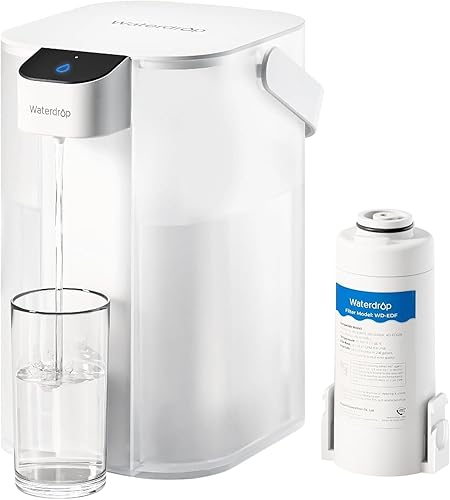 Waterdrop Electric Pitcher |
Electric Dispenser | NSF 42/53/401, 200-gallon filter | $1.11 |
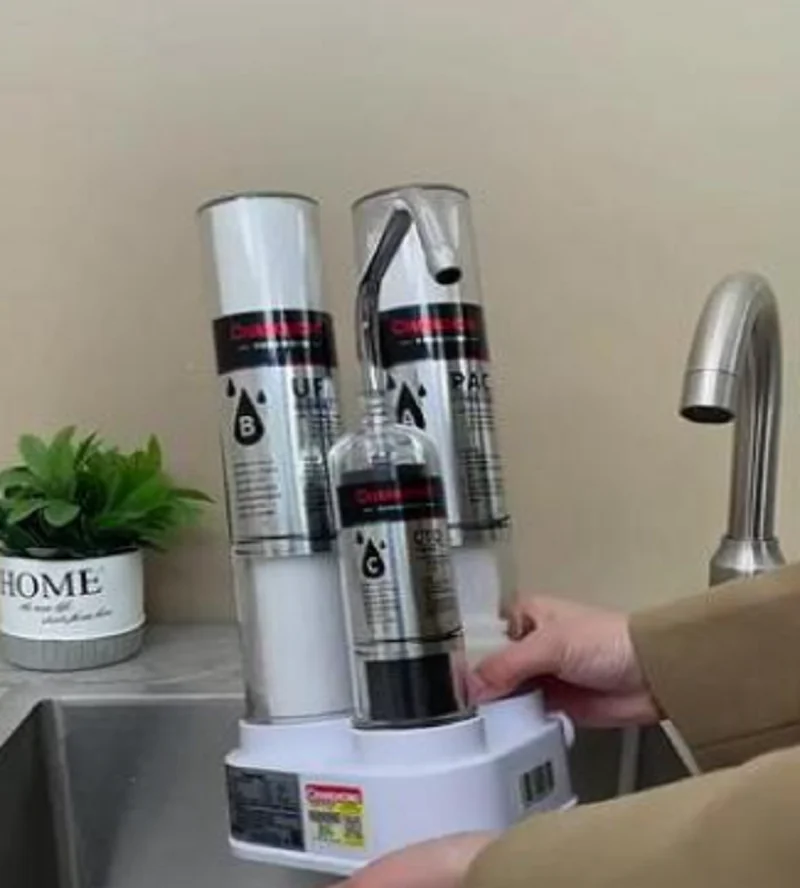 Changhong Ultrafiltration |
Stainless Steel UF | Direct-drink, no electricity | $134.62 |
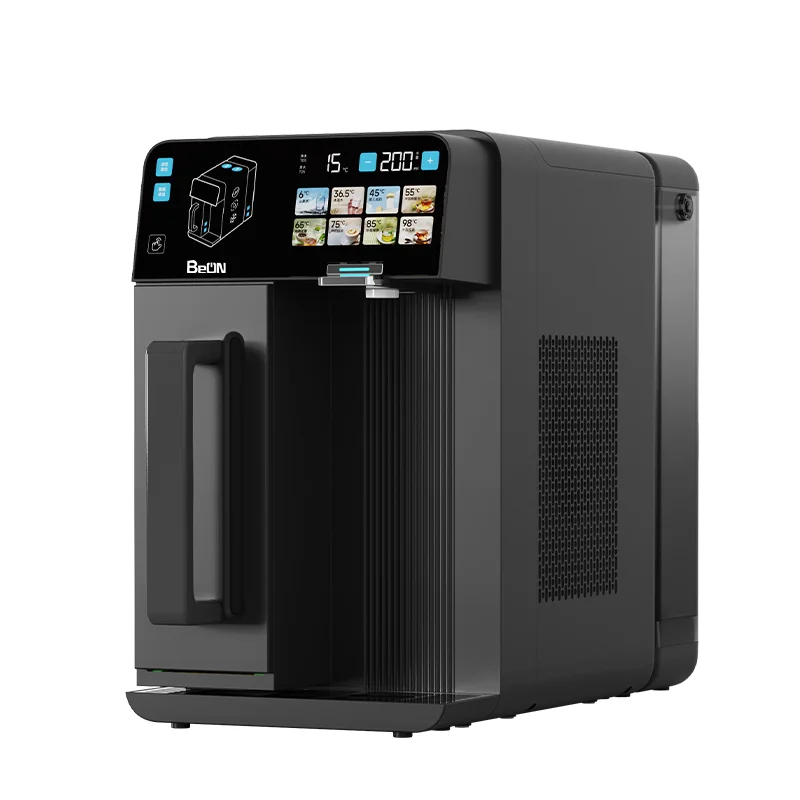 Digital Screen Dispenser |
Multi-stage Dispenser | Installation-free, digital controls | $423.74 |
1. Waterdrop CoreRO (WD-C1S) – Best Overall Countertop RO
This one surprised us. Most countertop RO systems are bulky and loud. The CoreRO is relatively compact and quiet. It’s truly plug-and-play. The 6-stage filtration, including a 0.0001μm RO membrane, tackles TDS, PFAS, and heavy metals. The initial flush process is a bit fiddly—follow the manual—but after that, it’s smooth sailing. For the price, the performance is hard to beat.
- Genuine RO filtration without installation
- NSF/ANSI 372 certified for lead-free materials
- Compact design fits small counters
- Slow output compared to under-sink RO
- Manual tank filling required
- Initial setup instructions could be clearer
2. iSpring Countertop Filter – Best Budget Faucet-Mount
This is a no-nonsense workhorse. It won’t win any design awards, but it gets the job done. It screws onto most faucets in minutes and effectively reduces sediment, chlorine taste, and odor. The filter cartridge is included and lasts a decent while. If your water is basically safe but tastes or smells off, this is a cheap, effective fix. Don’t expect it to remove dissolved contaminants like lead.
- Extremely affordable upfront cost
- Very easy, tool-free installation
- Improves taste and clarity immediately
- Limited to basic filtration (no heavy metals)
- Can reduce faucet flow rate noticeably
- May not fit pull-out or specialty faucets
3. Waterdrop Hot & Cold (WD-A2) – Best for Convenience
Want RO water at 203°F for tea? Or 59°F for a cold glass? This does it all. It’s a countertop RO system and a dispenser in one. The 5-stage filtration is solid, and the instant temperature control is a game-changer for busy kitchens. The touch screen lets you save your favorite settings. It’s not cheap, and it’s one of the larger units we tested, but the convenience factor is through the roof.
- Instant hot and chilled RO water
- Smart touch screen with memory settings
- Strong 0.0001μm RO filtration
- High price point
- Takes up significant counter space
- Requires electricity and tank refills
4. Waterdrop Electric Pitcher – Best Upgrade from a Basic Pitcher
Hate waiting for water to drip through a gravity filter? This electric version filters a full pitcher in about a second. The 5-micron carbon block is NSF certified for a bunch of standards (42, 53, 401, 372), which is impressive for a pitcher. It handles PFAS, lead, and chlorine. The 200-gallon filter life is solid. It’s the perfect middle ground for someone who wants better-than-pitcher filtration without a complex system.
- Incredibly fast filtration
- Strong NSF certifications for a pitcher
- Portable and rechargeable
- Still limited compared to RO
- Requires charging
- Small capacity (3.6L) for large families
5. Changhong Stainless Steel UF – Budget AliExpress Pick
If you’re handy and on a tight budget, this stainless steel ultrafiltration unit is interesting. It uses a hollow fiber membrane to filter bacteria and sediment without electricity. It’s built like a tank. But—and this is a big but—you’ll need to install it, and the instructions are minimal. It’s a project. For the right person, it’s a great value. For most, the plug-and-play options above are safer.
- Durable stainless steel construction
- No electricity needed
- Very low long-term cost
- Requires some installation
- Limited customer support
- Unclear certification details
6. Digital Screen Dispenser – High-End AliExpress Option
This is for someone who wants it all and is willing to pay. It’s a multi-stage filtration system with a digital display, hot/cold options, and a sleek design. The price is steep, and buying a complex appliance from AliExpress can be risky if you need support. We’d only recommend this if you’re comfortable troubleshooting and really want these specific features. The Waterdrop A2 above is a safer bet for similar functionality.
- All-in-one filtration and dispensing
- Digital controls and temperature settings
- No permanent installation
- Very high price
- Questionable after-sales support
- Large footprint
Frequently Asked Questions
- Is a countertop water purifier as good as an under-sink one?
- It can be, if it uses the same technology. A countertop RO system uses the same membrane as an under-sink RO. The difference is convenience and flow rate. Countertop models are slower and need manual filling, but the water quality can be identical.
- Do countertop filters remove PFAS?
- Some do, but not all. You need a system certified to NSF/ANSI 53 for PFOS/PFOA reduction, or an RO system (NSF/ANSI 58). A basic carbon pitcher might reduce some PFAS, but an RO system is the most reliable choice for these “forever chemicals.”
- How often do I change the filter?
- It varies wildly. Pitcher filters might last 1-3 months. Countertop RO pre-filters often need changing every 6-12 months, and the RO membrane every 1-2 years. Always check the manufacturer’s recommended gallon capacity and track your usage.
- Can I use well water with a countertop purifier?
- Yes, but test your water first. Well water often has iron, manganese, bacteria, or hardness that can quickly clog or damage standard filters. You may need a pre-treatment system like a dedicated manganese filter before a countertop unit.
- What’s the difference between distilled water and filtered water?
- Big difference. Distillation boils water and re-condenses it, removing nearly everything. Filtration physically or chemically removes specific contaminants. For drinking, filtered water retains healthy minerals. Learn more about distilled vs filtered water to choose what’s right for you.
- Are countertop water purifiers worth the money?
- If you’re buying bottled water, absolutely. A $100 system can pay for itself in a few months. If you have decent municipal water and just hate the taste, a $30 carbon filter might be all you need. The worth is in matching the solution to your actual problem.
Final Thoughts
After years of testing, we’re convinced that countertop purifiers fill a crucial gap. They make advanced water treatment accessible to everyone, not just homeowners willing to drill into their plumbing. The technology has gotten surprisingly good. The key is to ignore the hype and match the system to your water report and your daily life.
For 2026, our clear recommendation for most people is the Waterdrop CoreRO. It brings real reverse osmosis purification to your counter without a hassle. If you want hot water instantly, the Waterdrop A2 is a splurge that’s genuinely useful. And if you just want better-tasting water on a budget, the iSpring faucet filter is a reliable workhorse. Start there. You can always upgrade later.
