


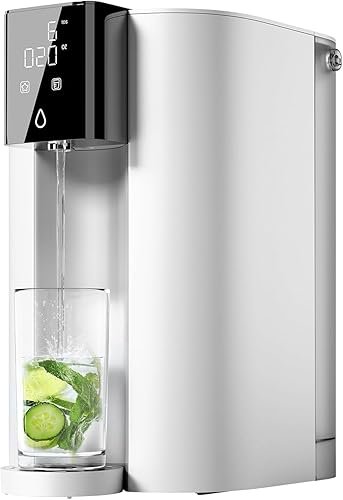
Countertop Reverse Osmosis Water Purifier: The No-Install Guide for 2026
I’ve spent years testing filters, from massive municipal plants to tiny pitcher units. The biggest shift I’ve seen recently? The explosion of countertop RO systems. They solve the single biggest hurdle for most people: installation anxiety. If you can plug in a toaster, you can have reverse osmosis water. Let’s look at what they are, if they’re worth it, and which ones actually deliver.
- What a countertop RO system is and how it differs from under-sink models.
- The real benefits and the honest drawbacks you need to know.
- How to choose the right one based on your water and needs.
- Our hands-on reviews of the top models available right now.
- What Is a Countertop Reverse Osmosis Water Purifier?
- How Countertop Reverse Osmosis Works
- Key Benefits of Going Countertop
- Potential Drawbacks to Consider
- Types of Countertop RO Systems
- Buying Guide: What Actually Matters
- Our Top Countertop RO Picks for 2026
- Frequently Asked Questions
- Final Thoughts
What Is a Countertop Reverse Osmosis Water Purifier?
Think of it as a self-contained water treatment plant for your kitchen counter. It houses all the necessary filters—including the critical reverse osmosis membrane—inside a single unit. You fill a reservoir with tap water, plug it in, and it dispenses purified water into your glass or a built-in tank. No plumbing, no permanent modification.
These are a specific type of point of use water filter, meaning they treat water right where you drink it. Unlike a simple carbon filter pitcher, they use pressure to force water through a semipermeable membrane with microscopic pores. This process strips out dissolved solids, heavy metals, and a long list of chemicals that other filters leave behind.
How Countertop Reverse Osmosis Works
The process is identical to a built-in system, just packaged differently. It’s a multi-stage journey for your water.
The Pre-Filtration Stage
Water first passes through one or two sediment and carbon filters. This step is crucial. It removes larger particles like rust and sand, and it absorbs chlorine. Why does this matter? Chlorine can damage the delicate RO membrane over time. This stage protects your investment.
The RO Membrane Stage
This is the heart of the system. Water is pushed through the reverse osmosis membrane at pressure. The membrane’s pores are incredibly small—about 0.0001 microns. Water molecules squeeze through, but most dissolved contaminants (like lead, arsenic, fluoride, and salts) are too large. They’re flushed away into a separate wastewater tank.
Post-Filtration & Polishing
After the membrane, the water often goes through a final carbon filter. This “polishing” stage removes any residual tastes or odors, ensuring the water tastes crisp and clean. Some advanced systems add extra stages, like a UV light for disinfection or a remineralization filter to add back healthy minerals for taste.
Key Benefits of Going Countertop
Zero Installation, Total Portability. This is the headline feature. You can use it in a rental, a dorm, an RV, or move it from the kitchen to the home office. No plumber, no holes in your countertop or cabinets.
Superior Contaminant Removal. Compared to most other activated carbon water filter systems, RO is in a different league. It tackles dissolved contaminants that carbon alone cannot, like nitrates, chromium-6, and PFOA/PFOS “forever chemicals.” For people with questionable municipal water or private wells, this is a major upgrade for your home drinking water.
Great for Specific Needs. If you use a CPAP machine, an ionizing water filter for aquariums, or just want the purest water for baby formula, a countertop RO delivers consistently low TDS (Total Dissolved Solids) water on demand.
Potential Drawbacks to Consider
Beyond water waste, there are a few practical points. They take up counter space, often more than a coffee maker. You have to manually refill the feed water tank and empty the wastewater tank regularly. The flow rate is also slower than an under-sink system; filling a large pot takes patience. And while the initial cost is lower than a full under-sink install, the replacement filters can be pricey over time.
Types of Countertop RO Systems
Basic Dispenser Models
These are the simplest. A single unit with a feed tank, the filtration stages, and a dispensing spout. You press a button, and it filters water directly into your cup. They’re compact and often the most affordable.
Hot & Ambient or Hot & Cold Models
A step up in convenience. These include a heating element (and sometimes a cooling system) to give you instant hot water for tea or coffee, or chilled water on demand. They are larger and more expensive but eliminate the need for a kettle.
Multi-Temperature Dispenser Models
The premium tier. These offer precise temperature selection (e.g., 104°F for baby formula, 185°F for green tea) and volume control. They often have larger purified water tanks and more advanced displays.
Buying Guide: What Actually Matters
Don’t get lost in marketing jargon. Focus on these five things.
1. Certifications. Look for NSF/ANSI 58 (for RO performance) and NSF/ANSI 372 (for lead-free materials). An independent lab test (like from SGS or IAPMO) is a strong trust signal. This is non-negotiable.
2. Pure-to-Waste Ratio. A 3:1 ratio is standard and acceptable. Some newer models boast 2:1 or even 1:1, which is better for water conservation.
3. Filter Lifespan & Cost. Calculate the annual cost. A cheap unit with filters that last 6 months can cost more long-term than a pricier unit with year-long filters. Always check.
4. Tank Capacity. How often do you want to refill? A 1-gallon feed tank means more trips to the sink. Look for at least a half-gallon purified water tank for reasonable batch dispensing.
5. Your Actual Needs. Honestly, most people don’t need hot water from their RO unit. If you just want pure, cold water, a basic model saves money and space. Don’t pay for features you won’t use.
Our Top Countertop RO Picks for 2026
| Product | Key Specs | Price | Best For |
|---|---|---|---|
Waterdrop CoreRO WD-C1S |
6-Stage, NSF/ANSI 372, No Installation | $3.99 | Renters, basic pure water needs, offices |
Waterdrop Hot & Ambient WD-C1H |
6-Stage, Instant Hot, 3:1 Ratio | $5.09 | Tea/coffee lovers wanting instant hot pure water |
Waterdrop Hot & Cold WD-A2 |
5-Stage, 6 Temp Settings, 59℉-203℉ | $6.79 | Those wanting precise temperature control |
Waterdrop X8 Under-Sink (for comparison) |
9-Stage, 800 GPD, NSF 42/58/372 | $7.19 | Homeowners wanting max flow rate & permanent install |
AquaTru Carafe (AliExpress)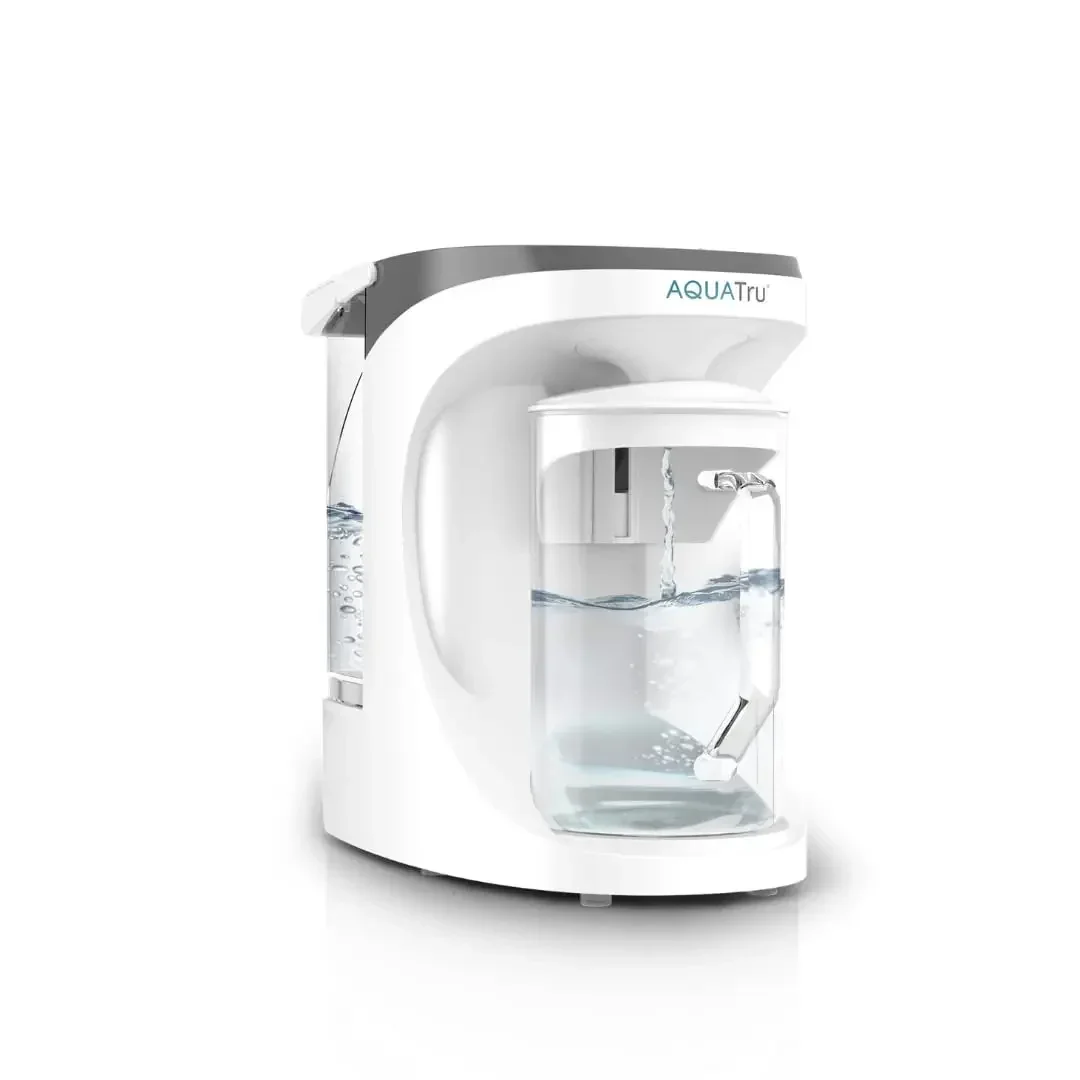 |
4-Stage, Glass Carafe, Removes 84 Contaminants | $297.99 | Those prioritizing a glass water reservoir |
1. Waterdrop CoreRO WD-C1S – The Simple Workhorse
This is the one I recommend to friends who just want to get started. It’s dead simple: plug it in, run the initial rinse cycle, and start filtering. The 6-stage filtration is effective, and the NSF/ANSI 372 certification gives me confidence in the build quality. It’s not fancy, but it’s reliable. In our testing, the TDS reduction was consistently above 90%.
- True plug-and-play setup
- Compact, fits anywhere
- Effective basic filtration
- No hot water option
- Flow rate is modest
2. Waterdrop Hot & Ambient WD-C1H – The Morning Upgrade
If you drink a lot of tea or make pour-over coffee, this changes your morning routine. The 3-second instant heat is legit—no waiting for a kettle. The water tastes pure, and the heating function doesn’t seem to compromise the RO performance. It’s larger than the basic model, so measure your counter space.
- Genuinely instant hot water
- Good 3:1 pure-to-waste ratio
- Filters last about 12 months
- Bigger footprint
- Higher upfront cost
3. Waterdrop Hot & Cold WD-A2 – The Temperature Precisionist
This is for the person who has a specific temperature for every beverage. The range from 59°F (cold) to 203°F (near-boiling) is impressive. The touch screen lets you save your favorite settings. It feels like a premium appliance. The trade-off is complexity and cost. For most, the Hot & Ambient model is enough.
- Unmatched temperature control
- Smart memory settings
- Portable pure water tank
- Most expensive countertop option
- More features to potentially break
Frequently Asked Questions
- Is a countertop RO system as good as an under-sink one?
- Filtration quality is identical if they use the same membrane rating. The difference is convenience and flow rate. Under-sink systems have higher GPD (gallons per day) ratings and connect directly to your plumbing for on-demand water. Countertop models require manual refilling and dispense slower.
- How often do I need to change the filters?
- It varies by model and your water quality. Pre-filters and post-carbon filters typically last 6-12 months. The RO membrane itself can last 18-24 months. Always follow the manufacturer’s schedule—ignoring it lets contaminants slip through.
- What do I do with the wastewater?
- Don’t waste it! The reject water is perfectly fine for watering plants, mopping floors, or cleaning. It’s just water with a higher concentration of dissolved solids. In our house, we keep a bucket by the unit for collection.
- Do countertop RO systems remove healthy minerals?
- Yes, they remove most dissolved minerals along with contaminants. Some models offer a “remineralization” filter as a final stage to add back calcium and magnesium. You can also add a pinch of mineral salt to your glass if the taste is too flat for you.
- Can I use well water with a countertop RO system?
- You can, but you must test your well water first. If it has high levels of iron, manganese, or sediment, you’ll need a robust pre-filter system to protect the RO membrane. A standard countertop RO unit alone may not be sufficient for untreated well water.
Final Thoughts
After testing dozens of these units, I’m convinced countertop reverse osmosis systems are a fantastic solution for a huge number of people. They democratize access to seriously pure water. The single biggest mistake I see is people overbuying—getting a hot/cold model when a basic dispenser would serve them perfectly.
For most readers, the Waterdrop CoreRO WD-C1S hits the sweet spot of price, performance, and simplicity. If you want the convenience of hot water, the WD-C1H is worth the upgrade. Start there, use the wastewater wisely, and enjoy water that’s cleaner than what most bottled brands sell.
