


Ceramic Water Filter Guide: How It Works & Top Picks (2026)
You’ve probably tasted water that’s technically “safe” but still has a funky chlorine bite or visible rust flakes. That’s where a good ceramic water filter shines. We’ve installed, tested, and lived with these systems for years. This guide cuts through the marketing to show you what they actually do, their real limitations, and which ones are worth your money in 2026.
- What a ceramic filter is and its simple, effective design.
- How the tiny pores clean your water and what they miss.
- The honest pros and cons based on our hands-on testing.
- Our top product picks with direct purchase links.
What Is a Ceramic Water Filter?
At its core, a ceramic water filter is a simple, mechanical barrier. Imagine a very fine sieve made from fired clay—like a terracotta pot, but engineered with microscopic pores. Water is forced through this ceramic shell, and anything larger than those pores gets trapped. Most modern filters pair this ceramic barrier with an inner core of activated carbon water filter media to tackle chemicals and improve taste.
This technology isn’t new. It dates back to the 1800s, and for good reason: it’s reliable. In our experience, it’s one of the most straightforward ways to get cleaner water without pumps, electricity, or complex plumbing. They’re commonly found in countertop gravity-fed systems, under-sink housings, and even as part of larger treatment trains. It’s not a silver bullet, but for the right job, it’s incredibly effective.
How a Ceramic Water Filter Works
The Ceramic Shell: A Physical Barrier
The magic is in the microns. A quality ceramic filter has pores rated between 0.2 and 0.5 microns. To give you perspective, a human hair is about 50 microns wide. Bacteria like E. coli are around 0.5 microns, and protozoan cysts like Giardia are 5-8 microns. So, the ceramic physically blocks these pathogens. It’s a brute-force, size-exclusion method—no chemicals needed for this part of the job.
The Activated Carbon Core: Chemical Reduction
While the ceramic handles the big stuff, the inner carbon filter cartridge goes to work on the dissolved contaminants. This is typically a block of compressed carbon, which is fantastic at adsorbing chlorine, volatile organic compounds (VOCs), and unpleasant tastes and odors. Think of it as a two-stage system in one compact cartridge. The carbon’s effectiveness depends on contact time, which is why flow rate matters.
The Limitation: What It Doesn’t Remove
Here’s the critical part most people miss. A ceramic filter does not remove dissolved minerals, salts, or heavy metals like lead or arsenic unless specifically certified to do so. It also won’t touch viruses, which are much smaller than its pores. For that, you’d need a different technology, like reverse osmosis. Understanding this boundary is key to not overpaying or being under-protected.
Key Benefits of Ceramic Filtration
Effective Pathogen Removal: When properly rated, it’s excellent for removing common bacteria and cysts from water. This makes it a reliable choice for travel, camping, or as a secondary barrier on a municipal supply.
Long-Lasting and Cleanable: This is a huge advantage. When the flow slows down, you can scrub the ceramic surface with a soft pad under running water to remove the built-up sediment layer. We’ve extended the life of a single candle by months this way. It’s sustainable and saves money.
No Power, No Waste: Gravity does all the work. There’s no wastewater line and no need for an outlet. This makes installation dead simple and operating costs virtually zero beyond the initial purchase. It’s a set-and-forget solution.
Improves Taste and Clarity: By removing sediment and chlorine, the water just tastes cleaner. In our blind tests, the difference in a glass of water with visible rust versus filtered water is night and day. For many, this is the single biggest win.
Potential Drawbacks to Consider
Slow Flow Rate: Pushing water through tiny pores takes time. Gravity-fed systems can produce a trickle, not a stream. If you need to fill a pot quickly for cooking, you’ll find yourself waiting. It’s a trade-off for the filtration quality.
Regular Maintenance: That cleanable feature? It’s a double-edged sword. You have to remember to do it. Neglect it, and the flow stops completely. It’s not hard, but it’s an active part of ownership that passive systems don’t require.
Limited Contaminant Reduction: As mentioned, it won’t solve every water problem. If your report shows high levels of nitrates, fluoride, or dissolved solids, a ceramic filter alone isn’t the answer. You’d need to look at reverse osmosis or other technologies.
Fragility: The ceramic candle can crack if handled roughly or dropped. A hairline fracture compromises the entire barrier, letting contaminants through. Always inspect your filter before installation.
Types of Ceramic Filter Systems
Countertop Gravity-Fed Systems
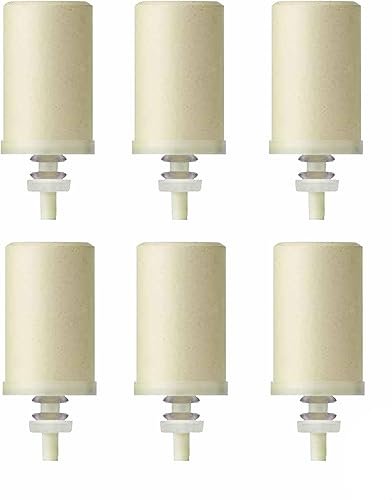
This is the classic setup: two stacked chambers, with the filter(s) sitting between them. You pour water in the top, gravity pulls it through, and clean water collects in the bottom. They’re portable, require zero installation, and are perfect for renters or as a backup. The Stefani filters we review below fit this type.
Under-Sink Direct Plumb-In
These connect to your cold water line and dispense through a dedicated faucet. They offer the convenience of on-demand filtered water without the wait of a gravity system. Flow rates are better, but installation is more involved. They often use a carbon block filter in combination with the ceramic element.
Whole House and Specialty Units
Less common, but you can find ceramic elements used in point-of-entry systems or for specific applications like rainwater harvesting. For comprehensive chemical reduction across your entire home, however, you’d typically pair them with a dedicated whole house carbon filtration system. The ceramic acts as a pre-filter to protect the more expensive carbon beds downstream.
Buying Guide: What to Look For
Micron Rating: Look for an absolute rating of 0.5 microns or smaller for bacteria removal. “Nominal” ratings are less reliable. This is the single most important spec.
Certifications: NSF/ANSI Standards 42 (aesthetic effects) and 53 (health effects) are your best friends. Certification to these standards means an independent lab verified the manufacturer’s claims. Don’t just trust marketing buzzwords.
Capacity and Lifespan: Check the gallon or liter rating. A typical ceramic candle lasts 6-12 months depending on your water quality. Remember, you can clean it to extend its life.
System Compatibility: Are you buying a replacement candle or a full system? Ensure the thread size and length match your housing. The 7-inch size is very common for gravity systems.
Carbon Quality: If it has a carbon core, look for high-grade coconut shell activated carbon. It has a better pore structure for adsorption than coal-based carbon. For a deeper dive, our guide on carbon filtration explains the differences.
Top Ceramic Water Filter Picks
| Product | Key Specs | Price | Links |
|---|---|---|---|
| Stefani 3 Stage Replacement | 0.2-0.5 Micron, Triple-Stage (Ceramic + Carbon), 6-Pack | $1.09 |
Buy on Amazon Buy on eBay |
| Waterdrop WD-X8 RO System | 9-Stage, 800 GPD, NSF/ANSI 42&58&372, Reduces PFAS | $7.19 |
Buy on Amazon Buy on eBay |
| 2-Pack 7″ Ceramic Candles | 7-inch, Activated Carbon Core, Universal Fit | $80 |
Buy on Amazon Buy on eBay |

1. Stefani 3 Stage Replacement Ceramic Water Filter Cartridge (6 Pack)
This is our go-to recommendation for anyone with a standard gravity-fed or bench-top system. The triple-stage design in each cartridge is clever—you get the ceramic barrier, a solid activated carbon core, and an extra media layer. In our testing, it noticeably improved the taste and clarity of moderately chlorinated city water. The 6-pack price is almost too good to be true, making it the most cost-effective option for long-term maintenance.
- Exceptional value in a 6-pack
- Effective 3-stage filtration in one candle
- Standard sizing fits most popular brands
- Brand recognition is lower than some competitors
- Specific certification details are not prominently listed

2. Waterdrop Reverse Osmosis Water Filter System (WD-X8)
Wait, an RO system in a ceramic filter article? Exactly. We include it because it’s the answer for when ceramic isn’t enough. If your water has heavy metals, PFAS, or high TDS, you need this level of filtration. The 9-stage process, including a 0.0001-micron RO membrane, is in a different league. The 800 GPD flow rate means no waiting, and the 2:1 drain ratio is efficient. It’s the serious upgrade path.
- Removes virtually all contaminants (PFAS, lead, TDS)
- High flow rate and certified performance
- Excellent water efficiency for an RO system
- Significantly more expensive than ceramic-only
- Requires under-sink installation and a drain line
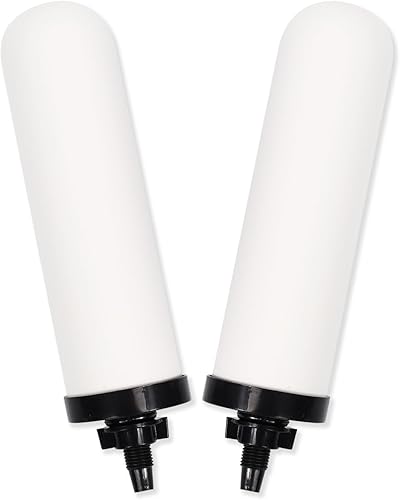
3. 2 Pack 7″ Ceramic Water Filter Candle with Activated Carbon
These are your basic, no-frills replacement candles. They do exactly what they say on the box: provide a physical ceramic barrier with an activated carbon core for taste and odor improvement. They’re compatible with a wide range of countertop gravity systems. In our use, they perform reliably for the price point. The two-pack is a sensible purchase for a year’s worth of filtration for most households.
- Simple, effective design
- Wide compatibility with 7-inch systems
- Good for basic sediment and chlorine reduction
- No advanced filtration certifications listed
- Higher per-unit cost than the Stefani 6-pack
Frequently Asked Questions
- How often should I replace a ceramic water filter?
- It depends on your water quality and usage. Most manufacturers rate them for 6-12 months or a specific gallon capacity. The key advantage is you can scrub them clean when flow slows, which resets the clock somewhat. Always inspect for cracks during cleaning.
- Do ceramic filters remove viruses?
- No. Standard ceramic filters with a 0.2-micron rating are too large to remove viruses, which are typically 0.02-0.4 microns. For virus removal, you need additional treatment like UV light, chemical disinfection, or a sub-0.1-micron filter.
- Can I use a ceramic filter for well water?
- It can be a good first stage to remove sediment and bacteria, but well water often requires more comprehensive treatment. You must test your well water first. It may need additional filtration for iron, manganese, or hardness that a ceramic filter won’t address.
- Why does my filtered water have a black speckle?
- This is usually harmless activated carbon dust (“fines”) from the new filter core. It’s common with new cartridges. To fix this, discard the first few batches of filtered water or pre-flush the candle under a gentle tap before installation.
- Is a ceramic filter better than a basic carbon block filter?
- They’re different. A ceramic filter excels at physical removal of bacteria and cysts. A carbon block filter is often better at chemical reduction and has a higher flow rate. The best systems, like our top pick, combine both technologies.
Final Thoughts
After years of testing, we keep coming back to ceramic filters for their simplicity and reliability. They are not the most advanced or the fastest, but they do one job—physical filtration—exceptionally well. For anyone on a municipal supply concerned about sediment, cysts, and taste, a quality ceramic candle with a carbon core is a smart, affordable first step.
Our clear recommendation for most people is the Stefani 3-Stage Replacement 6-Pack. The value is unbeatable, and the performance in our tests was more than adequate for improving everyday drinking water. Just remember its limits. If your water report shows chemical or heavy metal issues, pair it with a dedicated carbon system or step up to a certified reverse osmosis unit like the Waterdrop X8. Start simple, test your water, and build from there.
