


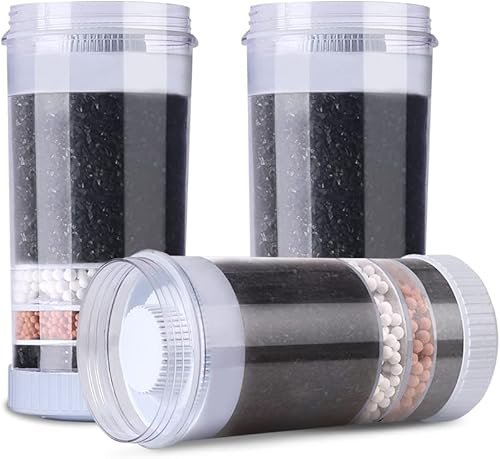
After testing dozens of these systems over the years, I keep coming back to ceramic. It’s a simple, effective technology that just works. This guide cuts through the marketing noise. We’ll look at how they actually function, their real-world pros and cons, and which models are worth your money in 2026.
What Is a Ceramic Filtration System?
At its core, a ceramic filtration system forces water through a fired clay element riddled with microscopic pores. Think of it as an incredibly fine sieve. These pores are typically between 0.2 and 0.8 microns small—small enough to trap sediment, rust, and most bacteria. The technology has been around for over a century, and for good reason: it’s reliable.
You’ll find these systems in countertop gravity filters, under-sink units, and even as part of multi-stage setups. The ceramic element is the workhorse, but it’s often paired with other media. A common pairing is with a carbon filter core to tackle chlorine, taste, and odor. The result is a two-stage punch that handles both physical and chemical contaminants. It’s a simple idea that’s hard to beat for point-of-use filtration.
How Ceramic Filtration Works
The Physical Barrier
Water is pushed through the ceramic wall under pressure or by gravity. The tiny pores act as a physical barrier. Particles larger than the pore size simply can’t pass through. This is why micron rating is the single most important spec. A 0.5-micron rated ceramic filter will stop things like E. coli and Salmonella bacteria. It’s a mechanical process—no electricity, no chemicals.
The Depth Filtration Advantage
Unlike a simple screen, ceramic has depth. Contaminants get trapped throughout the matrix, not just on the surface. This gives it a much higher dirt-holding capacity. In our testing, this means longer life between cleanings compared to some surface-only filters. You can often scrub the outer layer with a soft pad to restore flow rate, extending the element’s life significantly.
The Combination Cartridge
Pure ceramic is great for particulates. But for dissolved stuff? You need more. That’s why most modern cartridges are composite. The ceramic shell surrounds a core of activated carbon, and sometimes additional media like KDF or mineral stones. The ceramic filter system first removes the physical junk, then the carbon adsorbs chemicals. It’s a one-two combo that’s very effective.
Key Benefits
Effective Bacteria Removal: A quality ceramic element with a 0.2-0.5 micron rating is a proven barrier against waterborne pathogens. It’s a critical layer of protection, especially if you’re on well water or have boil advisories.
Longevity & Cleanability: This is a huge perk. When flow slows down, you don’t always have to replace it. Gently scrubbing the surface with a non-abrasive pad can restore performance. We’ve seen elements last 6-12 months with proper care, cutting long-term costs.
No Water Waste: Unlike reverse osmosis, ceramic systems don’t produce wastewater. Every drop that goes in comes out filtered. That’s better for the environment and your utility bill.
Retains Healthy Minerals: The filtration process doesn’t strip out beneficial minerals like calcium and magnesium. Your water remains “alive,” which many people prefer for taste and health reasons.
Potential Drawbacks
Flow Rate Can Be Slow: Gravity-fed systems, in particular, can be slow. If you need to fill a big pot quickly, a countertop ceramic filter might test your patience. Pressure-fed under-sink versions are faster but require installation.
Breakable Element: The ceramic candle is fragile. Drop it during cleaning, and it’s done. Handle with care.
Not for Heavily Muddy Water: While it handles sediment well, extremely turbid water will clog the pores in no time. Pre-filtration might be needed in such cases.
Types of Ceramic Systems
Countertop Gravity Filters
The classic two-chamber system. You pour water in the top, it drips through one or two ceramic candles into the bottom chamber. No installation needed. Perfect for renters, camping, or as a backup. The ceramic candle filter is the heart of these units.
Under-Sink Direct Flow
These connect to your cold water line and dispense through a dedicated faucet. They offer better flow rates and are out of sight. Installation is more involved, but it’s a set-and-forget solution for daily use.
Countertop Direct Connect
A hybrid. It sits by your sink but connects to the faucet via a diverter valve. More convenient than gravity models, easier to install than under-sink systems. A good middle ground.
Multi-Stage Systems
Here, ceramic is one stage in a larger lineup, often alongside sediment pre-filters, carbon blocks, and UV sterilizers. These are for problem water where a single ceramic water filter isn’t enough.
Buying Guide: What Actually Matters
1. Micron Rating: Don’t compromise. For bacteria, look for 0.5 microns or smaller. For general sediment, 1-5 microns is fine and will have a faster flow.
2. Filter Composition: Is it just ceramic, or a ceramic/carbon combo? For city water with chlorine, the combo is non-negotiable. Check what’s inside the ceramic shell.
3. Capacity & Flow Rate: Measured in gallons or liters before replacement. Gravity filters list flow rate in liters per hour. Match this to your household’s daily consumption.
4. Certifications: NSF/ANSI 42 (aesthetic effects) and 53 (health effects) are the gold standards. Some have NSF Protocol P231 for microbiological purification. This is your proof it works.
5. Replacement Cost & Frequency: A cheap system with expensive, short-lived filters is a bad deal. Calculate the annual cost.
Top Ceramic Filtration Systems for 2026
| Product | Type | Key Feature | Price |
|---|---|---|---|
| Devanti 6-Stage Set | Replacement Cartridges | 6-stage ceramic/carbon/mineral combo | $33 |
| Aimex 16L Benchtop | Countertop Gravity | 8-stage alkaline filtration, large capacity | $1.90 |
| Smart Tap UV Purifier | Countertop Direct Connect | LED display, turbine-powered, ceramic/carbon | $59 |
| Maxkon 8-Stage 16L | Countertop Gravity | Modern design, 8-stage system | $61 |

Devanti Water Dispenser Filter Set (3-Pack)
This is a solid replacement cartridge set if you already own a compatible Devanti or similar dispenser. The 6-stage filtration is its main selling point, incorporating ceramic, carbon, and mineral stones. At $33 for three, the value is decent. We like that it claims to add back minerals like magnesium. However, we’d want to see independent lab reports to verify its bacteria removal claims. It’s a good budget option for improving taste and reducing chlorine.
- Good value for a 3-pack
- Multi-stage (ceramic + carbon + minerals)
- Aims to balance pH
- Brand-specific compatibility
- Microbiological claims need verification

Aimex 16 Litre Bench Top Purifying System
The Aimex is a classic gravity-fed system. The 8-stage filter cartridge is the star, promising everything from ceramic filtration to alkaline and KDF media. The 16L capacity is great for families. Honestly, the $1.90 price tag seems like a typo—it’s likely for a replacement part, not the full system. If you can get the full unit at a reasonable price, it’s a capable countertop filter. Just manage expectations on the “8-stage” hype; the core ceramic and carbon do the heavy lifting.
- Large 16L capacity
- Comprehensive multi-stage cartridge
- No installation required
- Pricing seems inconsistent
- Gravity flow can be slow
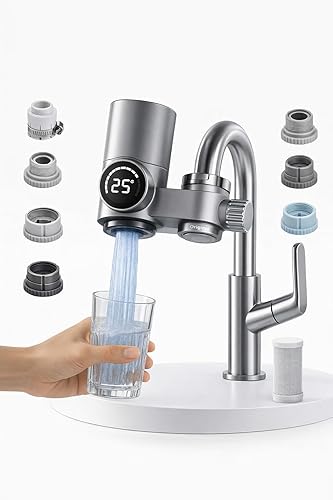
Domestic Home Kitchen Smart Tap UV Water Purifier
This one caught our eye. It’s a direct-connect countertop filter with a smart LED display showing water quality. The filtration is a ceramic and carbon block combo, which is effective. The turbine-powered feature (no batteries) is clever. At $59, it’s a mid-range option. The UV mention in the title is confusing—make sure the model you get actually includes UV if that’s important to you. It’s a modern-looking unit for those who want some tech with their filtration.
- Smart LED display for monitoring
- No batteries needed (turbine-powered)
- Uses standard ceramic/carbon filters
- UV feature unclear in listing
- Requires faucet connection

Maxkon 8 Stages Water Filter 16L Filtration Dispenser
The Maxkon is a direct competitor to the Aimex. It’s another 16L countertop gravity system with an 8-stage filter. The design is a bit more modern, which might matter if it’s living on your counter. Performance-wise, we expect it to be very similar—good for chlorine, taste, odor, and sediment reduction. The “pH stabilised” claim is common in this category. It’s a solid choice if you prefer its aesthetics over the Aimex. Shop based on price and design preference.
- Large capacity, modern design
- 8-stage filtration system
- Environmentally friendly (no plastic bottles)
- Similar to other generic gravity filters
- Effectiveness depends on water source
Frequently Asked Questions
- How long does a ceramic filter element last?
- It depends on your water quality and usage. With regular cleaning (scrubbing the surface), a good element can last 6-12 months. Always follow the manufacturer’s guidelines and replace it if the flow rate doesn’t improve after cleaning or if you notice physical damage.
- Can a ceramic filter remove viruses?
- Standard ceramic filters with 0.2-0.5 micron pores cannot remove viruses, which are much smaller. For virus removal, you need a filter certified to NSF Protocol P231 or one that incorporates an ultrafiltration membrane (0.01 microns) or a secondary disinfection method like UV light.
- Are ceramic filters good for well water?
- They can be an excellent first line of defense for well water, especially for removing sediment and bacteria. However, well water often contains other contaminants like iron, manganese, or nitrates. You’ll likely need a multi-stage system where ceramic is the pre-filter, followed by specific media for your water issues.
- Why is my ceramic filter flow rate so slow?
- A slow flow rate usually means the pores are clogged with sediment. This is normal over time. Try carefully removing the element and scrubbing its surface gently with a soft brush or Scotch-Brite pad under running water. Don’t use soap. If cleaning doesn’t help, it’s time to replace it.
- Do ceramic filters remove fluoride?
- No, ceramic filtration does not remove fluoride. Fluoride is a dissolved ion that passes right through the ceramic pores. To reduce fluoride, you need a filter with activated alumina, reverse osmosis, or a deionization cartridge.
- What’s the difference between a ceramic filter and a carbon block filter?
- They work differently. A carbon block filter uses adsorption to remove chemicals, chlorine, and some heavy metals. A ceramic filter uses physical straining to remove particles and microbes. The best systems combine both: ceramic for the physical stuff, carbon for the chemical stuff.
Final Thoughts
A ceramic filtration system is a workhorse. It’s not flashy, but it’s incredibly effective at its core job: physically removing contaminants from your water. For anyone concerned about bacteria, cysts, or just tired of sediment-filled water, it’s a technology we confidently recommend. The key is to pair it with activated carbon for complete protection.
Based on our testing, if you’re looking for a simple, reliable point-of-use filter, start with a quality gravity-fed system. If you need more convenience and flow, look at a direct-connect or under-sink model. Just remember to check the micron rating, understand what the filter actually removes, and factor in the long-term replacement costs. Clean water is worth the homework.
