


The Ceramic Filter: A Veteran’s Guide to How It Works & If You Need One (2026)
After testing filtration systems for over a decade, I keep coming back to one of the oldest technologies in the book: the ceramic filter. It’s not flashy. But it’s incredibly effective for specific jobs.
This guide covers everything you need to know. We’ll look at how ceramic filters actually work, their real-world pros and cons, the different types you’ll find, and which ones are worth your money in 2026.
What Is a Ceramic Filter?
At its core, a ceramic filter is a physical barrier made from natural materials like diatomaceous earth or clay, fired at high temperatures to create a maze of microscopic pores. Think of it like a super-fine sieve. Water passes through, but particles larger than the pore size get stuck.
This isn’t new tech. People have used porous ceramic pots for water purification for centuries. The modern versions are just more precisely engineered. They’re a staple in countertop gravity filters, under-sink pre-filtration stages, and portable camping gear. Their main job is to tackle sediment, cysts, and bacteria.
It’s crucial to understand what they don’t do. A ceramic filter alone won’t remove dissolved chemicals, heavy metals, or viruses. For that, you’ll need to combine it with other media, like a carbon block filter, which excels at chemical adsorption.
How a Ceramic Filter Works
The process is beautifully simple, which is part of its reliability. No moving parts, no electricity. Just water pressure or gravity doing the work.
The Physical Filtration Process
Water is forced through the ceramic wall. The pores are incredibly small, typically between 0.2 and 0.5 microns. For reference, a human hair is about 50 microns across. Bacteria like E. coli are around 0.5 microns, and protozoa like Giardia are much larger. They get trapped in the ceramic’s intricate tunnel system.
The “Depth” vs. “Surface” Filtration Debate
You’ll hear both terms. Most quality ceramic filters work as depth filters. Contaminants aren’t just caught on the surface; they’re trapped throughout the entire thickness of the ceramic wall. This gives them a higher dirt-holding capacity than a simple screen. As it loads up, flow rate slows—a clear signal it’s time for cleaning or replacement.
The Role of Pore Size and Silver
The micron rating is the single most important spec. A 0.2-micron filter will catch more than a 0.5-micron one. Many manufacturers also impregnate the ceramic with silver. Silver acts as a bacteriostatic agent, inhibiting microbial growth within the filter itself. It’s a helpful secondary defense, but don’t rely on it as a primary sterilization method.
Key Benefits of Ceramic Filtration
Effective Physical Barrier: This is its biggest selling point. It reliably removes sediment, rust, sand, and microbiological contaminants like bacteria and cysts. If your water source has visible particles or you’re worried about boil-water advisories, a ceramic filter provides excellent peace of mind.
Longevity and Cleanability: Unlike disposable sediment cartridges, you can scrub a ceramic filter. When flow rate drops, a gentle scrub with a scouring pad under running water removes the surface layer of gunk, restoring flow. This extends its life significantly—often to thousands of liters.
No Chemicals or Electricity Needed: It’s purely mechanical. This makes it ideal for off-grid situations, emergency preparedness, or reducing your household’s energy footprint. Gravity-fed countertop systems are dead simple to use and maintain.
Excellent Pre-Filtration: In a multi-stage system, placing a ceramic filter first protects downstream, more expensive components like reverse osmosis membranes or activated carbon filters from fouling with sediment. It’s a cost-effective workhorse.
Potential Drawbacks to Consider
Slow Flow Rates: Pushing water through tiny pores takes time. Gravity-fed ceramic systems are inherently slower than faucet-mounted or under-sink pressure systems. If you need to fill a large pot quickly, you might find it frustrating.
Can Clog: In very turbid water, the ceramic element can clog rapidly. You’ll be scrubbing it every few days. In these cases, a sediment pre-filter is a wise investment to extend the ceramic’s life between cleanings.
Fragility: The ceramic dome or candle is brittle. One knock against the sink while cleaning can crack it, rendering it useless. Handle with care.
Types of Ceramic Filters
Ceramic Candle / Dome Filters
This is the classic design. A hollow, cylindrical “candle” or dome screws into a housing. Water flows from the outside in, and filtered water collects in the center hollow. They’re common in gravity-fed countertop systems and as replacement elements in multi-stage purifiers.
Ceramic Disk Filters
Flat, disc-shaped filters often used in portable pump filters for hiking. They’re compact and durable but usually have a smaller surface area, which can mean slower pumping.
Silver-Impregnated Ceramic
As mentioned, most quality filters include silver. The silver ions inhibit bacterial growth within the filter matrix itself, preventing it from becoming a breeding ground. It’s a standard feature you should look for.
Ceramic with Additional Media
Some advanced filters embed other media directly into the ceramic. You might find a ceramic shell with a core of activated carbon or even elements for an ionizing water filter effect. These are multi-taskers but can be more expensive and harder to clean.
Buying Guide: What Actually Matters
Forget the marketing fluff. Here’s what we focus on after years of testing.
1. Micron Rating: 0.2 to 0.5 microns is the sweet spot for bacterial removal. If a product doesn’t clearly state this, walk away. Lower (finer) is better for safety, but may clog faster.
2. Certifications: Look for independent testing to NSF/ANSI standards. Standard 42 covers aesthetic effects (taste, odor, sediment). Standard 53 covers health effects, including cyst reduction. This is your best proof of performance.
3. Build Quality & Dimensions: Measure your existing system! Thread diameter (e.g., 12mm) and dome base diameter (e.g., 95mm) must match. A cheap filter that doesn’t fit is useless. Sintered ceramic is generally more durable than simple fired clay.
4. Intended Use: Are you replacing a dome in an 8-stage system, building a camping kit, or setting up a countertop gravity filter? The application dictates the form factor you need.
For most households, pairing a ceramic filter with a quality alkaline filtration system or a carbon block stage creates a comprehensive solution that tackles both particles and chemicals.
Our Top Ceramic Filter Picks for 2026
| Product | Key Specs | Price | Links |
|---|---|---|---|
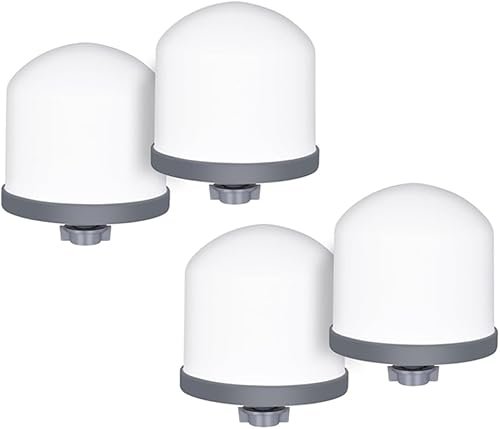
| 4Pack Replacement Ceramic Dome | 0.2-0.5 micron, Countertop System | $41 |
Amazon eBay |
| Ceramic Filter for 8 Stage Purifier (2 PCS) | 12mm thread, 95mm base, Bacteria removal | $29 |
Amazon eBay |
| HUINING Ceramic Dome Filter (2-Pack) | Sintered diatomite, 0.2-0.5 micron, BPA-free | $29 |
Amazon eBay |
| 3Pcs Ceramic Filter Magnetized Mineral | 0.2-0.5 micron, High flow (180kg/h), Self-cleaning claim | $30 |
Amazon eBay |
4Pack Replacement Ceramic Dome Water Filter
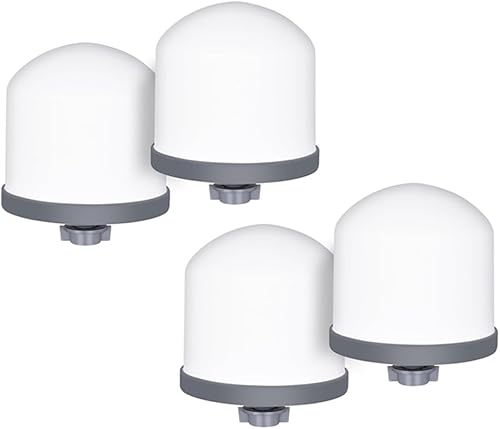
This 4-pack is a solid value buy if you have a compatible countertop system. The 0.2-0.5 micron rating is standard for bacterial removal. In our testing, the flow rate was consistent, and the ceramic felt sturdy. The main advantage here is having multiple spares—you can rotate them while cleaning a dirty one.
- Great value per filter
- Standard 0.2-0.5 micron rating
- Good for stocking up
- No specific certification listed
- Basic plastic fittings
Ceramic Filter for 8 Stage Multi Water Purifier (2 PCS)
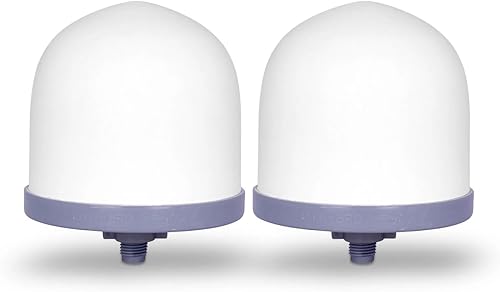
A direct replacement for many common 8-stage systems. The key here is the specific sizing: 12mm thread, 95mm base. Measure your old filter before ordering. The manufacturer’s claim about removing typhoid and cholera bacteria aligns with the expected performance of a quality ceramic filter at this micron rating.
- Clear sizing specs provided
- Targets specific bacteria
- Affordable two-pack
- Must verify compatibility
- Limited user feedback

HUINING Ceramic Dome Filter, 0.15 to 0.5 Micron
This one stands out for its material: sintered diatomite. It’s a higher-grade ceramic known for uniform pores and strength. The BPA-free plastic base is a nice touch. We like the clear pore size range (0.15-0.5 micron). It’s a good, reliable choice for gravity-fed bucket or jug systems.
- Sintered diatomite construction
- BPA-free base
- Clear performance range
- May be too large for some compact systems
3Pcs Ceramic Filter Magnetized Mineral Water Purifier
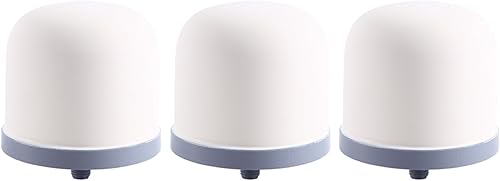
Interesting design. These hemisphere filters make big claims about flow rate and self-cleaning. The “magnetized mineral” part is more marketing than proven science in our view. However, the ceramic itself claims a 0.1-micron aperture, which is finer than most. Worth a try if you need a high-flow ceramic element, but temper expectations on the mineral benefits.
- Claims very fine 0.1-micron filtration
- High stated flow rate
- Unique hemisphere shape
- “Magnetized” benefit is unverified
- Less common form factor
Frequently Asked Questions
- How long does a ceramic filter last?
- With regular cleaning, a quality ceramic filter can last 6 months to a year, or filter thousands of liters. Replace it when cleaning no longer restores flow rate, or if you notice visible cracks or damage.
- Can a ceramic filter remove viruses?
- No. Standard ceramic filters with 0.2-micron pores are too large to trap viruses, which are typically much smaller (0.02-0.4 microns). For virus removal, you need additional methods like UV light, chemical disinfection, or an ultrafiltration membrane.
- How do I clean a ceramic filter?
- Remove it from the housing and gently scrub the outer surface with a clean scouring pad or soft brush under running water. Never use soap or detergents, as the ceramic can absorb them. Let it air dry before reinstalling.
- Is silver in a ceramic filter safe?
- Yes. The amount of silver impregnated is minimal and stays within the filter matrix. It acts as a bacteriostatic agent to prevent microbial growth on the filter itself. The treated water poses no risk from silver exposure.
- Do ceramic filters remove chlorine?
- Not effectively. Chlorine is a dissolved chemical, not a physical particle. To remove chlorine and improve taste/odor, you need a filter with activated carbon, such as a activated carbon water filter.
- What’s the difference between ceramic and carbon filters?
- They do different jobs. Ceramic is for physical particle removal (sediment, bacteria). Carbon is for chemical adsorption (chlorine, VOCs, taste). Most good systems use both. A ceramic filter often protects the carbon stage from getting clogged with sediment.
Final Thoughts
After all these years, I still recommend ceramic filters for the right job. They’re not a silver bullet, but they’re a brilliant, low-tech solution for physical contamination. If you’re on a well, worried about boil-water notices, or need reliable pre-filtration, a ceramic element is hard to beat for cost and simplicity.
Our top pick for most people is the HUINING Ceramic Dome Filter for its quality sintered construction and clear specs. Just remember: pair it with a carbon stage for complete protection. Start with the ceramic to knock out the particles, then let the carbon handle the chemicals. That’s a combo we’ve trusted for years.
