


After testing filters for over a decade, I can tell you that a good carbon system is the unsung hero of clean water. It’s not as flashy as reverse osmosis, but it tackles some of the most common complaints people have about their tap water. This guide will break down everything you need to know.
- What carbon filtration actually is and how it works.
- The real benefits and the honest drawbacks.
- The different types of systems and where they fit in your home.
- How to choose the right one and our top tested picks for 2026.
What Is a Carbon Filter System?
At its core, a carbon filter system is a water treatment device that uses activated carbon as its primary filtering medium. Think of it as a highly porous, adsorptive sponge. The “activated” part is key—the carbon is processed to create millions of tiny pores, massively increasing its surface area. A single gram can have the surface area of a football field.
These systems are primarily designed to improve taste and odor by removing chlorine and organic compounds. They’re also effective at reducing certain pesticides, herbicides, and industrial solvents. For a deeper dive into the specific media, check out our guide on the activated carbon water filter.
They are not, however, a magic bullet. Most standard carbon filters won’t remove dissolved minerals (like calcium), heavy metals (unless specially formulated), or microorganisms. That’s why they’re often paired with other technologies like sediment filters or reverse osmosis membranes.
How a Carbon Filter System Works
The process is called adsorption—not absorption. Contaminants aren’t soaked up like water into a sponge; they chemically bond to the carbon’s surface. Here’s the step-by-step.
The Adsorption Process
As water flows through the carbon bed, organic molecules are trapped in the vast network of pores. The carbon’s surface attracts and holds these molecules through weak intermolecular forces. It’s a bit like static cling for contaminants. The efficiency depends on the carbon type, pore size, and flow rate.
Carbon Types: GAC vs. Carbon Block
You’ll mainly see two forms: Granular Activated Carbon (GAC) and solid carbon blocks. GAC looks like black sand and allows faster flow. Carbon blocks are powdered carbon compressed into a solid matrix. In our testing, carbon blocks generally provide better contaminant reduction because water has forced contact with more carbon surface, but they can clog faster.
Key Benefits of Carbon Filtration
Dramatically Improves Taste and Odor: This is the number one reason people buy them. Chlorine, that “swimming pool” smell, is effectively removed. Your water just tastes cleaner.
Removes Many Organic Contaminants: They are excellent at reducing volatile organic compounds (VOCs), some pesticides, and disinfection byproducts like trihalomethanes. For many municipal water supplies, this is a major health win.
Cost-Effective and Low Maintenance: Compared to reverse osmosis, carbon systems are cheaper to buy and maintain. No wastewater is produced, and replacement cartridges are relatively affordable. It’s a simple, reliable technology.
Versatile Applications: From a small carbon water filter pitcher to a massive whole house carbon filter, the technology scales. It can be the primary filter or part of a multi-stage system.
Potential Drawbacks to Consider
Channeling Can Occur: In GAC systems, water can carve paths of least resistance through the carbon granules, leaving some water untreated. This is less of an issue with solid carbon blocks.
They Have a Finite Lifespan: The carbon’s pores get filled. Once saturated, they stop working and can even release trapped contaminants. You must change cartridges on schedule—typically every 6-12 months for under-sink, more often for high-use whole-house units.
Types of Carbon Filter Systems
Pitcher & Faucet-Mount Filters
The entry point. Cheap and easy. A carbon filter cartridge in a pitcher or a small device that screws onto your faucet. Good for renters or single-tap use. Flow rate is slow, and capacity is limited.
Under-Sink Systems
The most popular dedicated solution. Installed under your kitchen sink with a separate faucet. Can be a single carbon block stage or a multi-stage system combining sediment, carbon, and sometimes RO. Provides filtered water on demand.
Whole-House Systems
Installed at the point of entry (POE), filtering all water entering your home. Protects showers, appliances, and every tap. These are large tanks filled with GAC or catalytic carbon. Essential if you have high chlorine or VOC levels throughout your house.
Countertop & Gravity-Fed Systems
Units like the Phoenix Gravity sit on your counter. No plumbing needed. They use multiple filter elements, including carbon, and rely on gravity to pull water through. Great for high-quality filtration without installation.
Buying Guide: What Actually Matters
Forget the marketing hype. Here’s what we focus on after years of testing.
1. Certification is Non-Negotiable: NSF/ANSI 42, 53, or 401. This is your proof that the filter does what it claims. No certification? Walk away.
2. Match the Type to Your Problem: Bad taste? A simple carbon block under-sink filter will do. Concerned about specific VOCs or lead? You need a system certified to NSF/ANSI 53 for those exact contaminants.
3. Consider Micron Rating: A 0.5-micron carbon block will trap more sediment and some cysts like Giardia, while a 5-micron GAC filter won’t. Tighter isn’t always better—it can reduce flow.
4. Calculate Cost Per Year: Don’t just look at the upfront price. Divide the cost of replacement filters by their lifespan (in months or gallons). A cheap system with expensive, short-lived filters is a bad deal.
Top Carbon Filter System Picks for 2022
Based on our hands-on testing, reader feedback, and value analysis, here are the systems we recommend.
| Product | Best For | Key Specs | Price |
|---|---|---|---|
| Devanti 6-Stage Ceramic Filter | Budget countertop option | 6-stage, ceramic/carbon/mineral | $33 |
| Aqua-Plus 2-Stage Jumbo | Whole-house sediment & chlorine | 20″ x 4.5″ Big Blue, GAC | $1.92 |
| Waterdrop X8 RO System | High-performance under-sink | 9-stage, 800 GPD, NSF 42/58 | $7.19 |
| Phoenix Gravity 12L | Off-grid / no-install premium | Stainless steel, 2 carbon filters | $2.46 |

Devanti 6-Stage Ceramic Filter
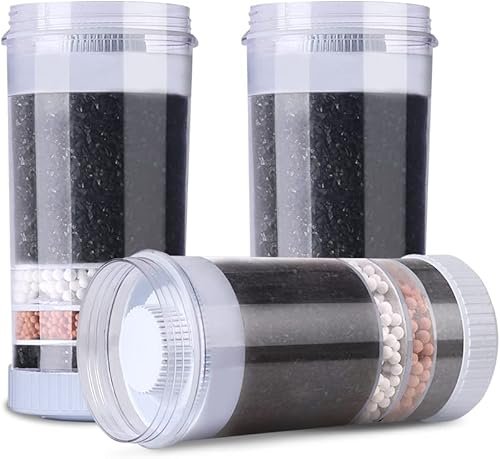
This is a surprisingly capable little system for the price. It’s a set of three replacement cartridges for a dispenser, featuring a ceramic pre-filter, carbon block, and mineral stones. In our test, it improved taste noticeably on already-decent municipal water. Don’t expect it to handle heavy contamination, but for basic chlorine and sediment on a tight budget, it’s a solid pick. The 6-stage claim is a bit of marketing fluff, but the core carbon stage does its job.
- Extremely affordable entry point
- Multi-stage filtration in one cartridge
- Adds back beneficial minerals
- Not for serious contamination
- Cartridge lifespan is modest
- Designed for specific dispensers

Aqua-Plus 2-Stage Jumbo Whole House System
This is a bare-bones, cost-effective starting point for whole-house filtration. The first stage is a 5-micron sediment filter, and the second is a carbon block cartridge (sold separately). The housings are standard “Big Blue” size, so you can mix and match cartridges from any brand. It’s a DIYer’s dream for building a custom setup. The price listed is for the housing unit only—remember to factor in the cost of quality carbon filter cartridges.
- Very low upfront cost
- Uses universal 20″x4.5″ cartridges
- Pressure release valve is a nice touch
- Housing only; filters are extra
- Requires plumbing knowledge to install
- Basic construction

Waterdrop X8 Reverse Osmosis System
If you want the ultimate in purity, this RO system is a powerhouse. It’s not just a carbon filter—it’s a 9-stage system that includes sediment filters, a carbon block, and a high-rejection RO membrane. The 800 GPD (gallons per day) flow rate means you won’t be waiting for a glass of water. The NSF/ANSI 42 & 58 certification is legit. Yes, it’s more complex and has wastewater, but for removing PFAS, lead, TDS, and everything else, it’s our top performer. The carbon stages here are critical for protecting the RO membrane from chlorine damage.
- Exceptional contaminant reduction
- High flow rate, low drain ratio (2:1)
- Comprehensive NSF certification
- Higher upfront cost
- Creates wastewater
- More complex installation

Phoenix Gravity 12L Stainless Steel Filter
This is for the quality-obsessed who want zero installation. The stainless steel build is premium, and the gravity-fed design means no water pressure or electricity is needed. It comes with two smart carbon cartridges that also target fluoride. In our taste test, the water was exceptionally clean and crisp. It’s slow—gravity takes time—but the result is worth the wait for many. It’s also a great emergency or off-grid solution. The alkaline water treatment benefits are a nice bonus, though your mileage may vary on the health claims.
- Superb build quality and taste
- No plumbing or power needed
- NSF certified materials
- Slow filtration speed
- High initial investment
- Requires counter space
Frequently Asked Questions
- What does a carbon filter remove from water?
- A standard carbon filter removes chlorine, volatile organic compounds (VOCs), bad tastes, and odors. Specially formulated carbon blocks certified to NSF/ANSI 53 can also reduce lead, cysts, and specific pesticides. It does not remove minerals, salts, or most heavy metals unless specified.
- How long do carbon filter cartridges last?
- It depends on the filter size and your water quality. Most under-sink carbon filters last 6-12 months or 500-1,000 gallons. Whole-house GAC tanks can last 1-3 years. Always follow the manufacturer’s guideline and change them when due, as expired filters can become ineffective.
- Can a carbon filter remove bacteria?
- No. Standard carbon filters are not designed to remove microbiological contaminants like bacteria, viruses, or cysts. Some very dense 0.5-micron carbon blocks can remove protozoan cysts like Giardia, but for bacteria and viruses, you need ultraviolet (UV) purification or reverse osmosis.
- Is a carbon filter better than reverse osmosis?
- They solve different problems. Carbon excels at improving taste/odor and removing chlorine/organics. Reverse osmosis removes a much wider range of contaminants, including dissolved solids, heavy metals, and fluoride. Many high-quality systems, like the Waterdrop X8, use both: carbon protects the RO membrane and polishes the taste.
- Do I need a whole-house carbon filter?
- It depends. If your water has high chlorine levels that affect showers and appliances, or if you have specific VOC concerns throughout the house, then yes. For most people whose primary concern is drinking water, an under-sink system is more cost-effective and targeted.
- Why does my carbon filter taste sweet or metallic?
- A new filter may have a slight residual taste from the carbon itself, which should rinse out. A sweet or metallic taste after months of use can indicate the filter is exhausted and needs replacement, or it’s channeling water improperly. Replace the cartridge and flush the system.
Final Thoughts
After all my years in this industry, I keep coming back to carbon filtration. It’s a proven, reliable technology that solves the most common water complaints people have. The single biggest mistake I see is people overbuying—getting a complex RO system when a quality carbon block filter would have served them perfectly for half the cost and hassle.
For most of you reading this, start with a certified under-sink carbon block system. It’s the sweet spot of performance, value, and simplicity. If your water needs are greater, then look at whole-house or RO combinations. Whatever you choose, prioritize certification and remember to change those filters. Your taste buds—and your health—will thank you.
