


The Complete Guide to Carbon Block Filters: How They Work & Top Picks (2026)
Carbon block filters are a cornerstone of modern water purification, prized for their exceptional ability to reduce chlorine, taste, odor, and a wide range of contaminants. This guide dives deep into their technology, benefits, and limitations, helping you make an informed choice for cleaner water.
What Is a Carbon Block Filter?
A carbon block filter is a dense, solid cartridge made from finely ground activated carbon particles that are compressed or molded into a rigid block. Unlike loose granular activated carbon (GAC) filters, the carbon block’s structure creates a highly uniform and porous medium. This design forces water to take a longer, more tortuous path through the carbon, significantly increasing contact time and contaminant removal efficiency.
These filters are renowned for their superior performance in adsorption, the process by which organic compounds, chlorine, and other chemicals adhere to the vast internal surface area of the carbon. They are a popular choice for point-of-use (POU) systems, such as under-sink installations, countertop units, and refrigerator filters, providing a critical line of defense for drinking water.
How a Carbon Block Filter Works
The magic of a carbon block filter lies in two primary mechanisms: adsorption and mechanical filtration.
Adsorption: Activated carbon is treated to have millions of tiny pores, creating a massive surface area. As water passes through, organic contaminants like chlorine, volatile organic compounds (VOCs), pesticides, and herbicides are chemically attracted to and trapped on the carbon’s surface.
Mechanical Filtration: The compressed block structure acts as a physical sieve. The micron rating (e.g., 0.5 micron, 5 micron) indicates the size of particles the filter can physically block. A lower micron rating means it can trap smaller particles, including sediment, rust, and even some cysts like Cryptosporidium.
For those interested in altering water’s pH after filtration, exploring an ionizing water filter or a dedicated alkaline filtration system can be a logical next step to create mineral-rich, alkaline water.
Key Benefits of Carbon Block Filtration
- Exceptional Contaminant Reduction: Highly effective at removing chlorine, chloramine, bad tastes, odors, and many organic chemicals.
- Superior Particle Removal: The solid block structure provides finer mechanical filtration than GAC, often down to sub-micron levels.
- High Adsorption Capacity: Increased contact time means more contaminants are adsorbed per gram of carbon.
- No Channeling: Unlike GAC filters, water cannot create preferred paths (channels) through a solid block, ensuring consistent performance.
- Versatility: Used in a wide range of applications, from whole-house pre-filters to dedicated drinking water systems.
- Cost-Effective: Provides excellent filtration performance relative to its cost, especially when compared to more complex systems.
Potential Drawbacks and Limitations
- Not a Total Solution: Carbon blocks are generally ineffective against dissolved inorganic contaminants like heavy metals (lead, arsenic), fluoride, nitrates, and hardness minerals (calcium, magnesium).
- Can Become a Breeding Ground: If not replaced regularly, the trapped organic matter can become a food source for bacteria.
- Flow Rate Reduction: Denser blocks can reduce water pressure more than other filter types, especially as they become clogged.
- Limited Lifespan: The adsorption sites become saturated over time. A filter that is not replaced can release trapped contaminants back into the water.
- Not for Microbial Cysts Alone: While some can reduce cysts, they are not a substitute for proper disinfection (like UV light) for eliminating bacteria and viruses.
Types of Carbon Block Filters
Standard Carbon Block (CTO)
The most common type, designed primarily for Chlorine, Taste, and Odor reduction. They are typically rated at 5 or 10 microns and are excellent general-purpose filters for municipal water.
Sub-Micron Carbon Block
These filters have a much tighter structure, often rated at 0.5 micron or less. They provide enhanced mechanical filtration, capable of removing finer sediment and cysts, in addition to chemical contaminants. They are ideal for water with higher turbidity or for those seeking extra protection.
Catalytic Carbon Block
Made from catalytic carbon, which has been specially treated to enhance its ability to remove chloramines and hydrogen sulfide (rotten egg smell). This is an important distinction, as standard activated carbon is less effective against chloramines, which many water utilities now use.
For a more comprehensive approach to water quality, some users combine carbon filtration with alkaline water treatment methods to both purify and re-mineralize their drinking water.
What to Look For: A Buying Guide
- Micron Rating: Choose based on your water quality. 5-micron is standard for sediment and taste; 0.5-micron offers finer particulate and cyst reduction.
- Filter Size: Ensure it matches your housing. The 10″ x 2.5″ “standard” size is most common for under-sink and countertop systems.
- Carbon Type: Look for “coconut shell carbon” for its high quality and purity. Catalytic carbon is necessary for chloramine removal.
- Certifications: Look for filters certified by independent bodies like NSF International or the Water Quality Association (WQA) against standards like NSF/ANSI 42 (aesthetic effects) and 53 (health effects).
- Capacity & Lifespan: Check the manufacturer’s rated gallon capacity and recommended replacement interval (typically 6-12 months).
- Compatibility: Verify the filter is compatible with your specific system brand and model.
Top Recommended Carbon Block Filters (2026)
Below is a comparison of popular and well-regarded carbon block filter options suitable for various needs.
| Product | Type | Key Feature | Price | Links |
|---|---|---|---|---|
| iSpring FC15 5 Micron CTO | Standard Carbon Block | Universal 10″ size, 5-micron CTO reduction | $26 |
Amazon eBay |
| 2 Set Sediment + 0.5µ Coconut Carbon | Sub-Micron Dual Pack | Includes sediment & 0.5µ coconut carbon filters | $46 |
Amazon eBay |
| Aqua-Plus 0.5µ Sediment + Coconut Carbon | Sub-Micron Dual Pack | 0.5µ for both sediment & carbon stages | $39 |
Amazon eBay |
| SAMSUNG Genuine HAF-QIN/EXP Filter | Refrigerator Carbon Block | Genuine OEM filter, removes 99% of contaminants | $82 |
Amazon eBay |
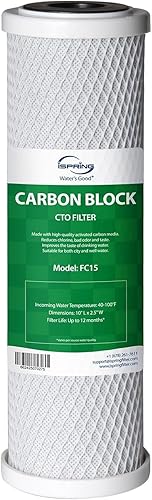
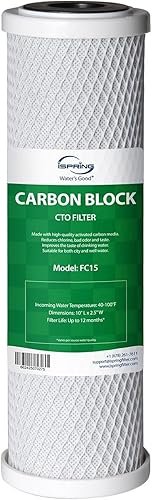
iSpring FC15 5 Micron 10 Inch CTO Carbon Block Filter
The iSpring FC15 is a reliable workhorse for standard under-sink or whole-house pre-filtration. This 5-micron CTO (Chlorine, Taste, Odor) filter is made from high-quality coconut shell carbon and is designed to fit all standard 10″ filter housings. It’s an excellent, cost-effective choice for improving the taste and clarity of municipally treated water.
- Universal 10″ size fits most housings
- Effective for chlorine, taste, and odor
- Very affordable replacement cartridge
- 5-micron rating won’t catch the finest particles
- Not designed for chloramine removal
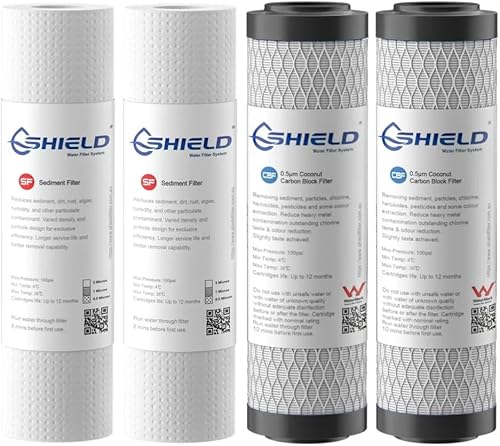
2 Set Replacement Water Filters Cartridges (Sediment + 0.5 Micron Coconut Carbon)
This dual-pack offers a complete 2-stage filtration solution. The first stage is a poly-spun sediment filter to remove dirt and rust, protecting the second-stage 0.5-micron coconut carbon block filter, which excels at polishing the water for taste and odor. With a 12-month lifespan per set, it’s a convenient and effective option for comprehensive point-of-use filtration.
- Complete 2-stage system in one pack
- 0.5-micron carbon for finer filtration
- Long 12-month cartridge life
- Slightly higher initial cost for the set
- Requires a dual-stage housing
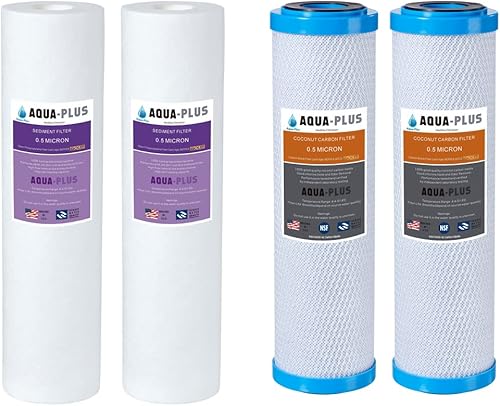
Aqua-Plus 2 Set 0.5 Micron Sediment + 0.5 Micron Coconut Carbon Filters
Aqua-Plus provides a value-oriented dual-pack where both the sediment and carbon block filters are rated at 0.5 microns. This ensures exceptionally fine particulate removal at both stages, making it a great choice for water with noticeable sediment or for those who prioritize crystal-clear water. It’s compatible with all standard 10″ housings.
- Both filters are 0.5-micron for superior clarity
- Excellent value for a two-stage set
- Removes over 99.9% of chlorine
- May clog faster in very high-sediment water
- Limited brand recognition compared to others
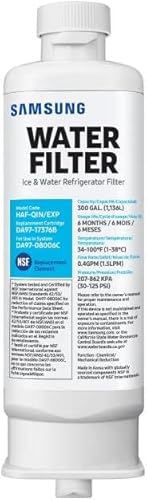
SAMSUNG Genuine Filter for Refrigerator Water and Ice (HAF-QIN/EXP)
For Samsung refrigerator owners, this genuine OEM filter is the benchmark. It uses an ultra-high-grade carbon block to reduce 99% of potentially harmful contaminants, including lead, mercury, and chlorine. While it comes at a premium price, it guarantees compatibility, optimal performance, and avoids the risk of leaks or damage that can come with third-party filters.
- Guaranteed compatibility with Samsung fridges
- High-performance contaminant reduction
- Includes authentication tag for verification
- Significantly more expensive than generic options
- Proprietary design only fits specific models
Frequently Asked Questions (FAQ)
- How often should I replace my carbon block filter?
- Typically every 6 to 12 months, or as specified by the manufacturer. Replacement depends on water quality and usage volume. A noticeable drop in flow rate or a return of bad taste/odor are signs it’s time to change it.
- Can a carbon block filter remove lead?
- Standard carbon block filters are not designed to remove lead. You need a filter specifically certified for lead reduction (NSF/ANSI 53), which often uses additional media like ion-exchange resin alongside carbon.
- What’s the difference between a carbon block and a GAC filter?
- Carbon block is compressed, offering finer filtration and no channeling. GAC is loose granules, which may have higher flow rates but less consistent contact time and can develop channels where water bypasses the carbon.
- Do carbon block filters remove fluoride?
- No, activated carbon does not effectively remove fluoride. Fluoride reduction requires specific media like activated alumina or reverse osmosis.
- Are carbon block filters safe?
- Yes, they are very safe. The carbon itself is inert and non-toxic. The key is to replace them on schedule to prevent bacterial growth on trapped contaminants.
- Can I use a carbon block filter for well water?
- It can be part of a well water system, but well water often requires a more comprehensive treatment plan. You should first test your well water for bacteria, heavy metals, and other contaminants to determine the right combination of filters.
Final Thoughts
Carbon block filters represent a powerful, efficient, and affordable technology in the water purification landscape. Their ability to dramatically improve water’s taste, smell, and clarity while reducing a broad spectrum of organic chemicals makes them an invaluable component of any filtration system. Whether you’re looking for a simple under-sink upgrade or a reliable refrigerator replacement, understanding the micron rating, carbon type, and your specific water needs is key to choosing the right filter.
Remember, the best filter is the one that addresses your unique water profile. Use this guide as a starting point, consider your local water quality report, and don’t hesitate to combine a carbon block with other technologies for complete protection.
