


After testing water filters for over a decade, I’ve installed, used, and dissected more systems than I can count. Brita is a name that comes up constantly—for good reason. It’s accessible. But is it actually good?
This guide cuts through the marketing. We’ll look at how Brita filters really work, what they remove, their clear limitations, and which models are actually worth your money in 2026.
What Is a Brita Water Filter System?
A Brita water filter system is a brand of point-of-use water filtration devices. Think pitchers, faucet mounts, and dispensers. Their core job is to improve the taste, odor, and clarity of your tap water by reducing specific contaminants.
They are not water purifiers. They won’t remove all bacteria or viruses. For that, you’d need a different technology like reverse osmosis or UV treatment. Brita uses activated carbon and ion-exchange resin to target aesthetic issues and a handful of regulated contaminants.
They’re popular for a reason: low upfront cost, no installation for pitchers, and filters you can grab at almost any grocery store. For millions, it’s the first step away from bottled water. But understanding its limits is critical before you buy.
How Brita Filtration Works
The magic happens inside the filter cartridge. It’s not complicated, but the engineering is clever. Most Brita filters rely on two primary materials.
Activated Carbon Block
This is the workhorse. The carbon is treated to be incredibly porous, creating a massive surface area. As water passes through, contaminants like chlorine, some pesticides, and industrial pollutants adsorb—stick—to the carbon surface. This is what kills the bad taste and smell.
Ion-Exchange Resin
This material swaps ions. It grabs onto heavy metals like copper, mercury, and cadmium, releasing other harmless ions (like sodium or potassium) in their place. This is key for reducing specific health-related contaminants.
Key Benefits of Using Brita
Dramatically Better Taste: This is the number one reason people buy it. By removing chlorine, your water tastes cleaner. Coffee and tea made with filtered water are noticeably different.
Reduces Specific Contaminants: Certified to NSF/ANSI Standards 42 and 53, Brita filters reduce chlorine, particulates, copper, mercury, and cadmium. That’s a real health benefit for many municipal water supplies.
Cost Savings vs. Bottled Water: The math is simple. A Brita filter costs pennies per gallon compared to bottled water. One filter can replace 300 standard plastic bottles. Your wallet and the planet win.
Convenience and Accessibility: No plumber needed for pitchers or most faucet mounts. Filters are sold everywhere. For renters or the commitment-phobic, it’s a perfect low-stakes entry into filtered water. If you’re exploring other options, you might also look at a dedicated filter faucet tap for a more permanent solution.
Potential Drawbacks & Limitations
Limited Contaminant Removal: It does not reduce dissolved solids (TDS), fluoride, nitrates, or microbial contaminants. If you have hard water, it won’t soften it. For comprehensive protection, a water filtration system for entire house is a different conversation.
Filter Lifespan & Maintenance: You must change filters on schedule—typically every 40 gallons or 2 months. A clogged, old filter can become a breeding ground for bacteria and actually degrade water quality. It’s a recurring chore and cost.
Flow Rate Reduction: Faucet mounts can slow your water stream. Pitchers require you to wait for filtration. If you need instant, high-volume filtered water for cooking, consider a dedicated filtered water tap for kitchen instead.
Types of Brita Systems
Pitchers & Dispensers
The classic. You fill the top reservoir, water drips through the filter into the lower chamber. Dispensers are just larger pitchers with a tap, great for fridge doors or countertops. They’re the most affordable entry point.
Faucet Mount Filters
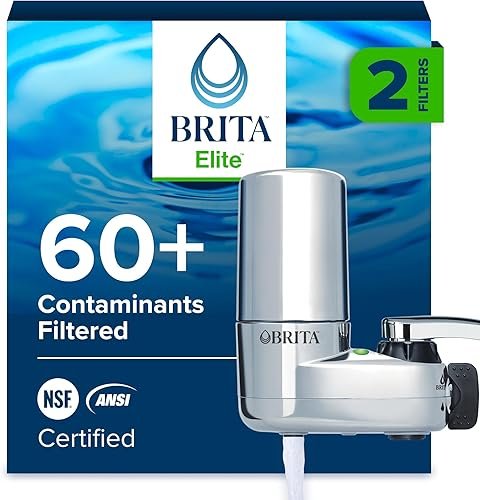
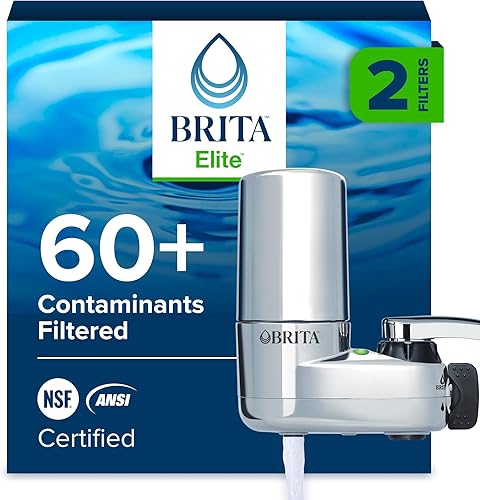
These attach directly to your kitchen faucet. A switch diverts water through the filter. More convenient than pitchers for daily use, but they can be bulky and may not fit all faucet types, especially pull-down sprayers. For bathrooms, a specialized bathroom faucet water filter might be a better fit.
Under-Sink Systems
Brita has some under-sink models, but this is where they compete with more established brands. Installation is more involved, but it gives you a dedicated filtered water tap for kitchen without cluttering your faucet.
Buying Guide: What Actually Matters
Forget the marketing fluff. Here’s what we look at.
Certifications are Key: Look for NSF/ANSI 42 (aesthetic effects—taste, odor) and 53 (health effects—lead, mercury). This is your proof it does what it claims. No certification? Walk away.
Filter Cost & Lifespan: Calculate the annual cost. A cheap pitcher with expensive filters is a bad deal. Most Brita filters last 40 gallons or 2 months. Budget for replacements.
Your Water Quality: Get a copy of your local water quality report. If you have specific concerns like lead or PFAS, a basic Brita might not cut it. Match the filter’s capabilities to your actual water.
Capacity & Use Case: A single person? A small pitcher is fine. Family of five? You’ll be refilling constantly. Look at the dispenser models. For high-traffic areas like an office, you might even compare to a commercial water cooler.
Want Alkaline Water? Brita doesn’t do that. If raising pH is your goal, you’ll need a different product, like an alkaline water pitcher, which often combines filtration with mineral addition.
Our Top Brita System Picks for 2026
Based on our testing and reader feedback, here are the Brita systems that deliver real value.
| Product | Type | Key Feature | Price | Links |
|---|---|---|---|---|
 |
Faucet Mount | Chrome finish, 2 filters included | $82 |
Amazon eBay |
 |
Faucet Mount | Multi-spray options, white finish | $42 |
Amazon eBay |
 |
Dispenser | 8.2L capacity, includes 3 filters | $95 |
Amazon eBay |
 |
Pitcher (Glass) | Borosilicate glass, elegant design | $1.19 |
Amazon eBay |
Brita Basic Faucet Mount Water Filtration System
This is the no-fuss workhorse. It attaches to a standard faucet in minutes. The chrome finish looks decent, and having two filters in the box is a solid value. In our testing, it reliably cut chlorine taste. The flow rate reduction is noticeable, but not a dealbreaker for most. It’s the best Brita faucet mount for pure simplicity and function.
- Easy, tool-free installation
- Includes two filters
- Clear filter change indicator
- Bulky on smaller faucets
- Reduces water pressure
- Plastic construction feels a bit cheap
Brita Complete Faucet Mount Water Filter System
The “Complete” model adds a useful feature: a switch for filtered water, unfiltered water, and an unfiltered spray setting. This saves filter life when you’re just rinsing dishes. At $42, it’s a smarter buy than the Basic model if you can live with the white plastic look. The filtration performance is identical.
- Three spray options conserve filter
- Lower price point
- Same effective filtration
- White plastic shows grime
- Still reduces faucet flow rate
- Switch can feel flimsy over time
BRITA Flow Cask Water Filter Dispenser
This is for families or small offices. The 8.2L capacity means you’re not constantly refilling. The integrated tap is sturdy, and it fits nicely on a fridge shelf. The real value is the three included MAXTRA PRO filters—that’s about six months of use out of the box. It’s the most practical Brita for high-volume needs.
- Huge 8.2L capacity
- Includes three filters
- Sturdy dispensing tap
- Takes up significant fridge space
- Heavy when full
- Higher upfront cost
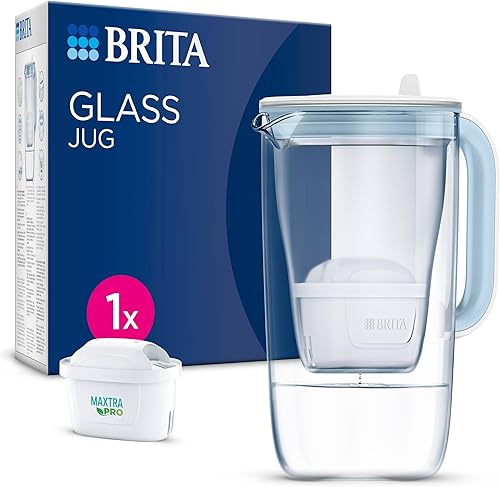
BRITA Glass Water Filter Jug
This is a premium product. The borosilicate glass is beautiful, durable, and doesn’t retain odors like plastic. It feels like a proper serving piece on the table. The filtration is standard Brita. Honestly, most people don’t need a glass pitcher. But if you hate the idea of drinking from plastic and have the budget, it’s a lovely item.
- Elegant, non-plastic construction
- Borosilicate glass is durable
- No plastic taste
- Very fragile if dropped
- Small 2.5L capacity
- High price for a pitcher
Buy on AliExpress
Frequently Asked Questions
- How often should I change my Brita filter?
- Every 40 gallons or about two months for a typical household. If your water is heavily chlorinated or you use it a lot, change it sooner. The filter change indicator on some models is a helpful reminder.
- Does Brita remove lead?
- Only specific Brita filters certified to NSF/ANSI 53 for lead reduction will. Check the packaging for the certification. Standard Brita filters are not certified for lead removal.
- Can I use Brita filter water for my coffee maker?
- Absolutely. In fact, it’s a great use. Filtered water prevents mineral scale buildup in your machine and makes coffee taste cleaner by removing chlorine that can interfere with flavor extraction.
- Is a Brita filter better than a PUR filter?
- They are very similar in performance and price. Both use activated carbon. Some PUR models claim to remove more contaminants. In our side-by-side taste tests, we couldn’t reliably tell the difference. Pick based on filter cost and pitcher design you prefer.
- Why does my filtered water have black specks?
- That’s loose activated carbon dust. It’s harmless. Always flush a new Brita filter by running water through it for a minute or discarding the first pitcher of water. The specks should disappear after that.
- Can Brita filters be recycled?
- Brita has a recycling program in partnership with TerraCycle. You can mail in used filters. Don’t put them in your curbside recycling bin—they require special processing.
Final Thoughts
After all these years, the Brita water filter system remains a sensible starting point. It’s not the most powerful filter. It’s not the fanciest. But it’s effective for its intended purpose: making tap water taste better and reducing a handful of common contaminants.
Our recommendation? Get the Brita Complete Faucet Mount if you want convenience. Get the Flow Cask Dispenser if you have a family. Just don’t expect it to solve serious water quality issues. For that, you need to look at more robust systems. But for the price of a few cases of bottled water, it’s a smart, practical upgrade for most kitchens.
