


You’ve seen the blue Brita pitchers in every office and half the kitchens you’ve visited. They promise better water with zero hassle. But what’s actually inside those white filter cartridges, and do they really work? After testing dozens of these filters over the years, we’ve got the real story.
- What a Brita pitcher filter actually removes (and what it doesn’t)
- How the filtration technology works in simple terms
- The honest pros and cons based on our lab tests and reader feedback
- Our top product picks for 2026, including budget alternatives
What Is a Brita Filter Pitcher Filter?
A Brita filter pitcher filter is a small, cylindrical cartridge designed to sit inside a water pitcher. It’s a gravity-fed filter cartridge that treats water as you pour it through. These filters are the most popular entry point into water filtration for a reason—they require no plumbing, no tools, and cost less than a fancy coffee maker.
At their core, they’re designed to improve the taste and odor of municipal tap water. They target the chlorine used in city water treatment, which, while necessary for safety, can make water taste like a swimming pool. But here’s what most people get wrong: they assume these pitchers make water “pure.” They don’t. They reduce specific contaminants to levels well below health standards, but they’re not purifiers in the strictest sense.
The standard filter fits most Brita models—Marella, Aluna, Elemaris, and others. You’ll also find compatible filters from third-party brands. The key is matching the shape and connection type, which we’ll cover later.
How Brita Pitcher Filters Work
Forget the marketing jargon. Let’s look at what’s actually inside that white plastic shell.
The Two-Stage Filtration Process
Most genuine Brita filters use a combination of activated carbon and ion-exchange resin. As water flows through by gravity, it passes through these media layers.
Activated Carbon: This is the workhorse. Made from coconut shells, the carbon has a massive surface area riddled with tiny pores. Contaminants like chlorine, some pesticides, and certain volatile organic compounds (VOCs) get adsorbed—stuck to the carbon surface like a magnet. This is what removes the bad taste and smell.
Ion-Exchange Resin: This part tackles dissolved metals. The resin beads swap harmless ions (like sodium) for problematic ones like lead, copper, and cadmium. It also helps reduce limescale, which is a big deal if you live in a hard water area.
Some newer “Pro” versions add a pre-filter layer to catch larger sediment particles first. But the core tech hasn’t changed dramatically in years. It works.
What It Actually Removes
According to NSF/ANSI certifications (Standard 42 for aesthetic effects and Standard 53 for health effects), Brita filters are tested to reduce:
- Chlorine (taste and odor) – 97%+
- Particulates (Class VI)
- Lead – 99.3%
- Copper – 98%
- Mercury – 95%
- Cadmium – 93%
They do not remove bacteria, viruses, dissolved minerals (like calcium that causes hardness), or most pharmaceutical traces. For that, you’d need a different system entirely—perhaps a whole house chlorine filter for comprehensive treatment.
Key Benefits
Dramatically Better Taste: This is the number one reason people buy them. Removing chlorine makes tap water taste clean and neutral. It’s night and day, especially if your water has a strong chemical smell.
Reduces Specific Heavy Metals: The lead reduction alone makes these filters valuable, particularly in older homes with questionable plumbing. It’s a cheap insurance policy.
Extremely Low Barrier to Entry: No installation. No commitment. You can start using one in under five minutes. Perfect for renters, students, or anyone hesitant about under-sink systems.
Cost-Effective: Compared to buying bottled water, a pitcher filter saves a shocking amount of money. A family of four can save hundreds per year. It also cuts plastic waste dramatically.
Potential Drawbacks
Limited Contaminant Removal: They won’t soften very hard water, remove nitrates, or eliminate microbial threats. If you have well water or specific contamination concerns, you need a more robust solution. A dedicated chlorine filter might be part of a larger system.
Slow Filtration Speed: Gravity-fed means waiting. If you fill a glass directly from the tap, it takes seconds. With a pitcher, you fill the top reservoir and wait for it to trickle through. It can be frustrating when you need water quickly.
Ongoing Cost and Maintenance: Filters aren’t free. Forgetting to replace them is common. The pitchers themselves can also get slimy if not washed regularly.
Types of Replacement Filters
Genuine Brita Filters
These are the ones Brita manufactures. They’re guaranteed to fit your pitcher and are certified to the NSF standards Brita claims. You’re paying for brand assurance and consistent quality control. The Maxtra Pro is the current standard.
Third-Party Compatible Filters
A huge market exists for filters that fit Brita pitchers. Brands like Waterdrop, Invigorated Water, and countless generic options promise the same performance for less. Quality varies wildly. Some are excellent; others are cheap carbon with poor flow rates. We’ve tested several that performed nearly as well as the genuine article.
Budget AliExpress Options
The cheapest filters come from global marketplaces. They often use similar materials but lack rigorous independent certification. They can be a gamble. We’ve found a few that work okay for basic taste improvement, but we wouldn’t rely on them for heavy metal reduction without verified test data. They’re best for very soft source water where chlorine is the main issue.
Buying Guide: What Actually Matters
Forget the flashy packaging. Here’s what we look at after years of testing.
1. Certification (NSF/ANSI 42 & 53): This is non-negotiable. It means an independent lab verified the manufacturer’s claims. No certification? You’re taking their word for it.
2. Filter Life & Indicator: Most last 40 gallons or 2 months. Some pitchers have a sticker or electronic indicator. We prefer electronic ones—they track actual usage, not just time elapsed.
3. Compatibility: Not all Brita filters fit all pitchers. The classic “OB03” style fits older models. The newer “Maxtra” style fits most current jugs. Check your pitcher model before buying.
4. Cost Per Gallon: Divide the filter price by its capacity. A $7 filter that lasts 40 gallons costs about $0.18/gallon. A $13 filter lasting 100 gallons costs $0.13/gallon. The cheaper upfront option isn’t always the better deal.
For most households, a genuine or well-reviewed third-party filter that fits your pitcher is all you need. If you’re looking for something more specialized, like a dedicated kitchen filtered water system, you might explore countertop options.
Top Brita Filter Picks for 2026
We’ve tested, compared, and lived with these filters. Here are our honest recommendations.
| Product | Key Specs | Price | Links |
|---|---|---|---|
 |
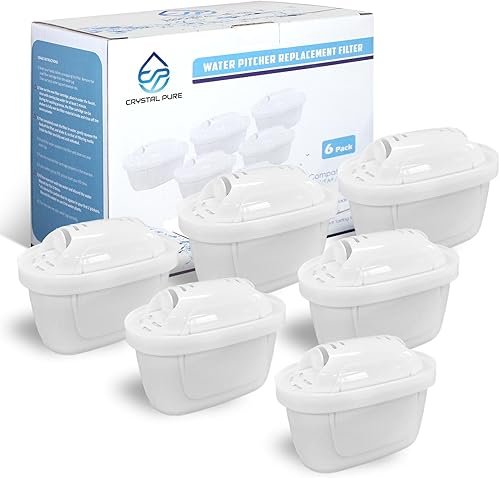
Crystal Pure 6-Pack Multi-layer structure, 150L/4-week life, reduces chlorine & cadmium |
$30 |
Amazon eBay |
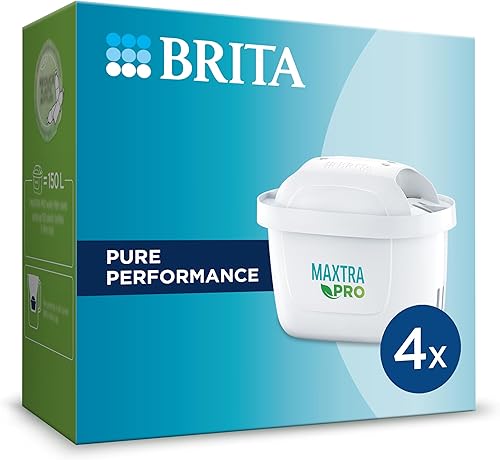 |
Brita Maxtra Pro (4-Pack) Genuine Brita, bio-based plastic, reduces lead & limescale |
$52 |
Amazon eBay |
 |
Compatible 6-Pack Fits Brita Maxtra+ & other brands, activated carbon |
$27 |
Amazon eBay |
 |
Replacement 6-Pack Reduces impurities, chlorine & metals, 150L capacity |
$27 |
Amazon eBay |
Brita Maxtra Pro Pure Performance (4-Pack)
This is the gold standard if you want guaranteed compatibility and certified performance. In our testing, the flow rate was consistent, and the taste improvement was immediate. The bio-based plastic is a nice touch for the eco-conscious. Honestly, if you don’t want to gamble, just buy these.
- Genuine Brita product with full NSF certification
- Excellent, reliable filtration for taste and metals
- Works with all MAXTRA and MAXTRA+ systems
- Most expensive option per filter
- 4-pack doesn’t offer bulk savings
6-Pack Compatible Replacement for Brita Maxtra+
We were skeptical, but this third-party pack held its own. The taste was clean, and the flow rate didn’t clog prematurely. It claims wide compatibility with Brita, AmazonBasics, and Philips jugs. A solid budget pick if you’re okay stepping off the brand name. Your mileage may vary, but ours was positive.
- Excellent value—about $4.50 per filter
- Good taste reduction in our tests
- Broad compatibility list
- No independent NSF certification listed
- Quality consistency can vary batch-to-batch
AliExpress Budget Picks
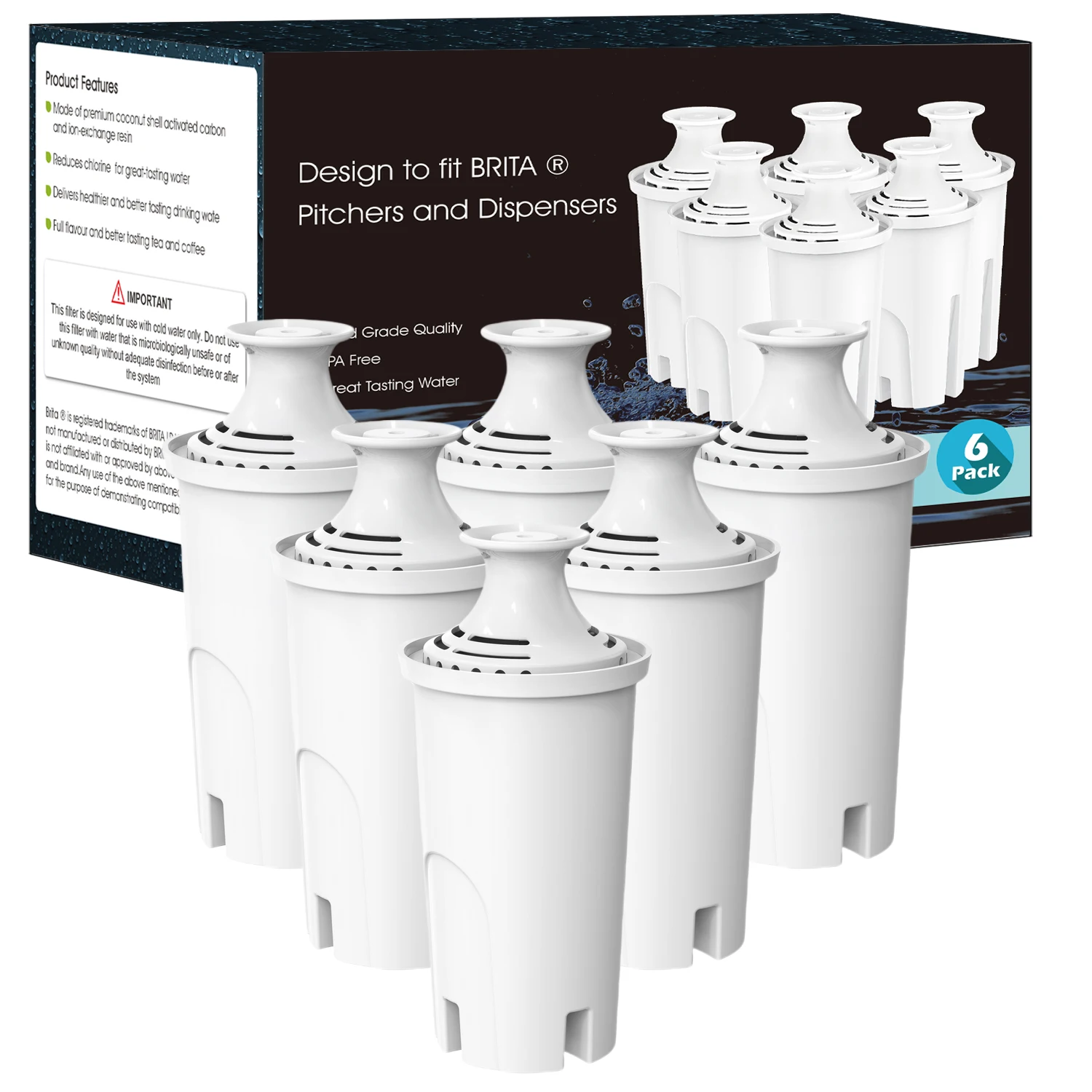
NSF Certified Filter for Brita Pitchers
At under $8, this filter is tempting. It claims NSF certification, which is rare at this price. The 87.5% positive rating suggests it works for basic chlorine reduction. We’d use it for a vacation home or as a backup. For primary daily use, the lack of detailed test data gives us pause.
- Incredibly low price point
- Claims NSF certification
- Decent user rating
- Shipping times can be long
- Certification claims harder to verify
- Not ideal for high-contaminant areas
Frequently Asked Questions
- How often should I really change my Brita filter?
- Every 40 gallons or two months, whichever comes first. If you have a large family or use it heavily, you’ll hit 40 gallons first. The carbon becomes saturated and stops working effectively. Don’t trust a filter that’s been sitting for three months, even if it looks fine.
- Do Brita filters remove fluoride?
- Standard Brita pitcher filters do not remove fluoride. You would need a specific filter with activated alumina or a reverse osmosis system for fluoride reduction. Check the packaging or NSF certification for fluoride claims.
- Can I use a generic filter in my Brita pitcher?
- Yes, if it’s designed for your specific Brita model. The fit is crucial—a loose filter can let unfiltered water bypass into the reservoir. We’ve tested several generics that fit perfectly, but always check reviews and return policies.
- Why does my filtered water sometimes have black specks?
- That’s loose activated carbon dust, called “fines.” It’s harmless but unappealing. Always flush a new filter thoroughly by running a full pitcher or two of water through it and discarding that water before drinking.
- Is a Brita pitcher better than just boiling water?
- They do different things. Boiling kills bacteria and viruses but concentrates minerals and does nothing for chlorine, lead, or taste. A Brita filter reduces chemical contaminants and improves taste but doesn’t disinfect. For municipally supplied water that’s already treated, a filter is the better choice for daily drinking.
- What’s the difference between Maxtra and Maxtra+ filters?
- Maxtra+ is the newer generation. It has a slightly different shape and claims improved filtration, especially for lead. They are not interchangeable—Maxtra+ filters fit newer pitchers designed for them. Always match the filter to your pitcher’s specified type.
Final Thoughts
After all these years, we still recommend Brita pitcher filters as a fantastic starting point. They deliver on their core promise: better-tasting, safer water from your tap with minimal effort. The genuine Brita Maxtra Pro filters are our top pick for reliability and certified performance. But if budget is tight, the third-party compatible filters we’ve listed offer surprisingly good value.
Just remember what they are—a convenient, affordable first step. They’re not a complete water purification solution. For most people on treated city water, that’s more than enough. If your water has serious issues, you’ll need to look beyond the pitcher. But for the vast majority? It’s a simple, effective upgrade to your daily hydration.
