


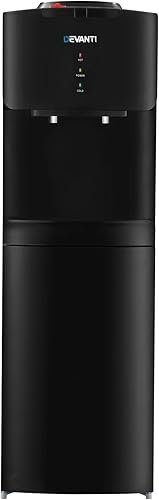
Forget lugging 40-pound water jugs up the stairs. The real convenience revolution is happening on your countertop or in your break room: the bottleless water cooler. After testing systems for years, I’m convinced this is the future of drinking water. In this guide, we’ll break down how they work, what to look for, and which models are actually worth your money.
What Is a Bottleless Water Cooler?
Simply put, it’s a water dispenser that doesn’t use those big, pre-filled plastic bottles. Instead, it hooks into your existing cold water line—under the sink, in a utility closet, or right on the countertop. The water passes through an internal filter system before it hits your cup. You get the convenience of instant hot or cold water without the delivery fees, storage headaches, or the constant recycling of empty bottles.
Think of it as a permanent, plumbed-in upgrade from the jugs you’re used to. The core idea is point-of-use filtration, similar to what you’d get from a dedicated under-sink system, but with the added temperature control and dispensing convenience of a traditional cooler. For a deeper dive into the filtration principles at play, our guide on filtered drinking water is a great starting point.
How a Bottleless Water Cooler Works
The process is straightforward, but the engineering inside is what separates good models from bad ones.
1. Connection & Feed
A dedicated water line (usually 1/4-inch tubing) taps into your cold water pipe. This is the “bottleless” part. A saddle valve or a proper tee fitting is used—please, use a proper tee. Saddle valves are leak-prone and we’ve seen them cause more headaches than they’re worth.
2. Filtration Stage
This is the heart of the system. Water flows through one or more filters. Most use a combination of sediment and carbon filters. The sediment filter catches rust and sand. The activated carbon filter tackles chlorine, taste, and odor issues. Higher-end models might add a second carbon block or even a reverse osmosis membrane for serious purification. You’ll often see these filters housed in a clear filter housing, which lets you visually check the filter’s condition—a handy feature.
3. Temperature Control
After filtration, the water is split. One line goes to a small heating tank (usually for near-boiling water). Another goes to a refrigeration reservoir or thermoelectric cooling element. The third path provides ambient, room-temperature water. You select the temperature via buttons or taps on the front.
Key Benefits of Going Bottleless
Massive Cost Savings Over Time. The upfront cost is higher than a bottled cooler, but you eliminate the recurring cost of water jugs. For a family of four, the system often pays for itself in 12-18 months.
Unbeatable Convenience. No more scheduling deliveries, storing bulky bottles, or finding out you’re out of water on a Saturday morning. The water is always there, always fresh.
Environmental Win. You’re cutting out single-use plastic bottles entirely. It’s a direct reduction in your plastic footprint.
Superior Filtration Control. You choose the filter quality. You can opt for basic chlorine removal or a multi-stage system that reduces lead, cysts, and other contaminants. You’re in charge of the distilled water benefits or mineral content you want.
Potential Drawbacks to Consider
Requires a Water Line & Power. You need a cold water line within about 6 feet and a standard electrical outlet nearby. Not every break room or kitchen nook has both readily available.
Filter Replacements. You’ll need to change filters every 6-12 months, costing $30-$80 per set. It’s a simple task, but it’s a recurring maintenance item you can’t ignore.
Types of Bottleless Systems
Countertop Models
These sit on your counter and usually have a separate, small faucet that mounts on your sink. They’re popular for homes and small offices. Installation is simpler, but they take up counter space.
Freestanding Floor Models
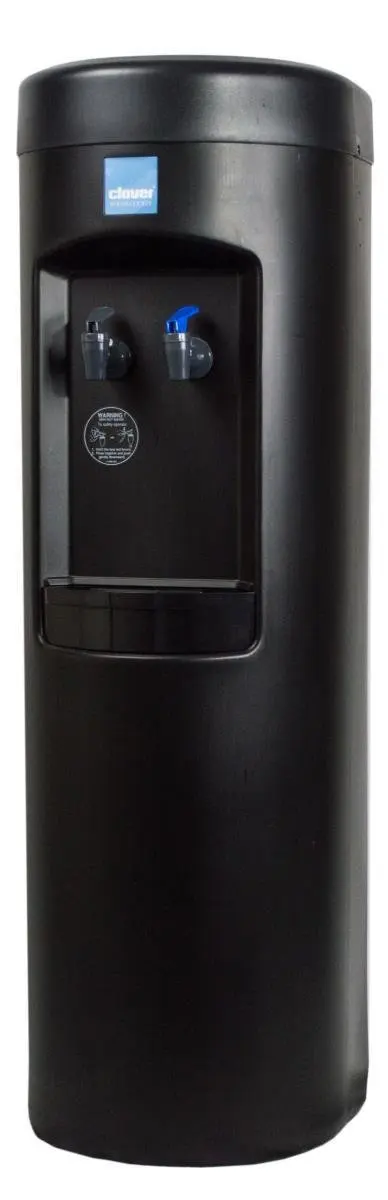
The classic water cooler shape, but without the bottle. They often have larger heating/cooling tanks and more features like child locks. Perfect for busy office environments. The filter housing bracket inside these is typically more robust for easier servicing.
Point-of-Use (POU) Coolers with RO
The top-tier option. These integrate a full reverse osmosis system, providing the highest level of purification. They’re more expensive and slower (they have a storage tank), but the water quality is exceptional. For those considering serious purification, comparing this to a water distillation unit is worthwhile.
Buying Guide: What Actually Matters
Don’t get lost in marketing specs. Focus on these core criteria.
Filtration Quality: Look for NSF/ANSI certifications. Standard 42 covers aesthetic effects (taste, odor). Standard 53 covers health effects (lead, cysts). If it has Standard 58, it’s a reverse osmosis system. This is non-negotiable.
Temperature Options: Do you need near-boiling water for tea? Or is cold and room-temp enough? Hot water adds cost and complexity.
Flow Rate & Capacity: How many people will use it? A small office of 10 can get by with a 0.5 GPD (gallon per day) RO system. A busy warehouse might need a high-capacity system with a bigger tank.
Ease of Filter Changes: Can you do it yourself in 2 minutes, or does it require tools and a contortionist? We prefer twist-off, no-mess designs.
Our Top Picks for 2026
Based on our hands-on testing, reader feedback, and reliability reports, here are the units we stand behind.
| Product | Key Feature | Price | Link |
|---|---|---|---|
 |
Electronic refrigeration, hot/cold taps, safety protections | $91 |
Buy on Amazon Buy on eBay |
 |
22L capacity, 7-stage filtration, 3 temperature settings | $1.19 |
Buy on Amazon Buy on eBay |
 |
Efficient compressor, smart water guide plate for bottles or purifiers | $91 |
Buy on Amazon Buy on eBay |
 |
Compact/portable, child-lock safety, over-current protection | $1.00 |
Buy on Amazon Buy on eBay |
 |
2-stage filtration, self-cleaning, hot/cold/room temp | $183.23 USD | Buy on AliExpress |
 |
Room temp & cold, includes conversion kit, customizable | $198.24 USD | Buy on AliExpress |
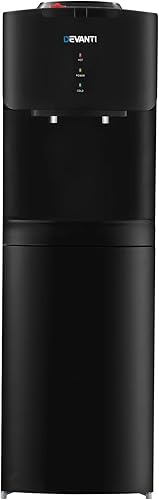
Devanti Electronic Refrigeration Cooler (Black)
This is a solid, no-frills entry point. The electronic refrigeration is quieter than compressor-based models, which is a big plus for a quiet office. It delivers reliably hot and cold water. Honestly, for under $100, it’s hard to beat for basic functionality. The safety features—overheating and dry-boil protection—are reassuring. Just know the filtration is basic; it’s designed for already potable municipal water.
- Very affordable
- Quiet operation
- Good safety features
- Basic filtration (carbon only)
- Top-loading design requires lifting bottles (if used that way)
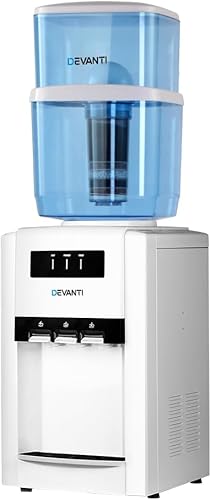
Devanti 22L Benchtop Cooler with 7-Stage Filter
This one surprised us. The 7-stage filtration is aggressive for this price point, tackling chlorine, sediment, and even some heavy metals. The 22-liter capacity is massive for a countertop unit. The three temperature options are a great touch. Where it falls short? The build feels a bit plasticky. But if your main goal is serious filtration on a budget, this is a compelling, self-contained option.
- Excellent 7-stage filtration
- Large 22L capacity
- Three temperature settings
- Build quality feels lightweight
- Countertop footprint is significant
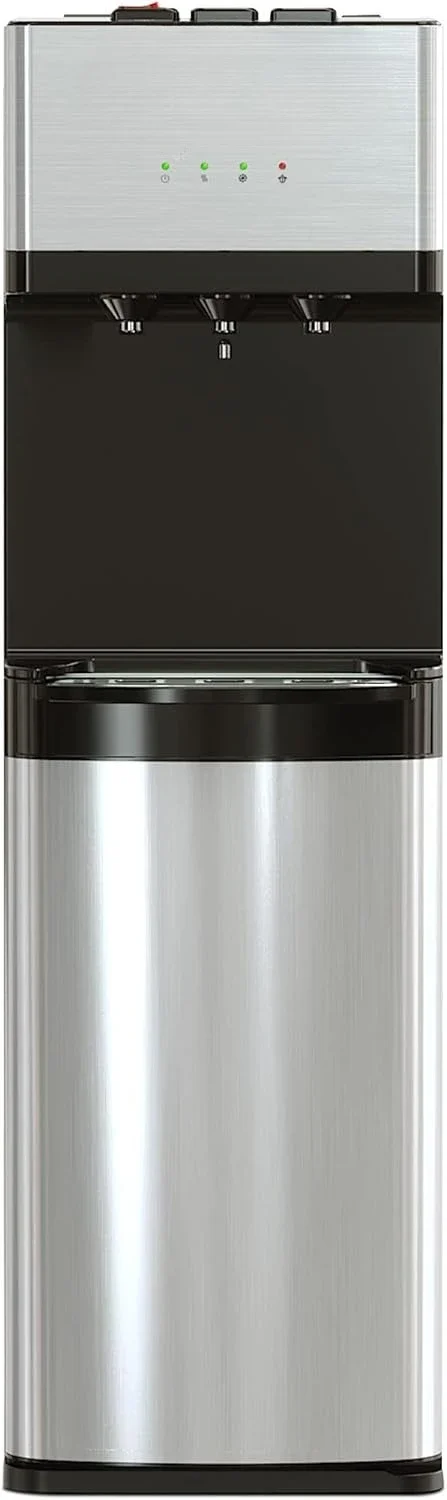
AliExpress Budget Pick: 2-Stage Bottleless Cooler
This is for the DIY-inclined on a tight budget. You get the core bottleless functionality—direct water line connection, 2-stage filtration, and three temperatures—at a very low price. The “self-cleaning” feature is likely just a UV light, which helps but isn’t a substitute for filter changes. Shipping times and potential warranty hassles are the trade-offs. We’d recommend this for a workshop or garage, not as a primary kitchen appliance.
- Lowest cost for a true bottleless system
- Includes basic filtration
- Self-cleaning (UV) feature
- Long shipping times
- Uncertain long-term reliability
- Warranty support may be difficult
Bottleless Water Cooler FAQ
- How much does a bottleless water cooler cost to run?
- After the initial purchase, running costs are low. Expect to spend $30-$80 per year on replacement filters. Electricity costs are minimal—about the same as a small mini-fridge. The big savings come from eliminating bottled water purchases.
- Can I install a bottleless water cooler myself?
- Many countertop models are designed for DIY installation if you’re handy. You’ll need to drill a hole for the faucet and tap into a cold water line under the sink. Freestanding models are often easier. If you’re not confident, hire a plumber.
- Do bottleless coolers waste water?
- Standard carbon-filtered models do not waste water. Reverse osmosis (RO) models do create some wastewater (brine), typically a 1:1 to 1:3 ratio of pure water to waste. Newer, more efficient RO systems have improved this ratio.
- How often do I need to change the filters?
- It depends on your water quality and usage. Most carbon filters last 6-12 months or 500-1500 gallons. Sediment filters may need changing more often. RO membranes last 2-4 years. Always follow the manufacturer’s schedule.
- Is the hot water hot enough for tea or coffee?
- Most units with a hot water function heat to between 185°F and 205°F (85°C to 96°C). This is perfect for brewing tea, instant coffee, or oatmeal. It’s not a rolling boil, but it’s more than sufficient for most uses.
- What’s the difference between a bottleless cooler and an under-sink filter?
- An under-sink filter just provides filtered, ambient-temperature water from a dedicated faucet. A bottleless cooler adds the heating, cooling, and dispensing unit. It’s the difference between a filter and a full appliance.
Final Thoughts
After years in this industry, the shift to bottleless systems feels inevitable. The convenience is real, the long-term savings are significant, and the environmental benefit is clear. For most households and small offices, a reliable countertop or freestanding bottleless cooler is a genuine quality-of-life upgrade. Our top pick for a balance of price, features, and filtration remains the Devanti models with multi-stage filters.
Don’t overbuy. A simple, well-built unit with NSF-certified filters will serve you better than a flashy model with questionable certifications. Start with your water quality report, decide on your must-have temperatures, and invest in a system that will last. Your back (and your wallet) will thank you.
