


Big Blue Filter Housing: Your 2026 Guide to Whole House Filtration
You’ve seen them in hardware stores, maybe even in a neighbor’s garage. Those big, blue, bullet-shaped canisters. They’re not just for show. After testing systems for over a decade, I can tell you a proper big blue filter housing is the backbone of serious whole-house water treatment. This guide covers what they are, how they work, and which ones are worth your money in 2026.
- What exactly a big blue housing is and why size matters.
- The simple science behind how it cleans your water.
- The real benefits and the honest drawbacks.
- A clear comparison of top models you can buy today.
What Is a Big Blue Filter Housing?
Forget the fancy names. A big blue filter housing is a heavy-duty plastic canister, typically made of polypropylene, designed to hold a large-diameter water filter cartridge. The “big” refers to the standard 4.5-inch diameter. The “blue” is just the most common color—though you’ll find grey and clear versions too. Think of it as a reusable shell. You buy the housing once, then swap out the internal replacement filter cartridge every few months or years.
These aren’t for a single faucet. They’re installed on your main water line to treat every drop entering your home. That’s why you’ll hear them called “whole house” or “point-of-entry” filters. The large size isn’t for looks; it allows for high flow rates and longer-lasting filters. In my experience, anyone on well water or dealing with city water chlorine should be looking at these.
How a Big Blue Filter System Works
The principle is dead simple. Water pressure pushes water into the top of the housing, through the filter cartridge trapped inside, and out the bottom to your pipes. The magic is in the cartridge you choose. Let’s break down the flow.
The Basic Mechanics
Your main water line gets cut. The housing is installed with inlet and outlet ports, usually 1-inch NPT threads for good flow. Inside, the cartridge sits on a central standpipe. When you turn on a tap, unfiltered water floods the housing, is forced through the filter media, and exits clean. A pressure relief button (a feature I highly recommend) lets you depressurize the system before changing filters. No mess, no fuss.
The Cartridge is Everything
The housing is just the stage. The performer is the filter cartridge. A simple pleated filter cartridge might catch dirt and rust down to 5 microns. A carbon block cartridge tackles chlorine, taste, and odor. Some are “graded density,” meaning they catch bigger particles on the outside and finer ones deeper in. The housing holds them all. Your water quality dictates which cartridge you need.
Key Benefits of Going Big Blue
Whole-House Protection: This is the big one. You’re not just filtering drinking water. You’re protecting your water heater, washing machine, and dishwasher from sediment buildup. You’re showering in water with reduced chlorine. It’s a foundational upgrade for your home’s water.
High Flow Rate, Low Pressure Drop: Because of their large diameter, these housings cause minimal restriction. A 1-inch port system can easily handle the flow for a typical home. You won’t notice a difference in your shower pressure.
Cost-Effective Long-Term: The initial housing costs more than a pitcher filter. But the replacement cartridges are much cheaper per gallon than proprietary pitcher or fridge filters. Over five years, you save real money.
Customizable Filtration: You can stack them. Start with a sediment filter, then a carbon filter. This modularity lets you tackle specific problems—like sediment and chloramines—with a simple two-stage system.
Potential Drawbacks to Consider
Space & Installation: You need room near your main water entry point. Installation is a job for a confident DIYer or a plumber. It’s not plug-and-play.
Cartridge Replacement Discipline: You have to remember to change the filter. A clogged sediment filter can restrict flow. A spent carbon filter does nothing. Set a calendar reminder.
Types of Big Blue Housings & Systems
By Size: 10″ vs. 20″
This is the first choice you’ll make. A 10-inch housing is good for cottages, RVs, or homes with 1-2 bathrooms and lower water usage. For most family homes, the 20-inch housing is the right call. It holds a cartridge with double the surface area, meaning longer life and less frequent changes. We always recommend the 20″ version if you have the space.
By Configuration: Single vs. Multi-Stage
A single housing is your starting point. It’s perfect for tackling one primary issue, like sediment. A two-stage system (two housings in series) is the sweet spot for comprehensive filtration—sediment first, then carbon. Three-stage systems add a third filter, often for specific contaminants like heavy metals.
Clear vs. Opaque Blue
Clear housings are fantastic for seeing your filter in action (or seeing when it’s clogged). But they can grow algae if exposed to light. Blue housings block light and are the industry standard for a reason. I use blue for all my installs.
Buying Guide: What Actually Matters
1. Housing Size & Port Size: Match the housing to your home’s water demand. 20″ is standard for whole-house. Ensure the port size (usually 1″ NPT) matches your plumbing.
2. Pressure Relief Button: Get one with this feature. It’s a small button on the cap that releases built-up pressure. It makes filter changes infinitely safer and cleaner.
3. NSF/ANSI Certification: Look for housings certified to NSF/ANSI Standard 42 (structural integrity) or, better yet, Standard 44 (resin). It means the materials won’t leach into your water.
4. Your Water Source: City water? A carbon filter is your priority for chlorine. Well water? Start with a 5-micron sediment filter. You might also wonder about other purification methods; understanding if distilled water is safe can help you compare technologies, though a distiller is a different appliance entirely.
5. Budget for Cartridges: The housing is a one-time buy. Factor in the annual cost of 2-3 replacement cartridges. Quality matters here.
Top Big Blue Filter Housing Picks for 2026
Based on our hands-on testing, reader feedback, and plumber recommendations, here are the systems that deliver real value.
| Product | Key Features | Price | Links |
|---|---|---|---|
 |
10″ Clear housing w/ pressure relief; Great for seeing filter condition; Includes a polyspun sediment cartridge | $69 |
Buy on Amazon Buy on eBay |
 |
20″ heavy-duty housing; 1″ NPT ports; Accepts all standard 20×4.5 cartridges; Simple, reliable design | $1.12 |
Buy on Amazon Buy on eBay |
 |
Complete 2-stage system; Sediment + carbon block filters included; Food-grade housing; Brass ports | $1.92 |
Buy on Amazon Buy on eBay |
 |
Pentair/Pentek quality; Heavy-duty HFPP cap; 20″ housing; No pressure relief (pros prefer this for durability) | $1.60 |
Buy on Amazon Buy on eBay |
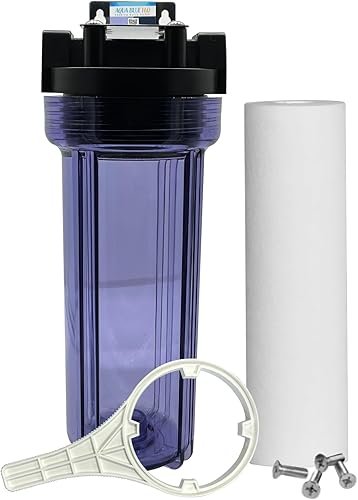
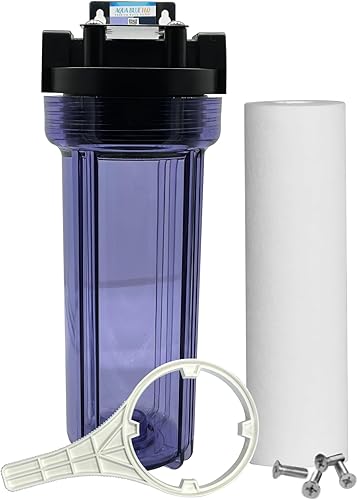
10″ Clear Big Blue Housing W/Pressure Relief
This is your entry ticket. The clear sump lets you monitor your filter without opening anything—perfect for diagnosing well water issues. The included polyspun sediment cartridge is a decent starter. We like the pressure relief button. It’s a solid, no-fuss choice for a single-stage setup or for an RV.
- Visual filter monitoring
- Pressure relief included
- Good starter cartridge
- Clear can grow algae in light
- 10″ size limits filter life
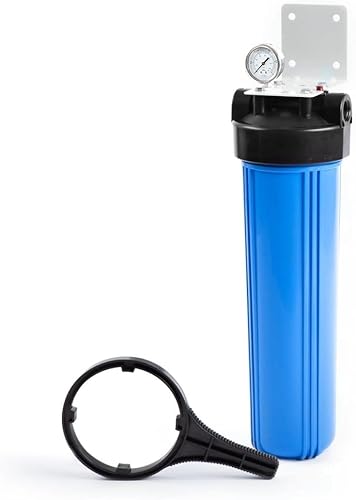
Big Blue 20″ Whole House Water Filter Housing
This is the workhorse. The price is absurdly low, but the housing is standard and functional. It accepts any 20×4.5 cartridge. No frills, no pressure relief. For a plumber or a confident DIYer building a custom system, this is the blank canvas you need. Pair it with a quality carbon cartridge for city water.
- Incredible value
- Standard 20″ size
- Simple, durable design
- No pressure relief button
- Basic hardware
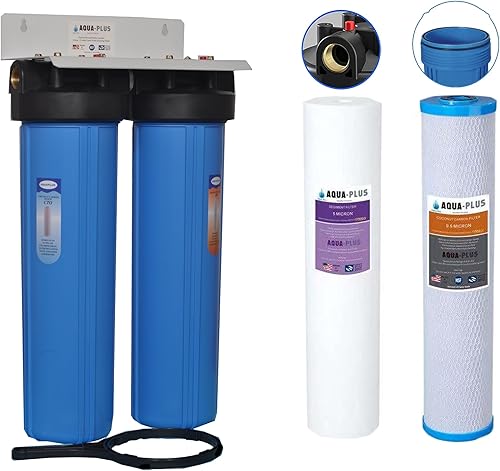
Aqua-Plus 2 Stage Jumbo Big Blue System
For most homeowners, this is the one to get. It’s a complete, ready-to-install two-stage system. The first stage catches sediment, the second tackles chlorine and taste with a carbon block. Brass ports are a nice touch over plastic. It’s the easiest path to comprehensive whole-house filtration.
- Complete 2-stage solution
- Includes filters
- Brass ports, food-grade material
- Higher upfront cost
- Larger footprint
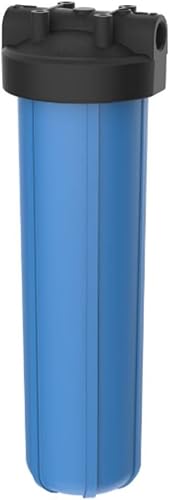
Pentek Pentair 150234 Big Blue Filter Housing
Pentair is a giant in the water industry. This housing is their prosumer model. The high-flow polypropylene (HFPP) cap is tougher than standard plastic. The lack of a pressure relief is a trade-off some pros prefer for perceived durability. You’re paying for the brand’s engineering and quality control.
- Trusted Pentair quality
- Heavy-duty HFPP cap
- Excellent build
- No pressure relief
- Premium price for a housing
Big Blue Filter Housing FAQ
- How often should I change my big blue filter?
- It depends on the cartridge and your water quality. A sediment filter might last 3-6 months with dirty well water. A carbon filter typically lasts 6-12 months. Always follow the manufacturer’s gallon rating or change it when you notice a drop in pressure or taste.
- Can I install a big blue filter housing myself?
- If you’re comfortable cutting your main water line and soldering or using SharkBite fittings, yes. It’s a straightforward plumbing job. If not, hire a plumber. A bad install can cause major leaks.
- What’s the difference between a big blue filter and a water softener?
- Different jobs. A filter removes particulates and chemicals. A softener removes hardness minerals (calcium, magnesium) through ion exchange. Many homes have both: a sediment filter first, then a softener, then a carbon filter.
- Do I need a pre-filter before my big blue?
- For well water with lots of sand or grit, a spin-down pre-filter (a simple screen you can flush) ahead of your big blue can dramatically extend the life of your main cartridge.
- Can a big blue housing remove bacteria or viruses?
- No. Standard cartridges do not remove microbiological contaminants. For that, you need a UV sterilizer or an absolute-rated 0.2-micron filter, which will significantly reduce flow rate and is usually used at a single point of use.
- Is a clear housing better than a blue one?
- It’s more useful for diagnostics, but riskier. Clear housings can allow algae to grow if exposed to light. For a permanent, maintenance-free install, stick with opaque blue.
Final Thoughts
After years of testing, I keep coming back to one truth: a big blue filter housing is the most sensible, cost-effective starting point for anyone serious about their home’s water. It’s not glamorous. It’s plumbing. But it works. For most families, the Aqua-Plus 2-Stage System represents the best balance of performance, convenience, and value. It’s the system I recommend to friends and family without hesitation.
Start there. Get your water tested. Then you’ll know if you need to add a third stage or a dedicated water distiller machine for specific needs. But get the foundation right first. Clean water from every tap isn’t a luxury—it’s a smart investment in your home and health.
