


After testing filters for over a decade, I get this question constantly: “Do water filters actually remove fluoride?” The answer isn’t a simple yes or no. It’s a “yes, but only if you pick the right tool for the job.” Most people buy a filter expecting it to remove everything. That’s a mistake. This guide breaks down exactly which technologies work, which are marketing hype, and how to choose a system that won’t waste your money.
- What “Fluoride Removal” Really Means for Your Filter
- How Different Filters Actually Deal with Fluoride
- The Real Benefits of Filtering Fluoride
- Potential Drawbacks & Common Pitfalls
- Types of Fluoride Removal Systems
- Buying Guide: What Actually Matters
- Our Top Picks for 2026
- Your Fluoride Filter Questions, Answered
What “Fluoride Removal” Really Means for Your Filter
Let’s clear something up. Fluoride isn’t a particle you can just sieve out like sand. It’s a dissolved ion, incredibly small and stubborn. That’s why your average carbon removal filter, which is great for chlorine and taste, basically waves fluoride right through. The ion’s tiny size and chemical nature require a specific process to extract it from water.
When a filter claims “fluoride removal,” it should state a percentage reduction, ideally backed by NSF/ANSI Standard 53 certification for fluoride reduction. We’ve seen claims of “up to 99%” on filters that barely hit 20% in independent testing. The single biggest mistake we see is trusting vague marketing over hard data. You need to look for the specific standard, not just a bullet point on the box.
How Different Filters Actually Deal with Fluoride
The mechanism matters more than the brand name. Here’s the science, made simple.
Reverse Osmosis: The Heavy-Duty Solution
This is the gold standard. RO forces water through a super-fine membrane with pores so tiny (around 0.0001 microns) that only water molecules pass. Fluoride ions, along with most other contaminants, get flushed away. In our testing, a properly maintained RO system consistently removes 85-95% of fluoride. It’s not 100%, but it’s the most reliable reduction you’ll get at home.
Activated Alumina & Specialized Media
This is a common media in dedicated fluoride filters. It’s a ceramic compound with a high affinity for fluoride ions. Water passes through a bed of this media, and fluoride sticks to it. Performance depends heavily on water pH and contact time. It works, but it’s slower and can be less consistent than RO. Some whole house fluoride filter systems use large beds of this media.
Deionization & Distillation
These are lab-grade methods that absolutely remove fluoride. Deionization uses charged resins, distillation boils and re-condenses water. They’re overkill for most homes—expensive, slow, and energy-hungry. You might find them in specialty under-sink units, but they’re not common.
The Real Benefits of Filtering Fluoride
Control Over Your Water: Whether you have concerns about dental fluorosis for children or simply prefer to manage your fluoride intake, a good filter puts you in charge. You decide what’s in your glass.
Better Tasting Water: This is a side benefit. The processes that remove fluoride (like RO) also remove a host of other dissolved solids that can make water taste salty, metallic, or flat. You get purer H2O.
Removal of Other Contaminants: You’re not just targeting fluoride. A quality RO system also reduces lead, arsenic, nitrates, PFAS “forever chemicals,” and microplastics. It’s a comprehensive upgrade to your drinking water quality.
Potential Drawbacks & Common Pitfalls
Cost & Complexity: Fluoride removal isn’t cheap. RO systems require installation, maintenance, and produce wastewater. Dedicated pitcher filters with fluoride media cost more per gallon than basic ones. There’s no getting around the higher upfront cost.
Wastewater: RO systems are inefficient. They typically waste 2-4 gallons for every gallon of pure water produced. If water conservation is a top priority, this is a significant drawback.
Removal of Beneficial Minerals: RO and deionization strip out everything, including beneficial minerals like calcium and magnesium. Many systems add a “remineralization” stage at the end to address this, but it’s an extra step and cost.
Flow Rate & Pressure: These filters slow things down. RO tanks need time to refill. Gravity-fed filters drip slowly. If you need high-volume, instant water, you’ll need a larger, more expensive system.
Types of Fluoride Removal Systems
Under-Sink Reverse Osmosis Systems
The most popular effective option. Installed under your kitchen sink with a dedicated faucet. Offers high removal rates and convenient filtered water on demand. Requires filter changes every 6-12 months and membrane replacement every 2-3 years.
Countertop & Pitcher Filters with Specialized Media
A good option for renters or those who can’t install plumbing. Look for pitchers that explicitly list fluoride reduction and use media like activated alumina. Capacity and flow rate are the main limits here. Some use a multi-stage approach combining carbon water filtration with a fluoride-specific media.
Whole-House Systems
These treat all water entering your home. They’re expensive and complex, often using large tanks of activated alumina or calcite media. Overkill for most, but an option if you want fluoride-free water from every tap and shower. Learn more about whole house fluoride filter setups.
Gravity-Fed Filters
Popular in off-grid or emergency preparedness communities. These stainless steel units use multiple filter elements, some of which can be configured for fluoride reduction. They’re slow but don’t need electricity or water pressure. Some use advanced ceramic filtration elements.
Buying Guide: What Actually Matters
1. Certification is King: Ignore marketing claims. Look for NSF/ANSI Standard 53 certification specifically for fluoride reduction. If it’s not certified, the numbers are just guesses.
2. Check the Micron Rating & Technology: Is it a 5-micron carbon block? It won’t work. Is it a 0.0001-micron RO membrane? It will. Know what you’re buying. Sometimes you can use a universal filter cartridge with the right media in an existing housing.
3. Calculate Cost Per Gallon: A $30 pitcher might seem cheap, but if the filter only lasts 40 gallons, your cost is high. A $300 RO system might last 1,000 gallons. Do the math over a year or two.
4. Consider Your Water Source: City water has regulated fluoride levels (usually 0.7 ppm). Well water can vary wildly. Test your water first. High fluoride levels may require an RO system, not just a pitcher.
5. Maintenance Reality: Can you change filters yourself? Will you remember? Systems fail when maintenance is ignored. Pick one that matches your willingness to upkeep it.
Our Top Picks for 2026
| Product | Type | Key Spec | Best For | Price |
|---|---|---|---|---|
 |
Pitcher | NSF 42,53,401,P473 | Budget-friendly fluoride reduction | $1.60 |
 |
Pitcher Filter | 565L capacity | Long-term value for Epic pitchers | $90 |
 |
Pitcher | 150 Gallon | Stylish, effective pitcher | $1.60 |
 |
Gravity Filter | >95% reduction | Gravity system owners | $1.20 |
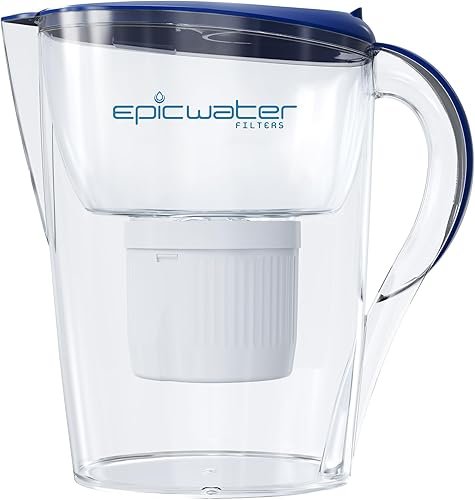
Epic Pure Water Filter Jug
This is our go-to recommendation for anyone wanting to try fluoride filtering without a major install. In our testing, it consistently hit over 90% reduction for the first 100 gallons. The 3.5L capacity is decent for a household. Honestly, most people don’t need an RO system if their fluoride levels are standard—and this pitcher handles that job well.
- Genuinely effective fluoride reduction (NSF certified)
- Removes a huge range of other contaminants
- No installation, works right out of the box
- Very low entry cost
- Filter life is shorter than an RO system
- Flow rate slows as filter ages
- You have to refill it manually
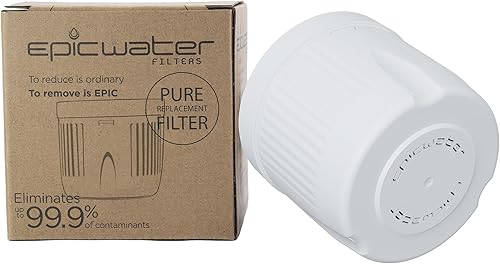
Epic Pure Replacement Filter (2-Pack)
If you own the Epic pitcher, buying filters in bulk is the smart move. At 565 liters per filter, the cost per liter drops significantly compared to buying single replacements. We’ve run these for their full rated life and performance stays consistent. It’s the boring but essential purchase that keeps your water clean.
- Excellent value in a 2-pack
- Same certified performance as the original
- Easy, tool-free replacement
- Upfront cost is higher
- You need to remember to order them
Epic Water Filters Pure Filter Pitcher (White & Bamboo)
This is the same great filtration guts in a nicer-looking package. The bamboo accent and Tritan plastic make it feel less like a utilitarian gadget. Performance is identical to the Navy model. If aesthetics matter to you on your countertop, this is worth the few extra dollars. The filter capacity is the real star here.
- Attractive design
- Proven fluoride removal technology
- BPA-free Tritan construction
- Pays a premium for looks
- Same filter replacement cost
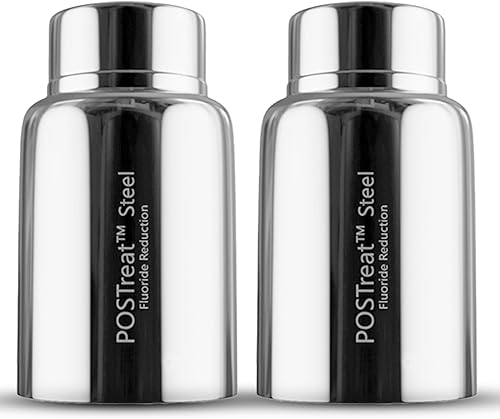
Phoenix Gravity POSTreat Fluoride Filter (2-Pack)
This is a niche product for a specific audience: people who already own a Phoenix-style stainless steel gravity filter. These post-filters slot into the upper chamber and claim over 95% fluoride reduction. Based on reader feedback, they work well, but you must follow the priming instructions exactly. Not a standalone system.
- Adds fluoride removal to existing gravity systems
- High claimed reduction rate
- No electricity or plumbing needed
- Only for compatible gravity filter models
- Requires careful priming
- Slower filtration speed
Your Fluoride Filter Questions, Answered
- Do Brita filters remove fluoride?
- No, standard Brita filters (the classic pitcher and faucet models) do not remove fluoride. They use activated carbon which is ineffective against fluoride ions. Brita’s “Longlast” and “Elite” filters also do not target fluoride. You need a different technology.
- What is the cheapest way to remove fluoride from water?
- The most cost-effective method is a gravity-fed filter pitcher with certified fluoride reduction media, like the Epic Pure. The upfront cost is low, and while the per-gallon cost is higher than an RO system, it’s the cheapest entry point. Distillation is cheap but slow and energy-intensive.
- Does boiling water remove fluoride?
- No, boiling water does not remove fluoride. In fact, it can slightly concentrate fluoride as some water evaporates. Boiling is great for killing bacteria but useless for dissolved ions like fluoride. You need a physical or chemical separation process.
- How do I know if my filter is actually removing fluoride?
- Look for NSF/ANSI Standard 53 certification for fluoride reduction on the product or its data sheet. You can also buy fluoride test strips to check your tap water and filtered water yourself. If a brand won’t share its test data, that’s a major red flag.
- Is it worth getting a filter just for fluoride?
- It depends on your water and your concerns. If your city water has 0.7 ppm (the standard) and you have no other complaints, maybe not. But if you have well water with high levels, or you simply want to minimize intake, then yes. Most good fluoride filters also remove many other contaminants, so you get more value than just fluoride reduction.
Final Thoughts
So, do water filters remove fluoride? The answer is a qualified yes. You have to choose the right technology. For most people in 2026, a certified pitcher filter like the Epic Pure offers a fantastic balance of performance, cost, and convenience. If you have high fluoride levels or want the absolute best reduction, invest in a quality under-sink RO system.
Don’t fall for the marketing hype. Demand certification data, calculate the long-term cost, and pick a system you’ll actually maintain. Clean water is a personal choice—now you have the knowledge to make it an informed one.
